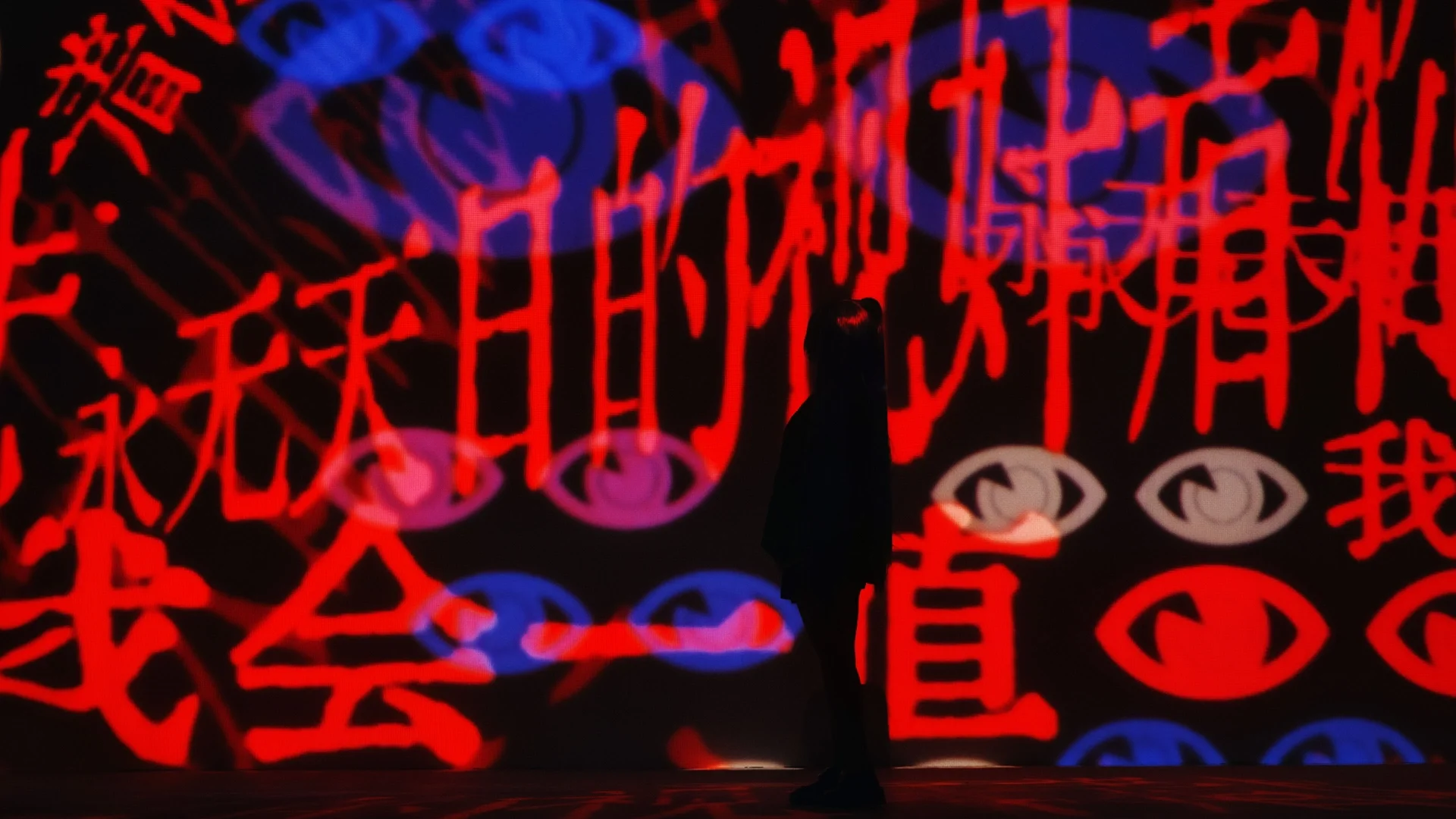
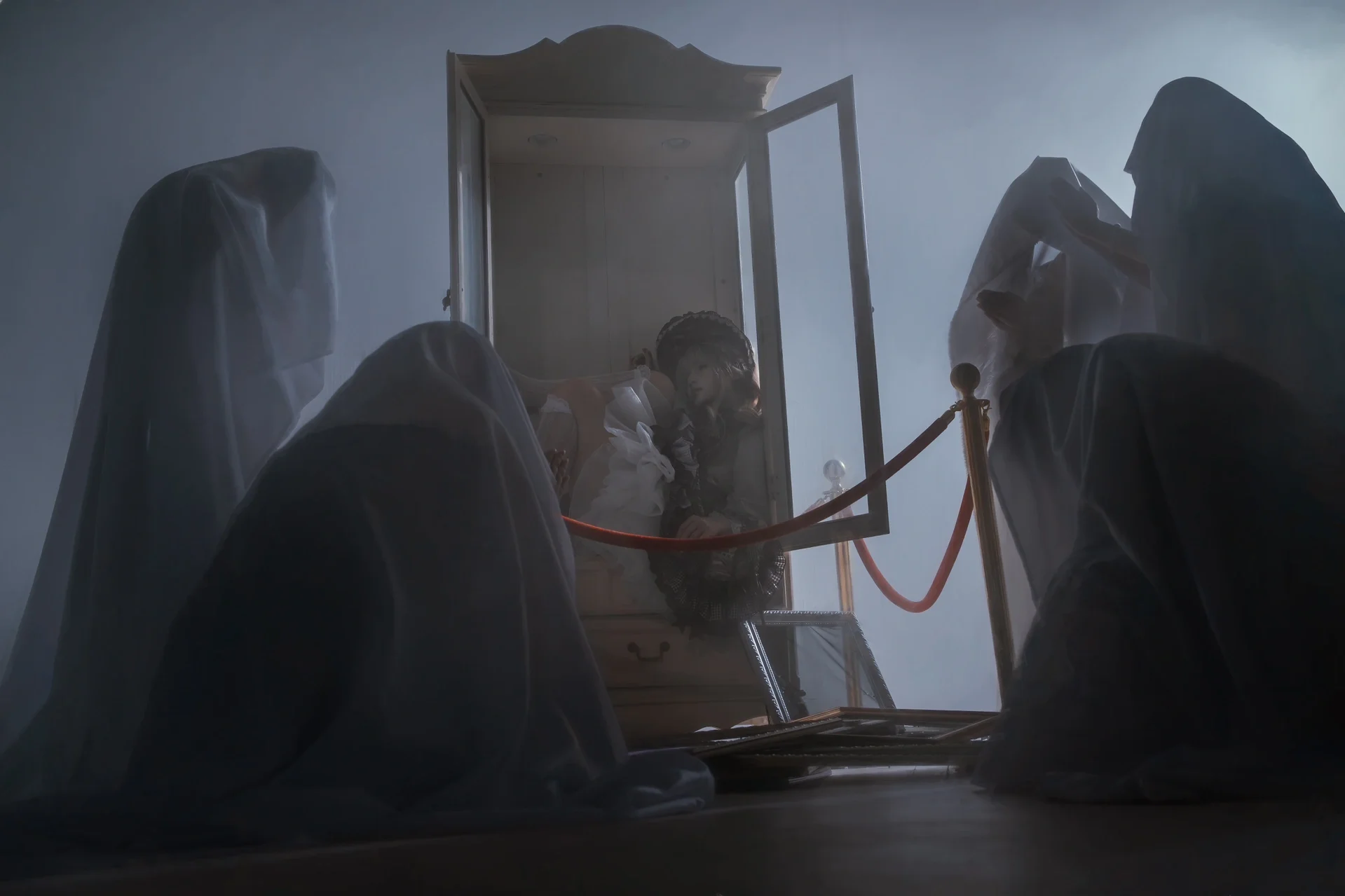
I used to think that light and shadow magic relied entirely on outdoor shoots and lighting arrays, but this offline class with Teacher A-Cheng completely opened up a new mindset for me. No one had ever told me before that a projector isn't just for slides—it can completely serve as a creative medium and light source for projector photography! It truly turned the studio into a canvas for light and shadow art, where the flares, color blocks, and even the illusory projected cracks in the frame were all captured in-camera. Post-processing only required a bit of color correction and texture blending. This thrill of 'what you shoot is almost what you get' is incredibly addictive.
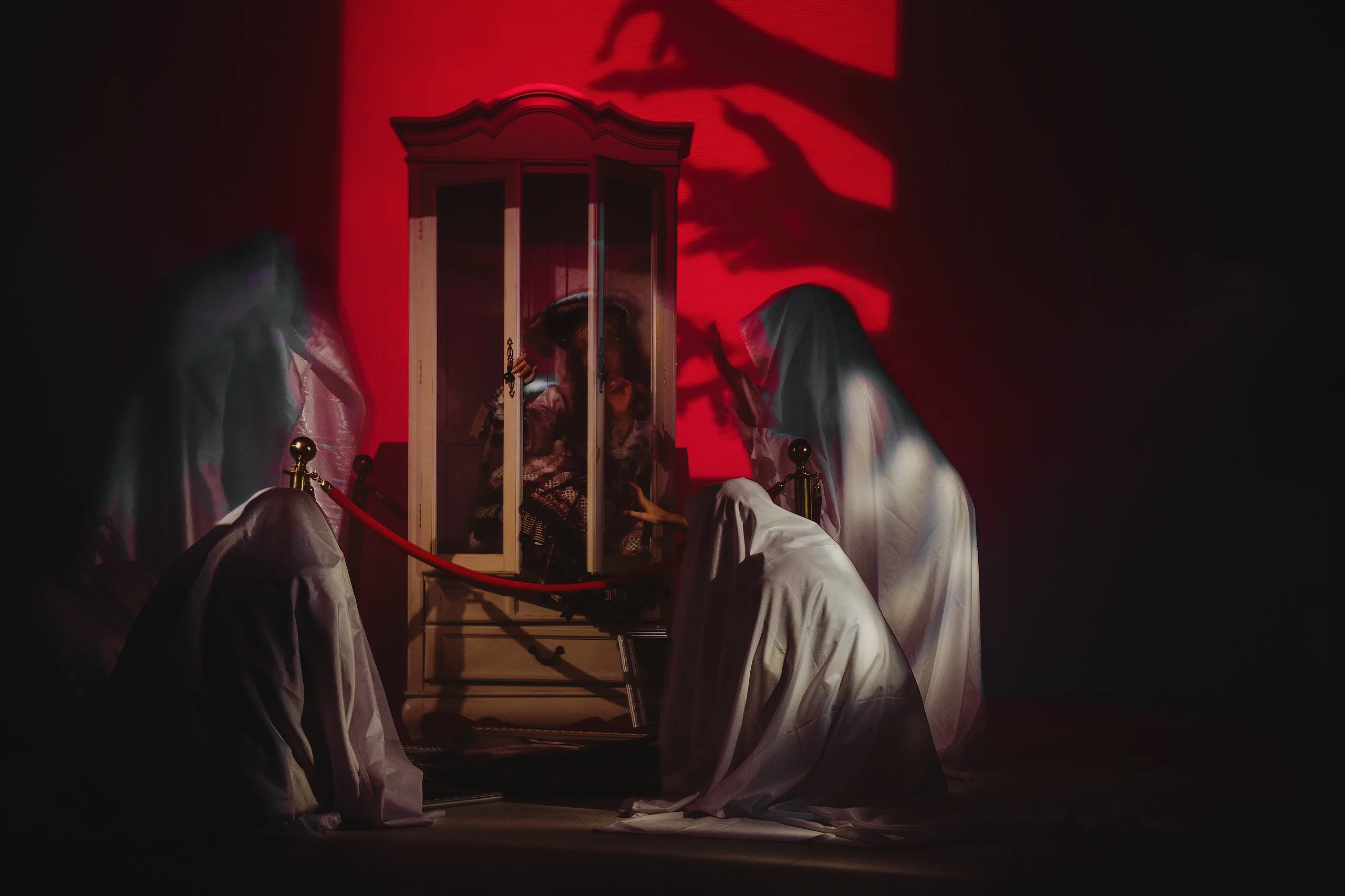
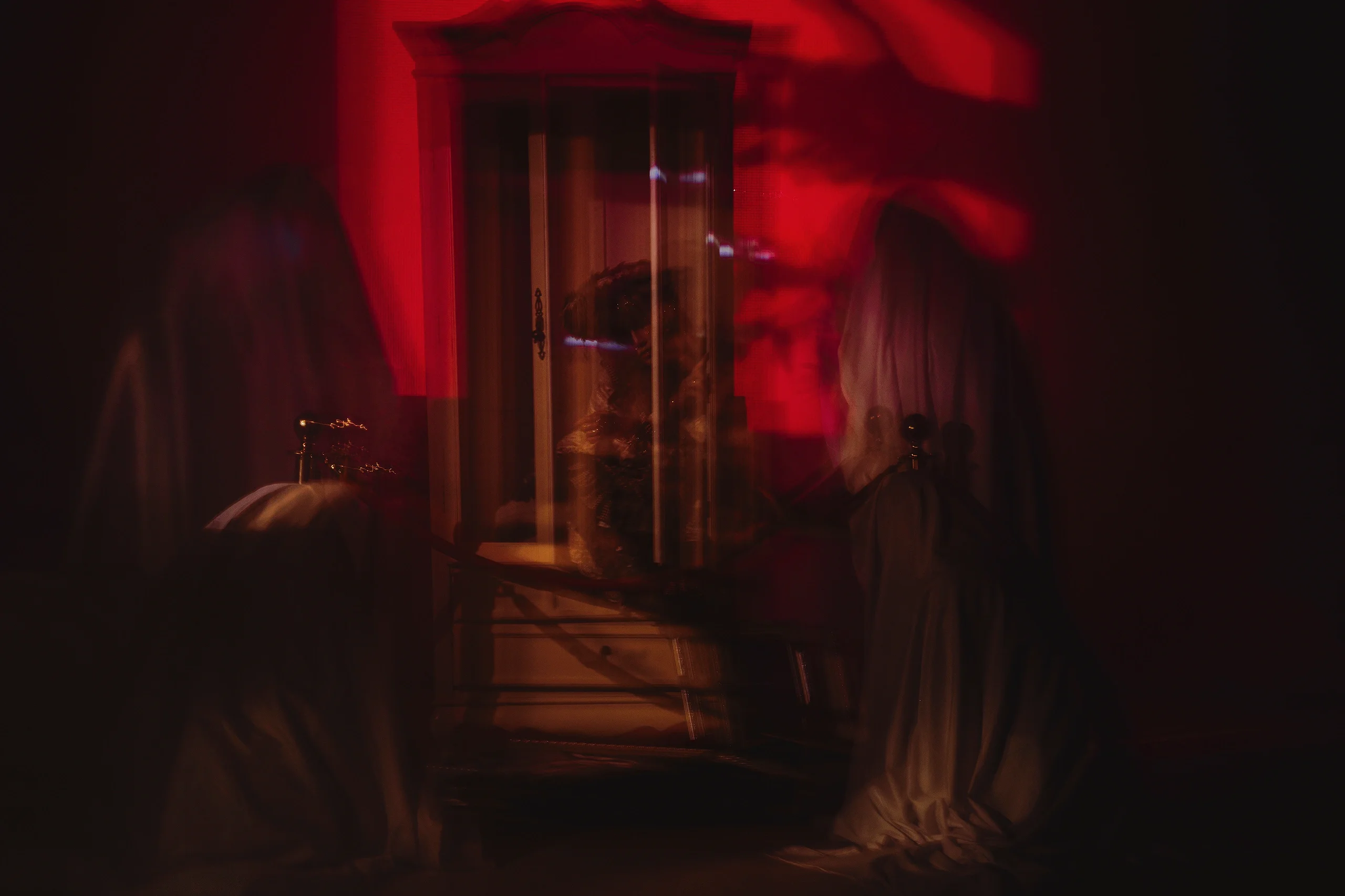
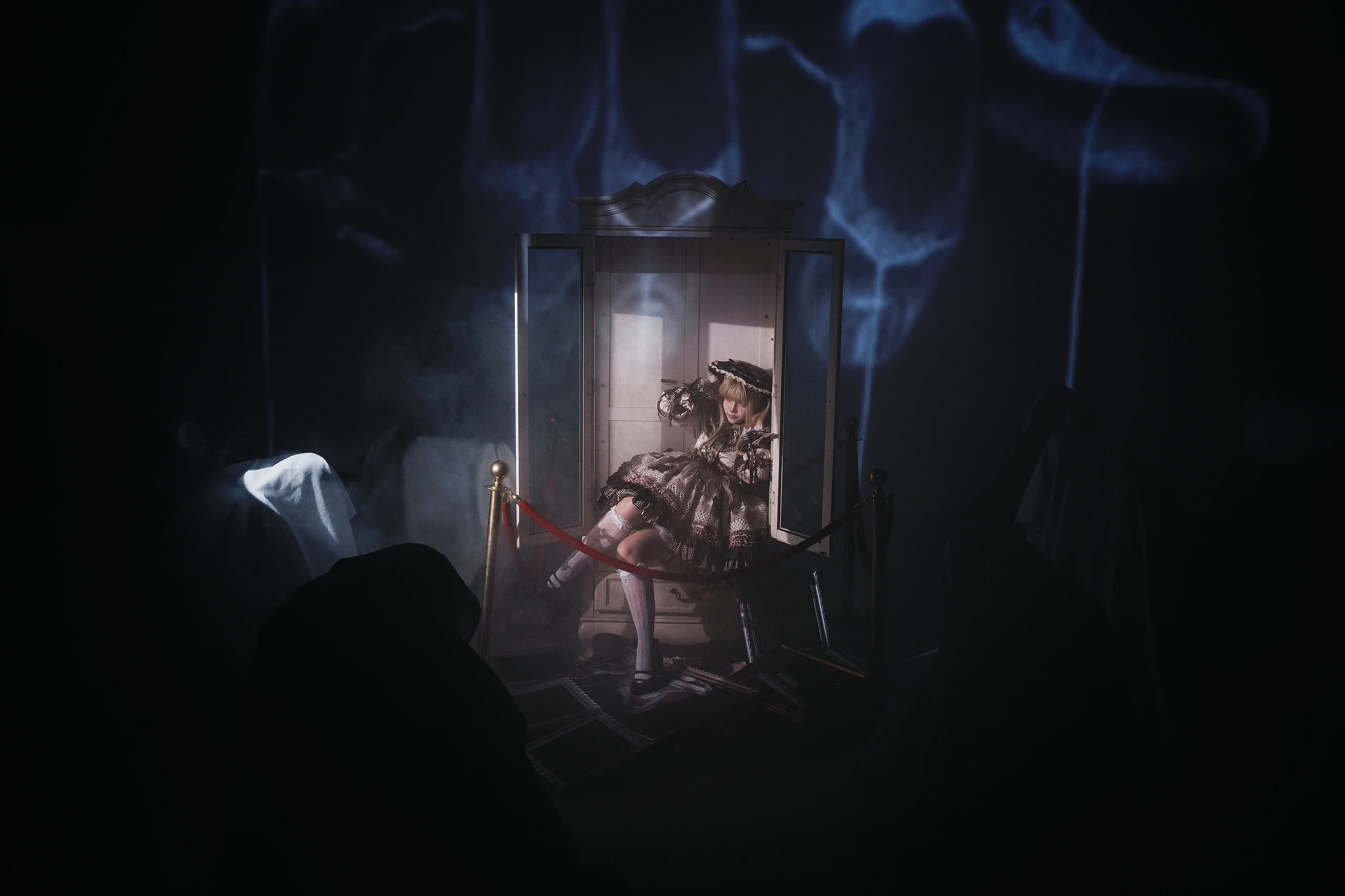
The set design for this shoot was actually very restrained, just using a vintage white display cabinet and a few pieces of lightweight drapery. The core secret weapon was that high-brightness projector. The most interesting parts were the two schemes: red-blue color clashing and overlapping light and shadows. When the red light hit, the atmosphere instantly became highly dramatic and dangerous. Combined with the surrounding 'ghost friends' covered in white cloths, the whole scene felt like some forbidden ritual. But when switching to blue light mode, the entire environment cooled down immediately, turning into a serene yet eerie psychological space. The way the light hit the white gauze and penetrated the smoke in the air created a texture that is hard to achieve with regular bounce boards alone.
During the shoot, we were constantly wrestling with the projection angle of the projector because we couldn't let the setup leak out of the frame; the character's positioning had to be exactly in the blind spot of the projection or on a specific reflective surface. This actually tests the photographer's ability to control the set, because the projector has a mind of its own—a slight misalignment, and the light on the face goes wrong. However, this sense of out-of-control within a controlled environment brought a lot of impromptu surprises to the creation.
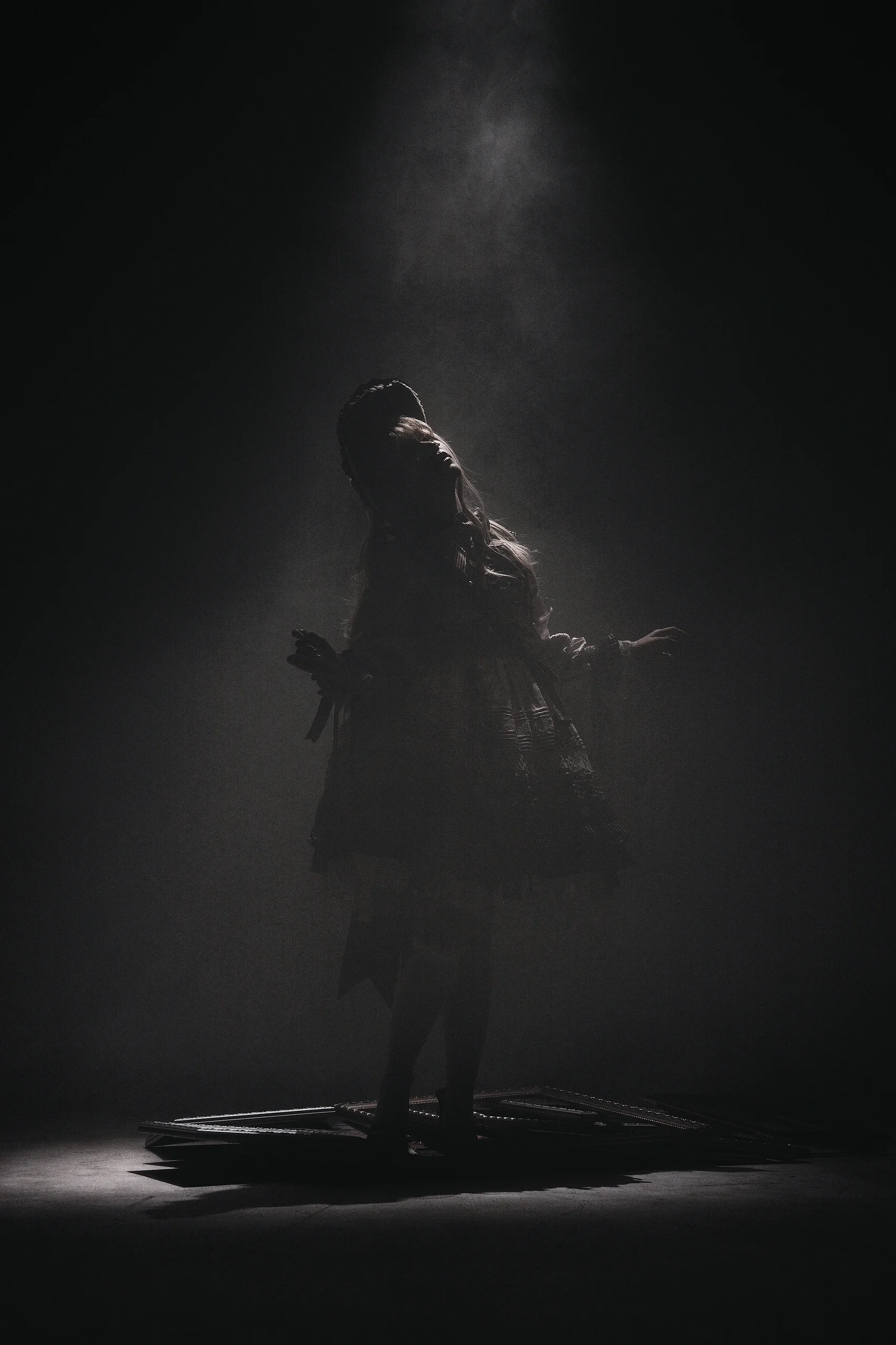
In one scene in the middle, a white cloth was draped directly over the head, leaving only a spotlight to pierce through the smoke, capturing a minimalist silhouette effect. This formed a strong contrast with the screen full of chaotic code and eye projections in the background. This way of building a multi-dimensional space inside a studio is perfect for creators chasing visual tension. After coming back, I reflected a bit and felt there are still many details to perfect, such as how to match the projector's brightness with the camera's exposure parameters more flawlessly.
In short, if you have a projector sitting around at home, you should definitely give it a try. I hope this photography tips sharing inspires you. Don't be bound by traditional, conventional lighting mindsets—treat it as part of your creation, and the visuals will absolutely surprise you.