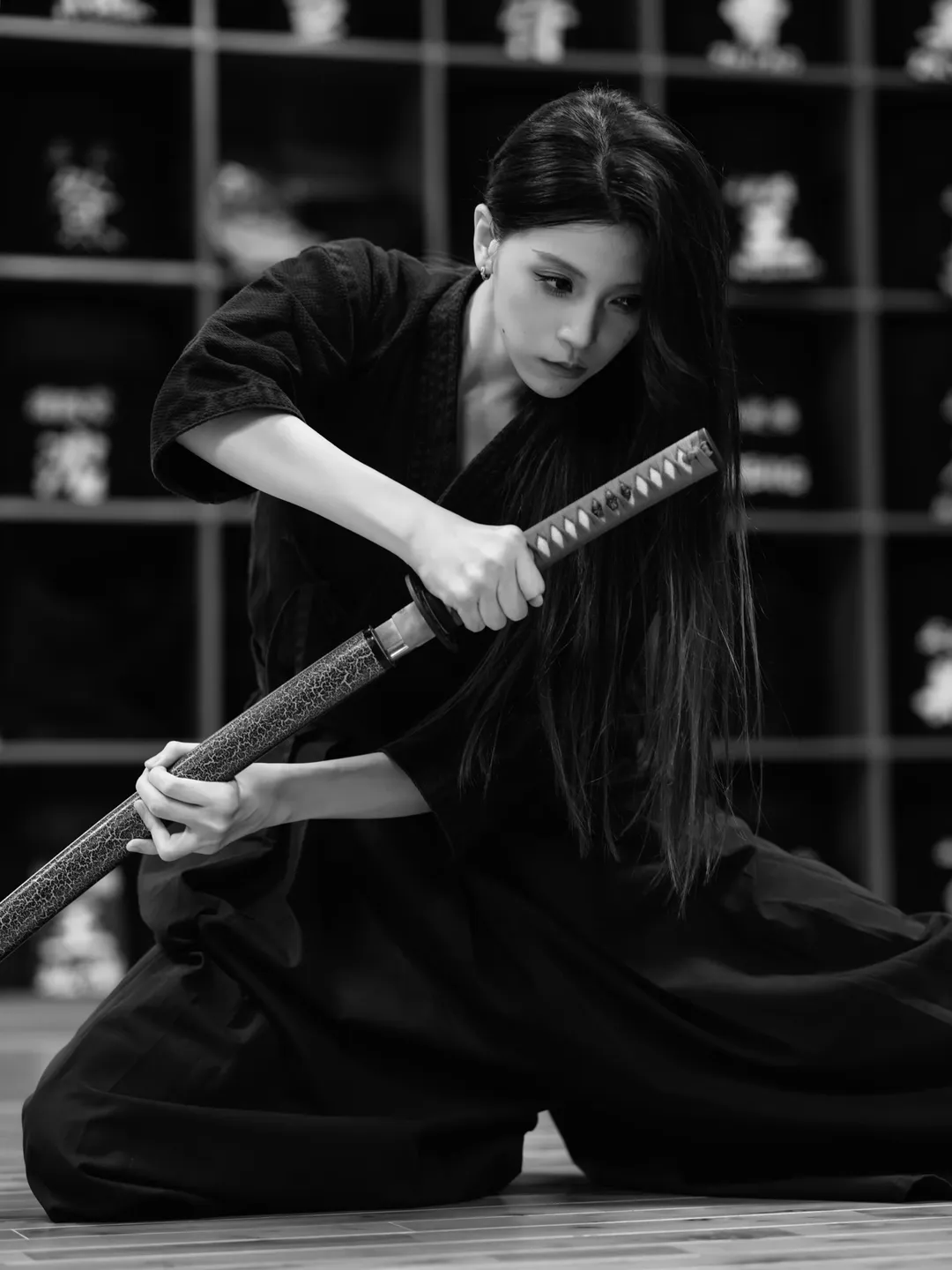
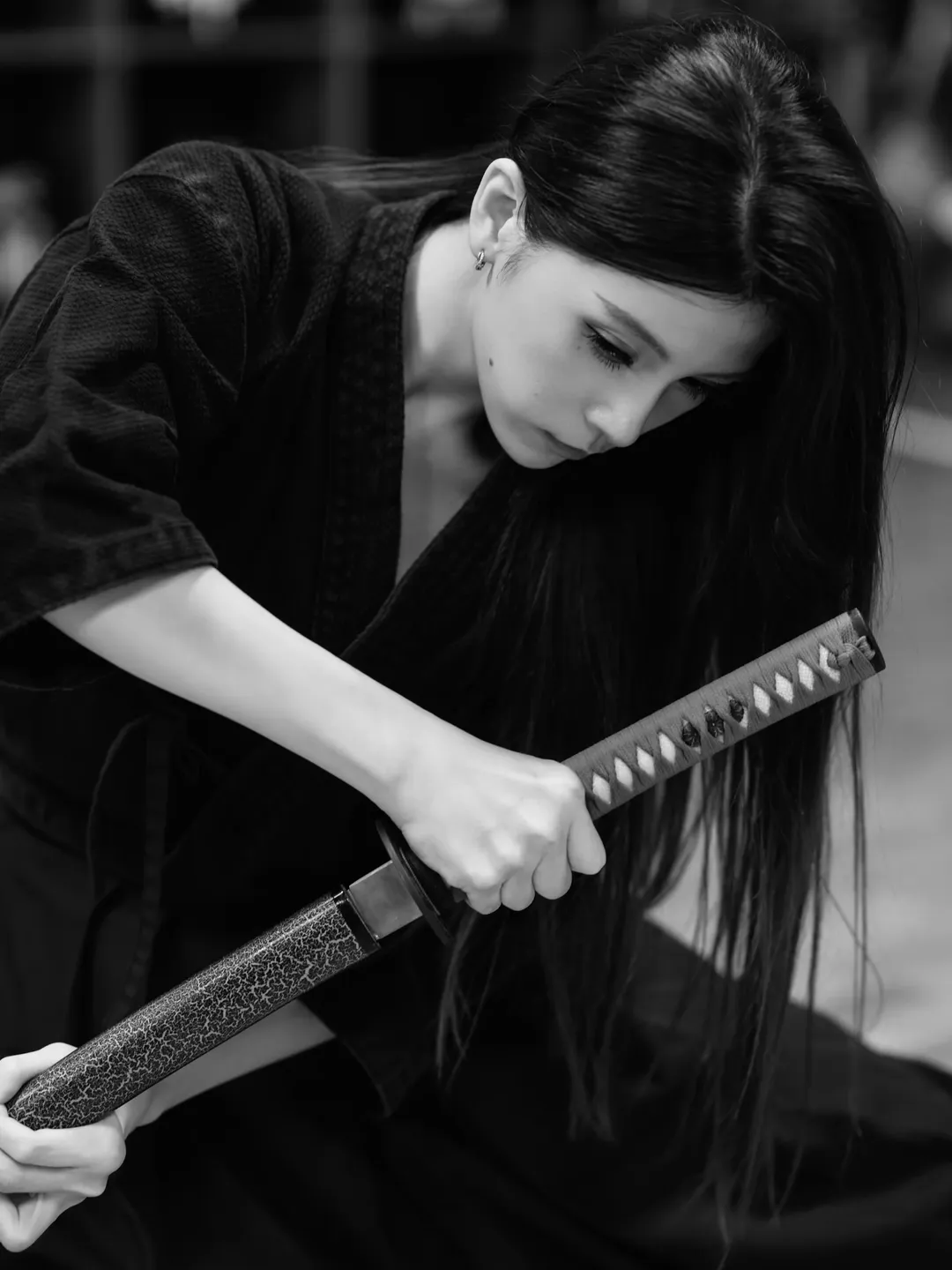
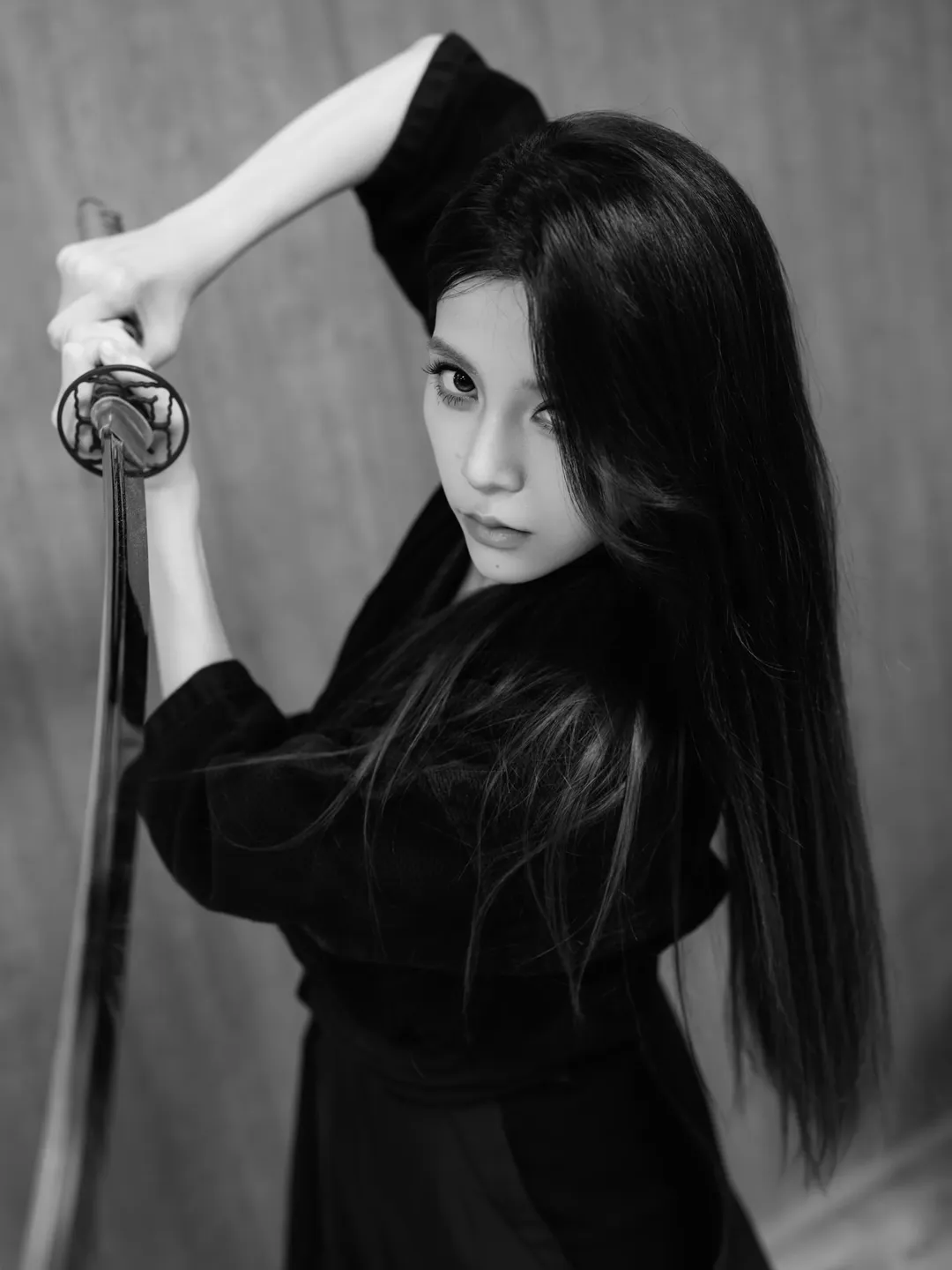
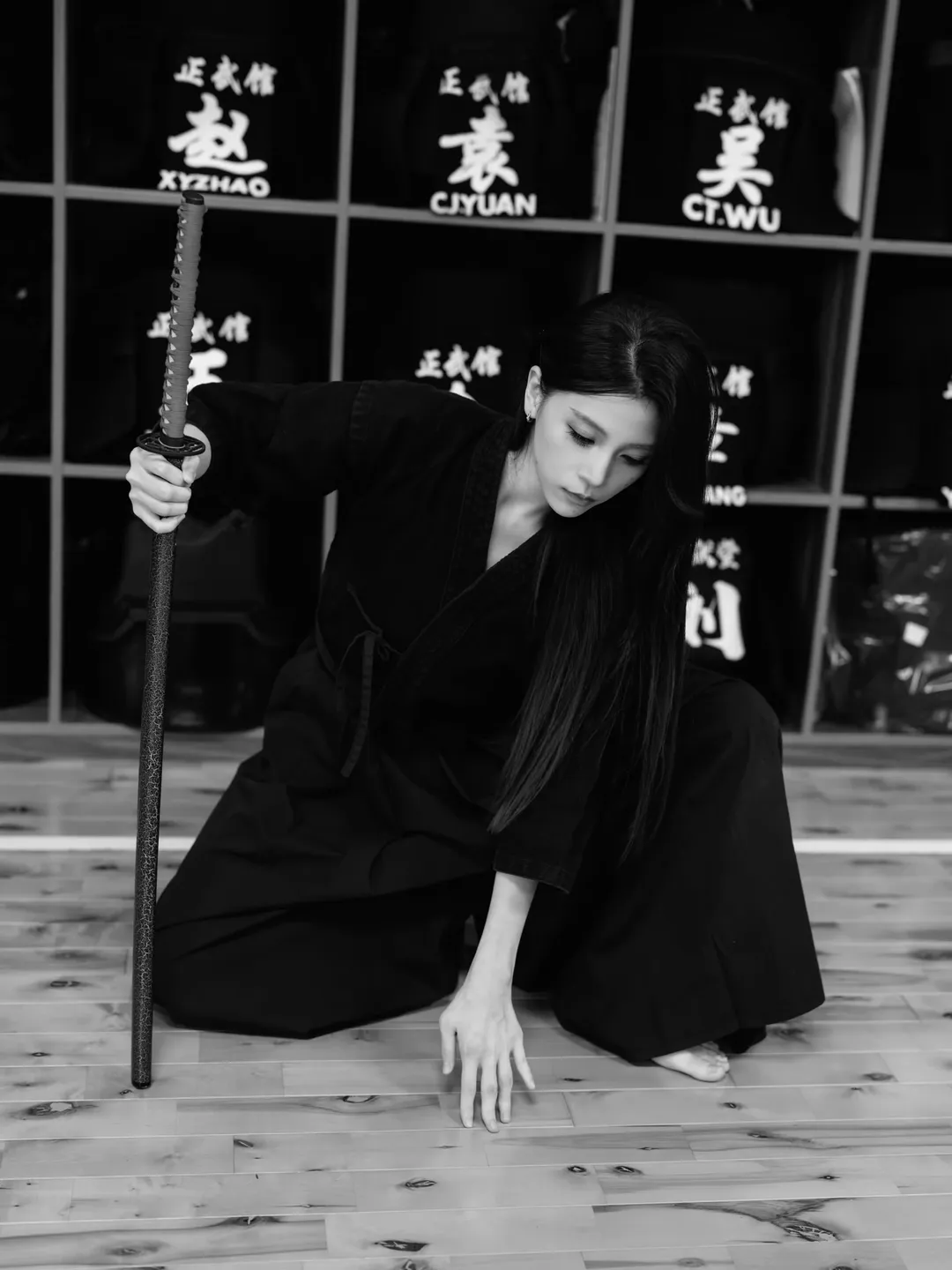
Cinching the obi cord tightly around my waist and smoothing down the collar of the black tunic, today called for executing a demanding shoot inside the dojo. The blade in my grip carried far more tangible heft than anticipated; the cold touch filtering through the hilt wrappings instinctively banished any stray, idle thoughts.
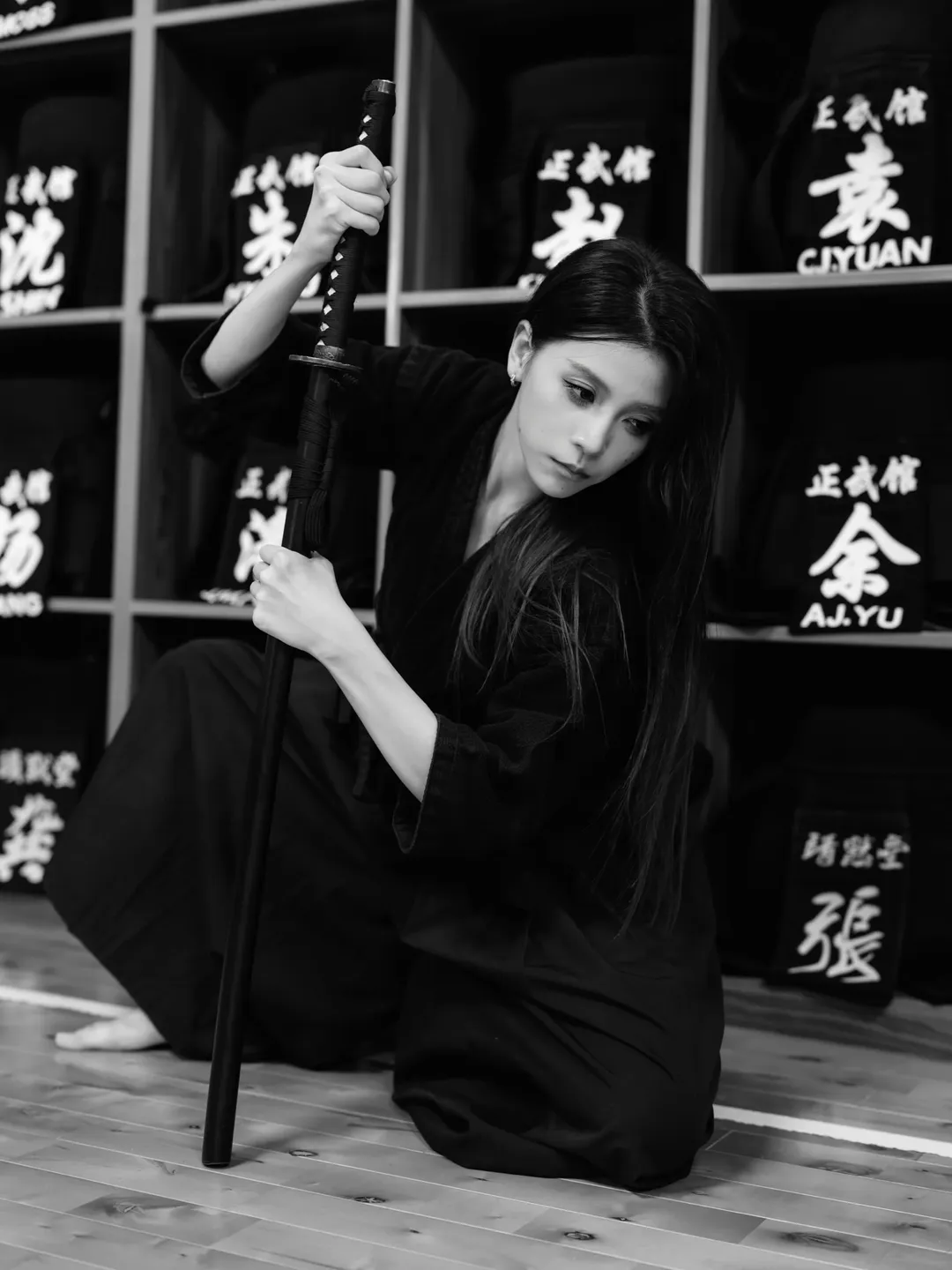
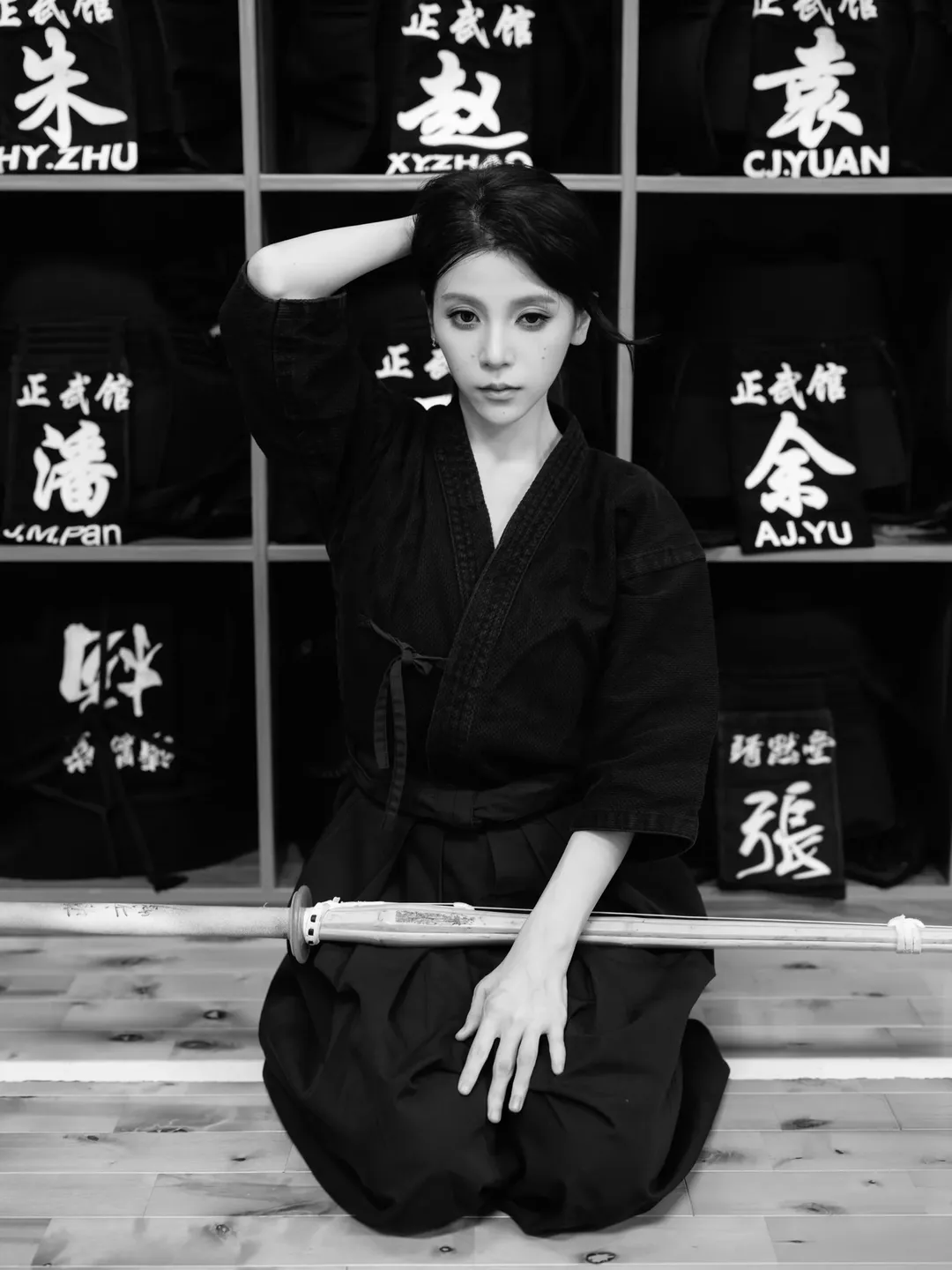
The dojo flooring was solid hardwood, imparting a grounded stability beneath bare soles. The gear racks lining the back were stacked with black equipment duffels inscribed with various names—a uniform, austere backdrop that innately radiated a solemn, focused intensity, harmonizing with today's concept.
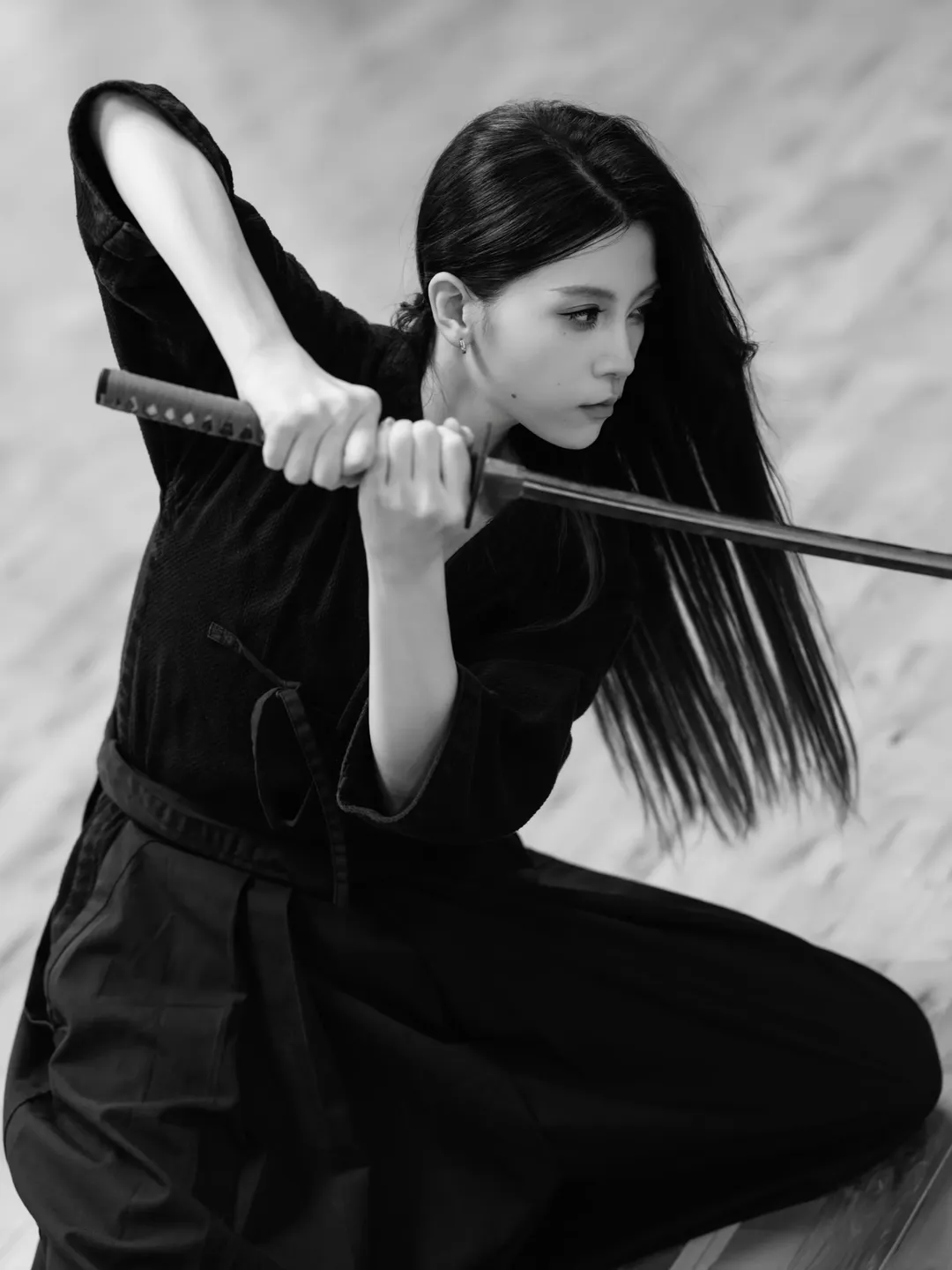
This minimalist black martial arts attire was stripped of superfluous embellishment, putting corporeal expression under an uncompromising lens. From the half-kneeling draw of the blade to resting the edge upright beside my torso, every weight shift demanded solid core control. In particular, the stance with a single knee grounded required multiple recalibrations to seize the cleanest light and shadow. Holding the prop blade, I silently tracked lens perspectives to ensure the hilt, kissaki tip, and line of sight formed a balanced geometry—far beyond mere posing, it felt like an unspoken dialogue with the camera.
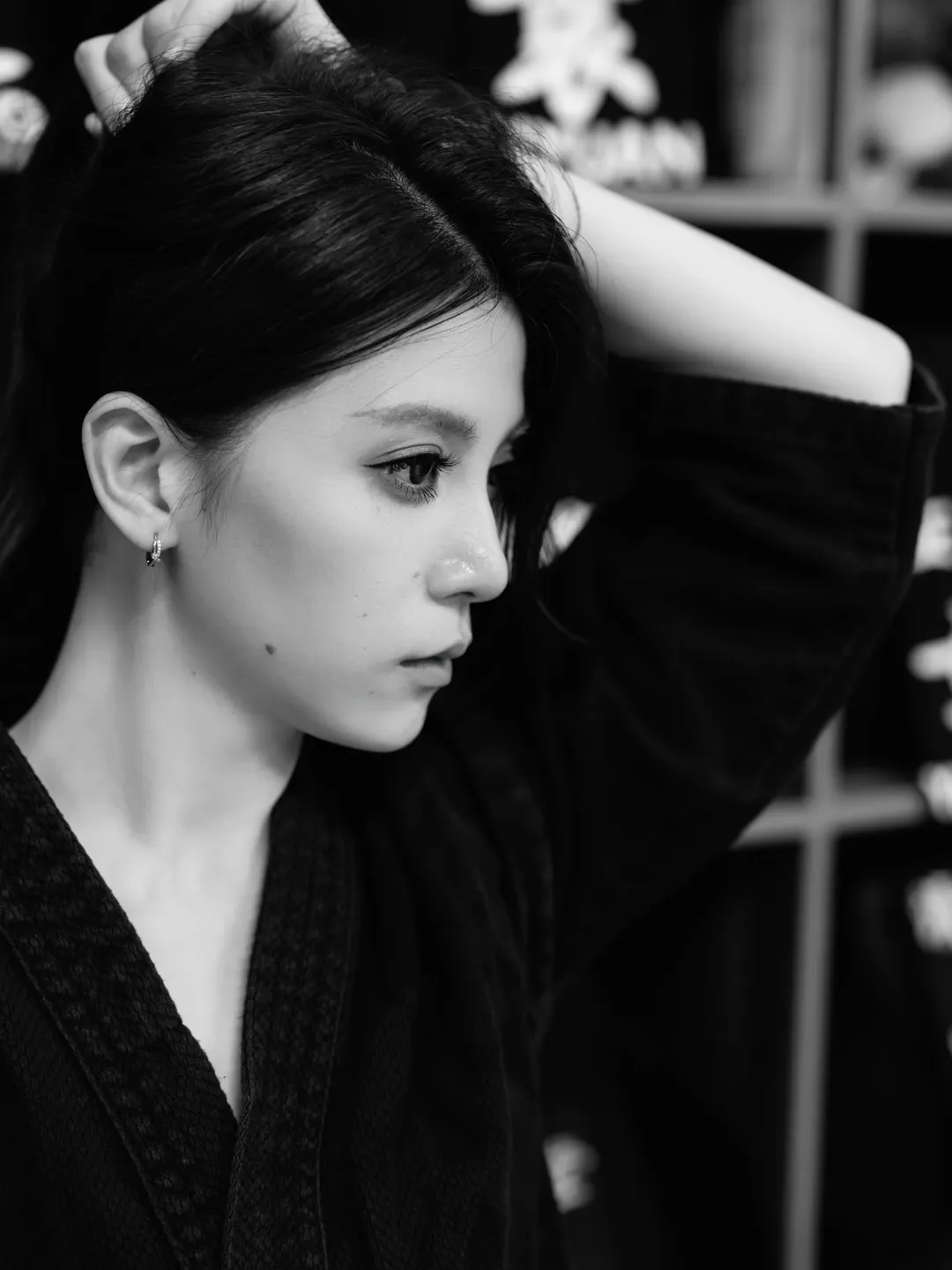
Why choose Black and white photography? Monochrome distills away visual noise, channeling all perception directly toward light and shadow, the grain of the skin, and the cold specular gleam of the steel. With side-raking light carving across the space, the blade's highlight stood out in sharp contrast against the deep black of the uniform; this stark chiaroscuro was the essence of the Japanese style atmosphere I set out to capture.
Gripping the sword, I held no thoughts of confrontation with an adversary. I had long heard the adage, 'The blade never points toward others, only severing delusion,' yet settling into these postures today brought the philosophy to life. Whether letting the tip droop low or thrusting into empty air, one is confronting the restlessness and noise within one's own soul. Every shutter click captured a conversation with the lens and an internal reckoning with my own state of mind. Strands of long hair falling forward, shadowing half my face, lent a subtle air of enigmatic depth.
Shooting martial arts or kendo themes is physically demanding—not only in muscular endurance, but in sustained emotional output. The gaze must stay razor-sharp without a flicker of laxity. A sudden draft or the faint click of a background prop can easily break concentration, requiring constant self-reminders to lock in and project cold poise tinged with latent danger. While an unsharpened practice sword, the weight it carried in my hand was real.
This series discarded complex visual effects and flamboyant color grading. It relied entirely on the unadorned garment, the blade in hand, the timber floor underfoot, and that sliver of directional backlight. The photographer had an eye for micro-moments, allowing me to sink into character without theatrical posturing.
Wrapping up the session left my wrists and knees aching, yet reviewing those stark, high-contrast monochrome frames made every effort worthwhile. The act of recording, in itself, is an act of pure expression.