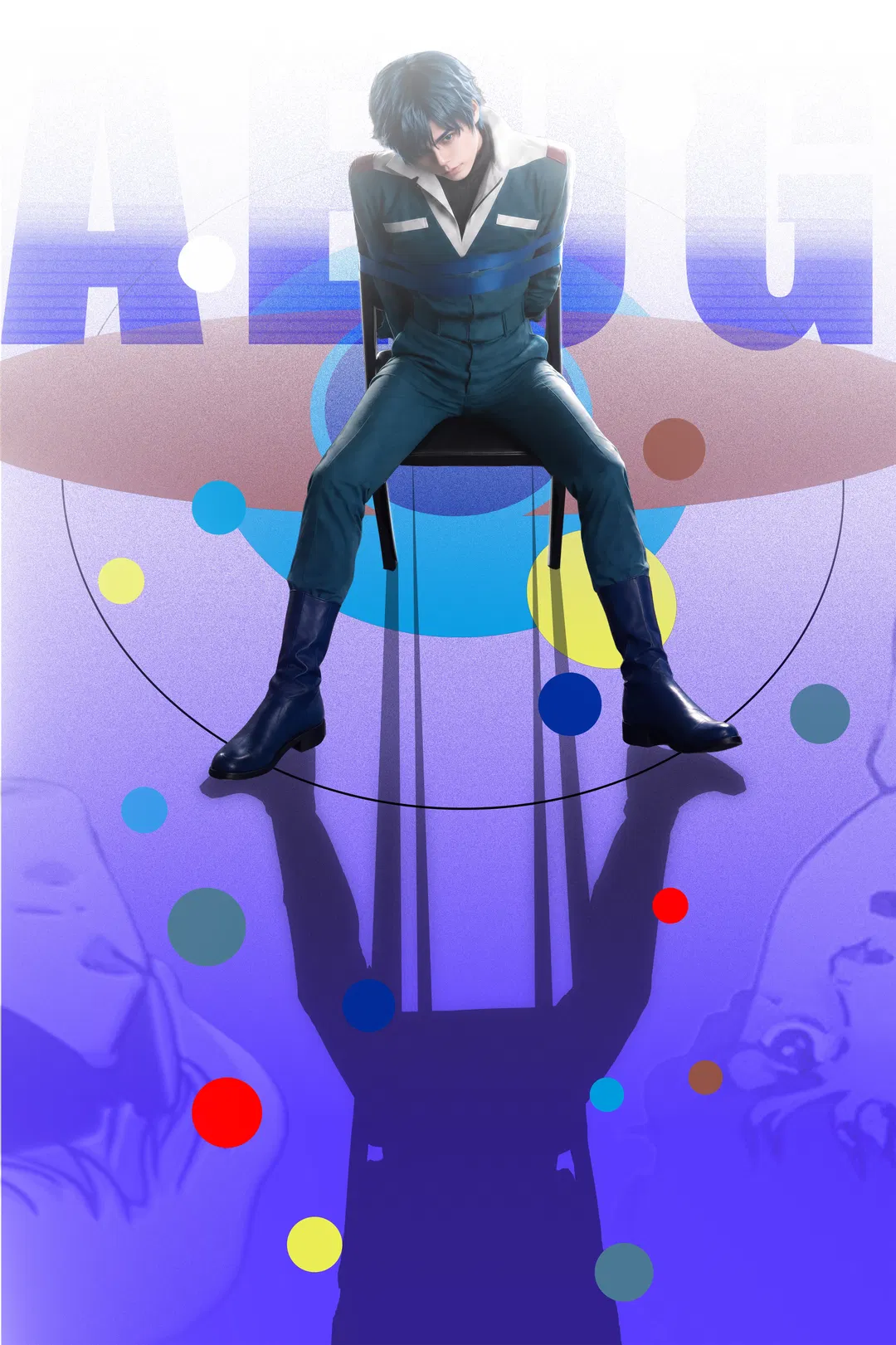
The core concept for this Zeta Gundam Camille photo set was to break away from the conventional studio feel. From the initial conceptualization, I decided to focus on the interaction between the character and the environment, as well as the visual fragmentation in post-processing. Since I acted as my own photographer for self-portraits, I put a lot of thought into adjusting the camera angles and composition. The raw photo was actually just sitting on a chair, but I wanted to externalize this bound state and internal resistance during post-processing, which is why the completely differently shaped shadow at the bottom of the frame exists. The shadow is frantic, with both arms struggling upward, forming a strong dislocated contrast with the tied-down posture of the body.
In terms of clothing, Camille's classic jumpsuit required effort in ironing and organizing its pattern and material; the white decorative lines on the collar and chest had to be aligned precisely, and the boots needed to maintain their glossiness. The wig was hand-trimmed by myself; to fit the character's hair flow, I styled it with a slightly messy touch along the original layers, retaining that natural feel of someone constantly rushing through the battlefield for a long time, without spraying too much styling gel to force a shape. The makeup emphasized facial three-dimensionality and a slightly weary yet steadfast gaze; during lighting, I intentionally left deeper shadows in the eye sockets and jawline, which creates a better atmosphere when paired with the cool tones in post-processing.
The post-processing stage was the most workload-intensive part this time. To echo that tense shadow, I completely overturned and remade the background, introducing a pop art style. High-saturation circular color blocks and geometric lines were used to fill the blank spaces of the frame, and the color clash of red, yellow, and blue not only allowed the frame to break away from dullness but also added a retro yet sci-fi collage feel. The faint character line-art outlines at the bottom were created by overlaying some sketch elements with extremely low opacity, increasing overall layering and informational content. The thin black circular line on the ground was also specially drawn to frame the physical body and the shadow within a specific stage area. When dealing with the edge relationship between the subject and the shadow, I applied a slight edge blur to make the transition between the real three-dimensional feel and the background's 2-dimensional flatness more natural. The entire process involved continuously adjusting layer blend modes to ensure that the relationships of various lights, shadows, and colors didn't look abrupt.