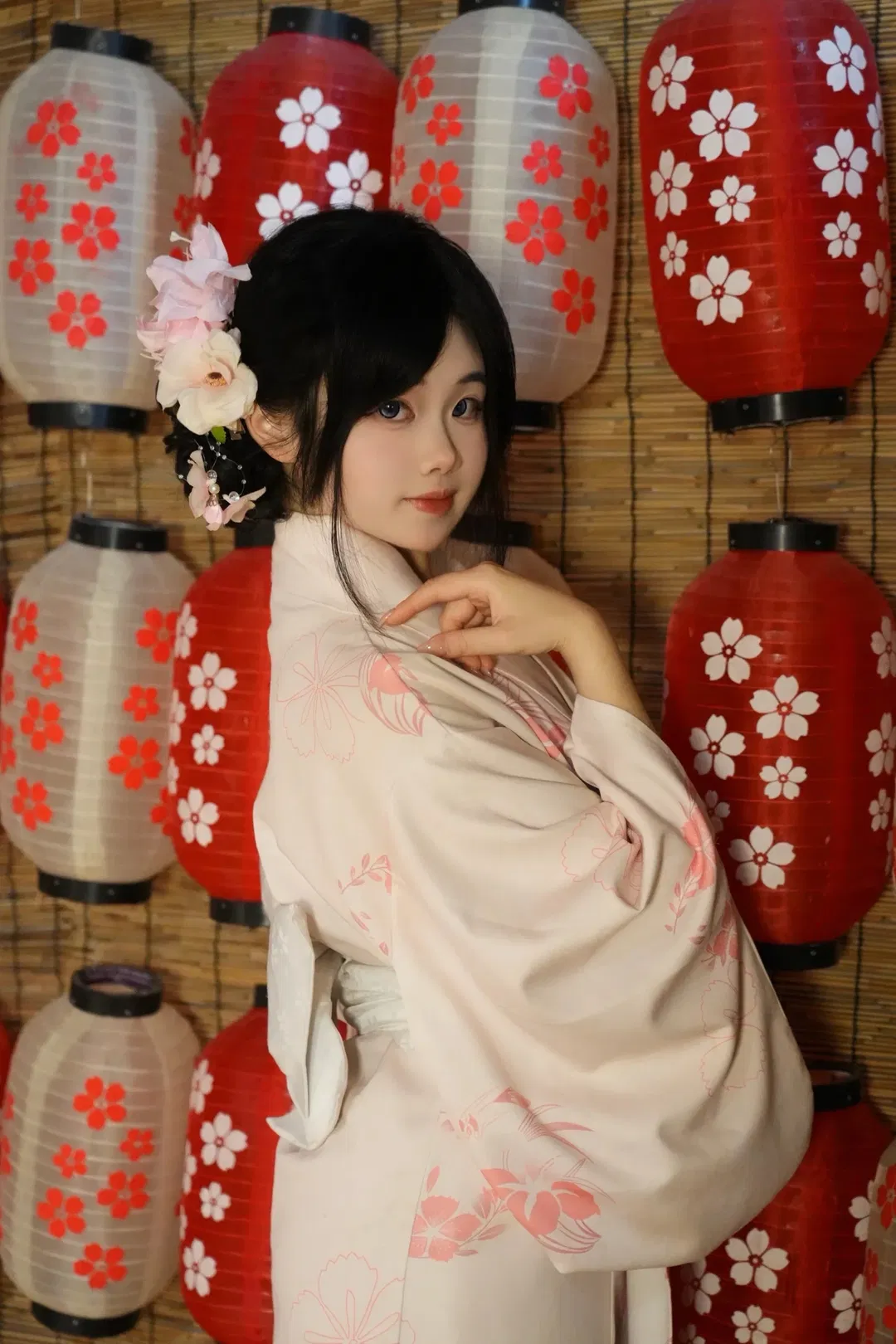
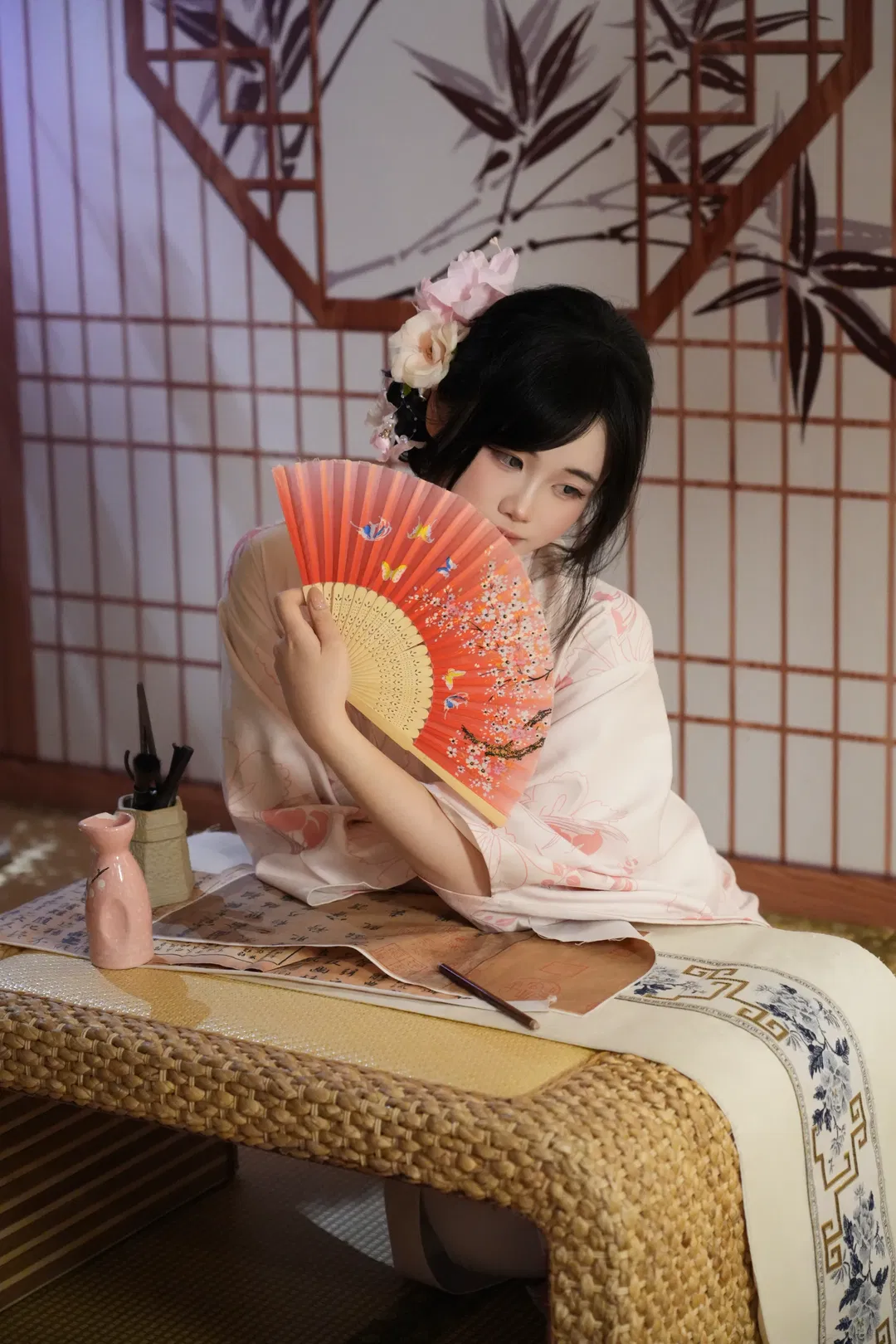
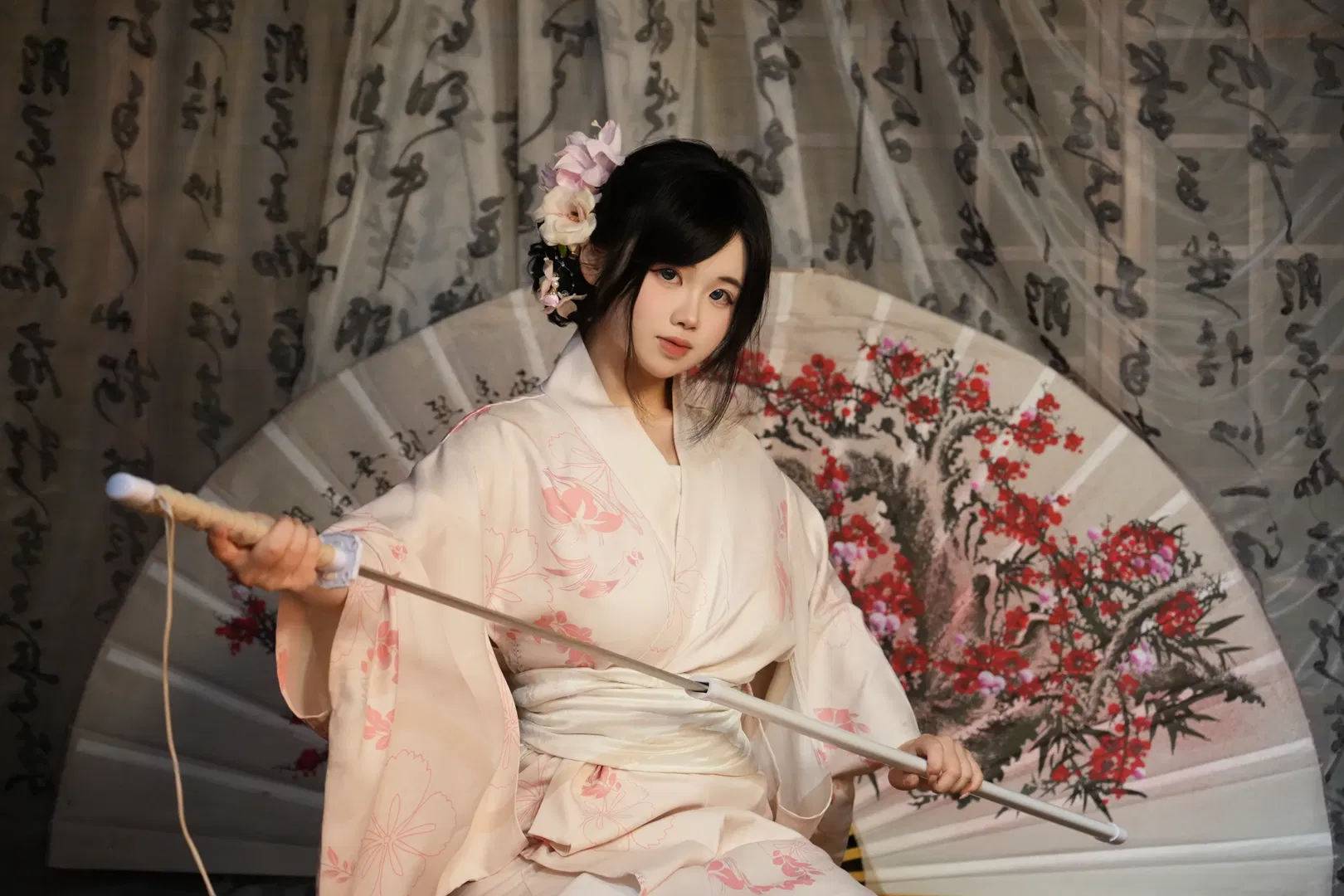
For this shoot at a Nanning self-photo studio, my main goal was to experiment with a Japanese-style Kimono photoshoot. I selected an ensemble featuring an off-white cream base adorned with delicate pink floral patterns. Under the warm yellow glow of indoor paper lanterns, the light-toned kimono took on an exceptionally soft texture that proved wonderfully flattering against the skin.
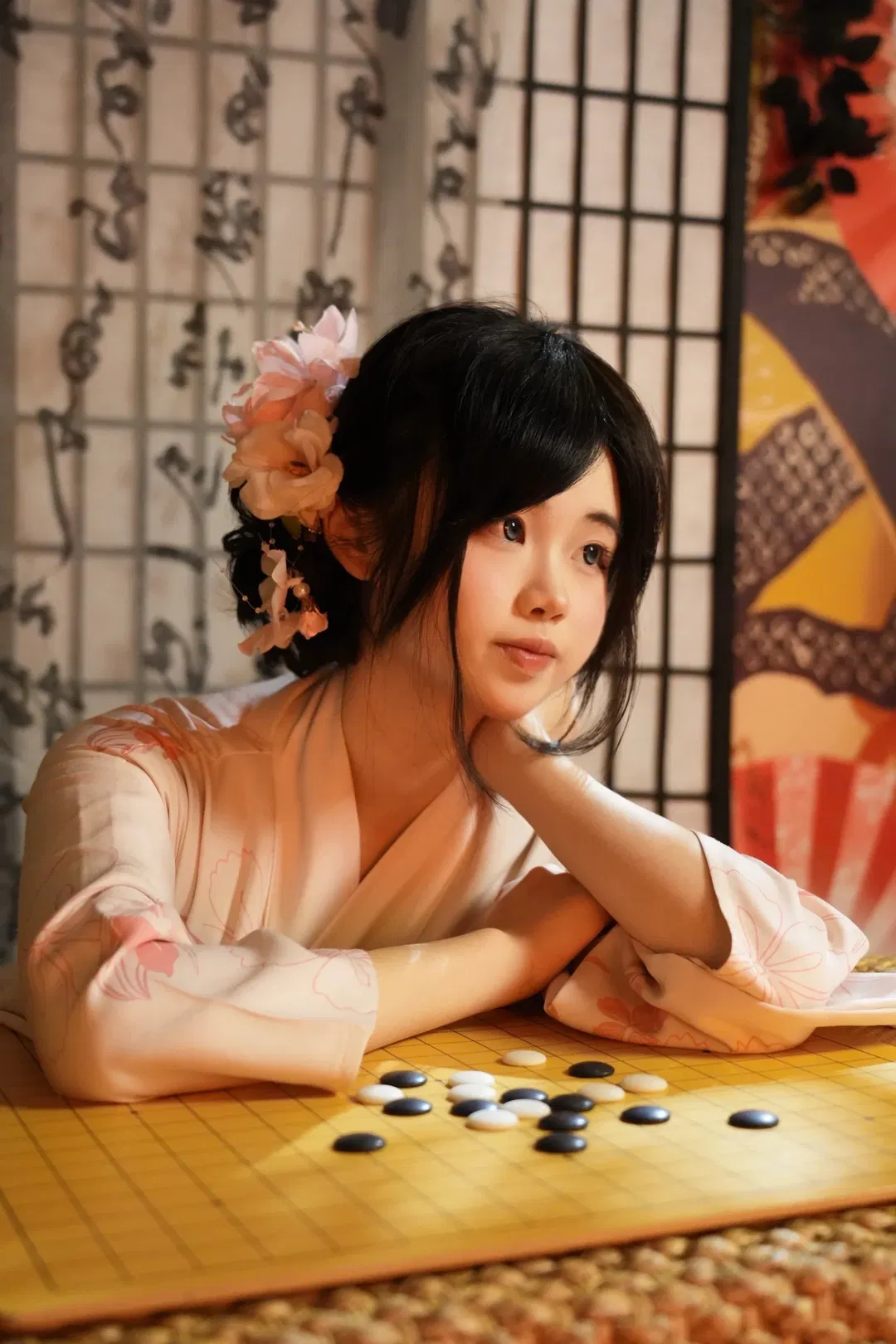
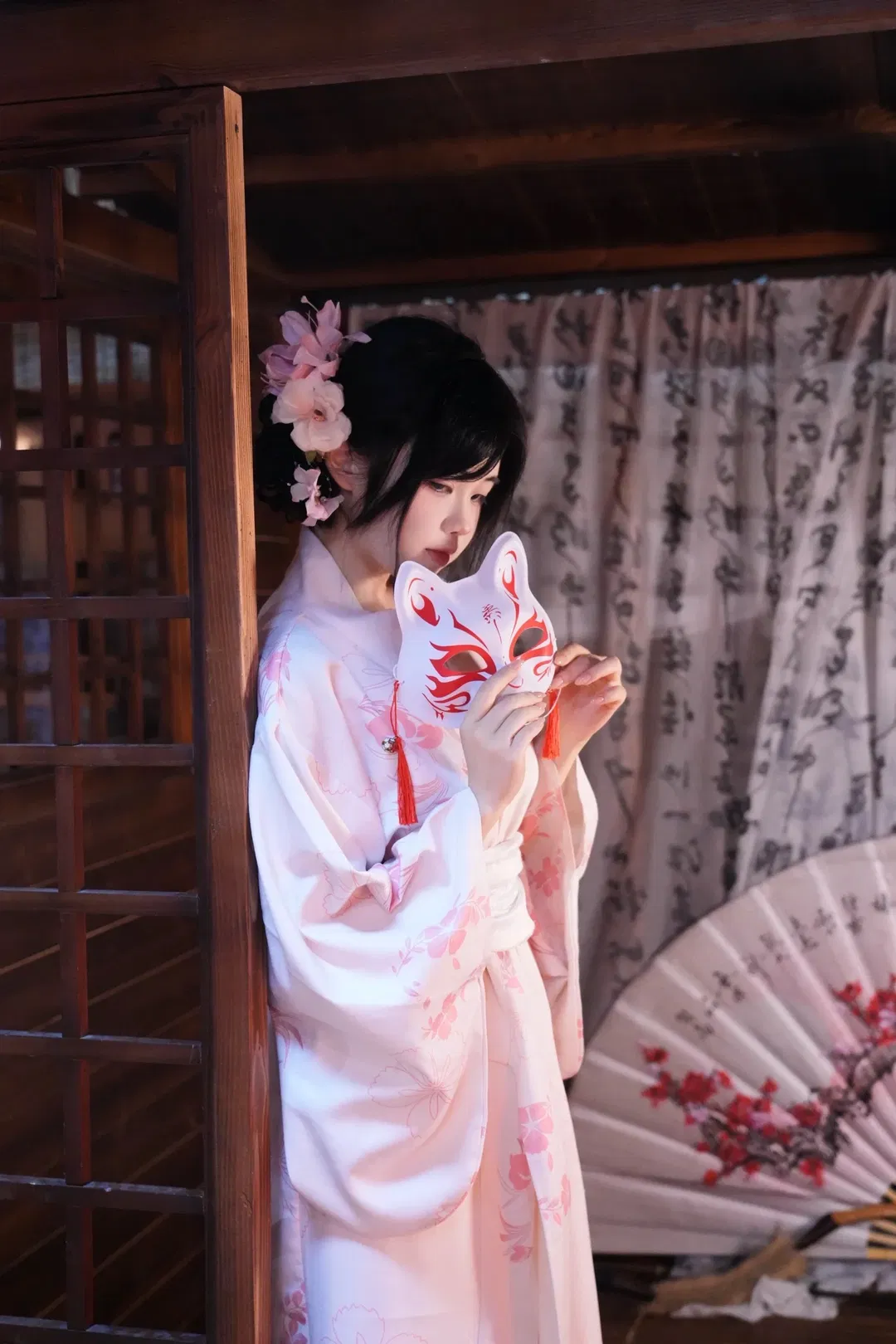
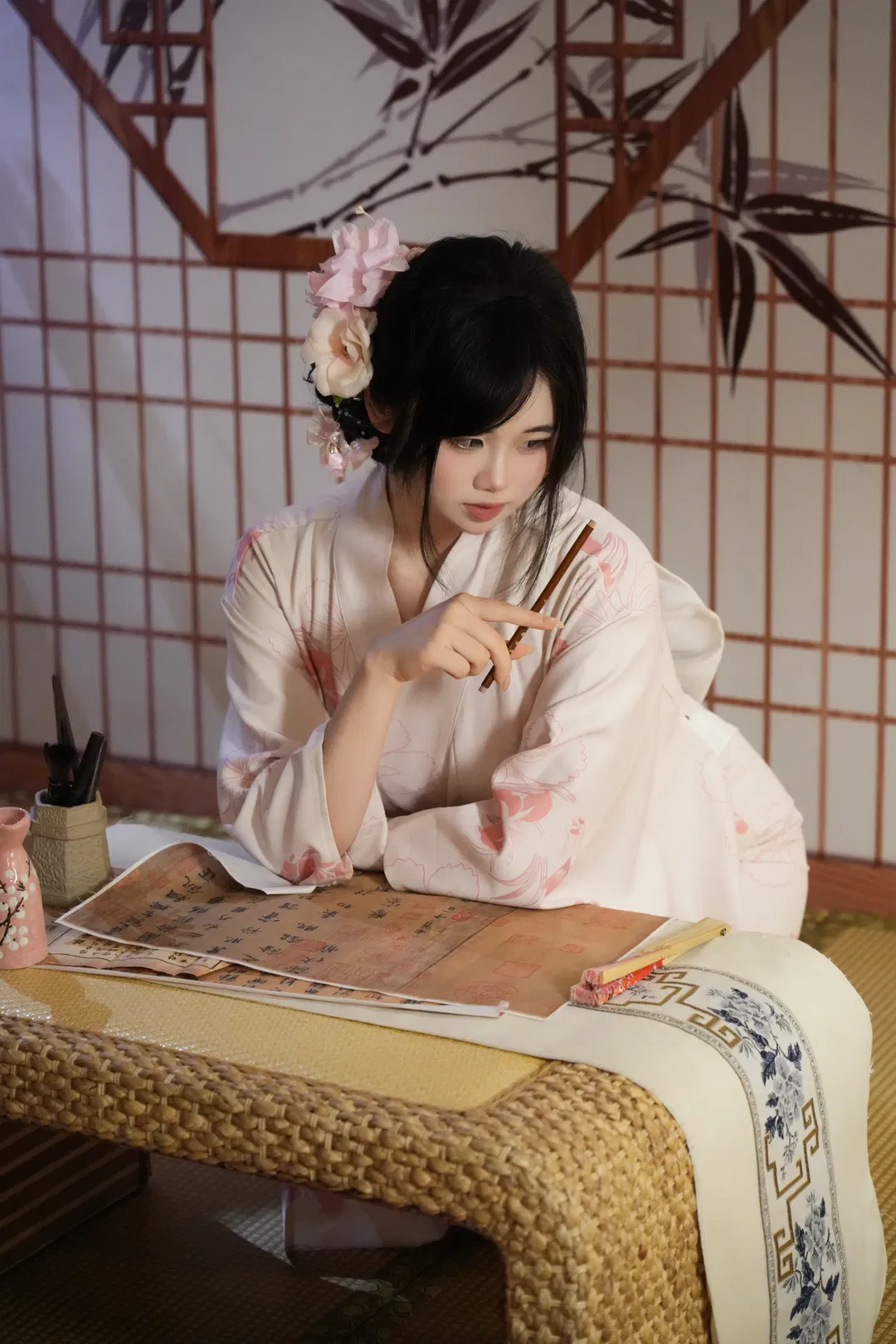
When it came to posing, I brought along numerous props to enrich the frame's storytelling. Sitting before a wooden Go board and resting my chin in one hand, while letting my gaze drift softly to the side rather than staring directly into the lens, effortlessly cultivated a quiet, contemplative atmosphere. For the frames featuring the fox mask, the secret lay in delicate hand movements: glancing downward while fingering the crimson tassels, or holding the mask to partially veil the side of my face, which both contoured my jawline and instantly unlocked emotional depth. In the shots simulating Chinese calligraphy, there was no need to actually write—the key was capturing that focused, meditative gaze while suspending the wrist above paper, paired with the natural drape of wide kimono sleeves. For poses wielding a katana, balancing the forward tilt of my center of gravity was crucial; gripping the hilt with both hands and sharpening my gaze lent the final frame immense dynamic tension.
In truth, this genre of photography also belongs to the realm of character cosplay roleplay. Some friends saw me in these loose, billowy robes and playfully teased that I looked like I had donned an oversized ceremonial robe. Yet in practice, expansive sleeves lend an ethereal sense of floating motion during movement, serving as fantastic visual leading lines. Between takes, watching the sunlight spill through the studio windows, the tender phrase 'May happiness descend gently into my palm' drifted across my mind. Since I had committed to this photoshoot, I gave myself over to complete relaxation, silently offering a playful mental suggestion: 'Please pretend to be enchanted for just a moment.' Approaching the camera with that mindset allowed my natural charm to unfold with genuine ease.
From a technical photography perspective, indoor Japanese-style portraiture places high demands on lighting design. Balancing overhead studio lighting with the warm glow of flanking lanterns effectively sculpted facial dimensionality, preventing features from flattening out. Setting the scene against wooden lattice shoji screens, rice-paper lanterns, or sheer calligraphic drapes meant that straight-out-of-camera colors were already wonderfully soothing without requiring heavy post-processing color grading.
Compositionally, subjects never need to remain rigidly centered. Utilizing wooden sliding door frames or the curved edge of a folding fan as foreground framing introduces rich visual layers and spatial depth. Above all, avoid stiff postures; lean into nearby props—even absentmindedly gazing into the distance looks far more organic than forced posing. Wearing a traditional kimono can be physically fatiguing due to the tightly bound obi sash around the waist; taking a seated break every thirty minutes to regulate your breath is highly recommended so that your eyes remain bright, clear, and spirited throughout.
This photoshoot was not merely a costume try-on, but a contemplative exploration of lighting and traditional aesthetics. Free from theatrical pretension, it simply and quietly preserved a cherished chapter of personal beauty within that serene setting.