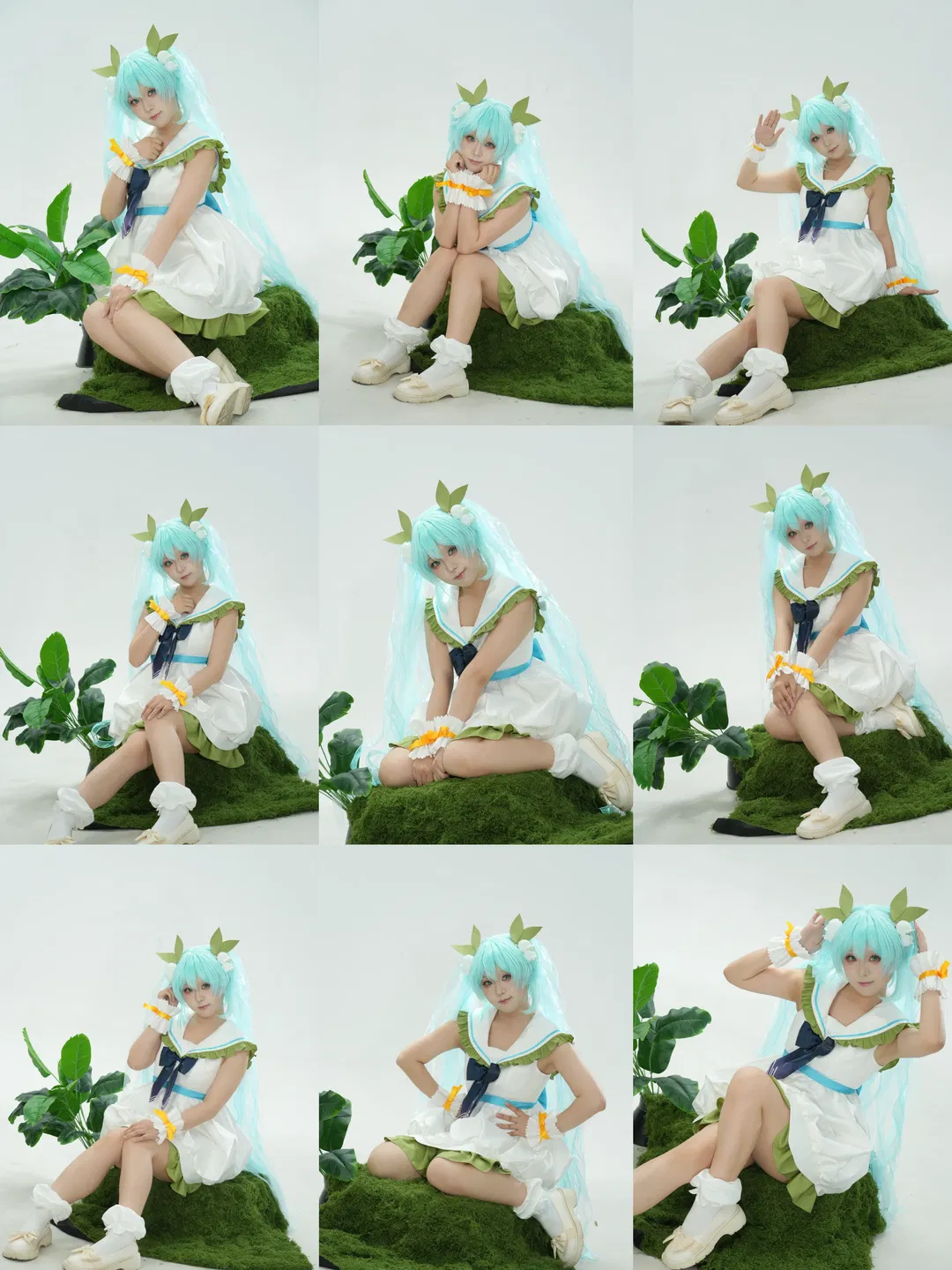
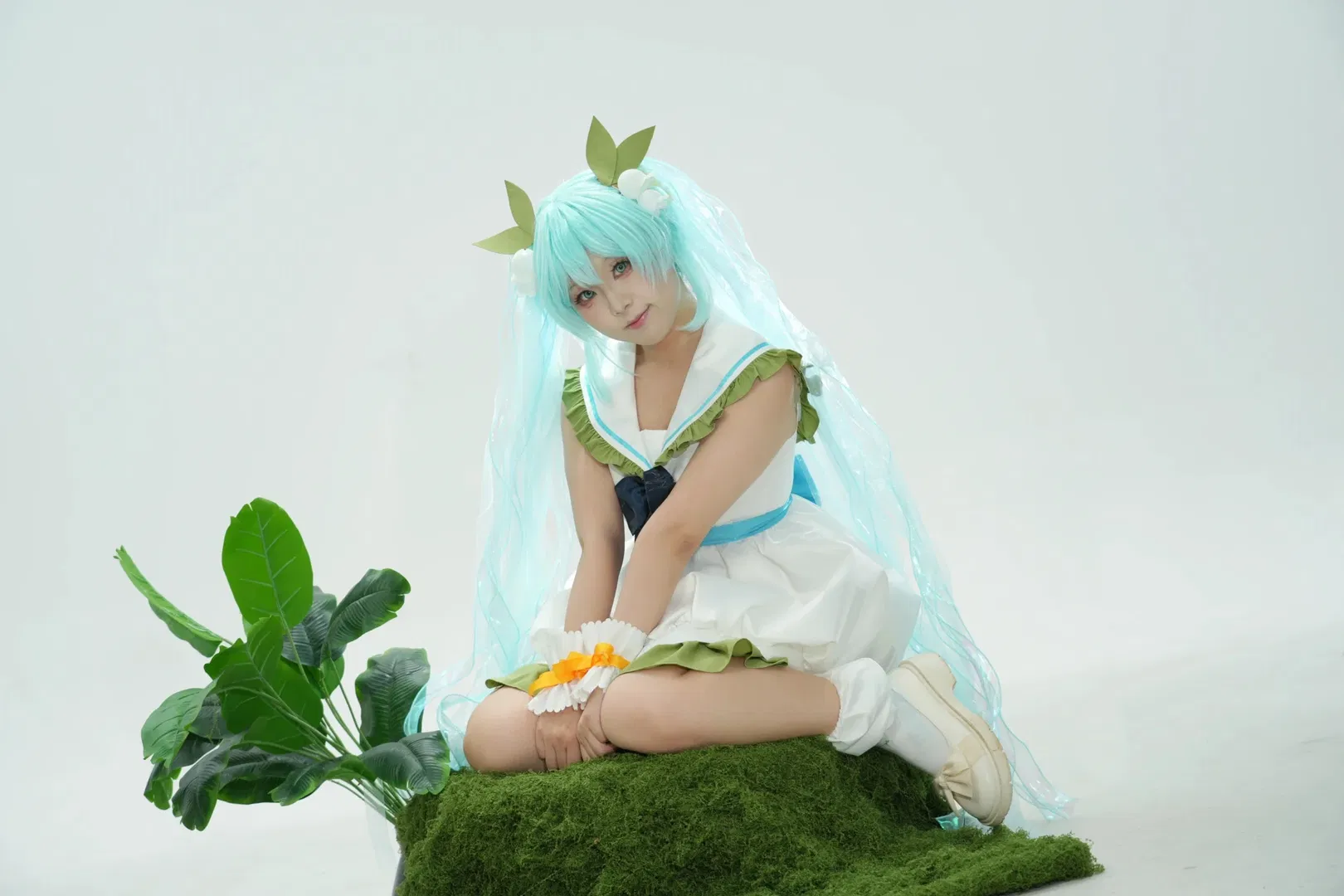
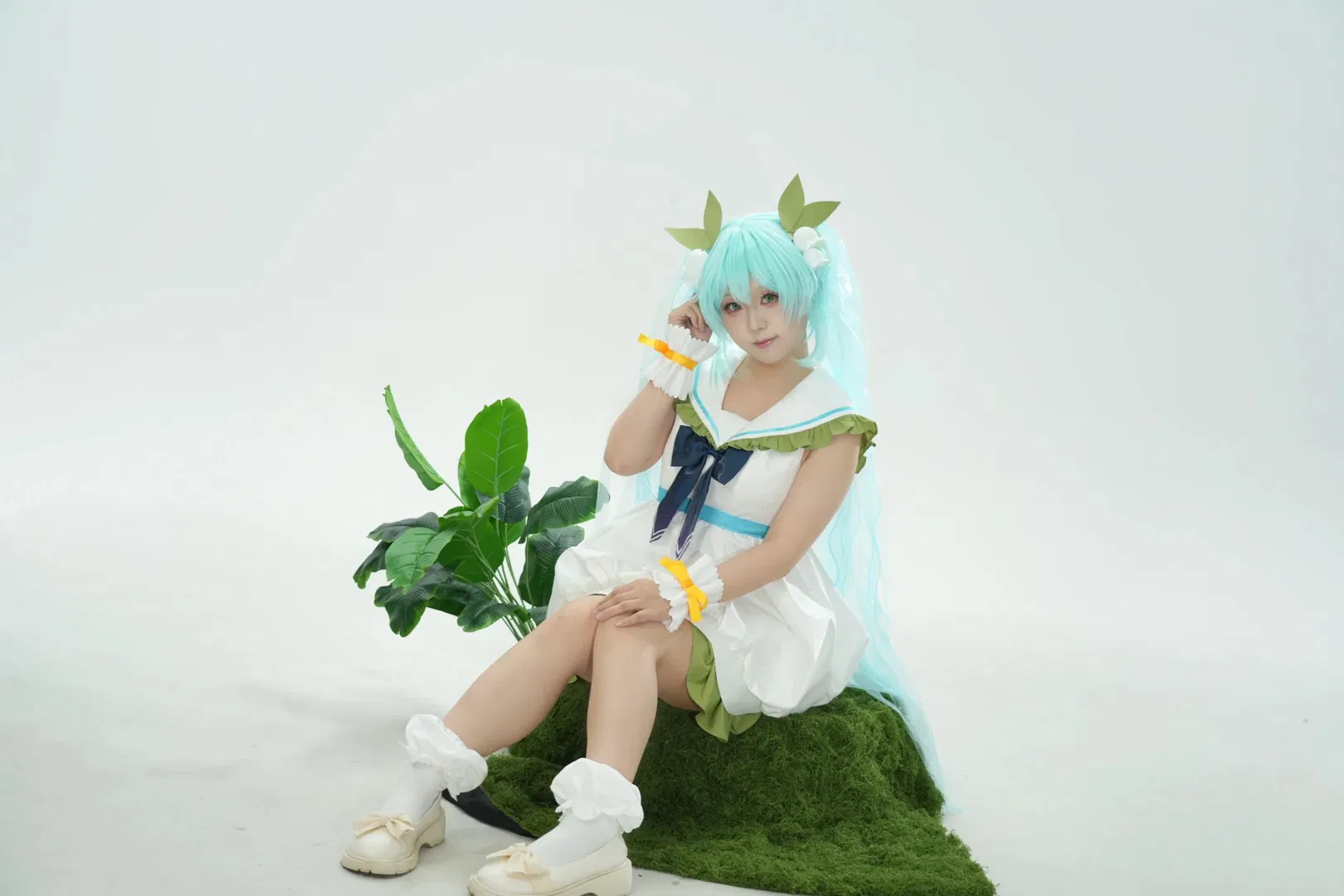
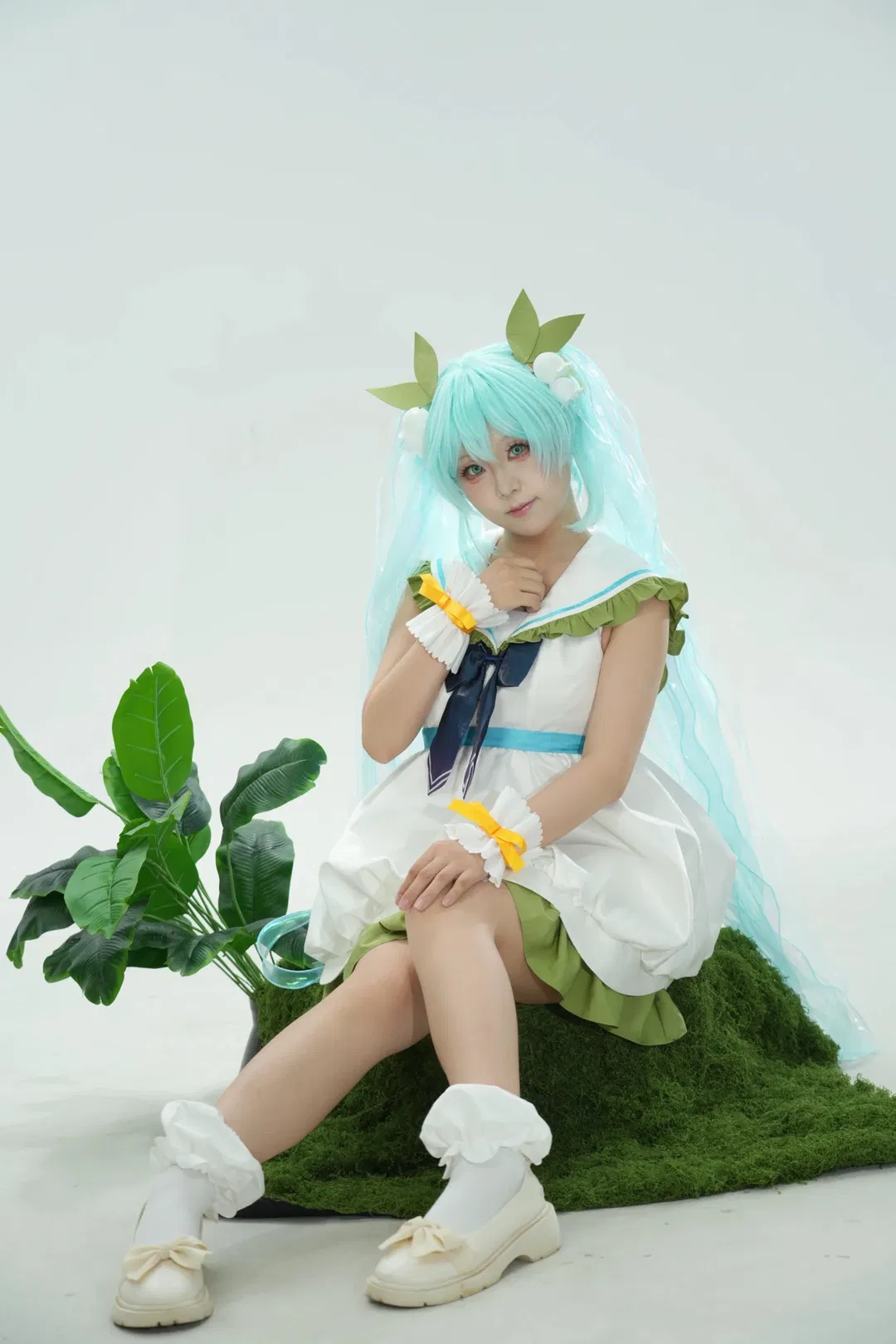
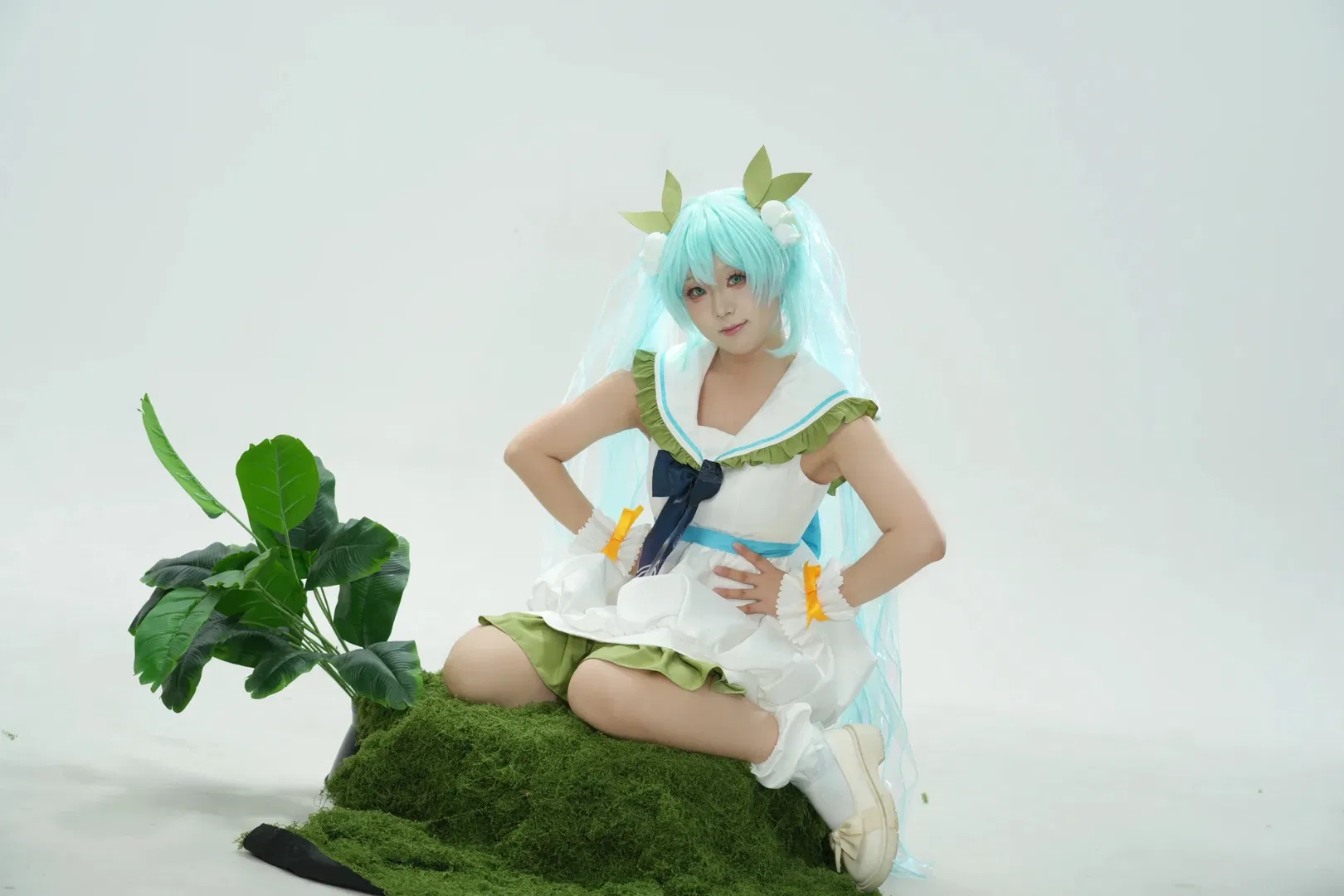
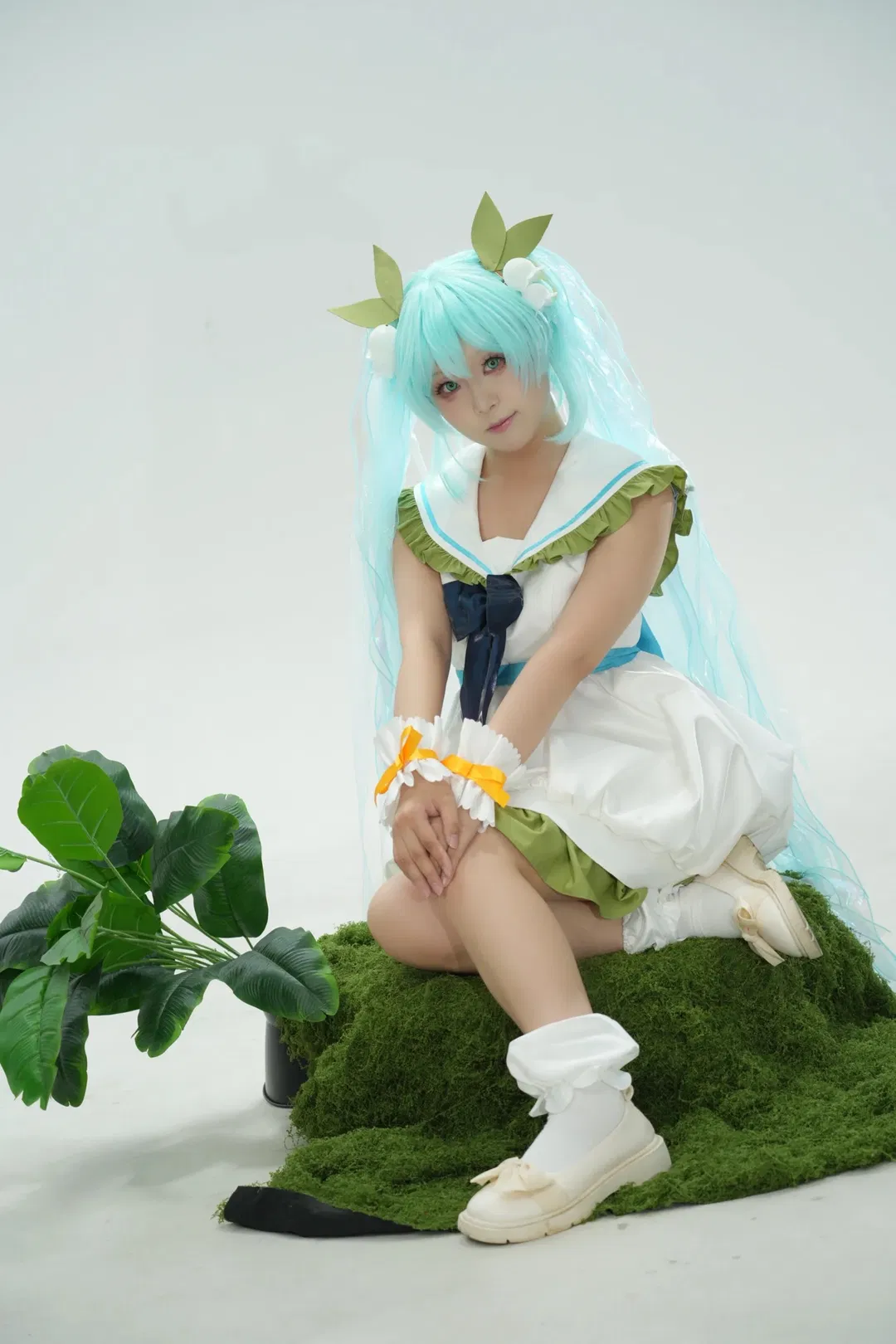
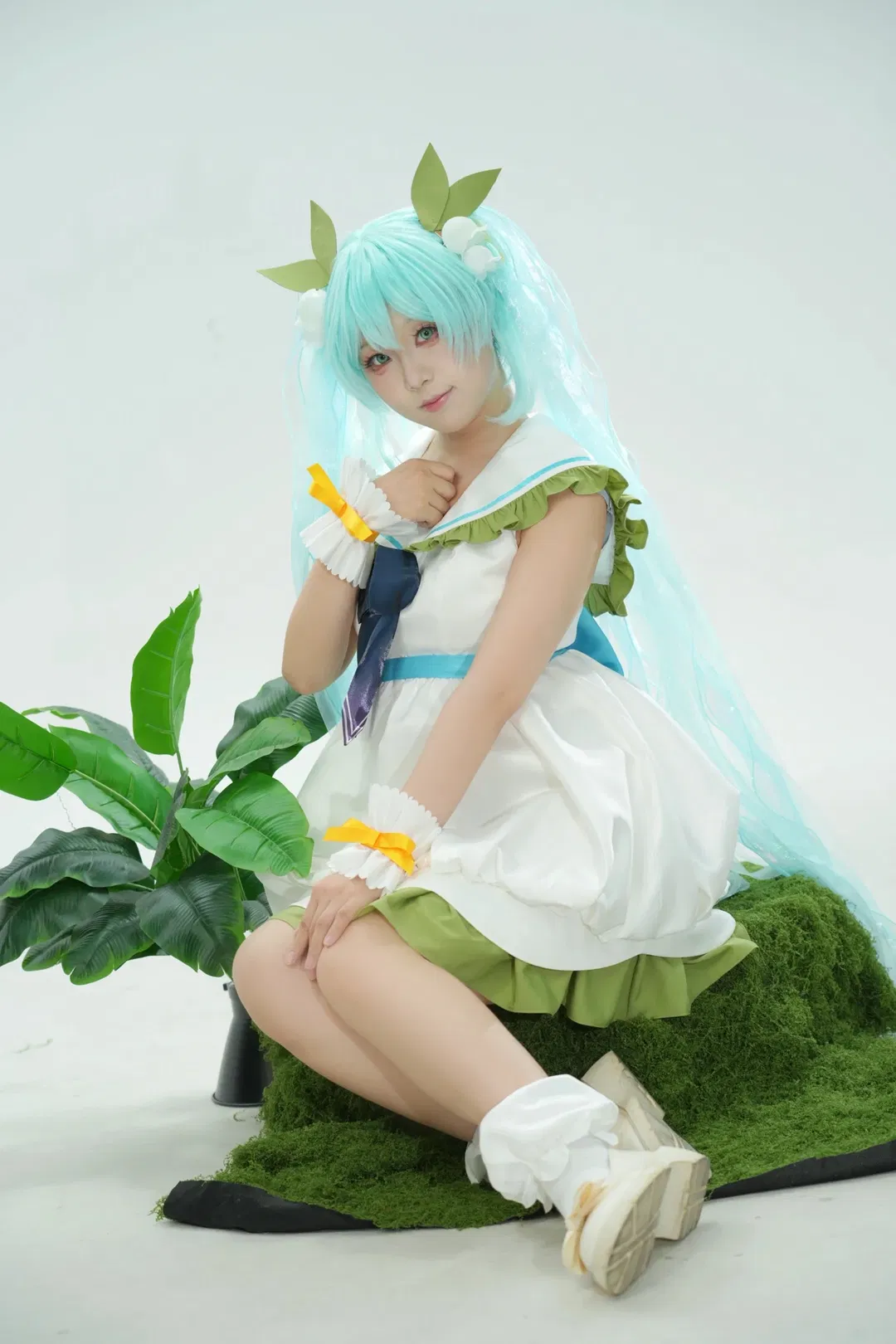
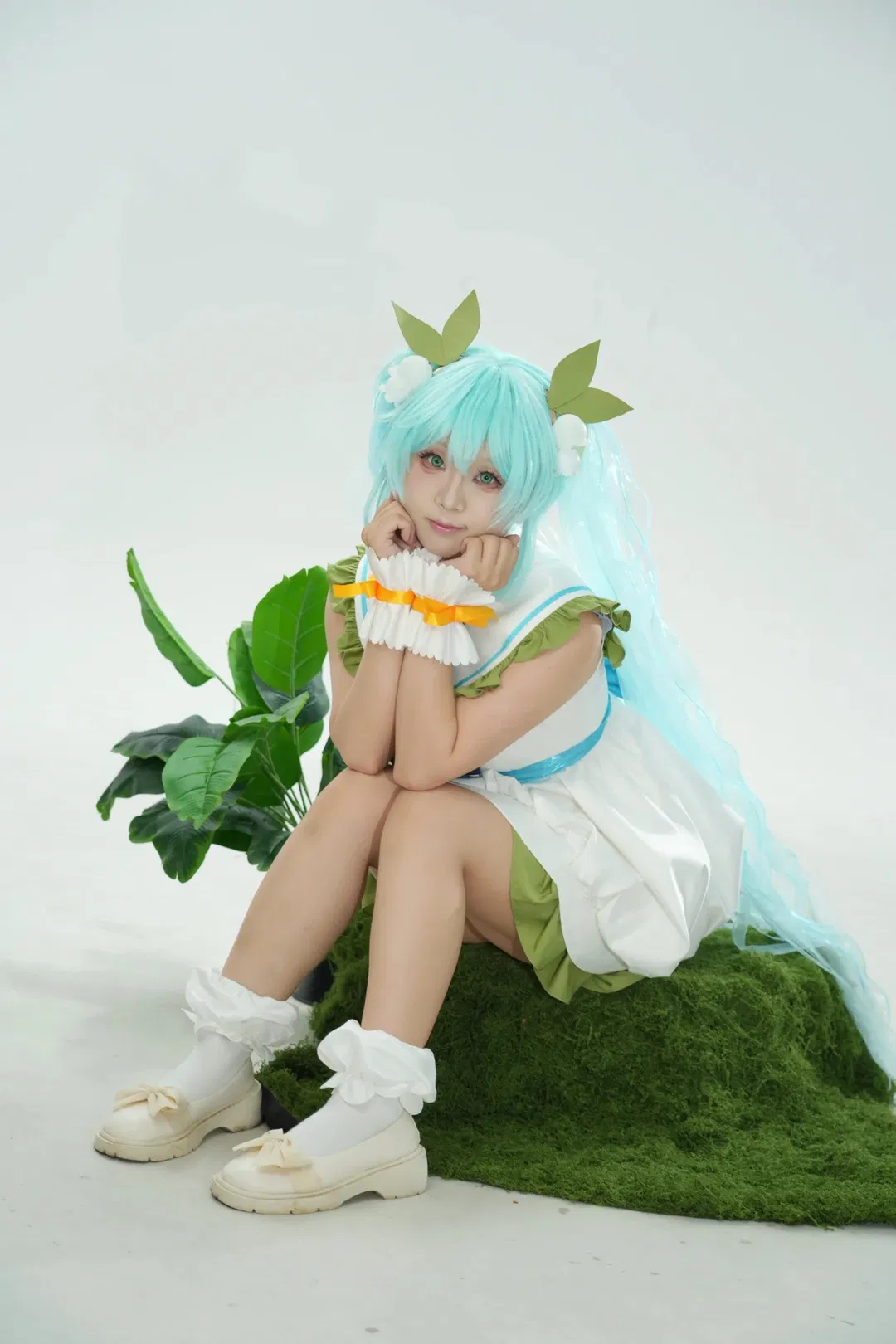
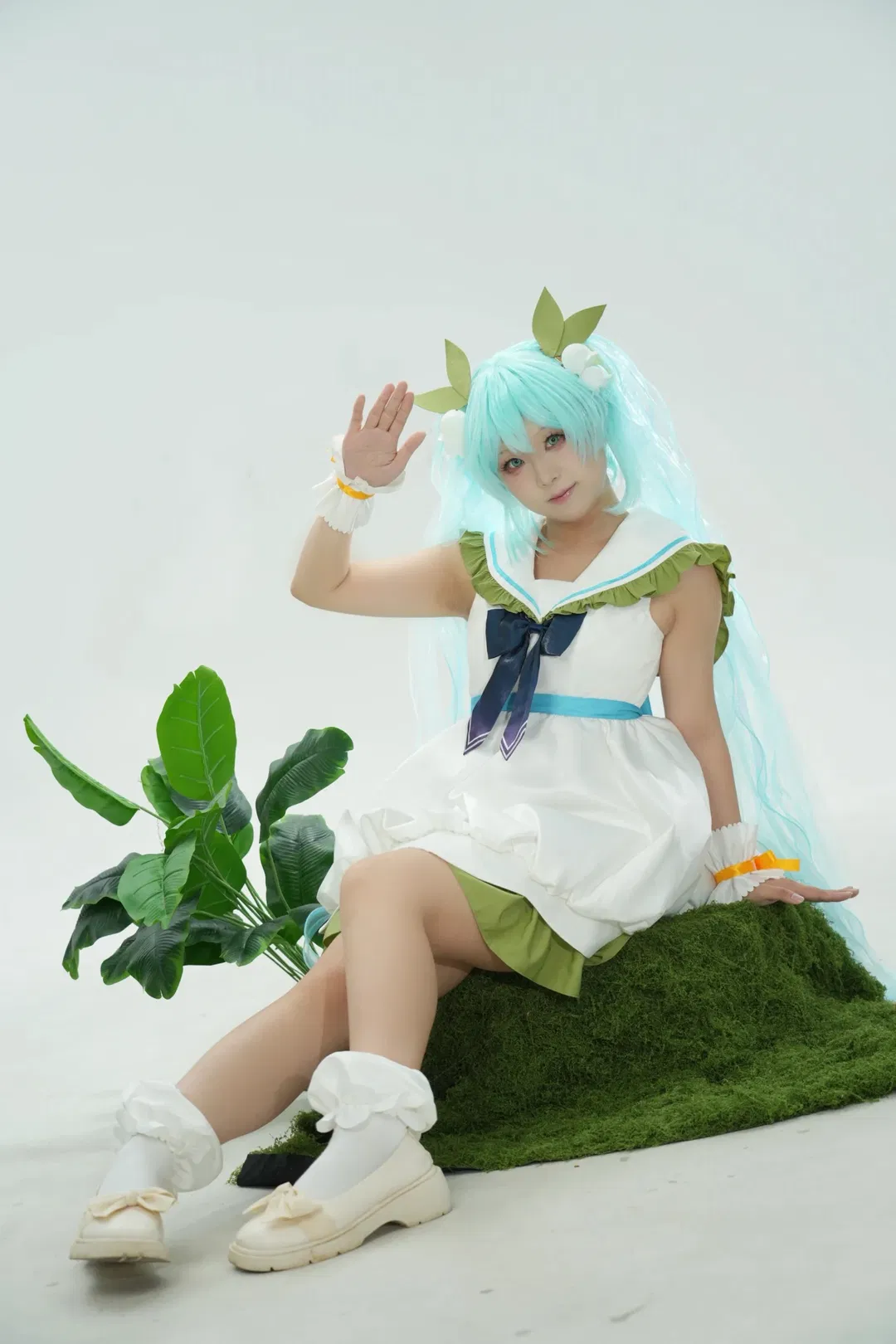
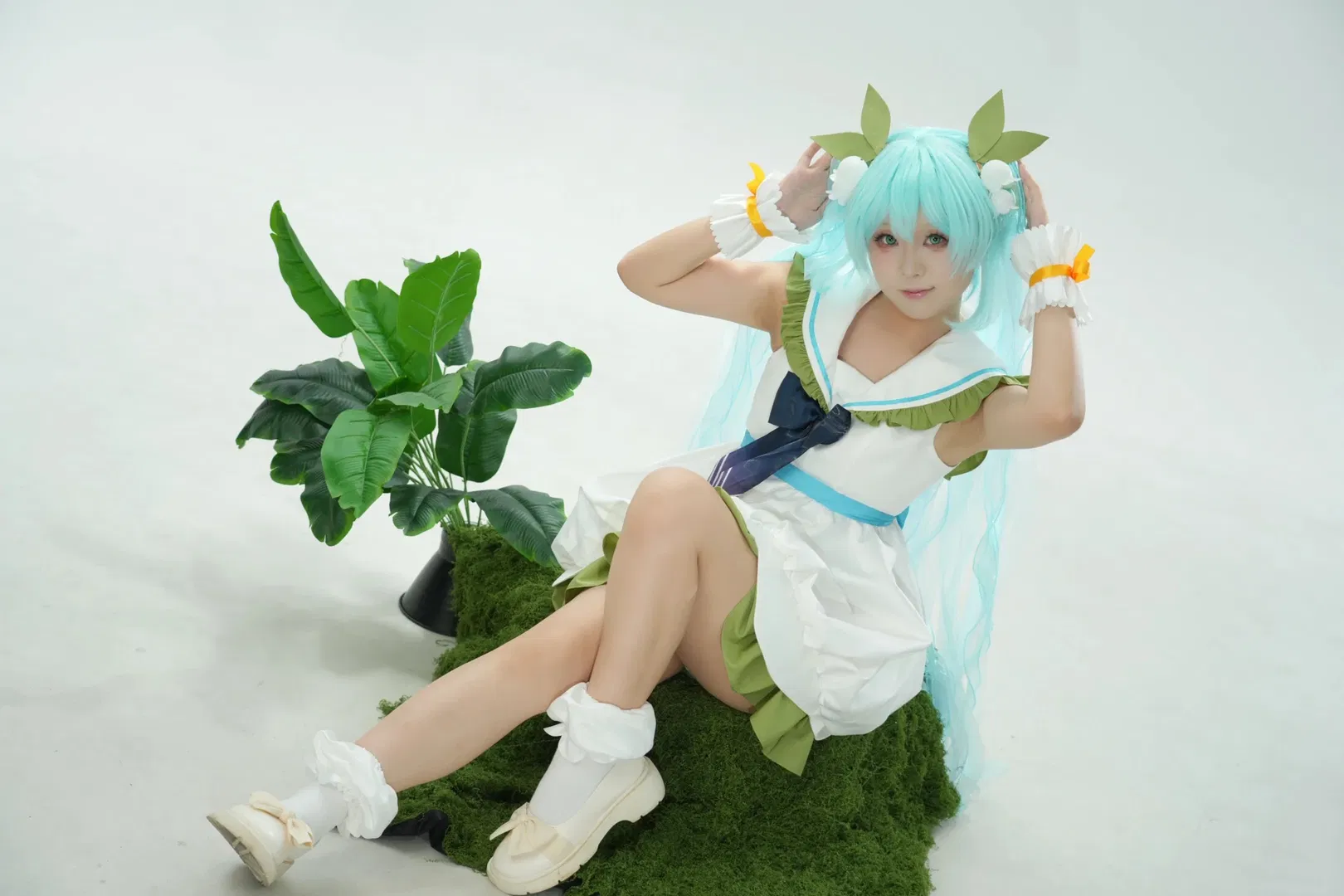
For this Hatsune Miku Cosplay Studio portrait session, I primarily want to share several sitting poses that you can directly apply without needing complicated props. For a sailor uniform styling, because the pleated skirt carries a natural flare and volume, sitting down in the wrong posture can easily look bulky on camera—making leg placement and controlling your center of gravity particularly crucial.
First, let's look at how to position your legs in this Sitting pose reference. The simplest approach is crossing your legs sideways: keep the thighs naturally touching while extending the lower legs outward. This not only makes your legs look longer, but also allows the skirt pleats to fan out smoothly. If crossing legs feels too tiring, try bending your knees with one leg positioned forward and the other back, shifting your center of gravity onto the hip of the rear leg while keeping the front leg relaxed. When you have greenery and moss as a set backdrop, lightly resting one hand on the edge of the moss while placing the other naturally on your knee or crossed legs effortlessly evokes a lush, forest-like atmosphere.
Hand placement is where most people freeze up after sitting down. If you don't know where to rest your hands, try resting your cheek on one hand. Note a subtle detail here: your elbow must be anchored on your knee or leg as a support point—never keep it suspended in the air, or your shoulders will instinctively shrug, making your neck look short. For resting your chin in both hands, your elbows similarly need support; lean slightly forward with your back straight so you can showcase expressive, engaging eyes without looking slouched.
If you want a more lively, spirited vibe for the Sailor uniform girl, try raising a hand as if waving hello. Keep your wrist relaxed without stiffening it, while gently propping the other hand on the moss, shifting your overall center of gravity to one side. You can also pretend to adjust your hair ornaments by raising both hands upward; this candid, snapshot feel adds lively energy to the shot. In a studio portrait environment with flat lighting, even though the light is soft, you should still keep your face oriented toward the light source while turning your torso to enhance three-dimensional depth.
As for keeping your Photo poses varied without repeating yourself, the secret lies in altering your body angles. Starting from a single seated foundation, you can derive multiple variations simply by rotating your shoulders and shifting your gaze. For instance, look down at your hands, or gaze slightly upward past the camera. Don't always stare dead-on into the lens; casting your eyes slightly aside or looking toward adjacent greenery will make you appear far more natural.
The collar lines of a sailor uniform are quite straight and geometric, so infusing soft, elegant curves into your sitting posture—such as raising one shoulder slightly higher than the other, or creating curved lines as you cross your legs—works wonders. During shooting, you can also take advantage of uneven heights in the moss terrain, letting part of your body sink in while keeping the rest upright; this subtle visual tension adds striking balance to the composition.
For artists and illustrators, breaking down these fundamental sitting postures serves as an excellent anatomy and Sitting pose reference for skeletal flow and muscle dynamics. There is no need to force overly convoluted poses; as long as the center of gravity is clearly established and your limbs are positioned ergonomically, the composition will look effortlessly harmonious. While the greenery props used in this shoot were simple, they effectively broke the monotony of a solid studio backdrop, working in tandem with the layered sitting pose to give the visuals breathing room. In everyday photography, looking for natural elements around you to lean against or interact with can ease camera anxiety while greatly enriching your Photo poses.