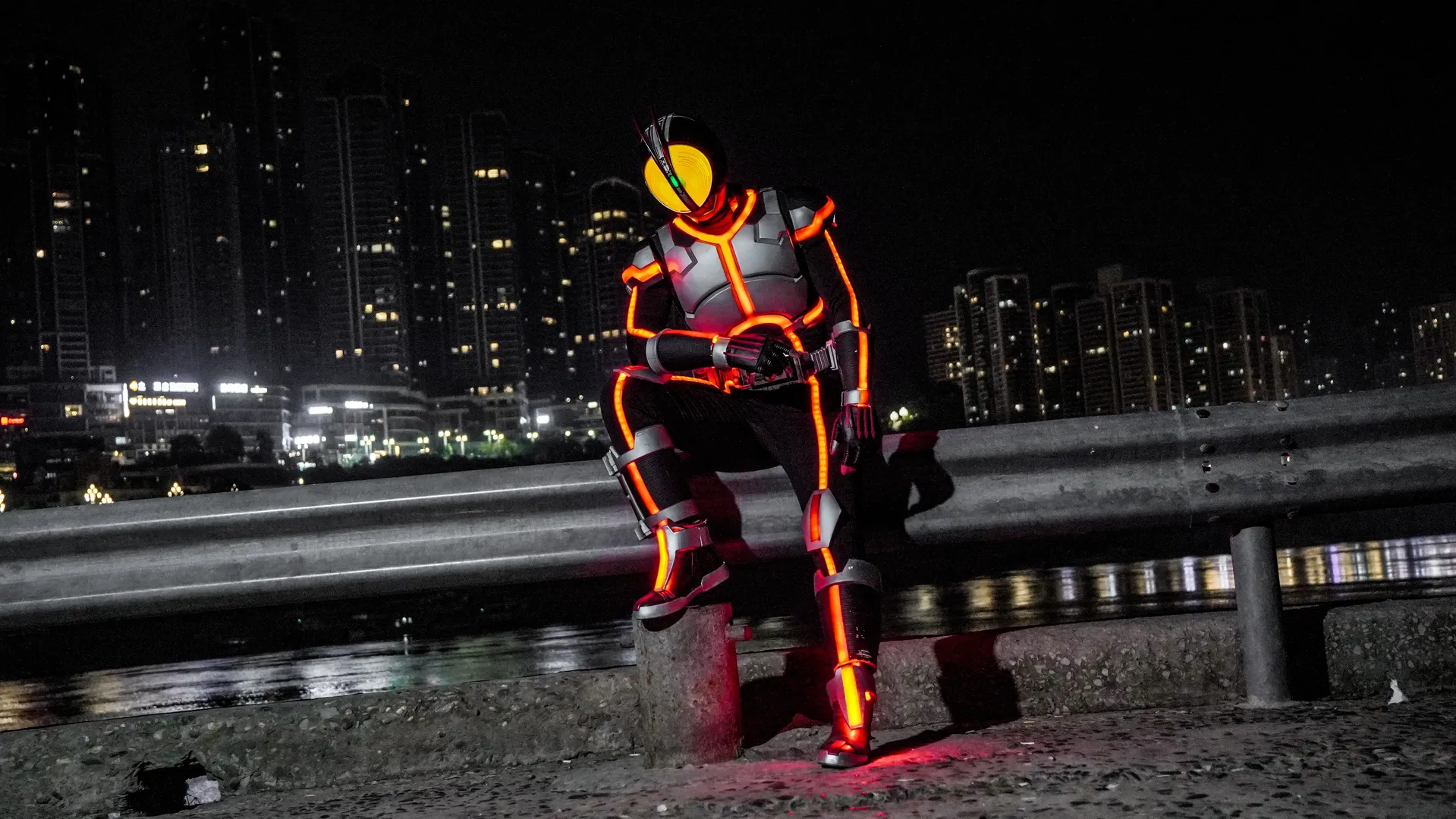
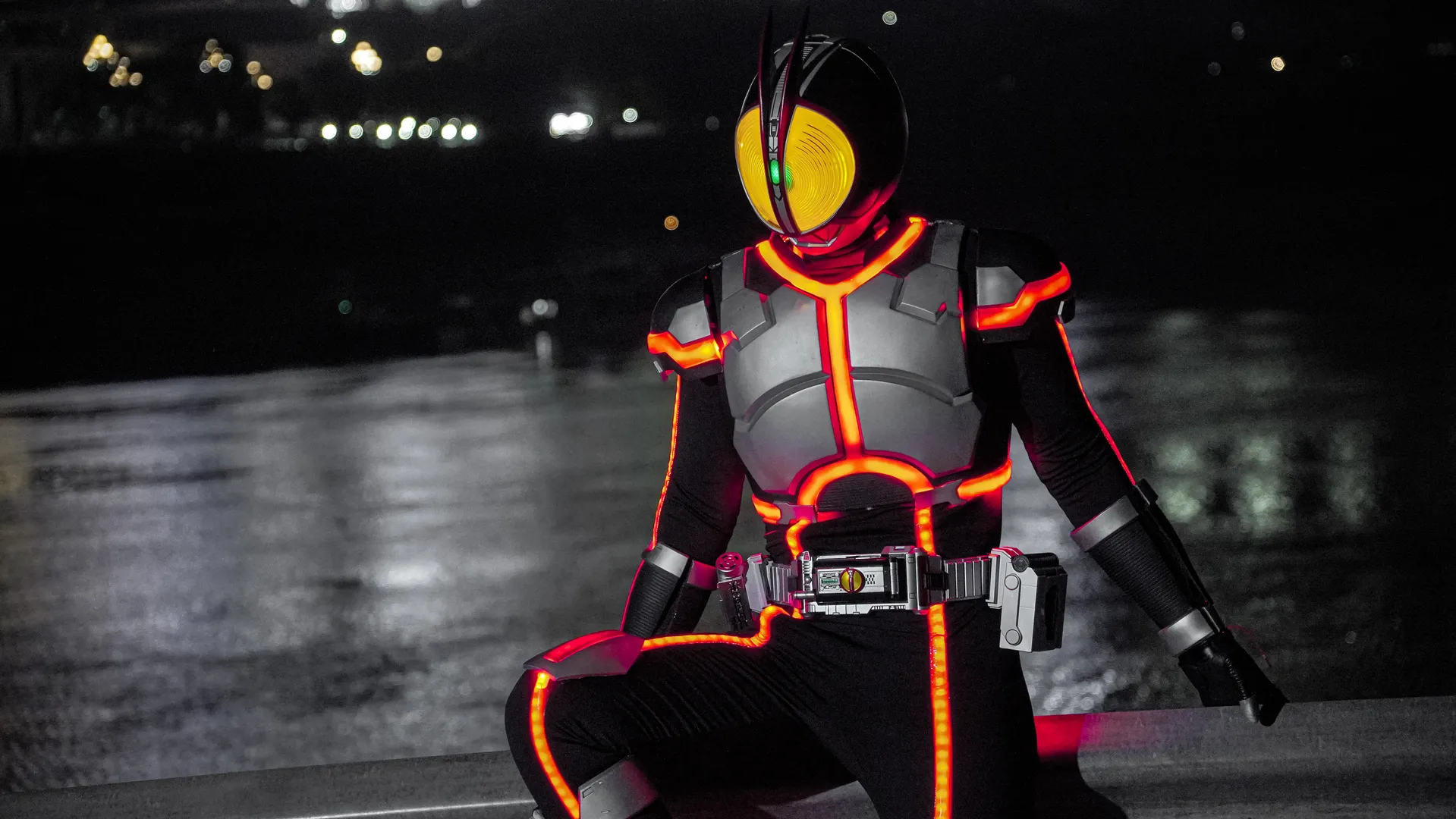
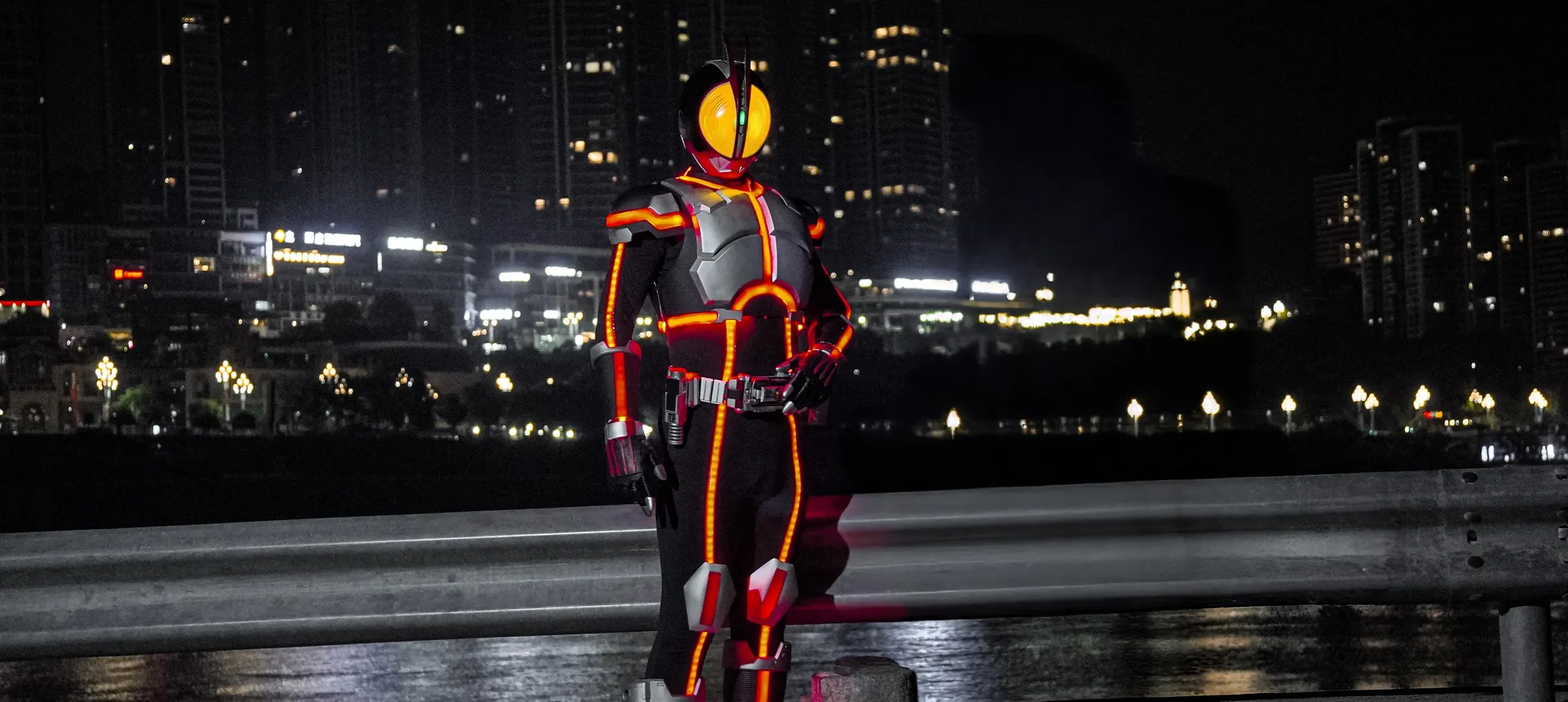
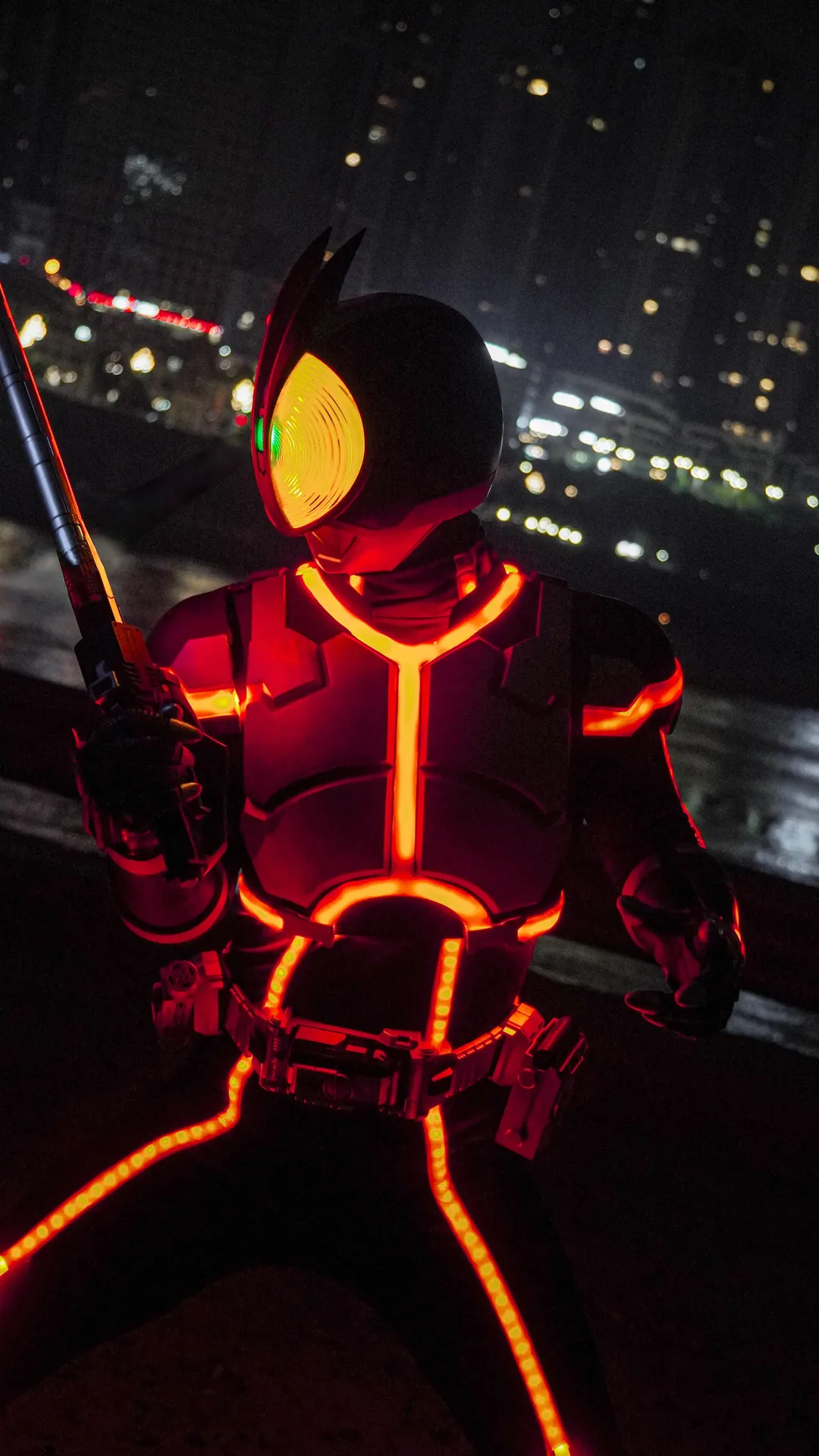
For this Tokusatsu photography night shoot of the Faiz armor from Masked Rider 555 (Faiz cosplay), the primary goal was to capture the mechanical texture of the armor and the visual tension of the illuminated lines in a nighttime setting. To resonate with the core theme of fighting to protect others in Masked Rider 555, we chose urban bridges and elevated highways near bodies of water for our location. Once darkness descended, distant city skylines and shimmering reflections across the water provided natural ambient bokeh, and this low-light environment allowed the LED light strips on the Glowing armor to become the most striking visual centerpiece of the frame (Night portrait).
Donning this Faiz Glowing armor requires immense patience. The combination of a black undersuit and matte silver-grey hard armor plating might look slightly subdued in broad daylight, but at night, given just a touch of subtle ambient illumination, the silver armor gleams with an icy metallic luster. The most critical step lies in the layout of the luminous photon streams across the body—running from the helmet's compound eyes and chest armor contours down through the abdomen, arms, and legs. To ensure no dim spots or circuit breaks occurred during the shoot, we repeatedly tested the battery packs and wiring throughout the dressing process. The belt driver is the undisputed core of the entire setup; its silver mechanical module, centered with the circular yellow-accented device and encircled by crimson LED rings, required meticulous fastening to stay flawlessly aligned during movement.
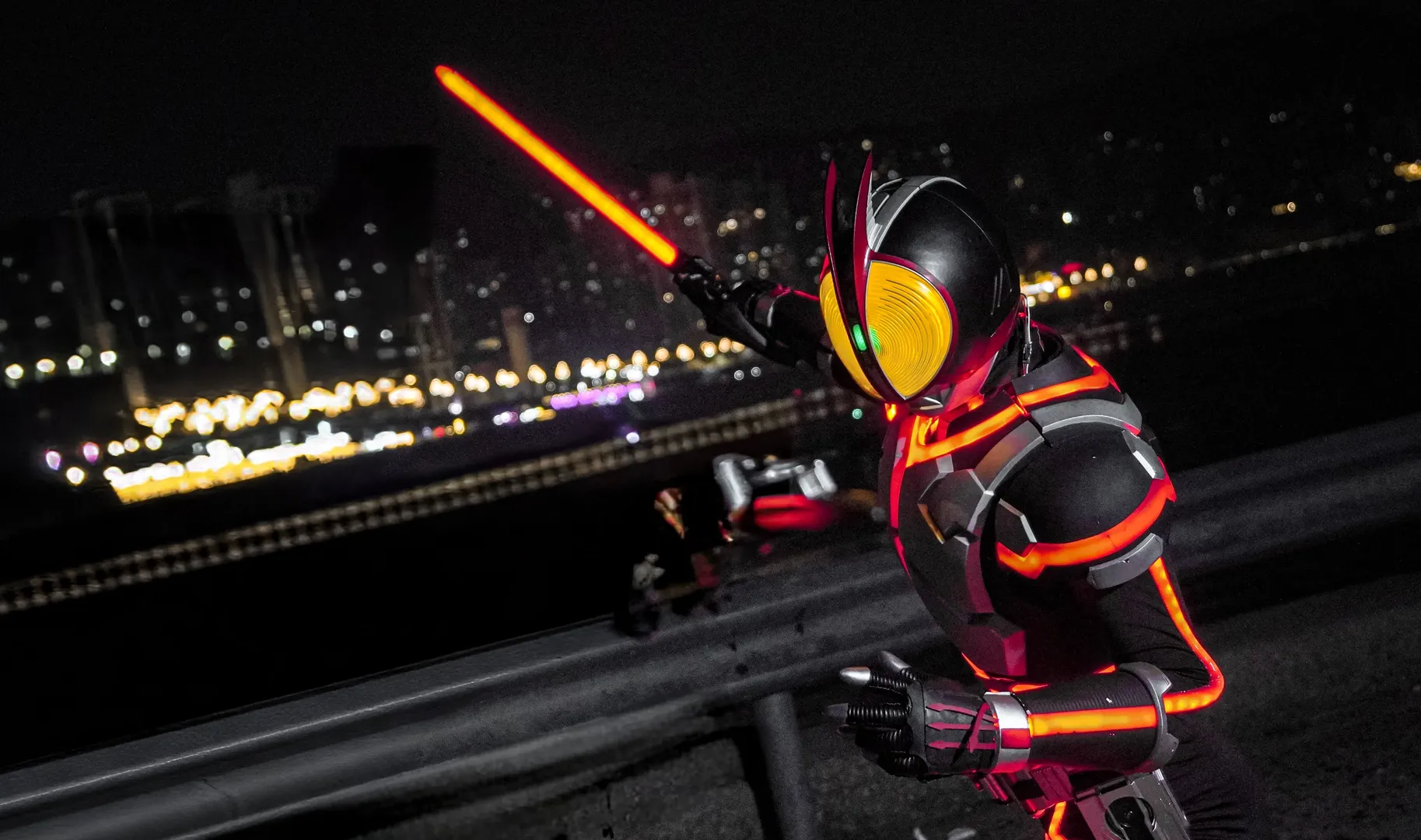
Executing tokusatsu combat stances demands rigorous physical stamina and sharp focus. To reflect the iconic battle style of Masked Rider 555, I wielded an illuminated beam saber prop. During slashes and thrusts, the crimson glow of the saber merged seamlessly with the red illuminated lines on the armor, generating intense visual impact. Every half-crouch, rise, or lunging stride required maintaining an upright silhouette and dynamic posture while bearing the weight of the suit. We constantly fine-tuned angles on set to avoid exposing seams or gaps at the armor edges, ensuring every movement radiated raw kinetic power rather than looking like a static, rigid pose.
Balancing light and shadow in a night shoot is the most intricate hurdle. Under extremely dim ambient illumination, the camera's ISO and shutter speed required precise calibration. To keep the glowing lines vibrant while defining the three-dimensional contours of the armor, we positioned off-camera flashes from the rim and rear to carve out silhouettes. The stark warm-and-cool contrast made the fiery red-orange illumination blaze even brighter. At times, to wait for a passing boat on the water to inject dynamic trails of light, or to let a gust of wind clear stagnant haze from the frame, we held a single pose in the freezing wind for extended minutes.
This session gave me a deeper reverence for this gear from Masked Rider 555. Though the armor was heavy and mobility was constrained, that persistent conviction to achieve the absolute best visual outcome mirrored the character's unyielding resolve to protect humanity. Witnessing those frames rich with sci-fi flair and combat intensity appear on the monitor, all exhaustion evaporated instantly. That is the indelible charm of Tokusatsu photography—using tangible physical craft and the poetry of light and shadow to resurrect moments of heroic power and timeless romance.