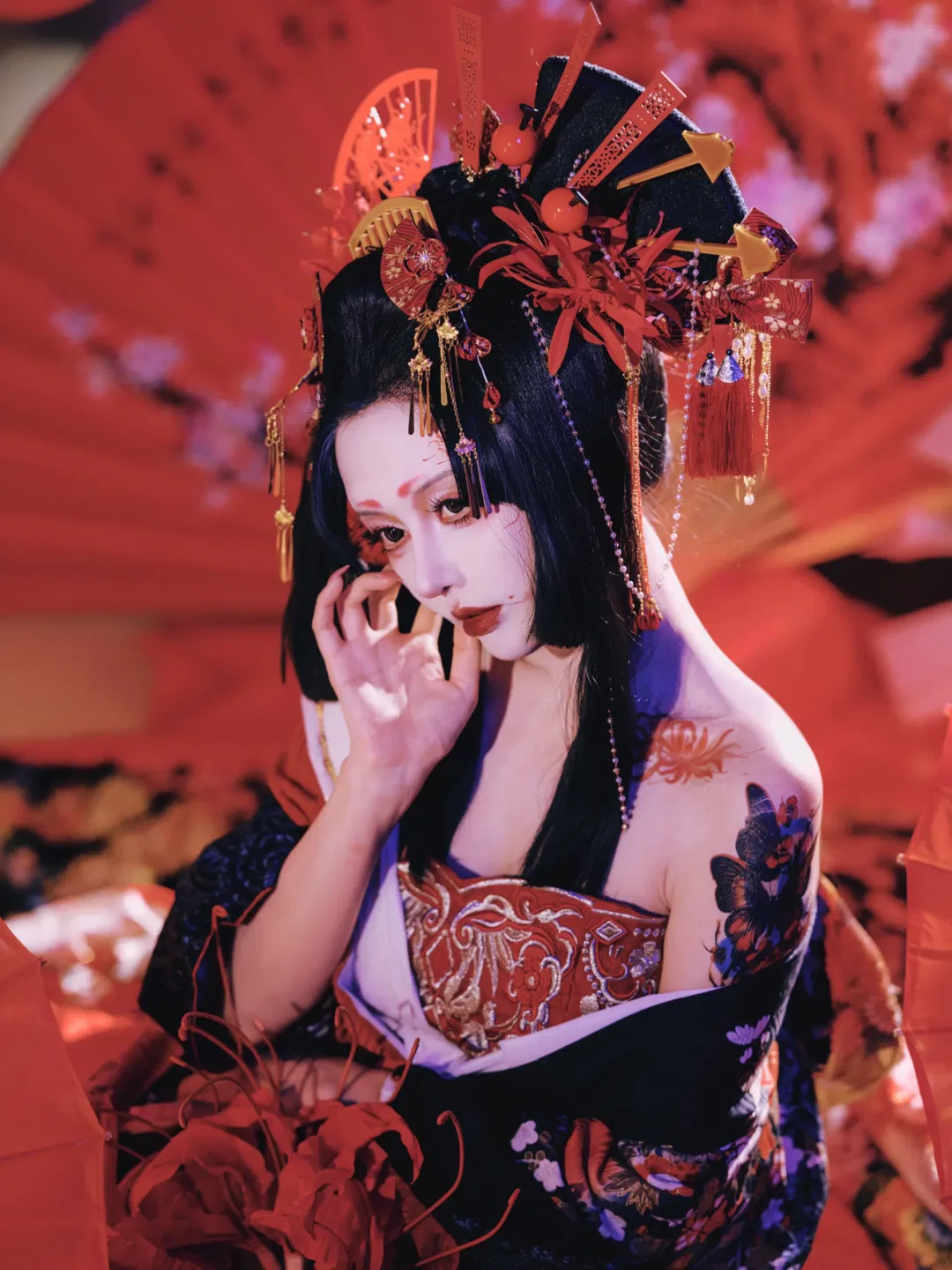
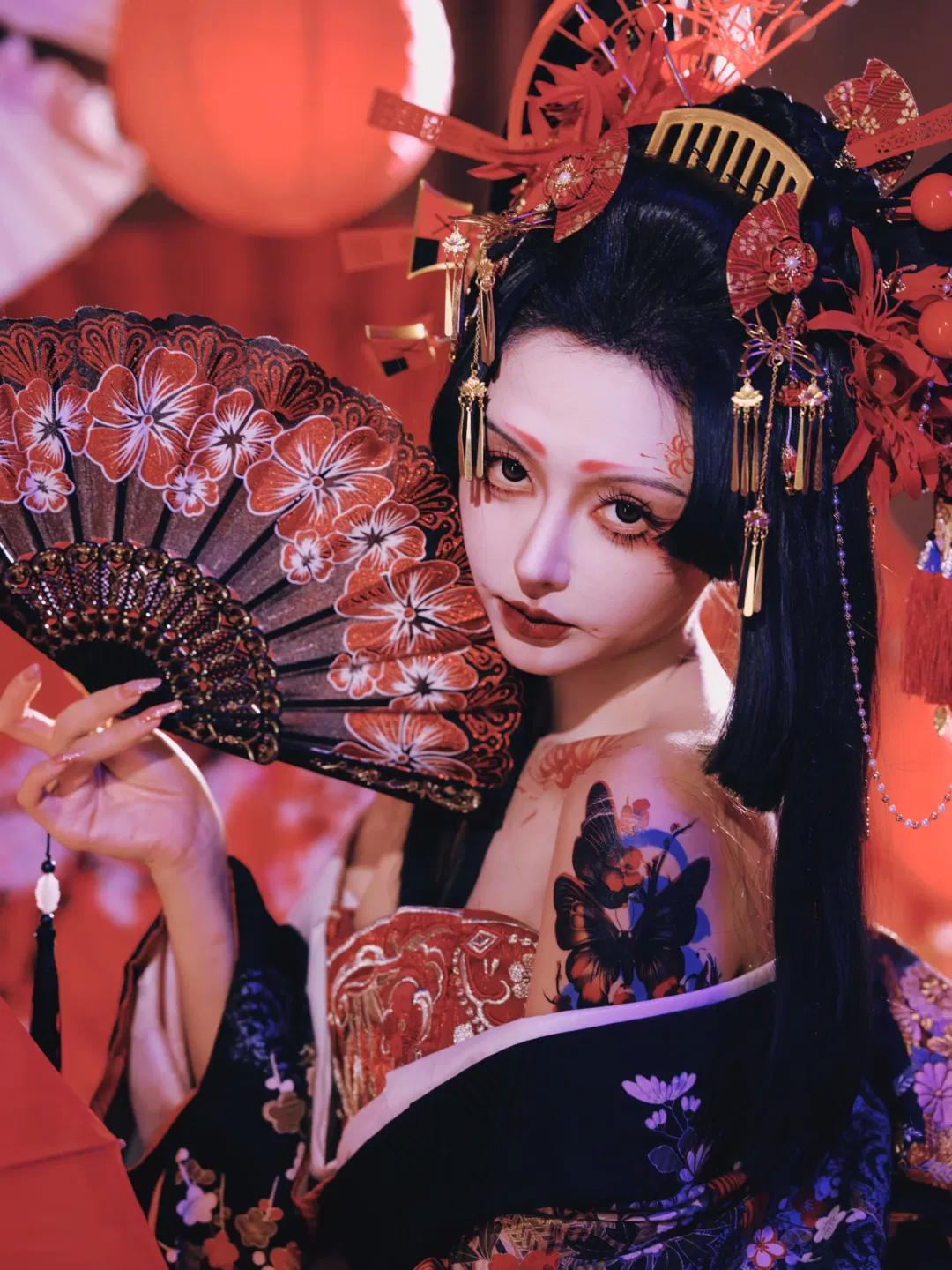
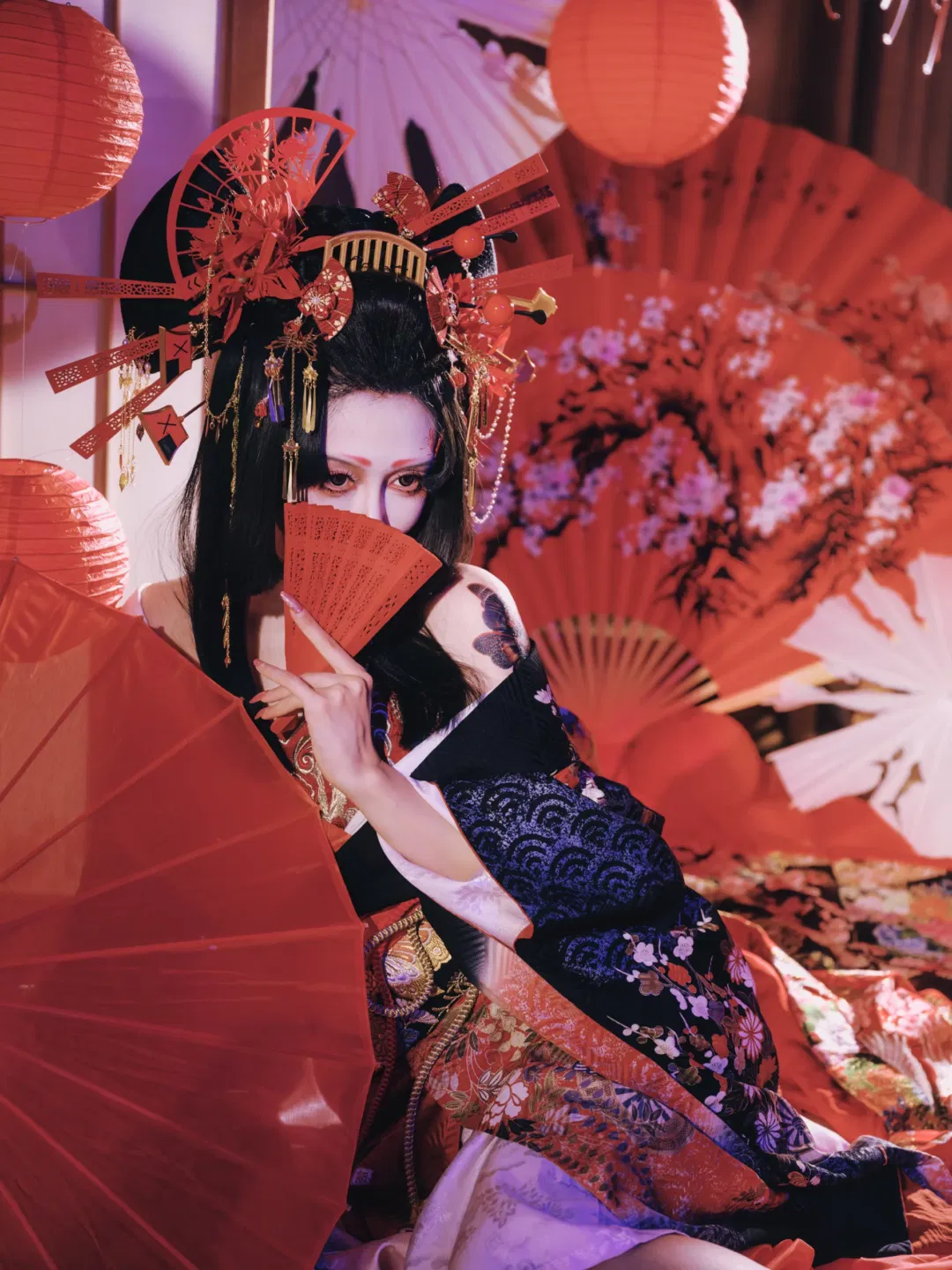
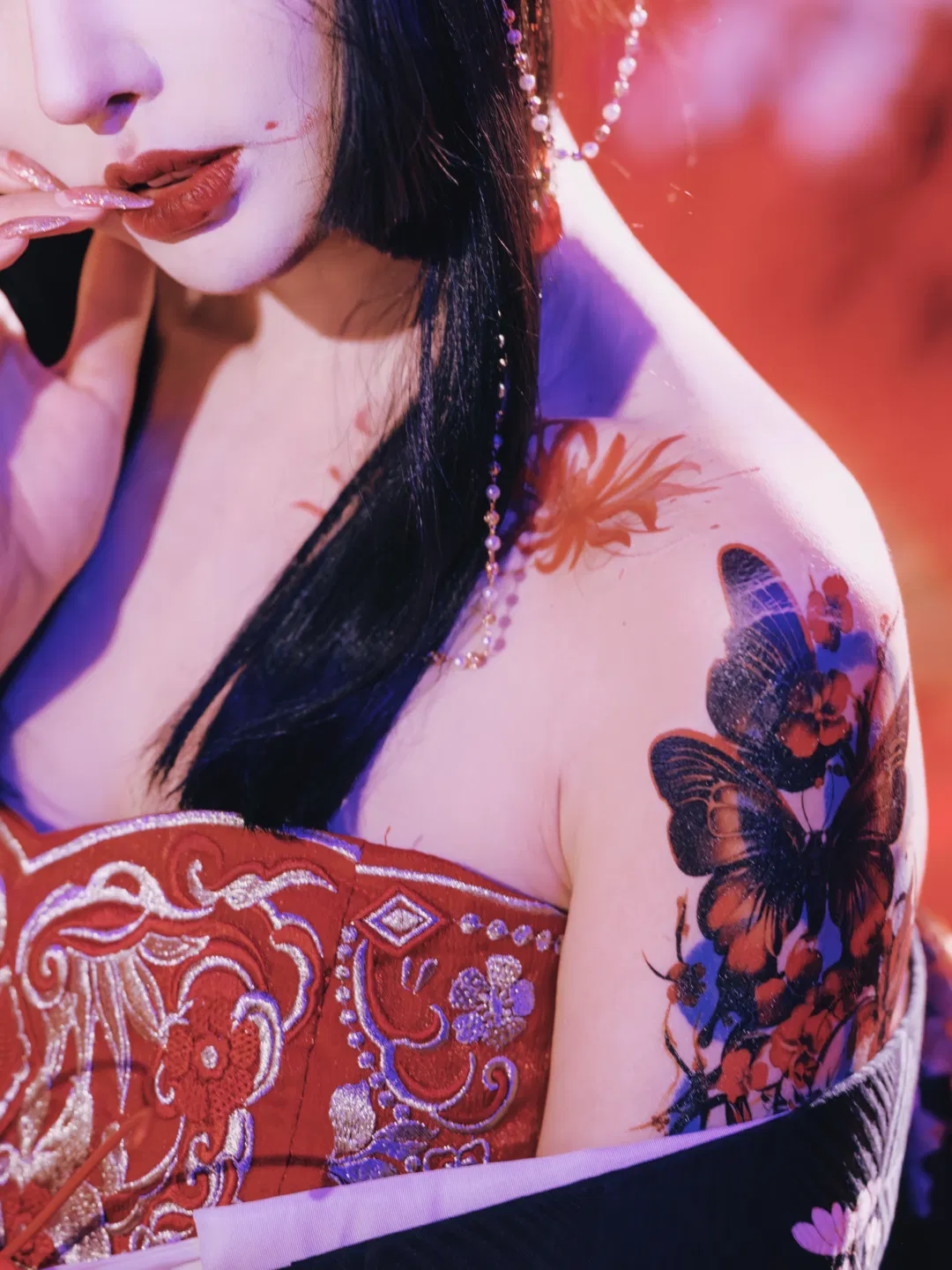
The sheer craftsmanship and weight of this Japanese-style Oiran coordinate vastly exceeded my expectations. Just anchoring the intricate crown arrangement—composed of hair combs, red plum blossoms, swinging tassels, and cascading beaded chains—took nearly forty minutes to stabilize, resting upon my neck with unmistakable physical heft. To align with the character archetype, the base makeup was prepped with a porcelain-white finish, paired with winged crimson eyeshadow, deep red matte lip stain, and delicate red floral huadian motifs painted around the outer corners of my eyes and cheeks, instantly teasing out an alluring, bewitching aura. The wardrobe featured a red-and-gold heavily embroidered bustier overlaid with an expansive wide-sleeved outer kimono patterned in rich dark florals, generating a striking chromatic clash. To heighten visual tension across the frame, extensive butterfly and floral body art transfers were applied across my shoulders and arms.
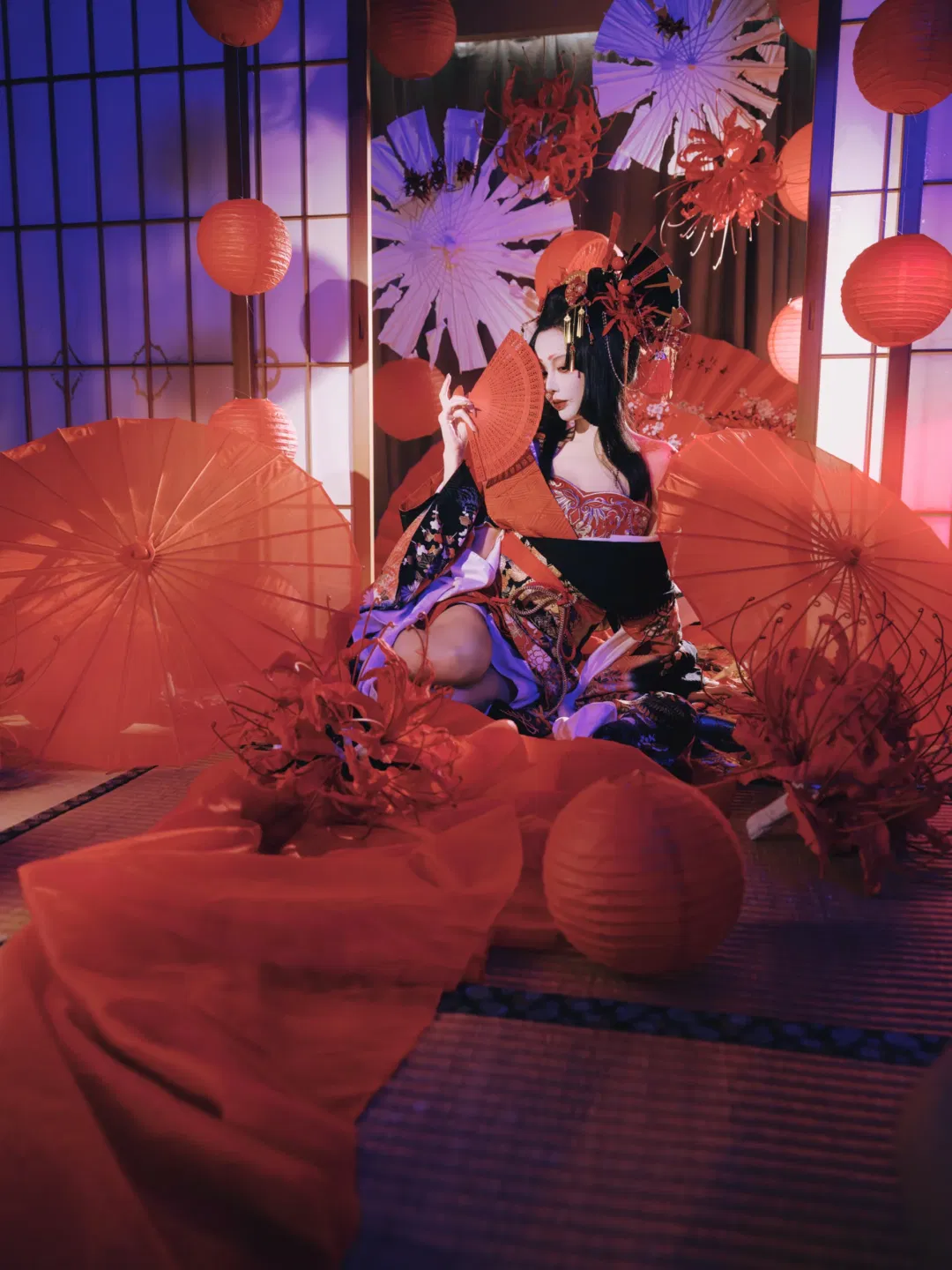
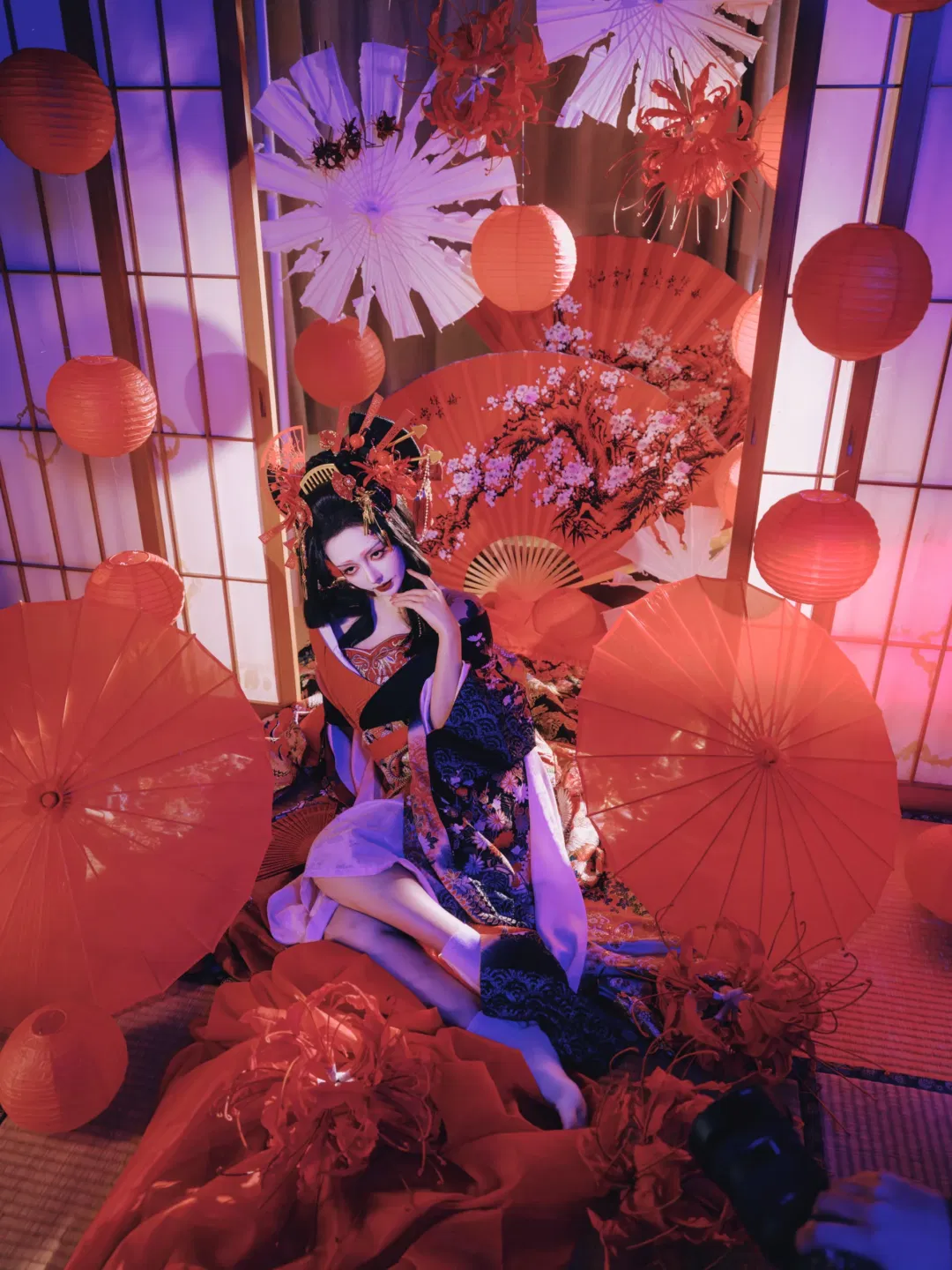
The set design was constructed entirely around traditional Japanese motifs and the haunting Spider Lily. The tatami flooring was draped in layers of vivid crimson sheer fabric, surrounded by an asymmetrical arrangement of red paper wagasa umbrellas in varying sizes, suspended paper lanterns overhead, a colossal folding fan partition screen, and dense clusters of blooming red spider lilies in the backdrop. The most delicate technical challenge on set was controlling specular light and shadow. Rather than relying on flat fill lights, the photographer flooded the shoji sliding screens behind with expansive violet-blue cool hues, while illuminating the subject at close range with warm, saturated red beams. This complementary red-blue collision not only carved out dramatic spatial depth, but also rendered porcelain skin tones remarkably crystalline and translucent.
For pose design and eye direction, I focused on channeling a languid yet aloof, cool composure. The folding fan in my hand served as an invaluable staging prop: whether half-masking my lower face to leave only the eyes exposed, or resting my chin on one hand with a downward glance, it naturally directed the viewer's focal path. When composing wide panoramic frames, I dropped my center of gravity low, utilizing seated postures to extend leg lines forward into the lens while slightly revealing the shoulder line to carve out breathing room amidst the dense, opulent fabrics.
Sustaining these poses throughout the session was physically taxing, especially holding tilted head positions or low gazes for extended takes. Yet seeing the cinematic interplay of light and shadow on the camera monitor brought an indescribable rush of creative fulfillment. I have always adored this dark oriental fantasy aesthetic where luxurious opulence coexists with eerie mysticism. Every micro-adjustment of an accessory, every positioning of a paper umbrella, and every glance shared with the lens was dedicated to freezing this theatrical tension in time. This Japanese-style portrait was not merely an endurance test against heavy styling, but an intensely satisfying journey of visual storytelling.