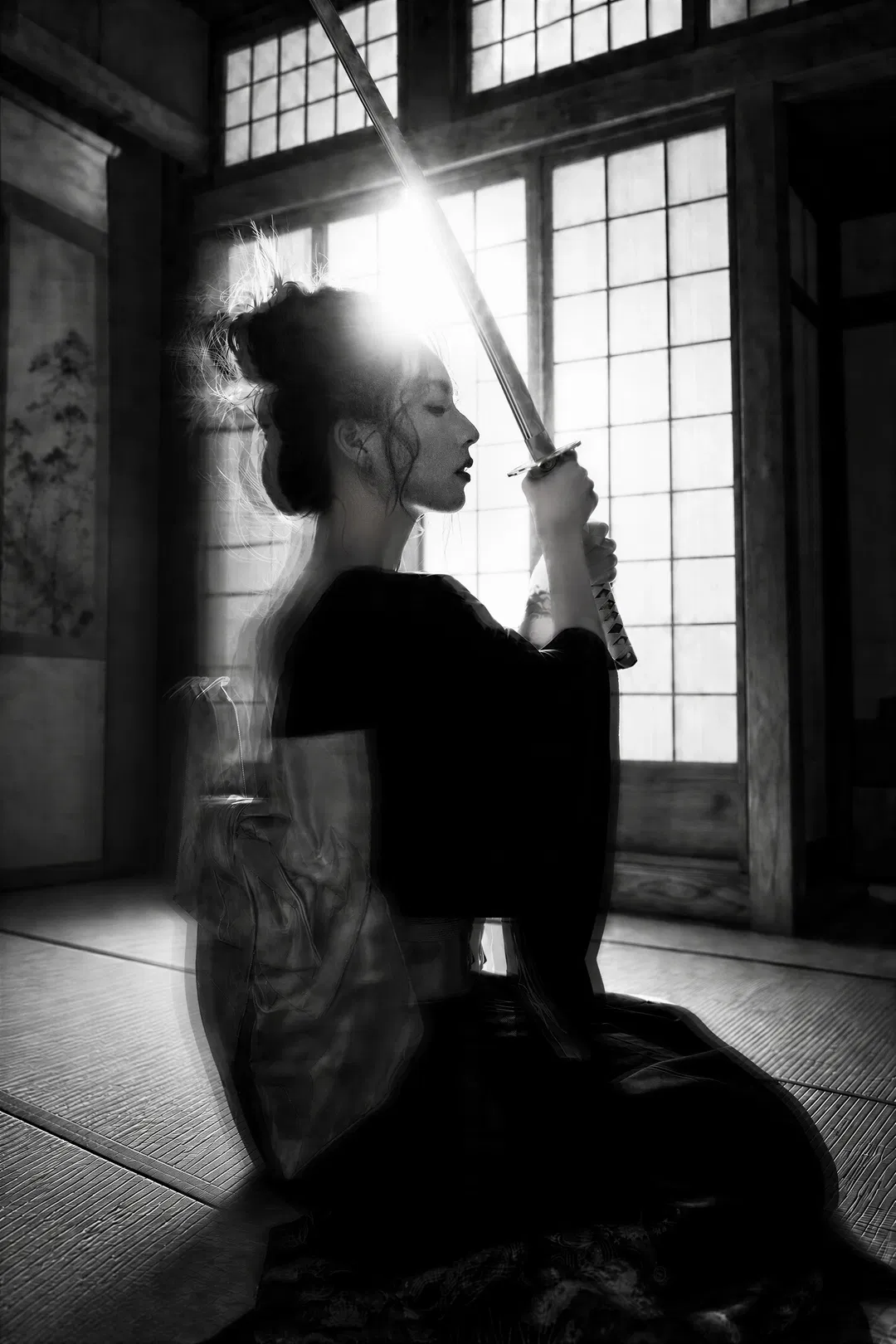
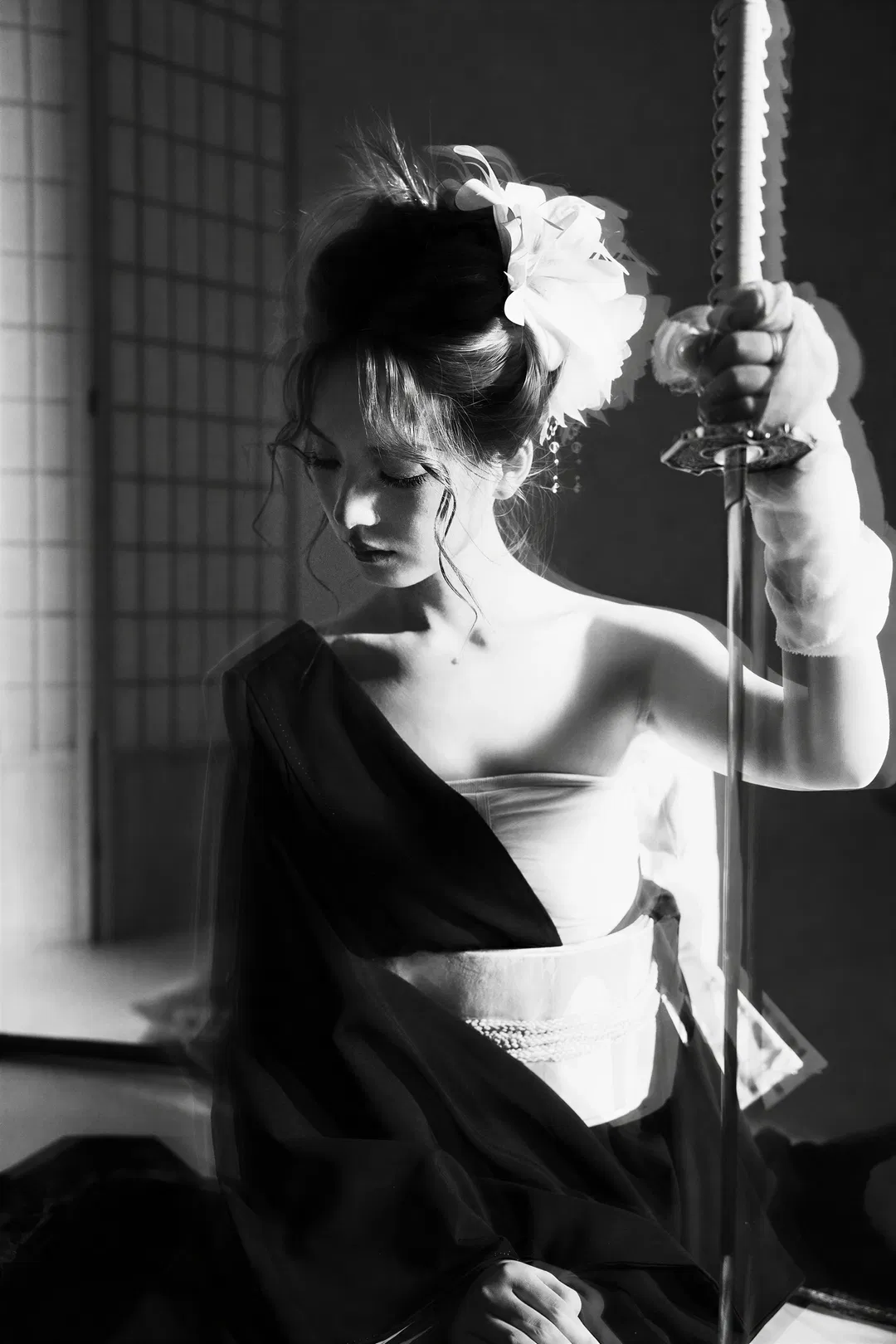
Seeing the black-and-white final images from this shoot vividly reignited in my mind that cold, extreme aesthetic synonymous with Kill Bill. 'The blade cleaves the flesh, the heart cleaves the soul'—no phrase better encapsulates the emotional tone of this set. When discussing the concept with the photographer, we immediately decided against color in favor of pure monochrome. High saturation easily diverts attention, whereas black-and-white chiaroscuro maximizes the textural weave of the kimono fabric and the frigid metallic sheen of the Katana. The outfit I wore was a modified Japanese garment: an off-the-shoulder, one-sided silhouette paired with a broad obi sash preserved traditional contours while injecting sleek sharpness and allure. The oversized blossom in my hair represented deliberate juxtaposition—tender petals colliding with an icy blade, echoing the heroine's intricate inner turmoil in the film. For makeup, we deliberately emphasized depth in the eye contours rather than bold lip shades, knowing that in Black and white portrait photography, a piercing gaze carries far more penetrating force than any color palette.
For the setting, we chose a traditional Japanese tatami room. The wooden lattice windows provided natural compositional framing, and more crucially, when natural sunlight pierced from the side or behind, the authentic division of rim light and deep shadows spared us immense post-processing hassle. To capture that lethal intent and inner torment during sword-bearing shots, the photographer urged me to avoid static poses, encouraging me to breathe, shift weight, and execute minute turns. The ghosting motion blur in the photos was achieved in-camera via slow-shutter dragging. These motion trails served not merely as a visual trick, but as an expression of the character's fractured, multilayered psyche.
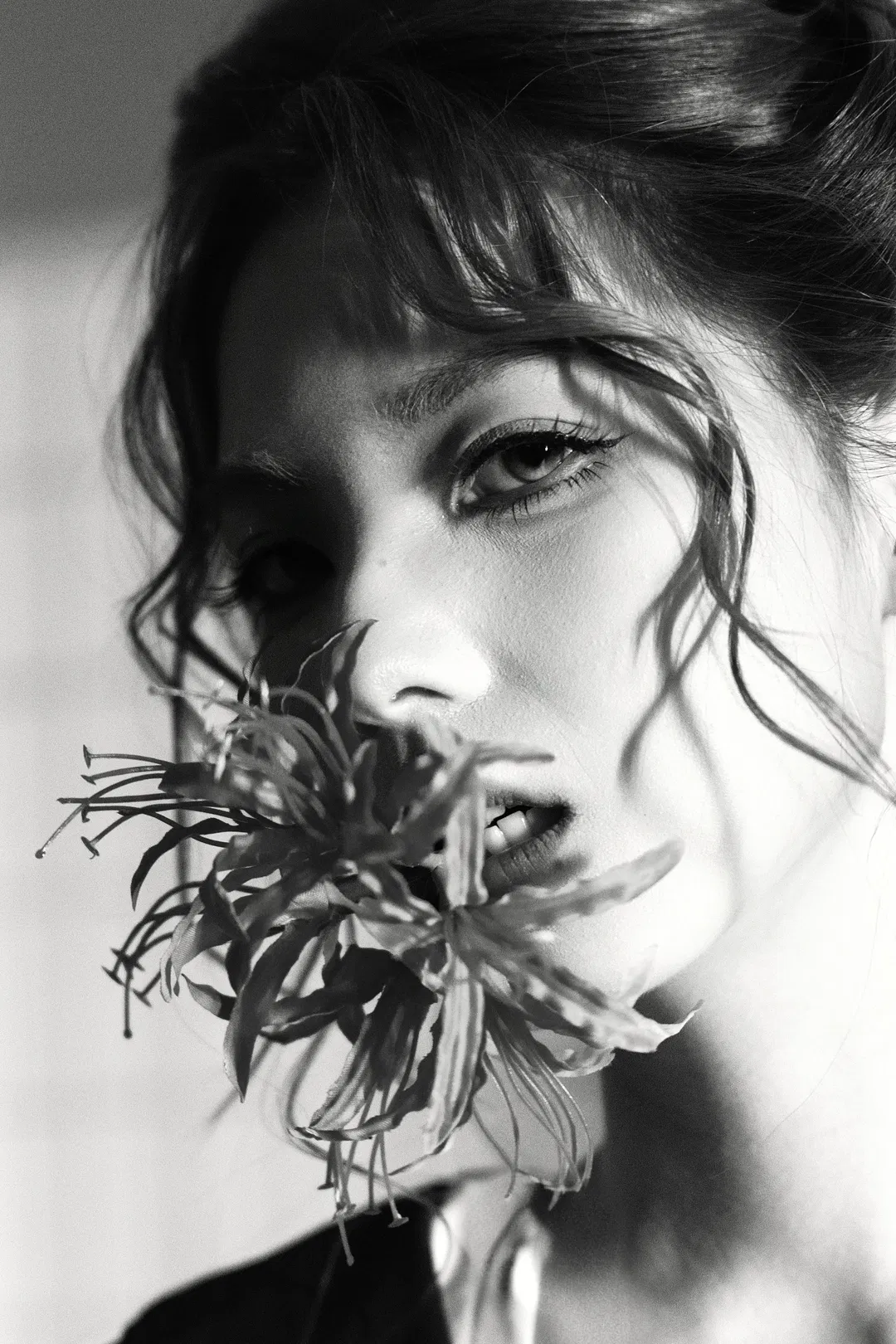
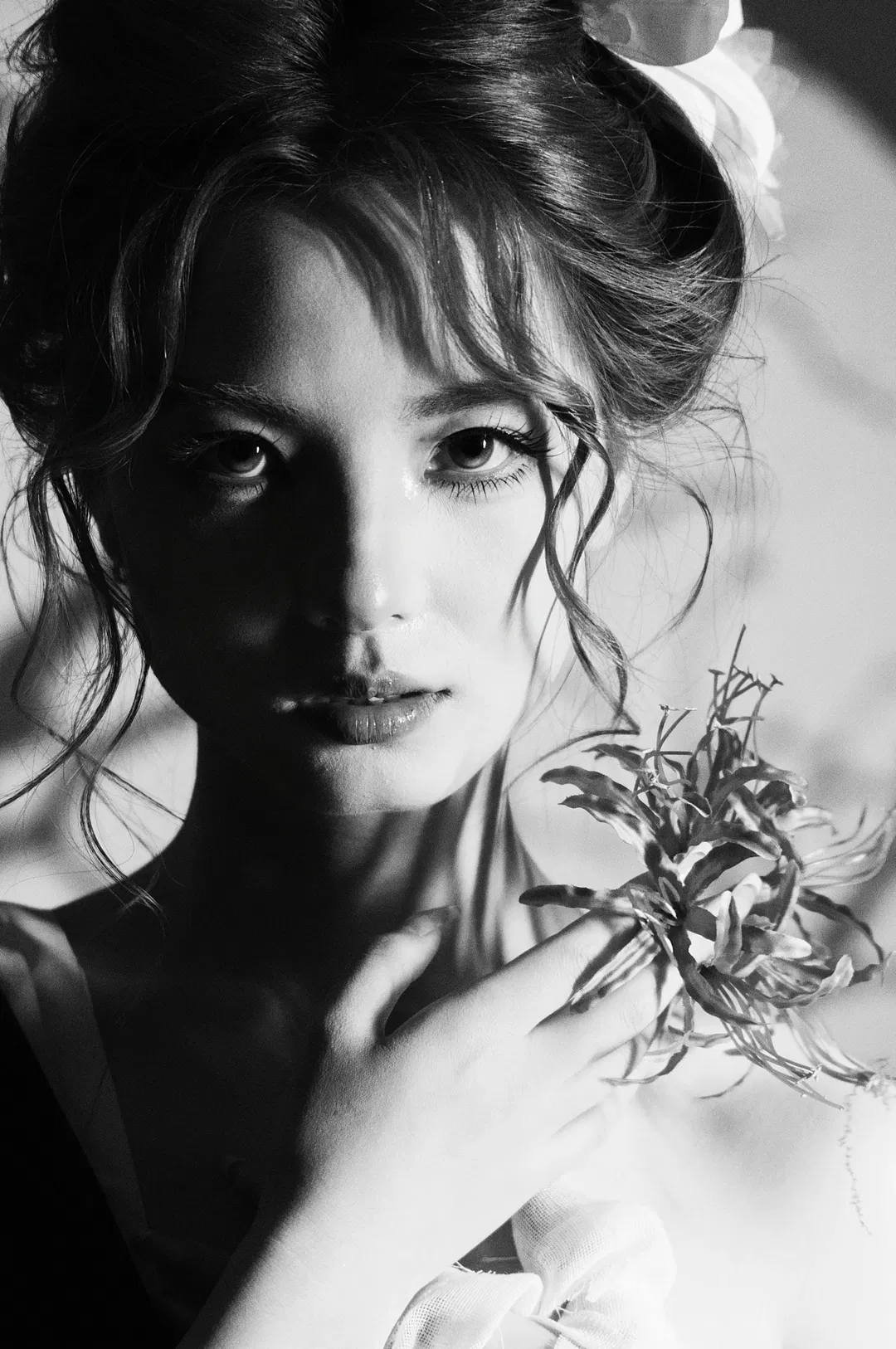
Regarding props, that Katana was genuinely heavy; my arm trembled constantly while holding it one-handed to adjust angles. Yet that authentic metallic weight helped me channel muscle engagement, naturally sharpening my gaze into something deadly. The red spider lily prop was an impromptu addition: whether biting lightly on the stem or rolling the petals between my fingertips, that hazardous softness complemented the razor-sharp edge of the blade. Holding flowers versus wielding a blade required entirely different physical tensions and emotional directions.
The entire shoot was intensely taxing physically and emotionally, demanding constant oscillation between a cold-blooded assassin and a vulnerable woman. But seeing the interplay of light, shadow, motion trails, and raw emotional presence coalesce seamlessly in the finished frames made every ounce of exhaustion worthwhile. This shoot brought me a deeper understanding of Japanese-style samurai character expression: tension rarely requires exaggerated facial strain; often, a locked-in gaze or an accidental convergence of light and shadow is all it takes.