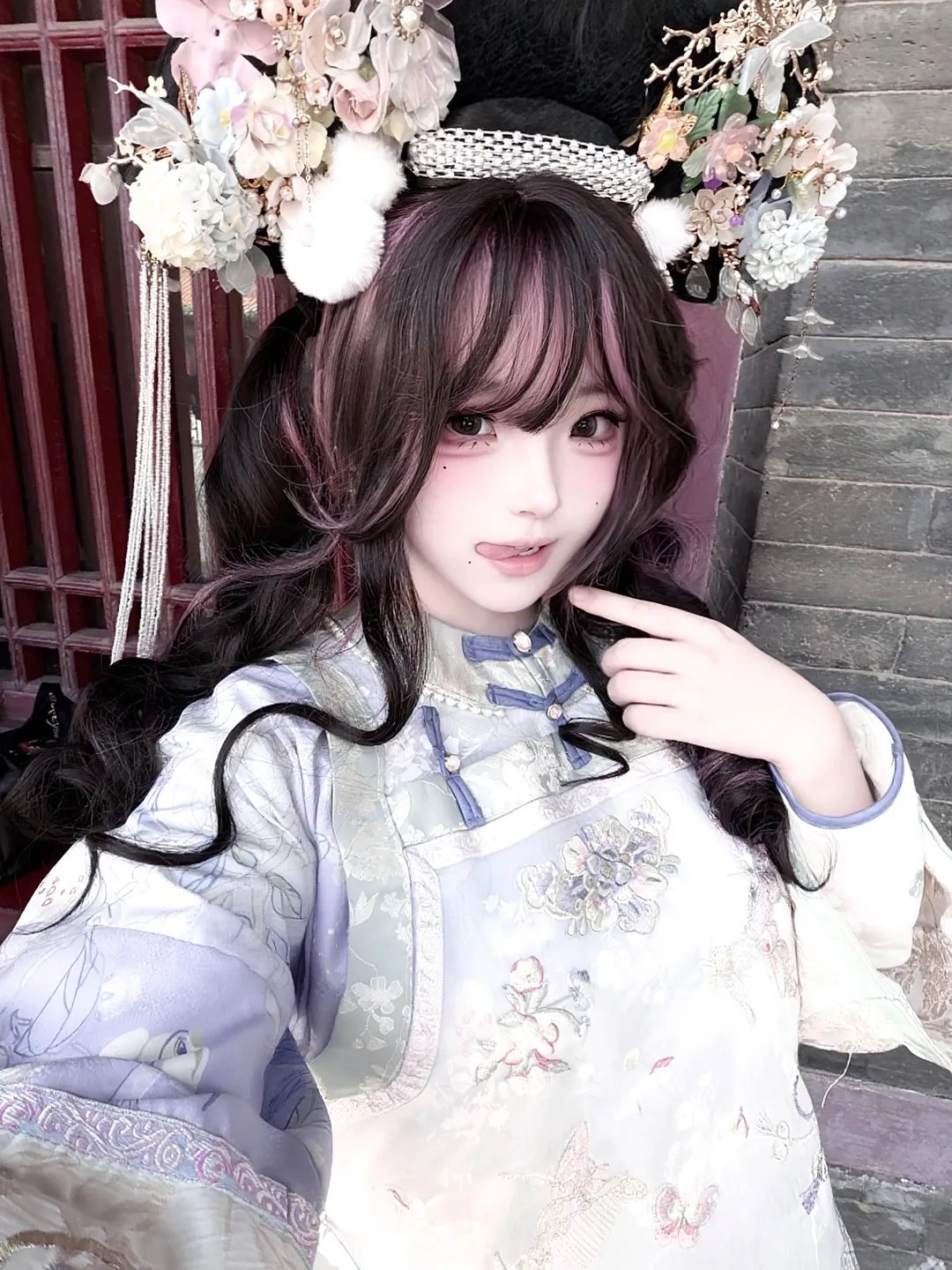
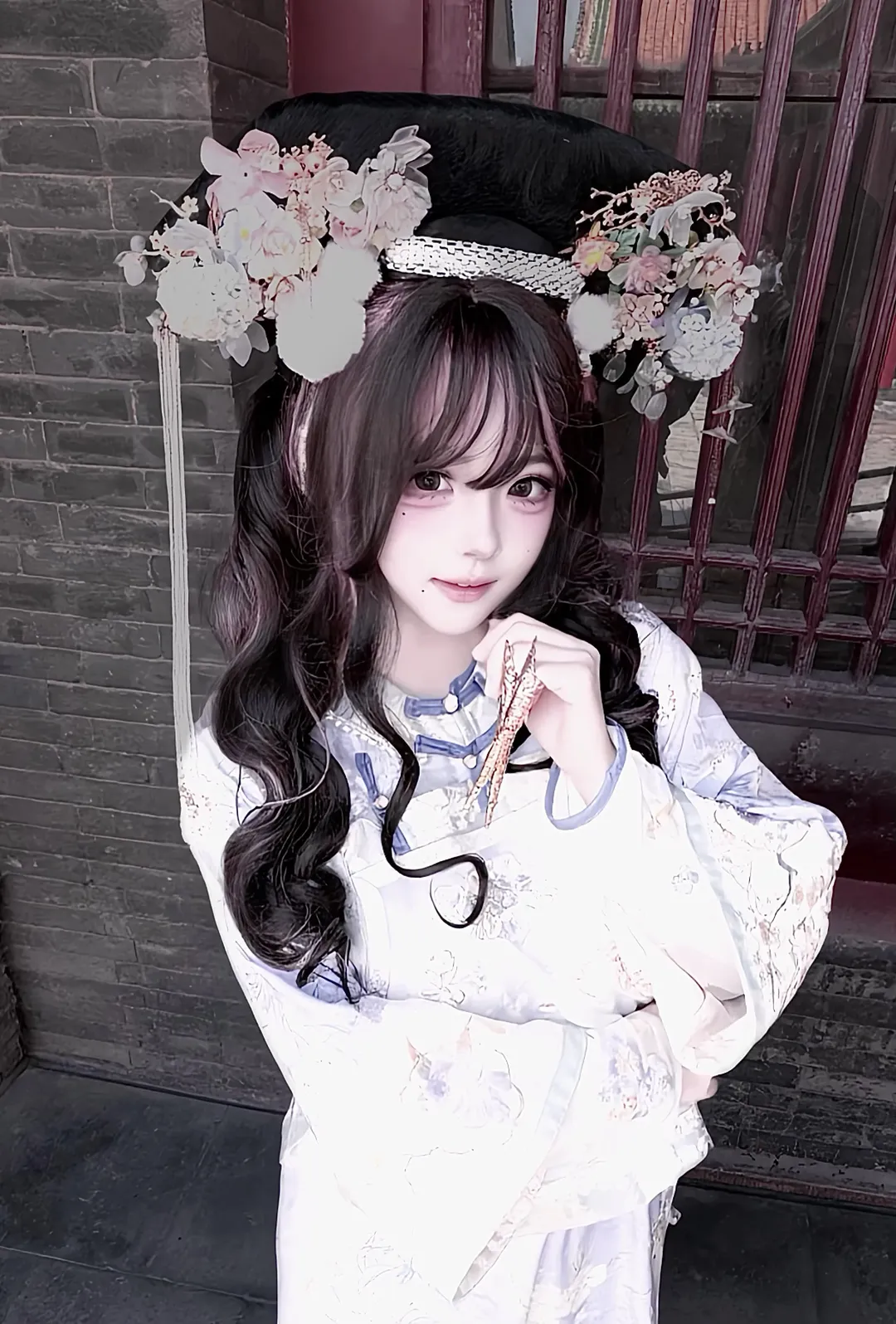
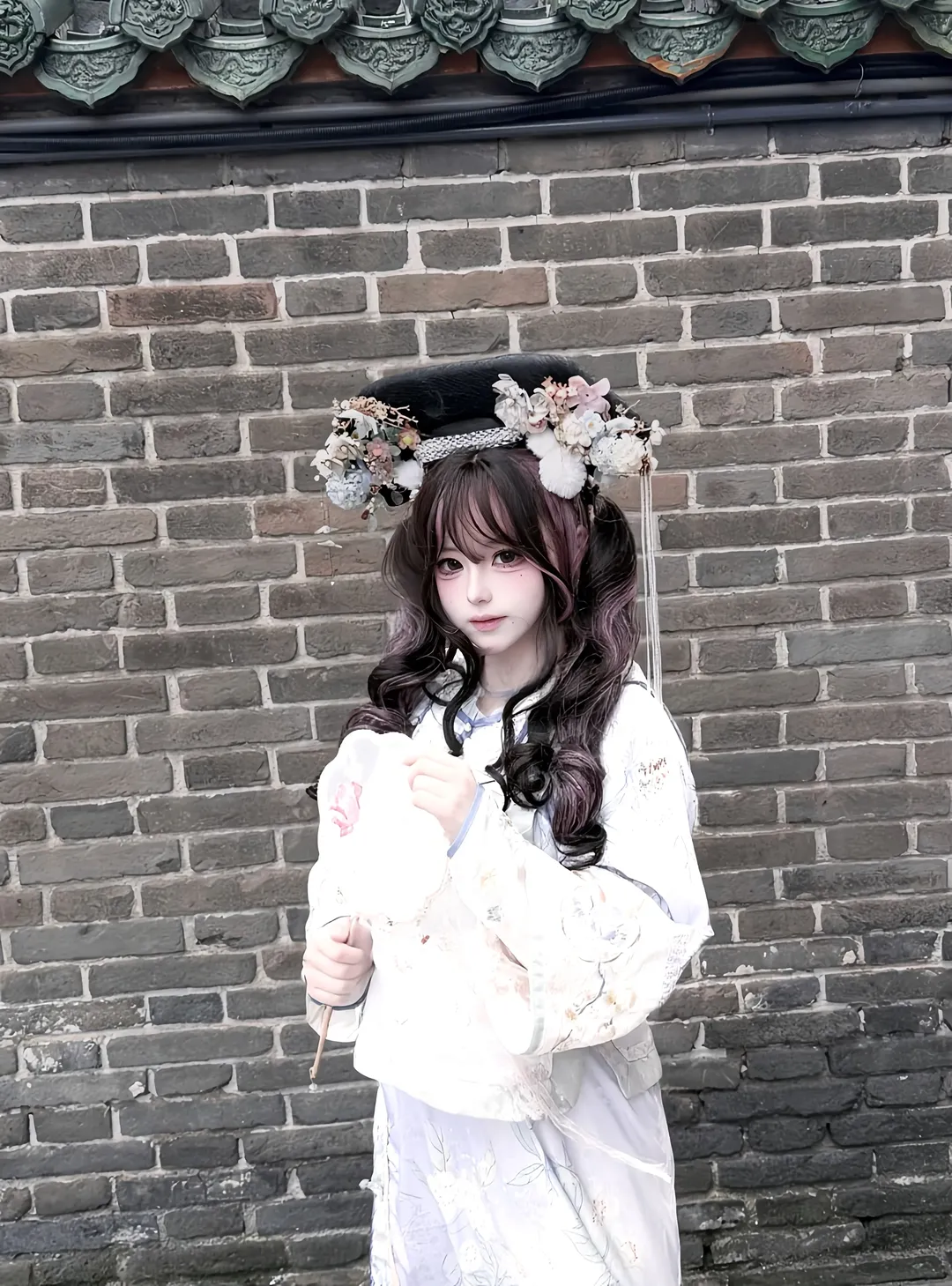
The planning for this authentic Gege styling focused primarily on the balance between the headpiece and the overall silhouette. To capture an authentic character flair, it wasn't just about clothing patterns, but more importantly the overall volume. This time, I specially selected a black headdress adorned with plush pom-poms and abundant faux flower tassels; the fluffy texture paired with cascading silver chains grounded the floating lightness of the pale garments. The garment design incorporated a high stand collar with traditional frog closures—a core element of Qing Dynasty style—yet to avoid looking too heavy, the base fabric used silk with a luminous sheen and a gentle gradient from pale white to soft lilac-blue. The embroidery featured flowers, birds, and butterflies, meeting modern aesthetic demands for refined Ancient style cosplay. During the shoot, I paid close attention to the symmetry and center of gravity of the Hair accessory styling, as heavy headwear tilting awkwardly can easily disrupt the harmony of the entire composition.
In terms of makeup (Makeup sharing), the emphasis was on a soft-focus matte and youthful finish. The base makeup was kept as luminous and clear as possible, with localized brightening under the eyes and on the tip of the nose to reduce reliance on heavy digital highlights later. The eyebrows featured a soft, gentle arch without harsh downward peaks to enhance a delicate facial contour. The eyes were the main focus, utilizing earth tones layered with subtle shimmering pink eyeshadow to enlarge the eyes without looking overly dramatic. The most spirited touch was the beauty marks: dotting small black marks under the eyes and along the cheeks added a playful, lively charm against the structured wig styling. A nude-pink matte lipstick was chosen to keep glossy lips from stealing visual focus from the elaborate costume.
The actual shoot took place in a traditional courtyard featuring blue brick walls and red-lacquered wooden doors. The color contrast between blue bricks and red doors is ideally suited for ancient-style themes, providing natural environmental ambiance for Hanfu photography. Photo 1, as a close-up, beautifully showcases the facial makeup and the front details of the headpiece. Photo 2 focuses on posture: holding hanging charms with slightly bent arms creates a relaxed gesture that feels far more natural than rigid, formal poses. Photo 3 captures overall harmony with the environment, where the texture of the gray brick walls stands out with great tactile depth against the light-colored costume.
The post-processing color grading concept was straightforward: preserving the creamy bokeh of the wide aperture while subtly adjusting the color temperature toward a cool-white tone. This palette keeps skin tones clean while highlighting the dreamy blue-purple hues of the outfit. I strictly avoided excessive skin-smoothing, applying only minimal shaping along the neck and jawline to ensure the genuine texture of the makeup remains visible rather than turning into a flat blur. Subtle details like shadows along the lip contours and defined individual lashes are crucial for three-dimensional depth; over-editing would flatten everything.
Overall, the core of this photo set was highlighting the quirky, spirited charm of a Gege rather than rigid historical solemnity. The plush pom-poms on the headpiece and my playful tongue-out expression were intentional choices to break the stiffness of conventional Qing Dynasty style looks. Although wearing such a heavy headpiece outdoors all day caused considerable neck and shoulder soreness, the resulting light and shadow made it all worthwhile. Completing Ancient style cosplay projects with bold accessory elements always deepens my understanding of the interplay between costume design and visual camera language. If ambient light is too harsh, the frame feels lifeless, so utilizing overcast or diffused light gave this entire set a soft, poetic glow.