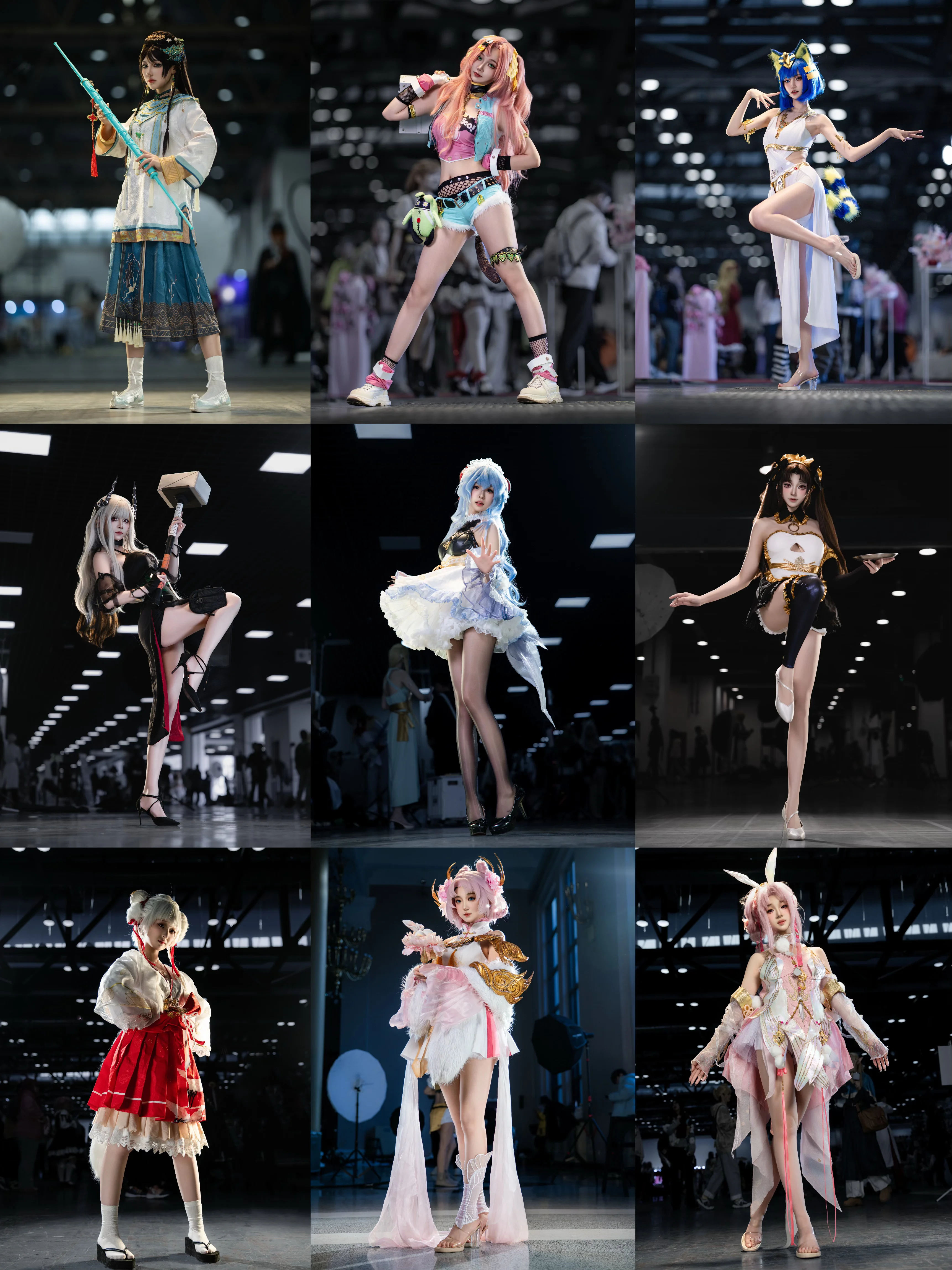
Over my years of doing Anime-style photography, I have actually always been wrestling with composition. Especially during convention photography, it's incredibly easy to get carried away by the venue's environment and the model's fleeting expressions. Looking back at my old shots, I used to feel that if the frame wasn't tilted, it lacked tension—even reaching the point of 'not tilted, not comfortable.' Massive diagonal compositions, extreme low-angle or high-angle shots; I used to think only those could create atmosphere and dynamic motion.
But gradually, after reviewing and organizing my work for a while, I realized that trying too hard actually creates distraction. Recently, I set a small goal for myself: keep the CMOS perfectly straight to experience a 'perfectly square' visual style. In fact, when shooting at a convention, especially for event photos, the most easily overlooked aspect is the horizontal and vertical lines of the architecture. The complex ceiling lights and the chaotic crowds in the background of the exhibition hall—once the camera tilts, the frame develops an obvious sense of imbalance, making the subject you wanted to highlight look unstable. Especially with a lively background in our Anime convention daily life, if you don't calibrate the horizon line, the photos can easily look cluttered and disorganized.
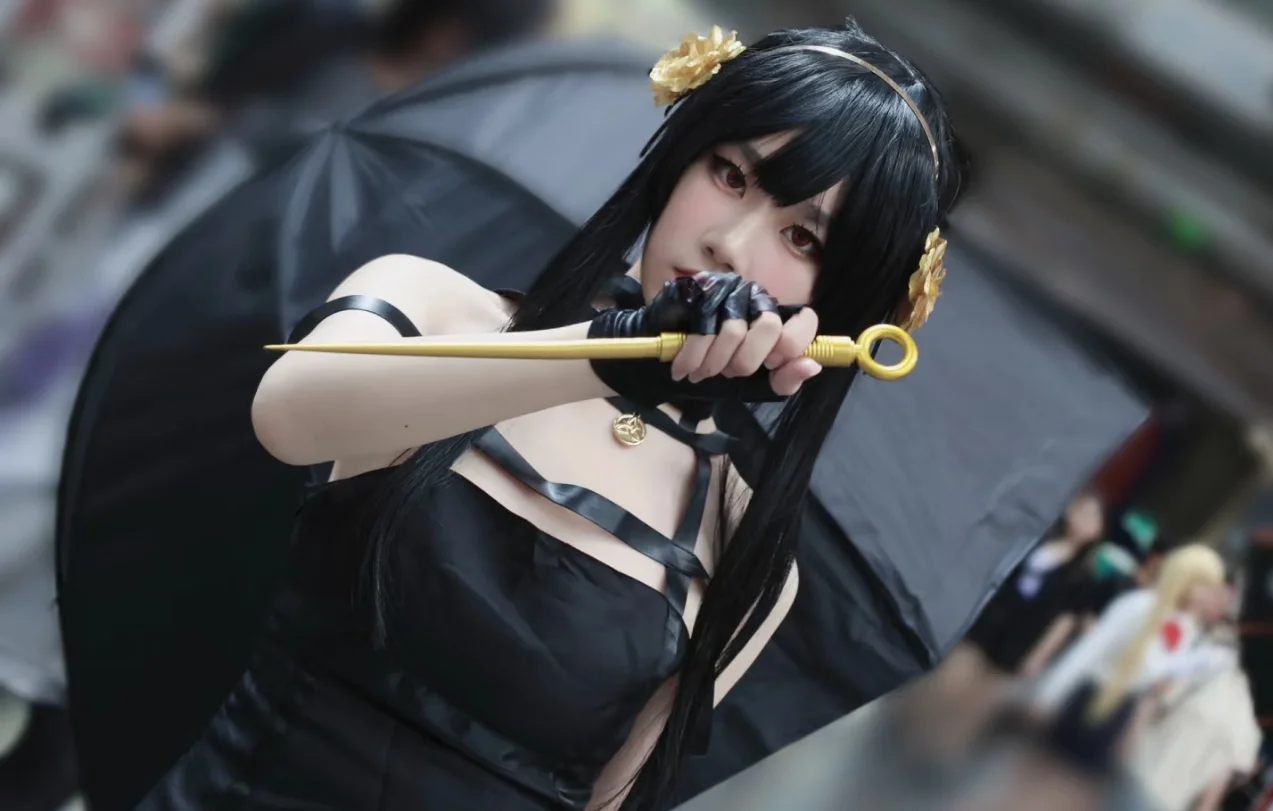
For instance, in the three sets of photos, the ones on the high stage in the nine-grid layout were shot where the runway itself has a certain perspective compression. Combined with the very harsh on-site lighting making the scene incredibly bright, a slight tilt indeed enhances the dynamic feeling of a 'frozen moment.' For actions like lifting a leg or reaching out a hand, a tilted composition perfectly fills the static image with tension. On the other hand, looking at the close-up holding the black umbrella, since it is a tighter half-body shot, if the composition lost its balance here, the viewer's gaze would easily be fractured by sharp angles. Ultimately, I opted for a relatively stable centered composition, trying my best to let the umbrella handle in the foreground and the character's gaze form an extension of silent dialogue across space, which looks much more narrative-driven than a tilted shot.
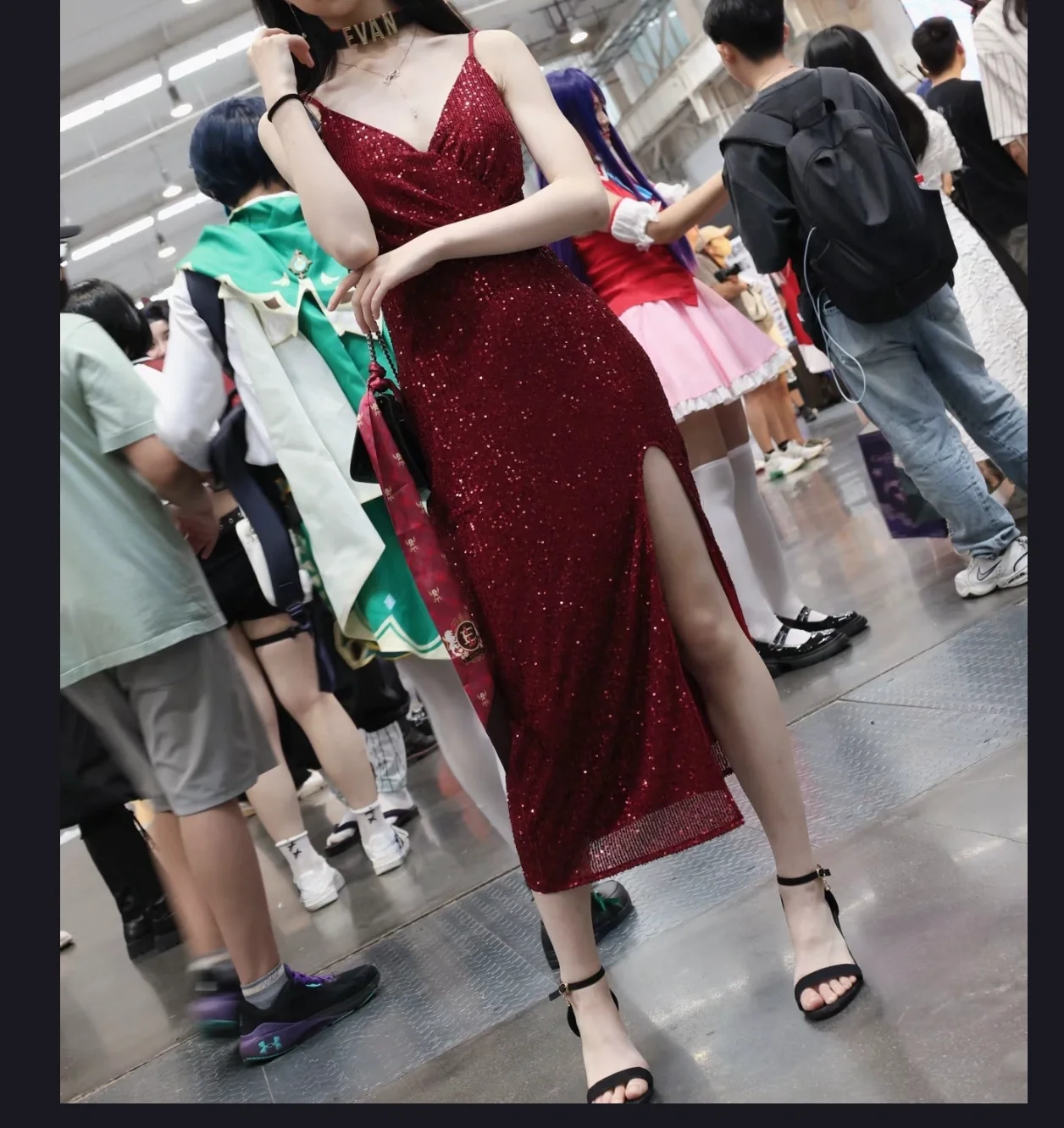
The main focus, however, is back to the full-body shot of the red dress. This red dress was truly the visual focal point of the day. The sequined fabric reflected tiny sparkles of light under the convention hall's mixed light sources, and paired with the delicate necklace on the neck and the high-slit skirt hem, the entire look carried an incredibly light and high-end texture. If shot with a wide-angle lens or a drastic tilt, although the legs would look longer, it would easily distort and warp the naturally slender outline of the skirt, and the perspective relationship would make the high-slit angle look harsh, losing that natural draping beauty. Shooting straight, combined with a relatively eye-level or slightly low camera position, not only faithfully preserved the crop lines of the body limbs and the outfit but also naturally kept the extension of the high-heeled sandals and leg lines, firmly holding up the powerful aura of the entire dress.
So I feel now that whether a composition is tilted or not is never a matter of absolute right or wrong; the key is whether it's a 'random tilt.' If you want to deliberately emphasize a certain state of motion and express a vividness that breaks convention—like those high-kicks and stepping movements in the photos—a tilted composition is absolutely fine and serves as the icing on the cake. But if the goal itself is to showcase the details, texture, or elegant posture of a Cosplay outfit, especially for a highly stylized long dress like the one in Figure 2, I still prefer to hold the camera level. A straight composition and an accurate horizon line help focus the viewer's eyes more on the character's facial expressions, the fabrics' texture patterns, and the styling details.
Convention photography involves many uncontrollable factors—lighting, background crowds, and time limits all require photographers to make quick decisions. When you are unsure about how to compose, making sure the horizon is straight and putting the subject in the center or near the golden ratio lines is usually a solid, foolproof backup plan. Understanding why you tilt, and what the visual expression is after tilting—that is true growth in photography. I am also still slowly exploring, moving from my previous 'uncomfortable if not tilted' state to being able to flexibly switch according to the needs of the photos. That is how photography is: adjusting details bit by bit, and in the end, having the finished photo look comfortable to yourself is what matters most.