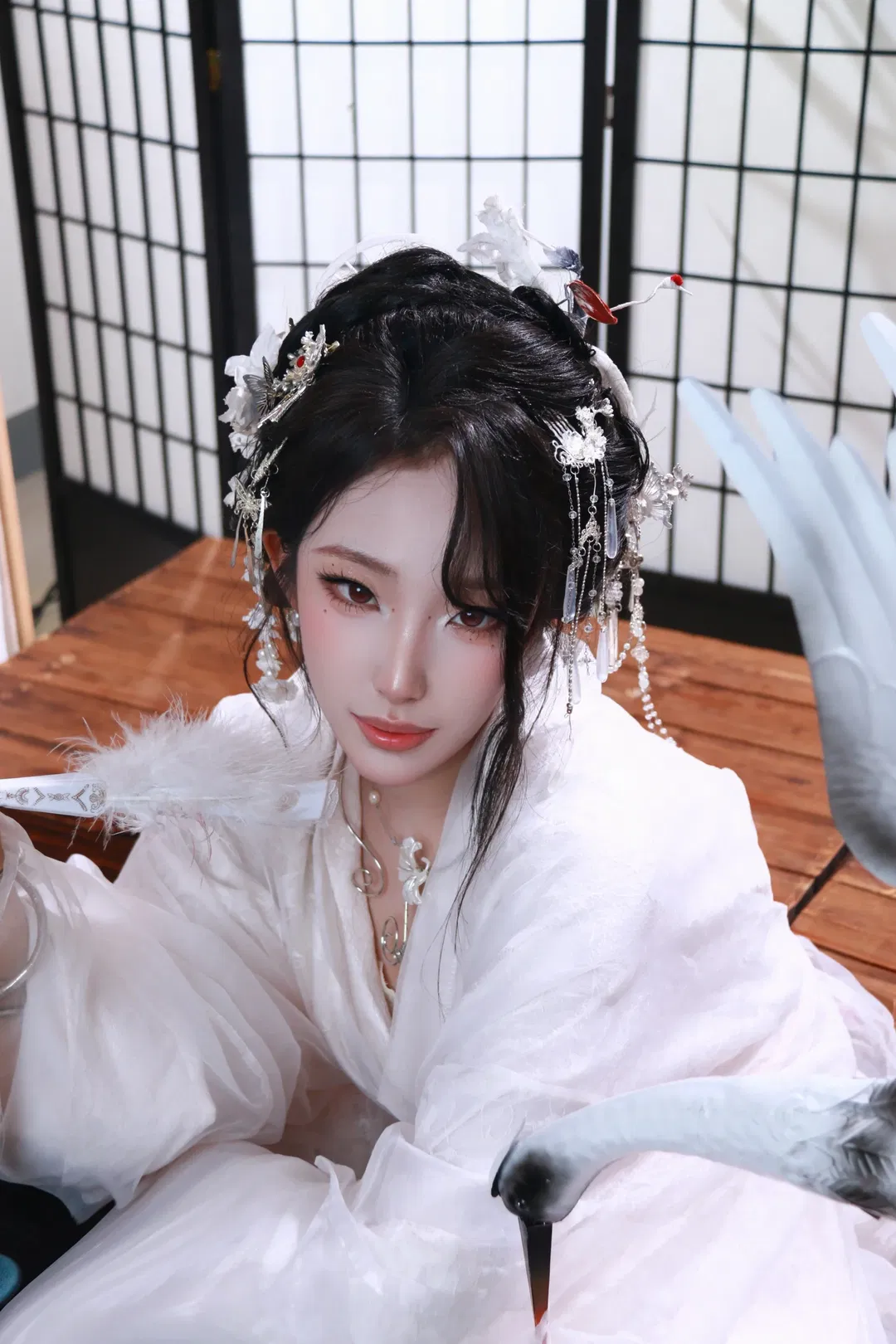
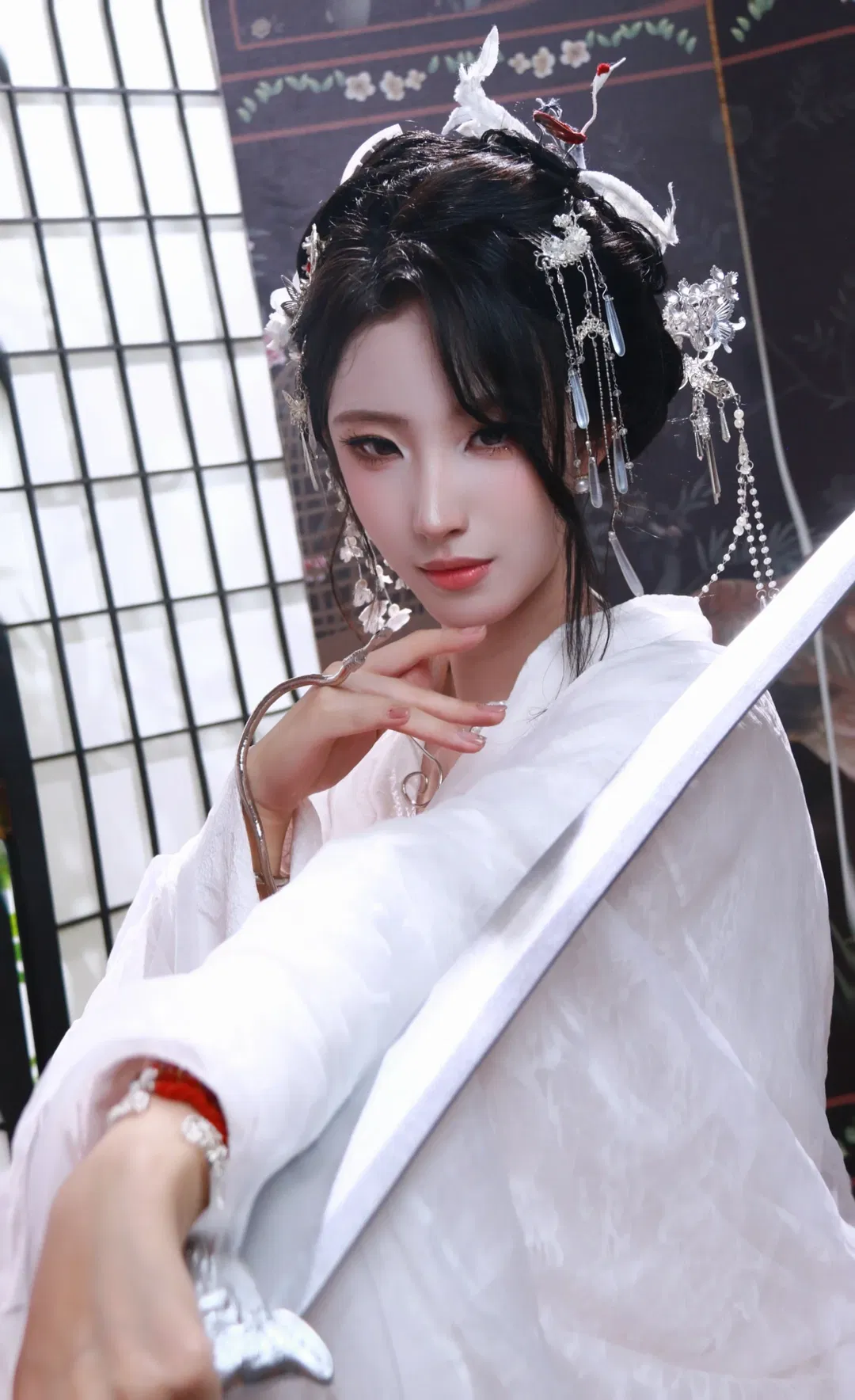
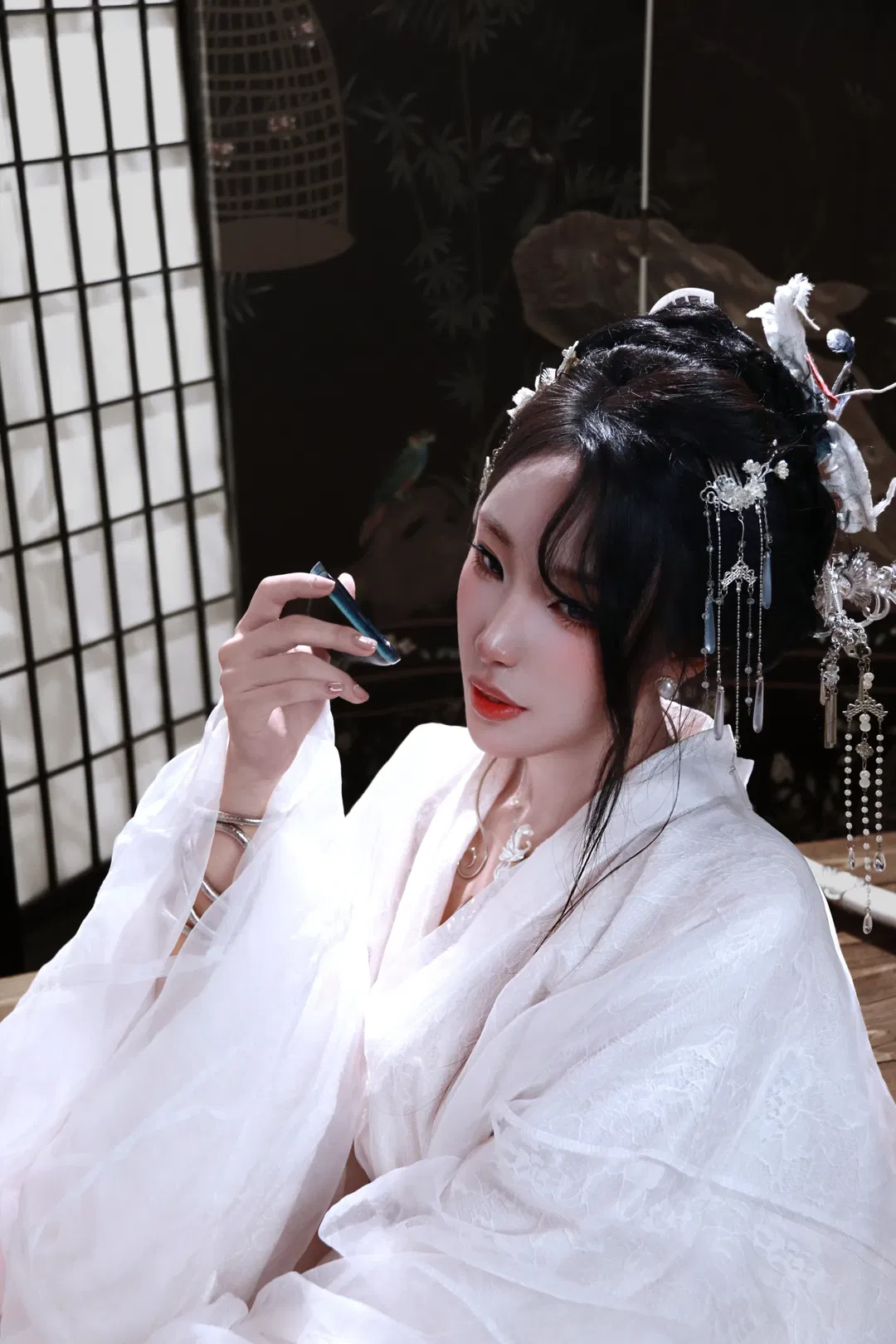
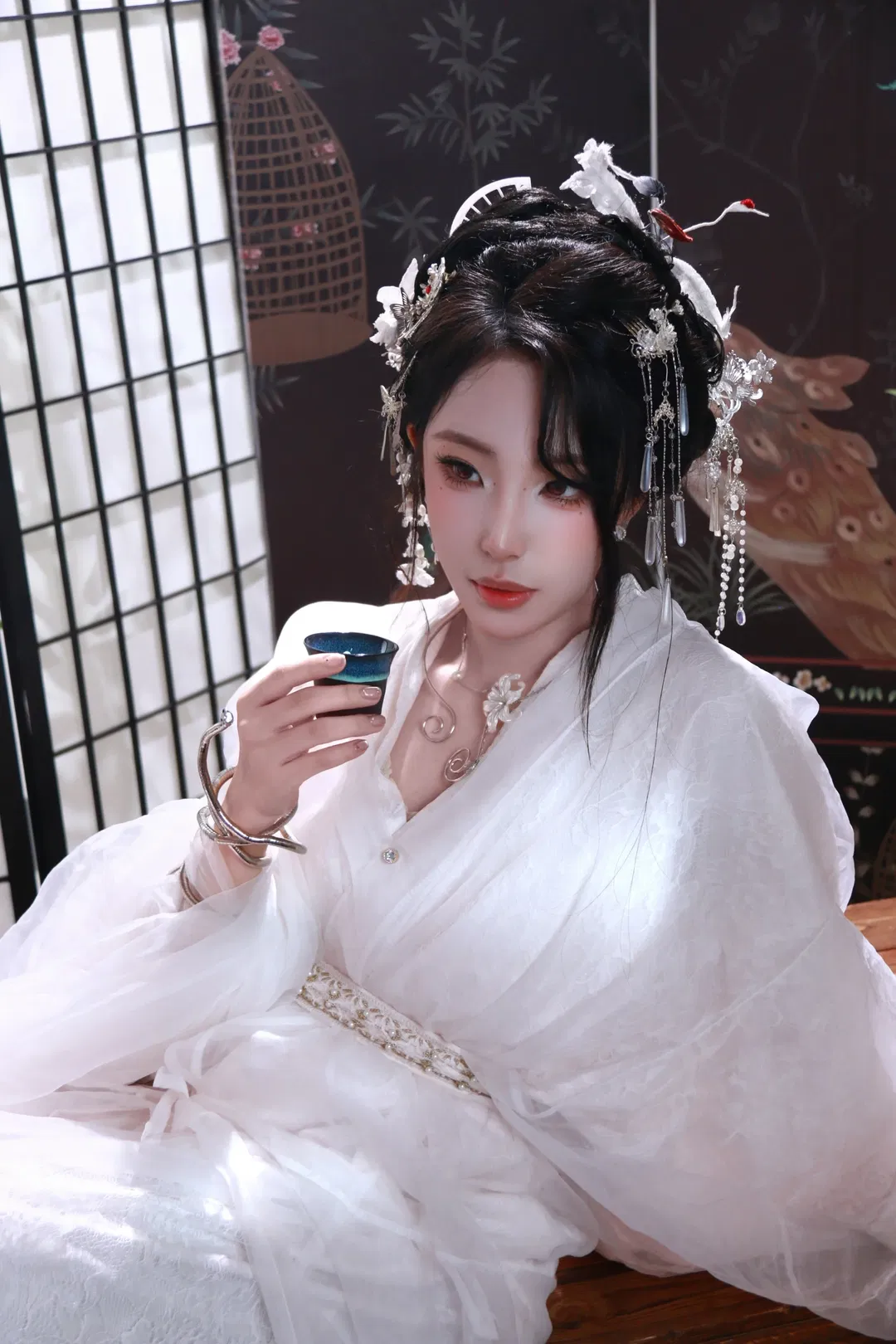
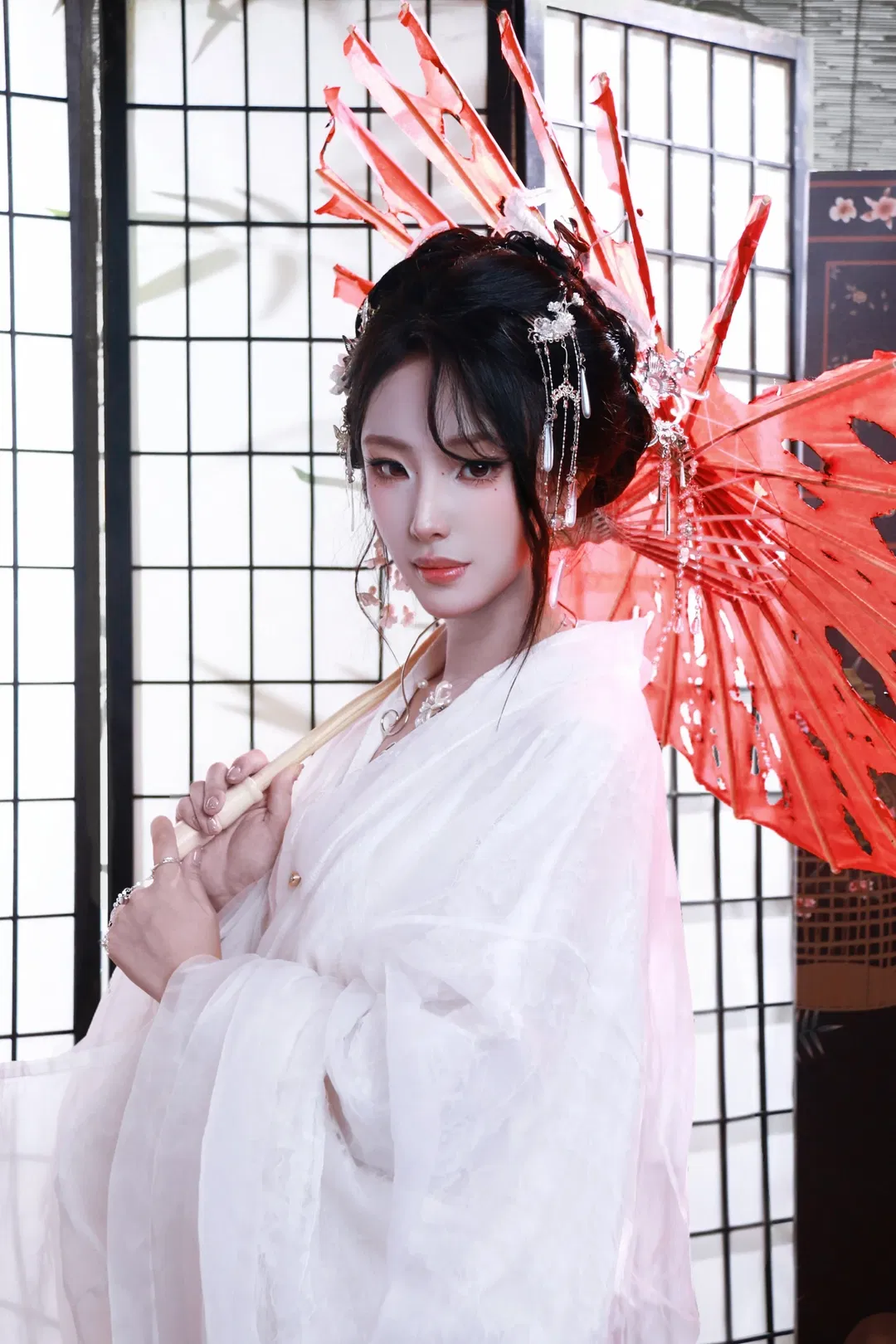
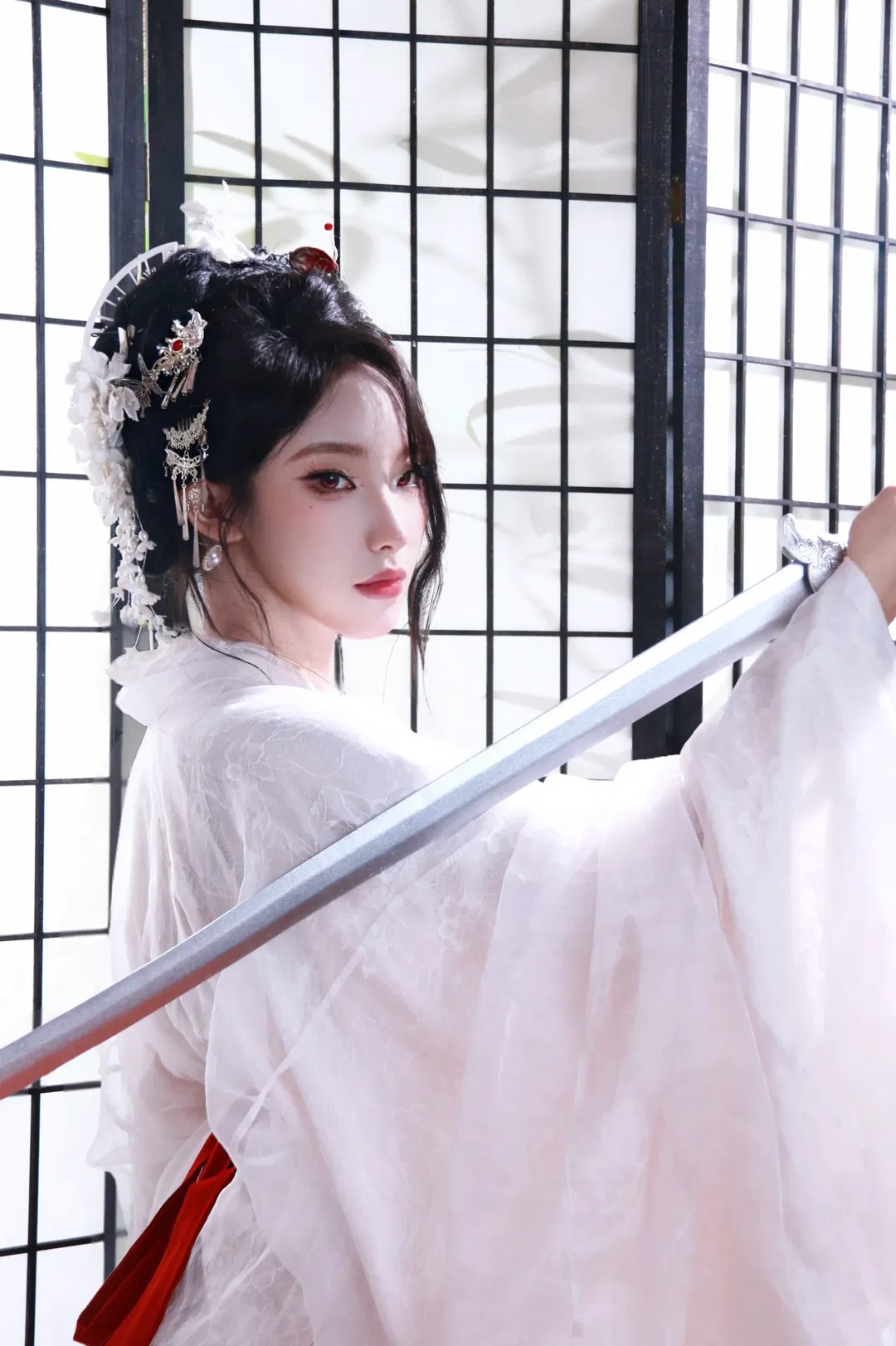
This ancient-style look shot at the Qimi Huanjing studio in Beijing was thoroughly immersed in poetic ambiance from hair and makeup to the final shutter click. The theme was 'a fleeting glimpse of beauty in the mortal realm, an immortal crane beyond the world,' so I chose a pure white cross-collar hanfu crafted with lightweight, semi-sheer fabrics, accented with delicate feather motifs along the collar and shoulders to echo the core motif. Rather than an overly elaborate updo, the hair was styled with layered silver metallic vines, cascading pearl tassels, and white floral pins dotted with crimson beads, creating rich, dimensional highlights under studio lighting.
Throughout the shoot, the use of props brought the greatest delightful surprises. The sword served as the focal prop in Photo 2 and Photo 6; resting it horizontally across my torso, photographer @DEMON (Photo Edition 📷) constantly reminded me to steady my gaze, channeling an aloof composure infused with lethal sharpness. The feather staff held in Photo 1 and the red oil-paper umbrella in Photo 5 injected intense visual punch, with the umbrella delivering a vibrant clash against the monochrome base. In Photos 3 and 4, holding a blue-black teacup while utilizing the diffused daylight filtering through the wooden shoji sliding doors yielded a remarkably crisp, luminous texture.
Bringing this series to life was genuinely demanding. Because the fabric is whisper-thin, maintaining an airy, floating drape often meant holding rigid poses without moving a muscle until the shutter clicked. The tassels adorning my hair were quite heavy, requiring deliberate, controlled head turns to prevent the strands from tangling into knots. Seeing the finished frames, however, made every ounce of effort worthwhile.
The greatest advantage of a Beijing studio photoshoot is precise control over lighting and backdrops. Qimi Huanjing's classic wooden lattice screens and shoji screens worked wonders: fine-tuning side-backlighting allowed rim light to gleam through fine hair strands and the sheer garment hems. This TFP photoshoot collaboration flowed smoothly; as a female photographer who often holds a camera myself, I understand deeply how critical a model's state of mind is before the lens. We avoided stiff, contrived posing, instead relying on the physical heft of each prop to anchor the body's natural center of gravity, achieving far more relaxed and organic postures.
Hanfu photography goes beyond simply donning a costume and standing still—it demands aligning your gaze, breathing rhythm, and fingertip tension to the fictional persona. How you grip a prop, the drape of wide flowing sleeves, and even the deliberate lightness of your steps govern the cinematic tension of the frame. This set featured numerous close-ups on the eyes; to complement the reddish-brown lenses and orange-red lip tint, I reduced my blink rate during close framing, keeping my gaze locked with piercing clarity directly down the center of the lens. The resulting light, shadow, and emotional depth aligned seamlessly, making this an immensely gratifying creative journey.