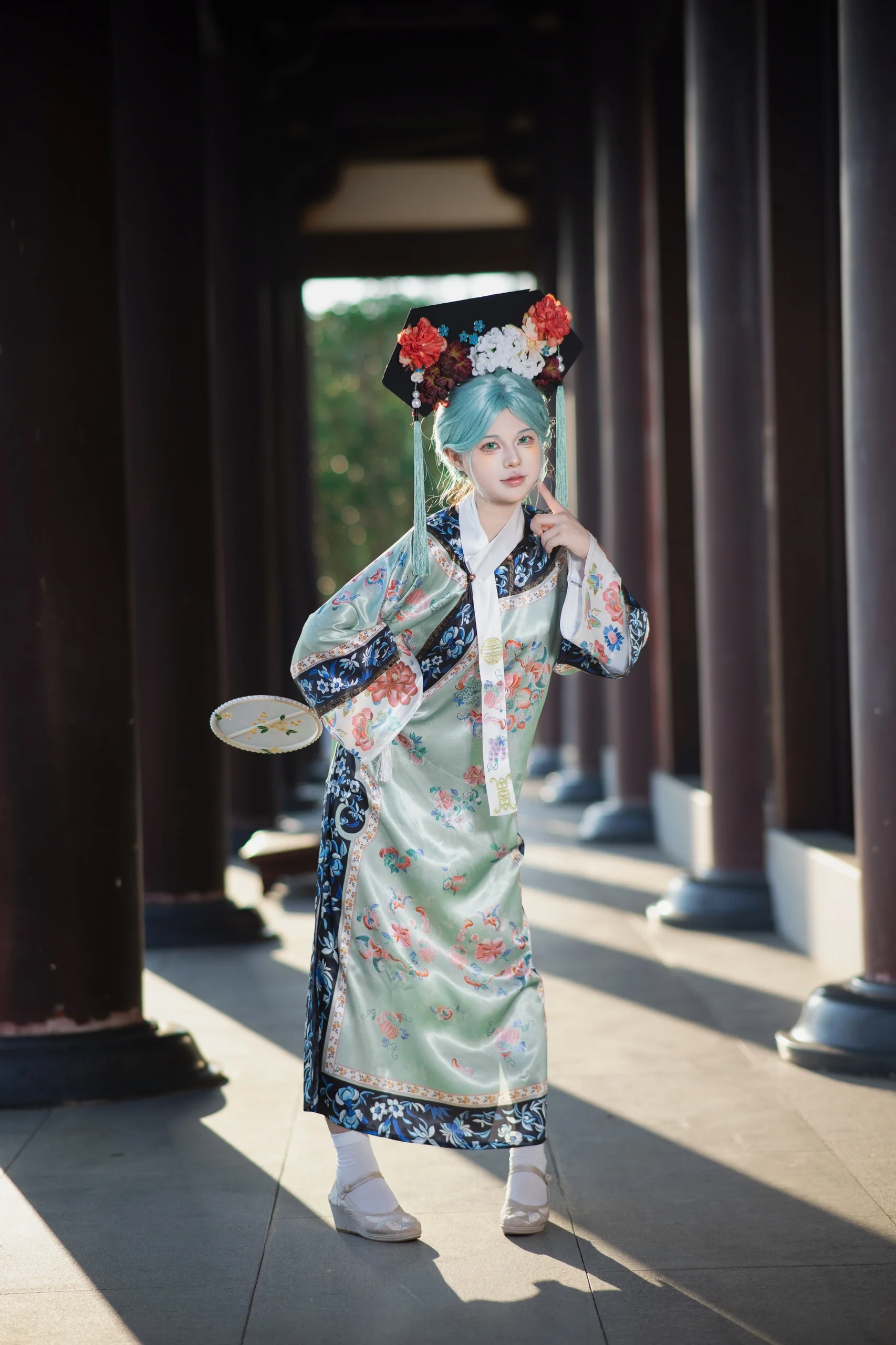
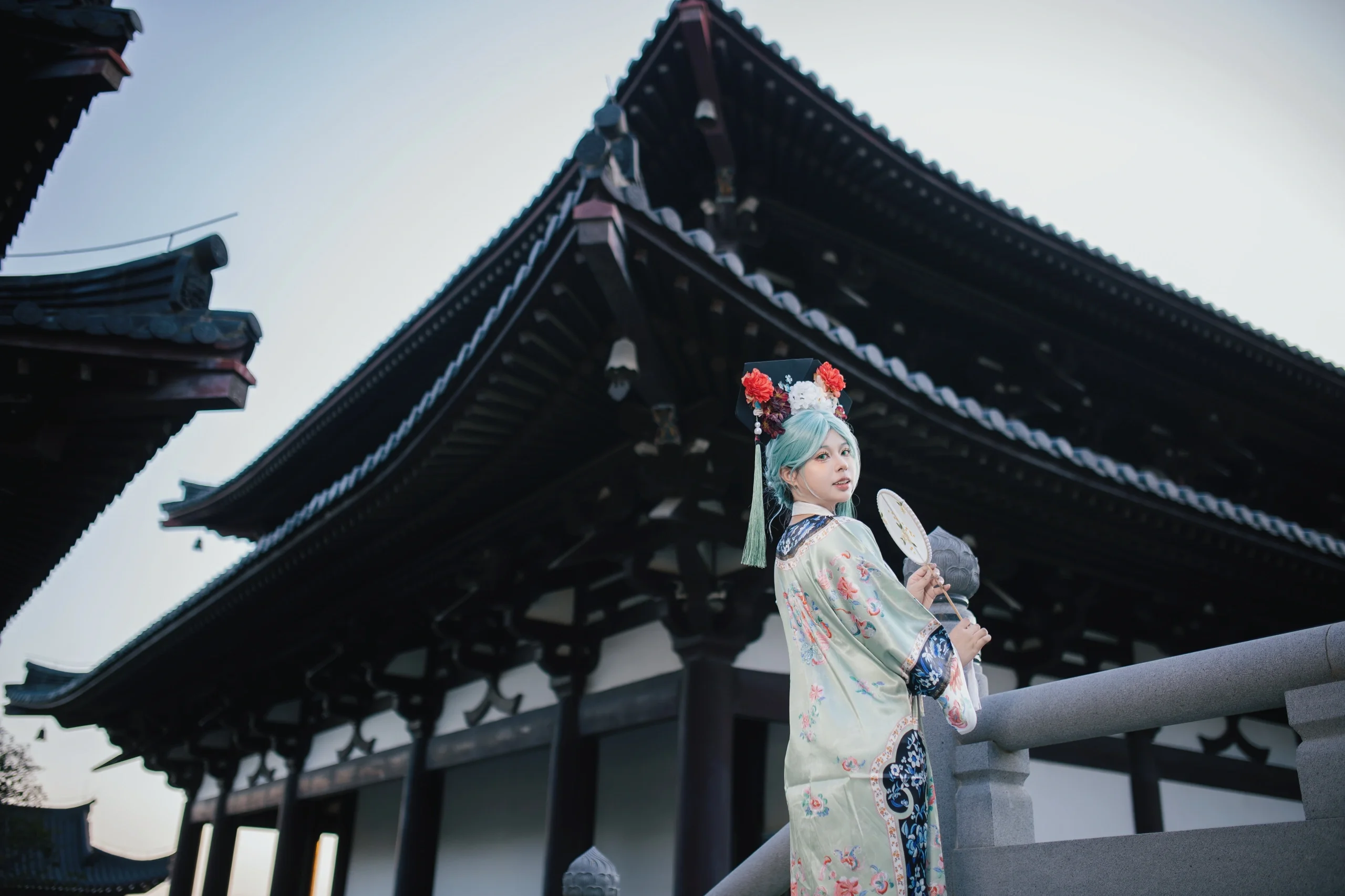
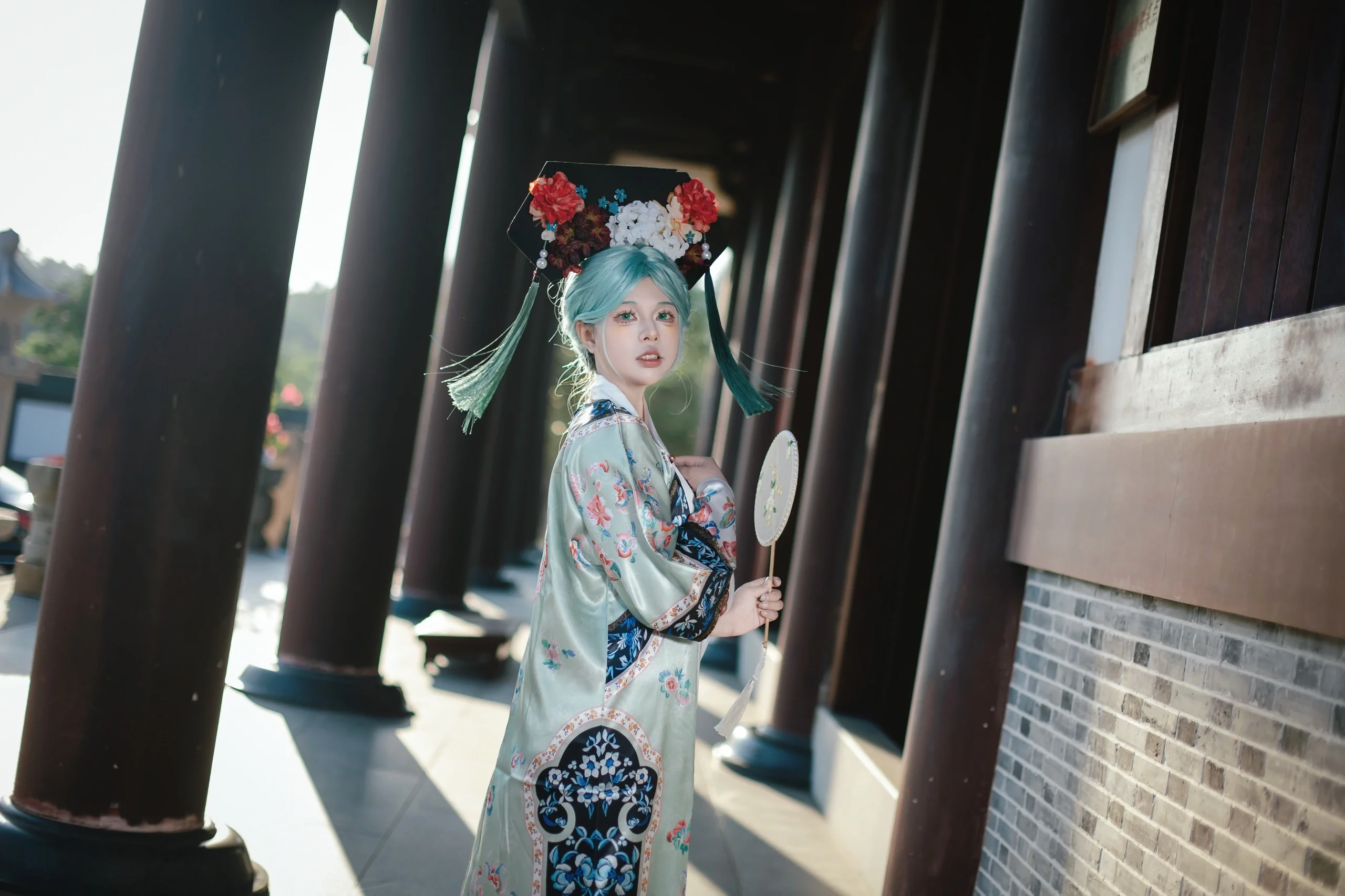
When I got this set of photos, my first impression was that the fusion of mint green and traditional embroidery was much higher than I expected. This time, instead of the traditional Vocaloid formula outfit, I tried a new Chinese-style clothing style of Qipao with Qing dynasty elements. Although the line \"Since you've seen the future, why not buy?\" in the post is a meme, it truly hits the nail on the head regarding the core idea of this photoshoot—making a brand-new visual experiment by combining a classic 2D character with Chinese-style elements.
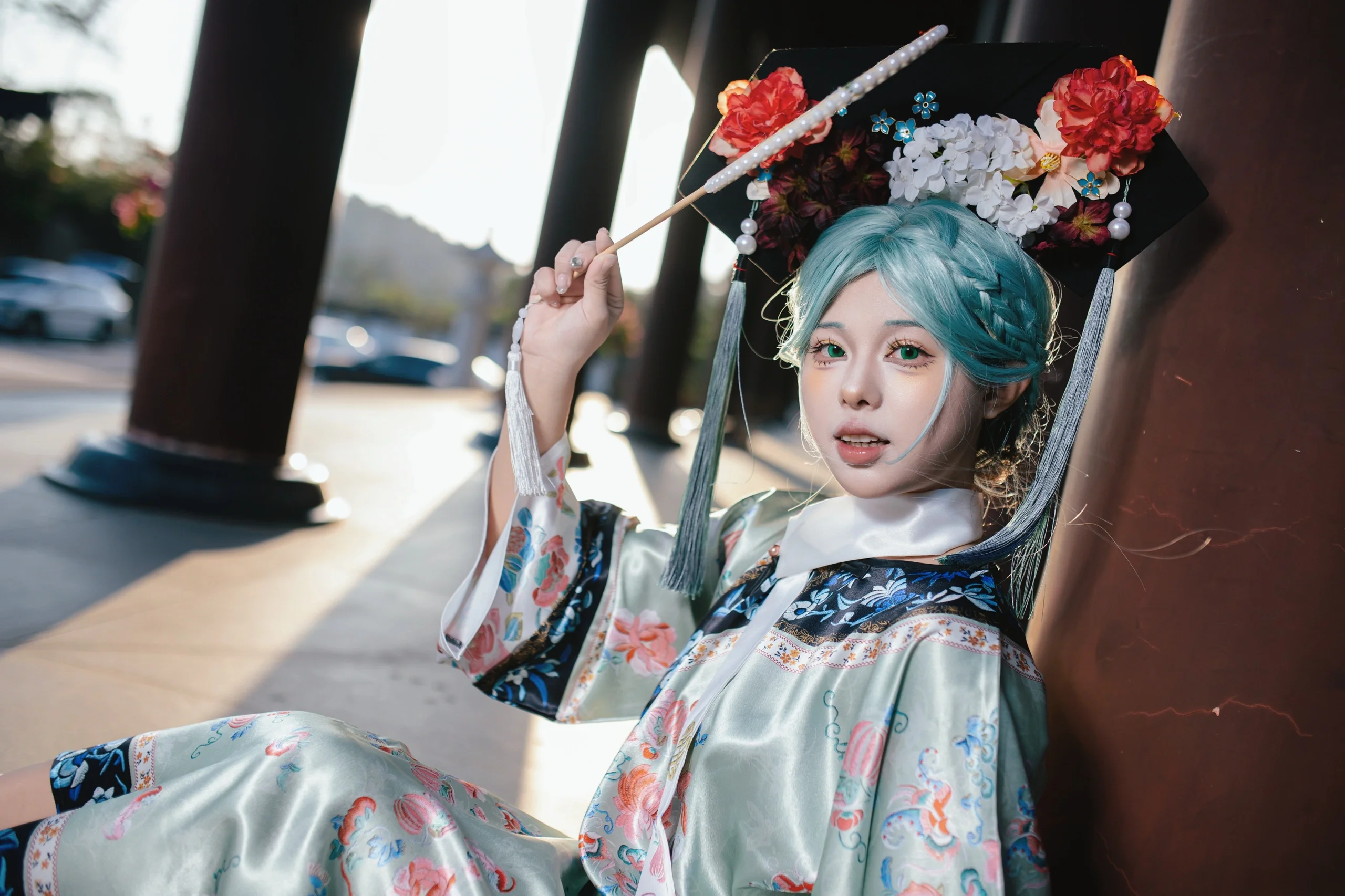
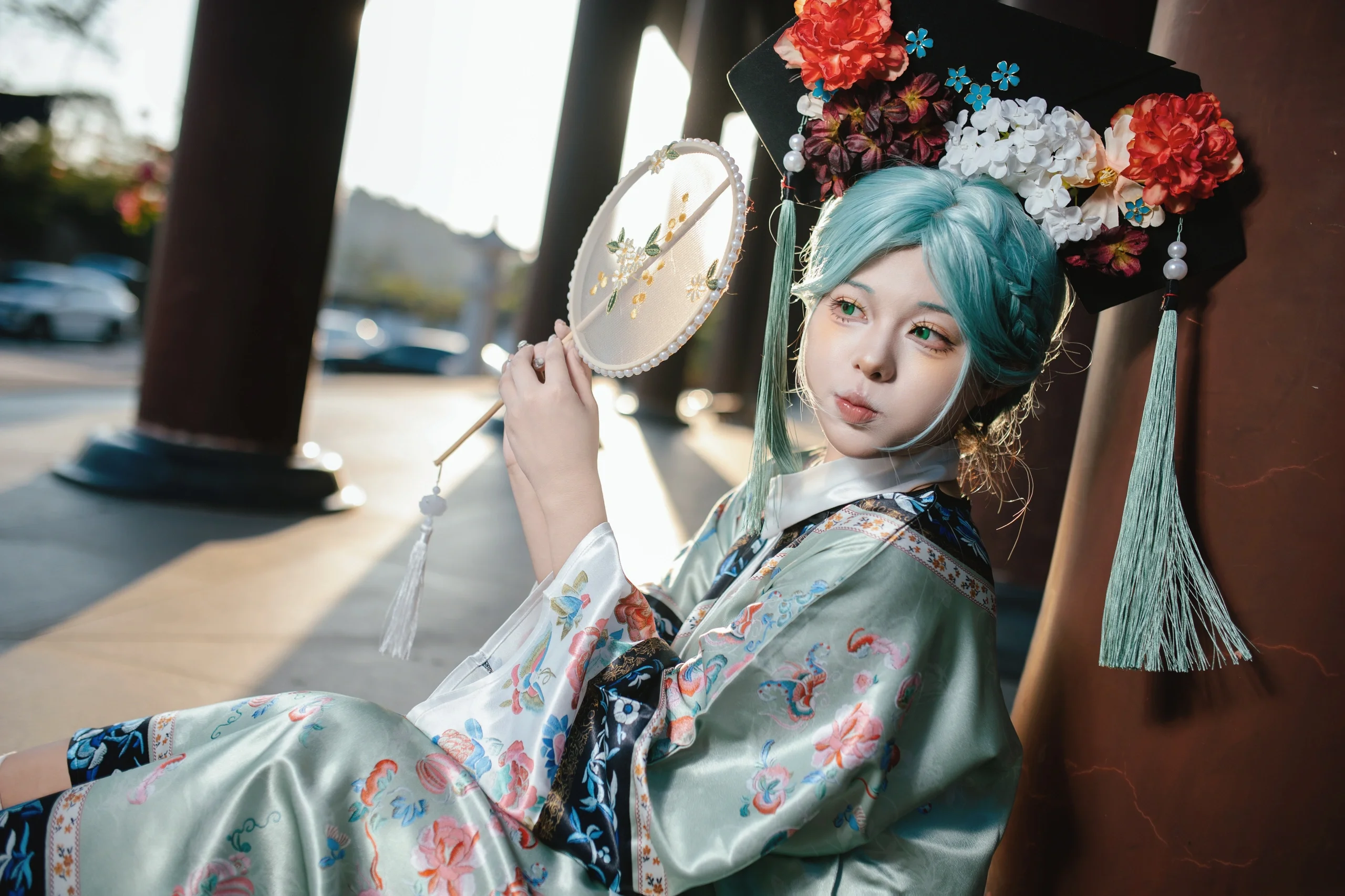
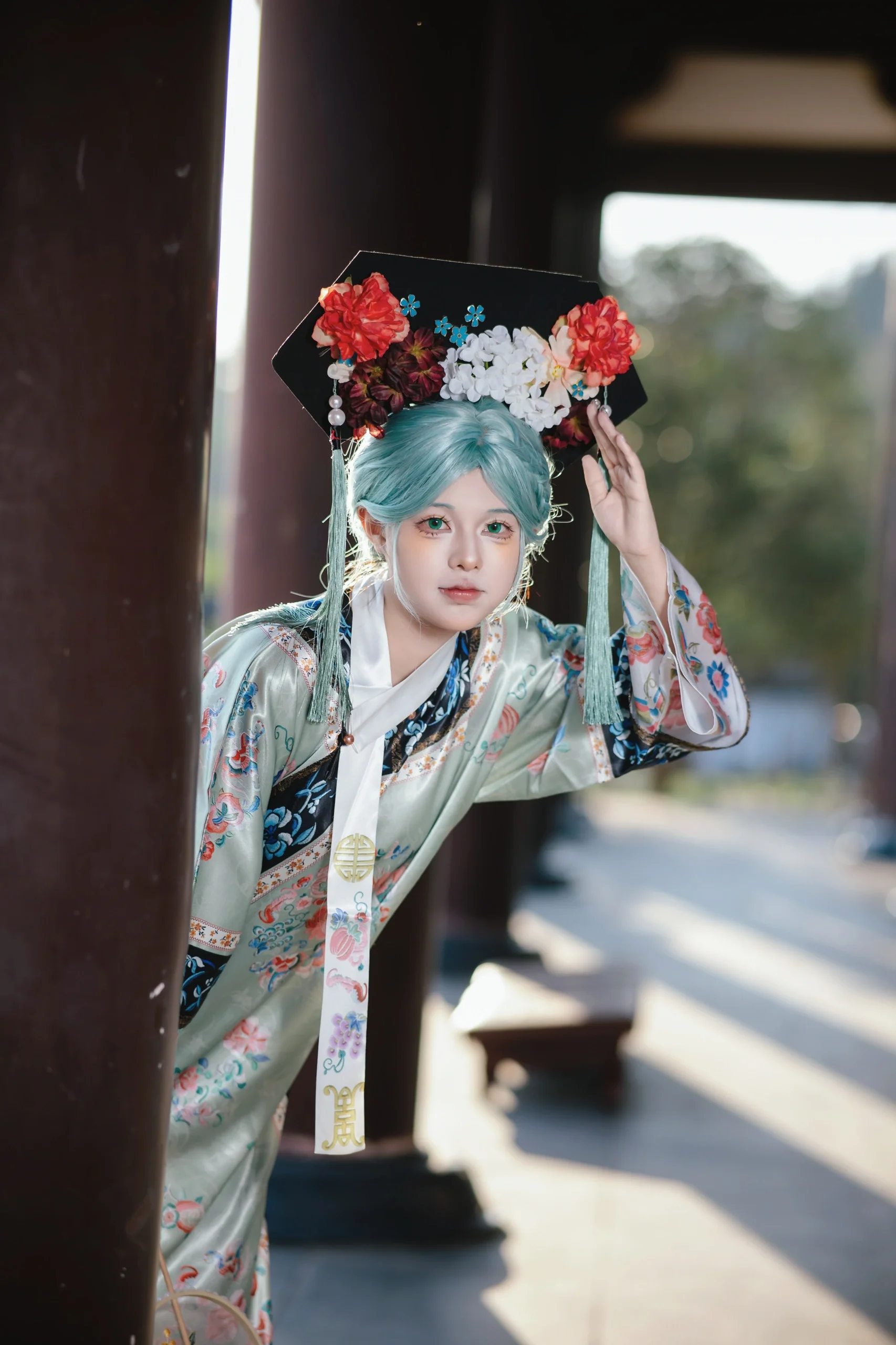
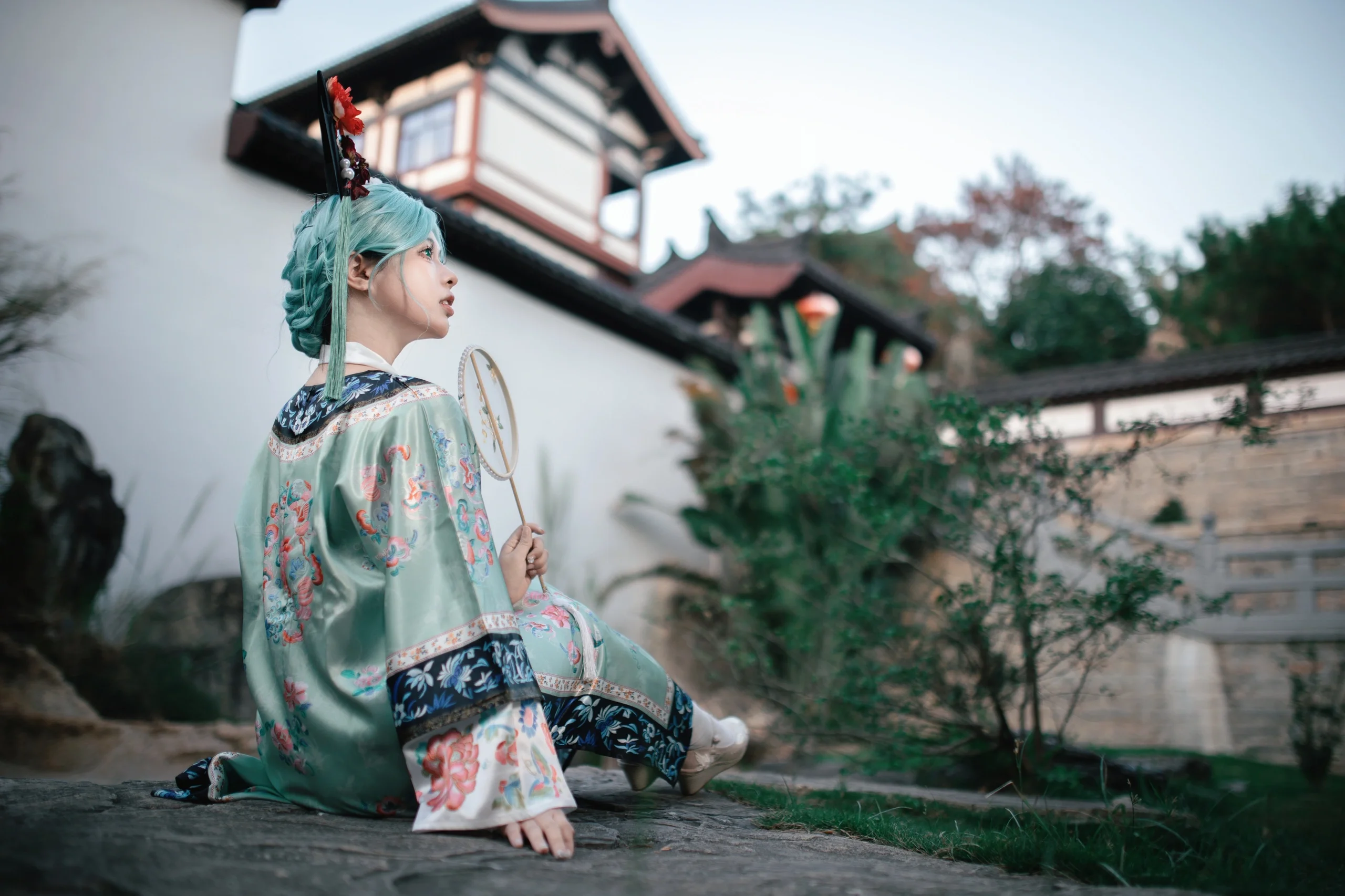
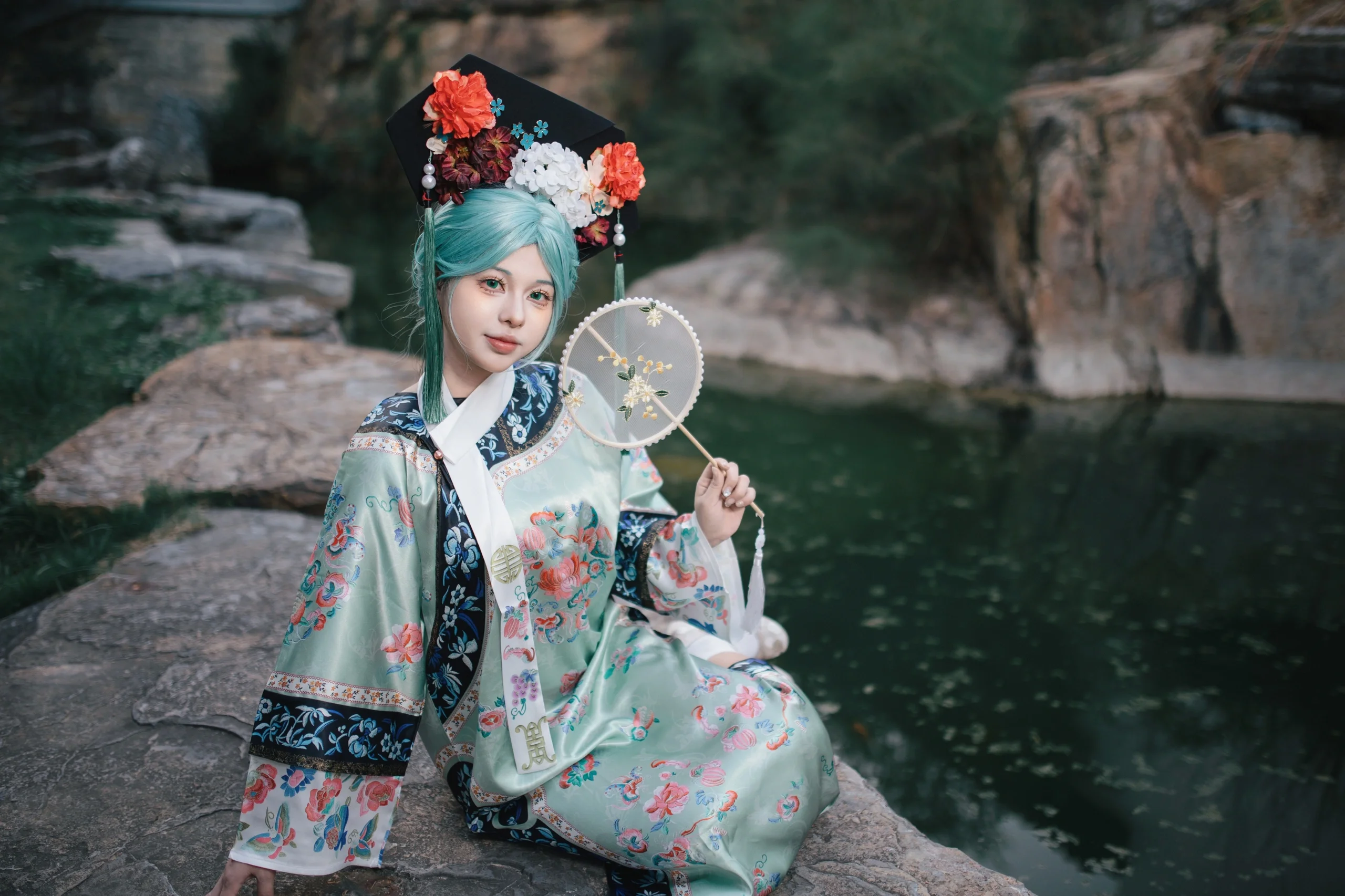
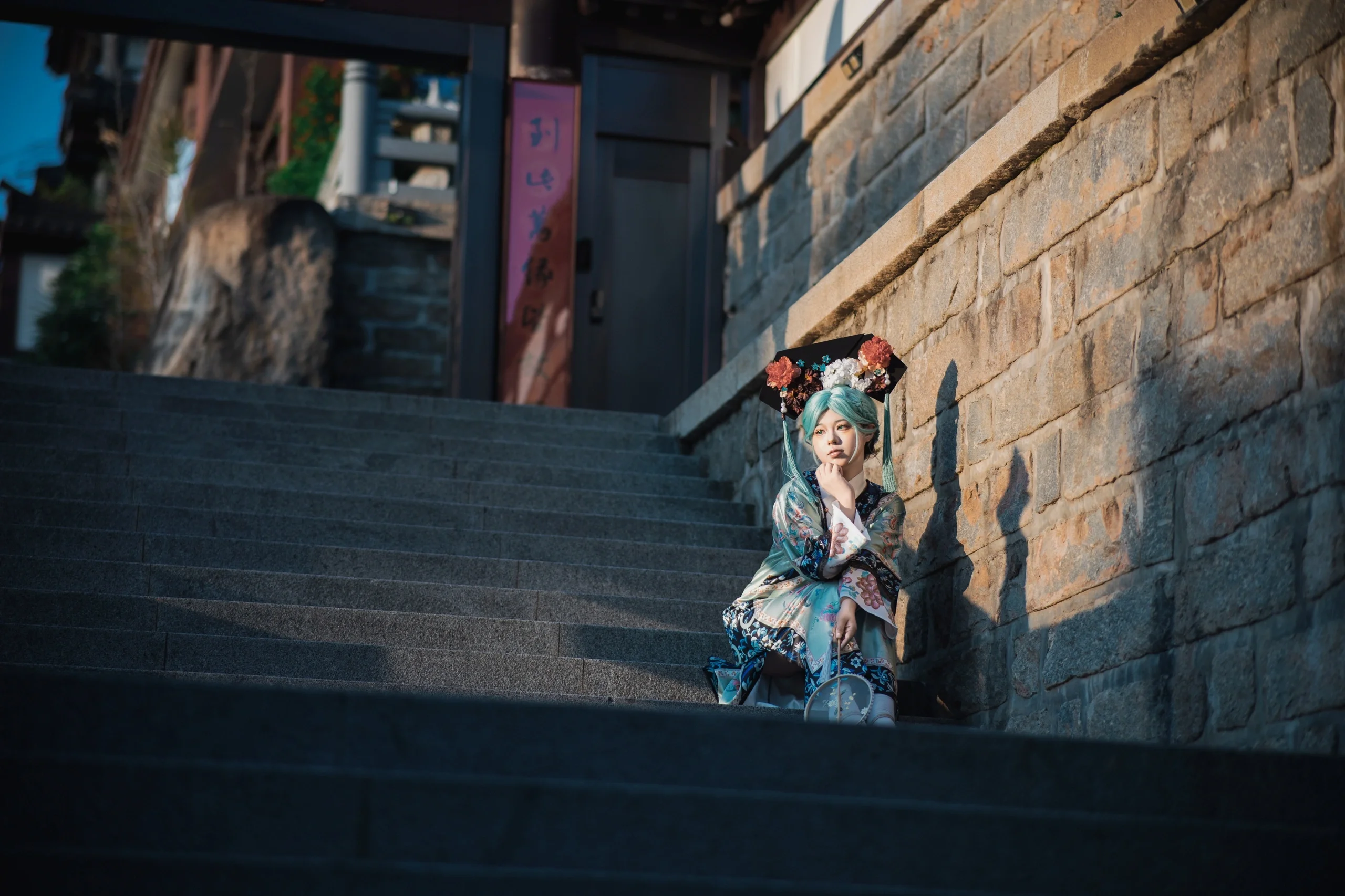
During the early planning phase, I paid special attention to the visual tone of the \"Qing Dynasty Hatsune Cosplay\" tag. I wanted to retain Miku's signature mint green hair color without losing the heavy, historical feel of traditional attire. I chose this mint green silk-textured robe, which is covered with delicate pink, white, and blue embroidery. The dark piping embroidery along the edges of the robe and the white hanging ornament at the collar bring out the layered depth of the entire outfit. To counteract the potential heaviness of the long robe, I paired it with white mid-calf socks and platform high-heeled white shoes, giving the overall traditional look a touch of the youthful girl energy unique to modern Cosplay.
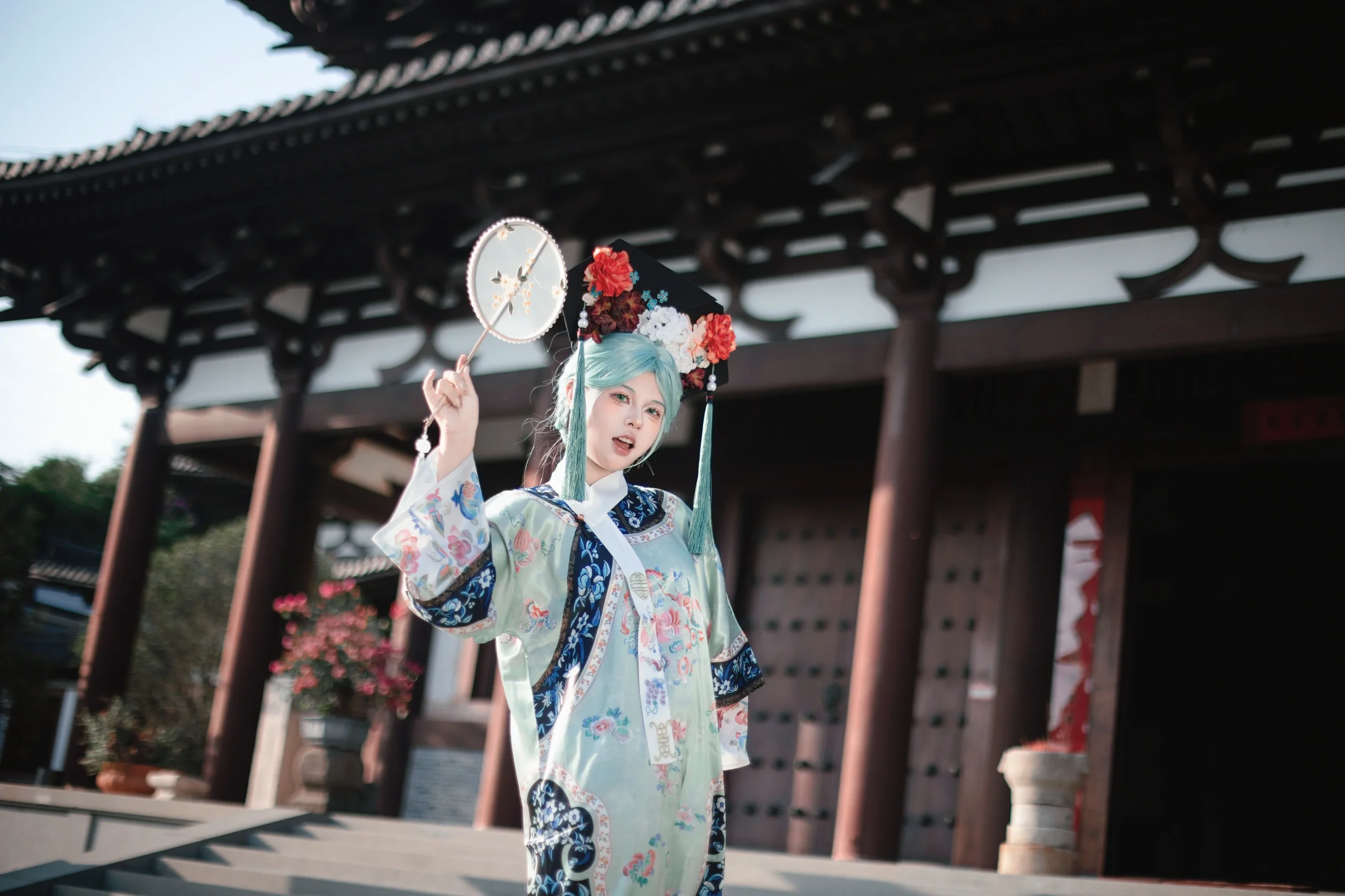
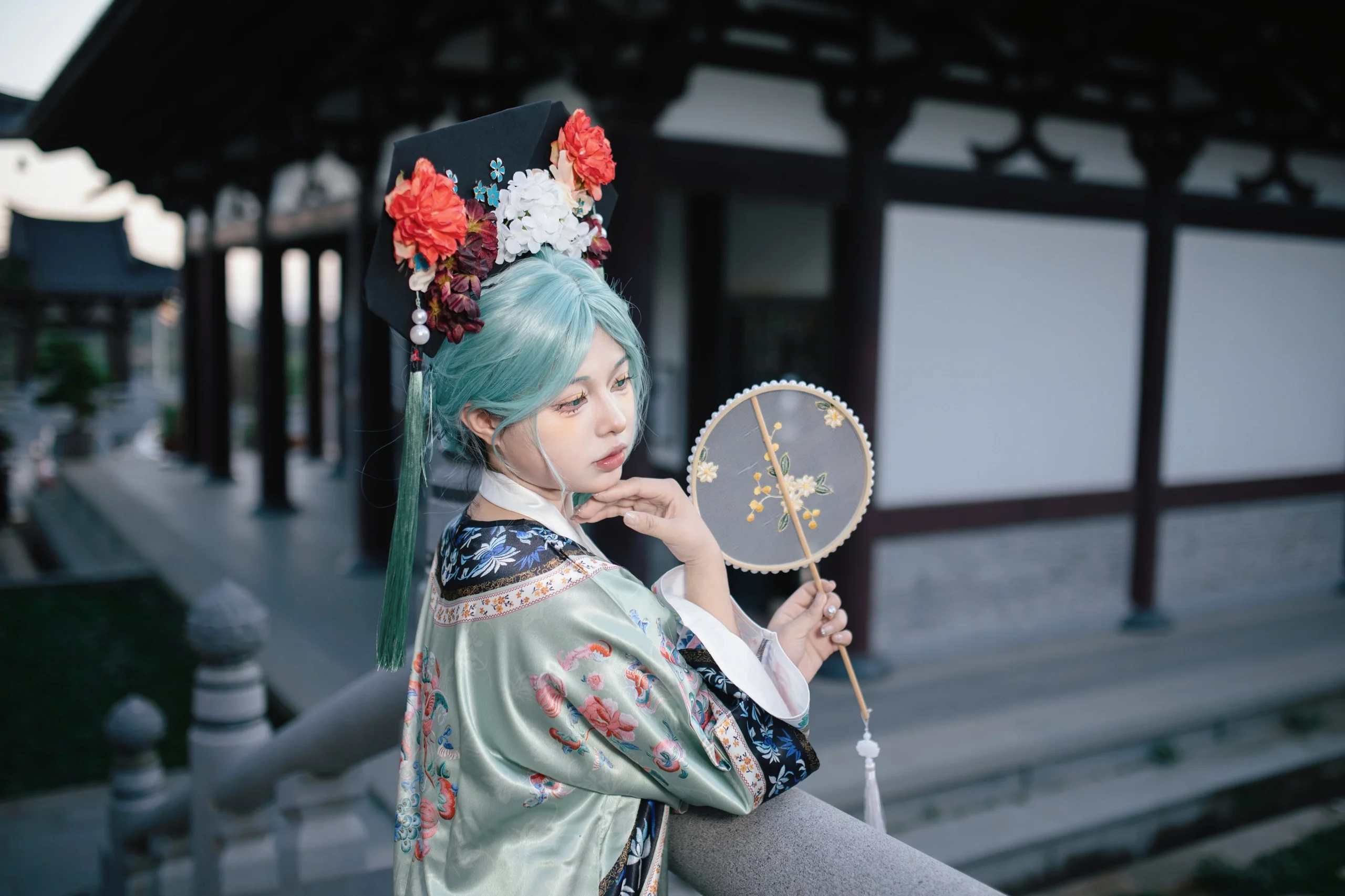
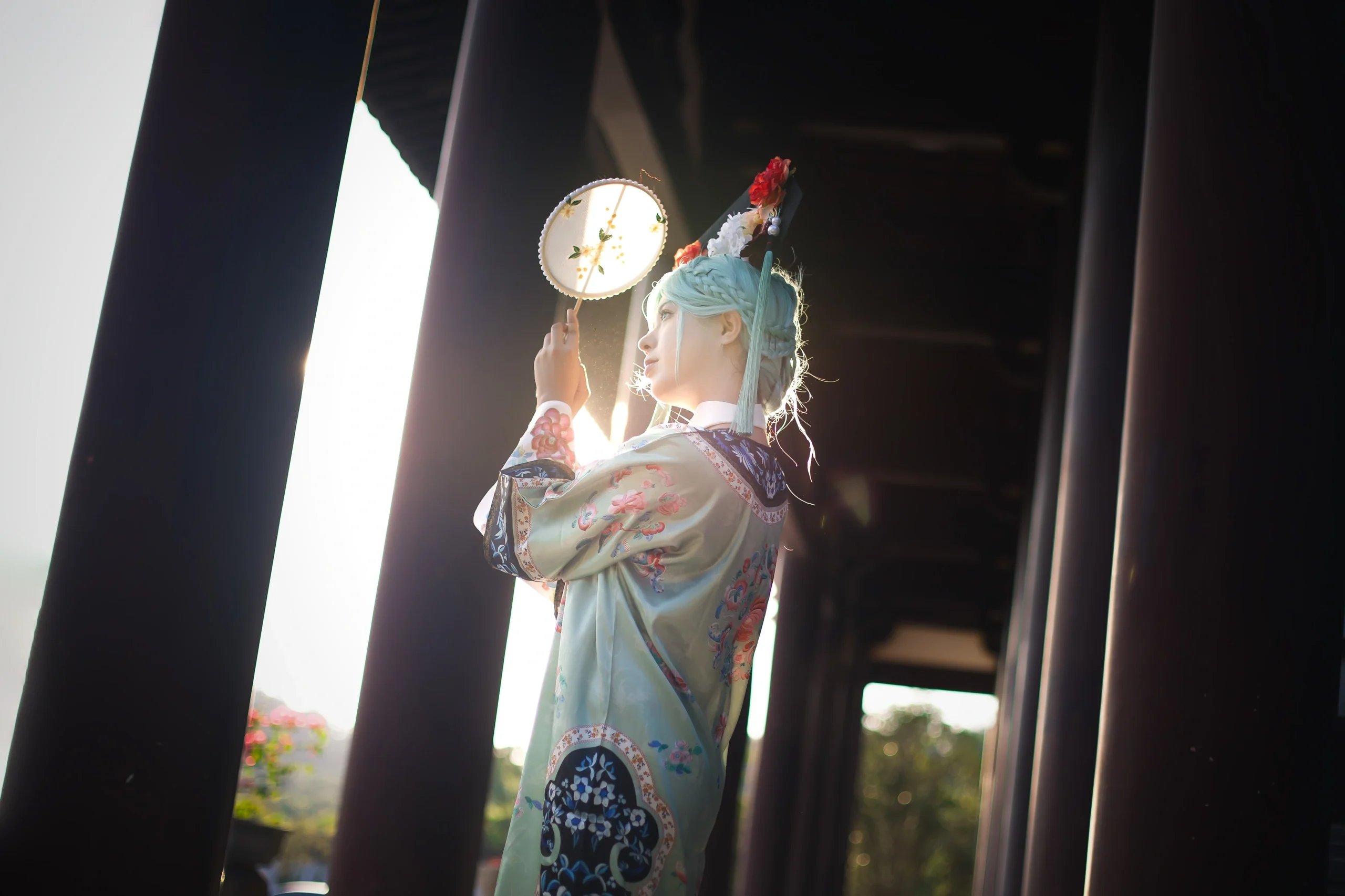
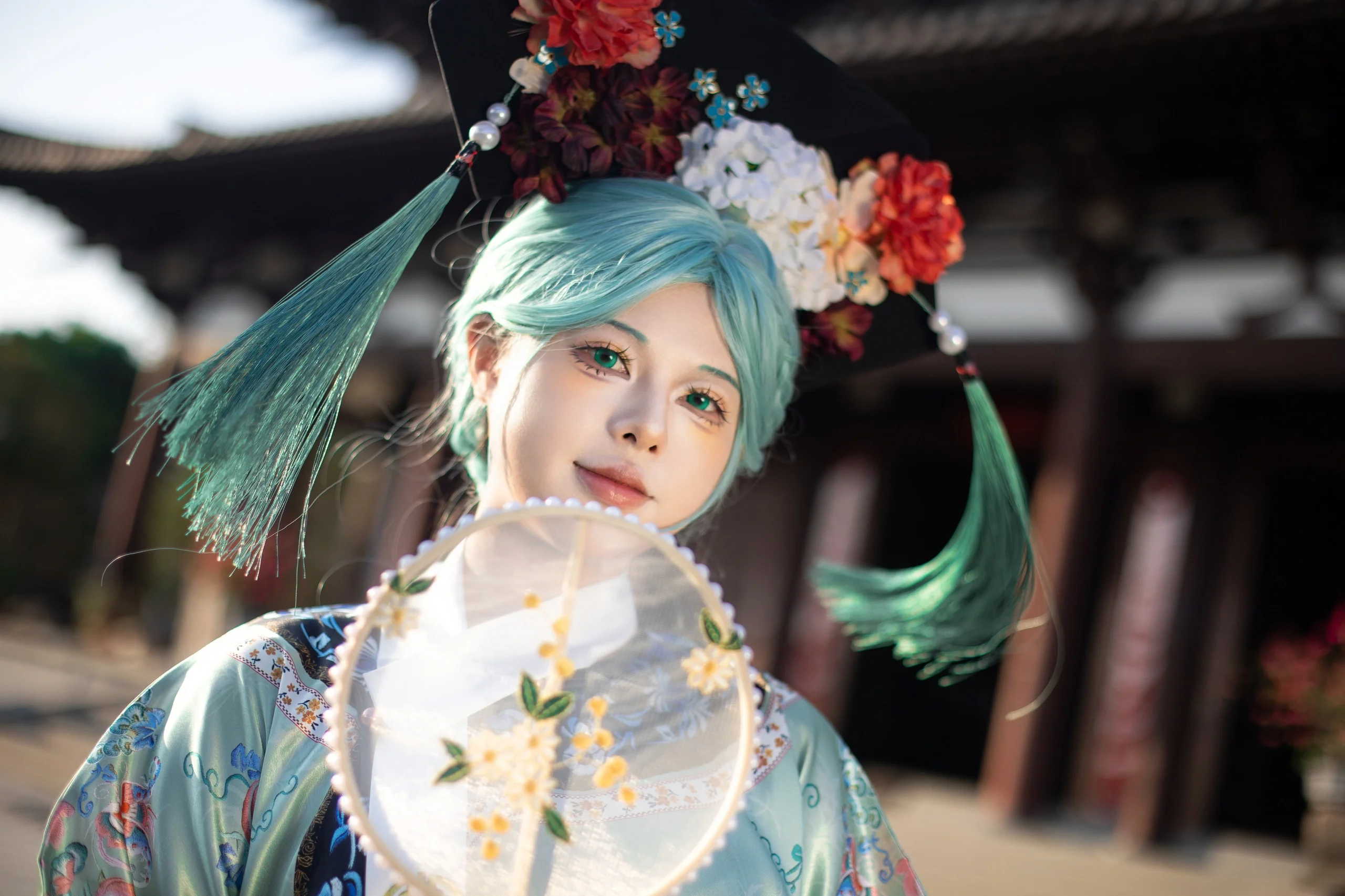
The black Da-La-Chi (Manchu headdress) on my head was the most difficult part of the entire styling. To keep it from looking too abrupt, I meticulously arranged large artificial flower decorations in red, white, and dark red on it. The two hanging mint green tassels perfectly echoed the color of my mint green wig, and the pearl strands added exquisite texture to the entire headdress. For props, I chose a white silk round fan with elegant floral embroidery; the white tassel hanging from the fan handle fluttered during movements, fitting the atmosphere of ancient-style cosplay photography perfectly.
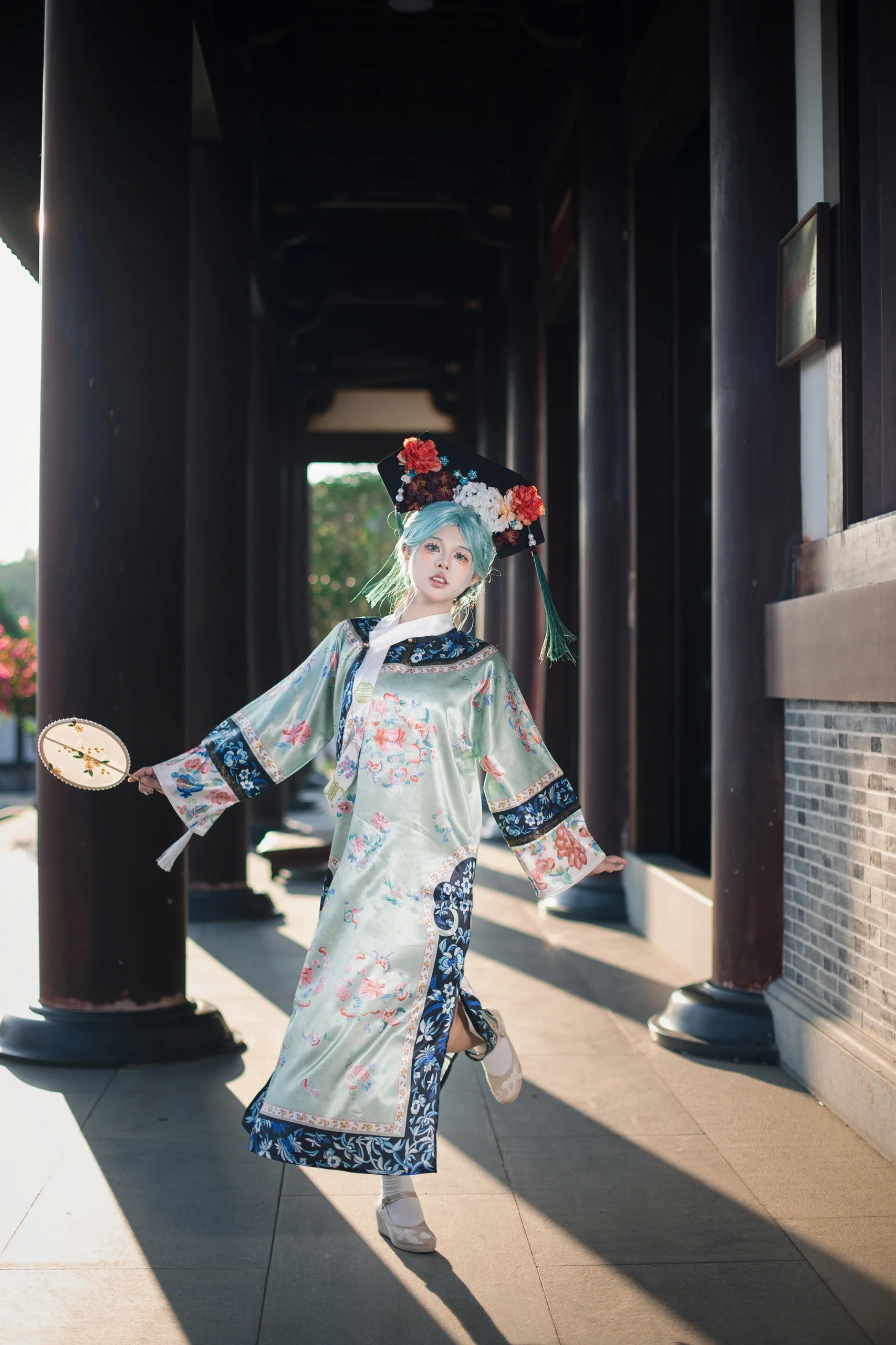
The light and shadow environment on the day of the shoot was incredibly amazing. The location was set in an ancient building corridor, where the dark wooden pillars and the blue-gray stone floor naturally carried a solemn Eastern aesthetic. The photographer utilized the long shadows cast by natural light between the pillars and the slanted afternoon sunlight to hit the silk fabric, creating a lustrous highlight texture. It made the outfit I wore look absolutely radiant. With every turn and raised arm, the floral embroidery on the dress stood out with three-dimensional depth under the light and shadow.
Throughout the shooting process, I experimented with different poses. When standing still, I would gently support my chin with my hand, focusing my gaze slightly in front of the lens to maintain a dignified yet playful state. When waving the round fan, I tried to stretch my body as much as possible, lifting my legs and raising my hands to capture the shape of the clothing in motion. The close-ups where I leaned against the pillars captured my most relaxed state—with the round fan half-masking my face or turning my face aside, that lazy expression actually gave the images more of a narrative feel.
Regarding this new Chinese-style clothing styling, some veteran anime fans might feel the leap is a bit large, and I personally understand that this kind of Chinese-style fan creation is indeed an \"OOC\" (Out Of Character) challenge. However, looking at it from another perspective, combining Miku's mint green with traditional Qing dynasty attire is actually a testament to the inclusivity and fun of Cosplay culture. Recreating the costume details, matching the makeup and hair, and finding the perfect outdoor location made the final photos show that this cross-era collision is incredibly interesting. The post-shoot editing also tried to preserve the real light and shadow as well as a natural skin tone, avoiding any exaggerated filter modifications, with the exact goal of making this styling look like a proper Hatsune Miku Cosplay work while maintaining a certain ancient-style cosplay texture.
Every time I do this kind of original ancient-style cosplay, I have to follow through with the entire process—from selecting fabric styles, trimming the wig, matching accessories, to managing the lighting and poses. Though tedious, each successful shoot brings a refreshing sense of breaking through traditional settings. This is probably why I have always loved shooting cross-domain Cosplay: being able to constantly try placing anime characters into different dimensions for interpretation. The chemical reaction generated between the character and the environment is far more interesting than simply reproducing the standard formula outfits.