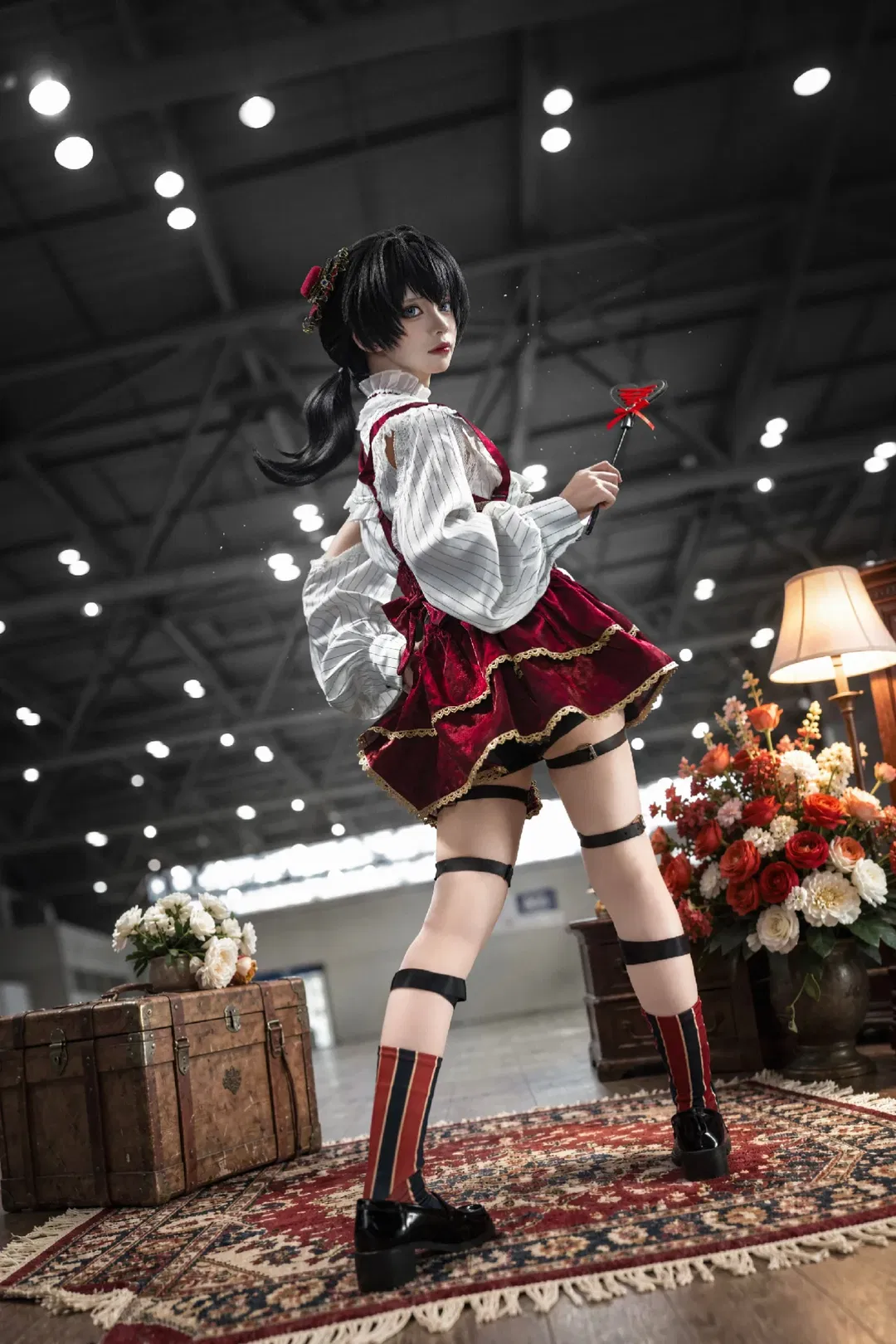
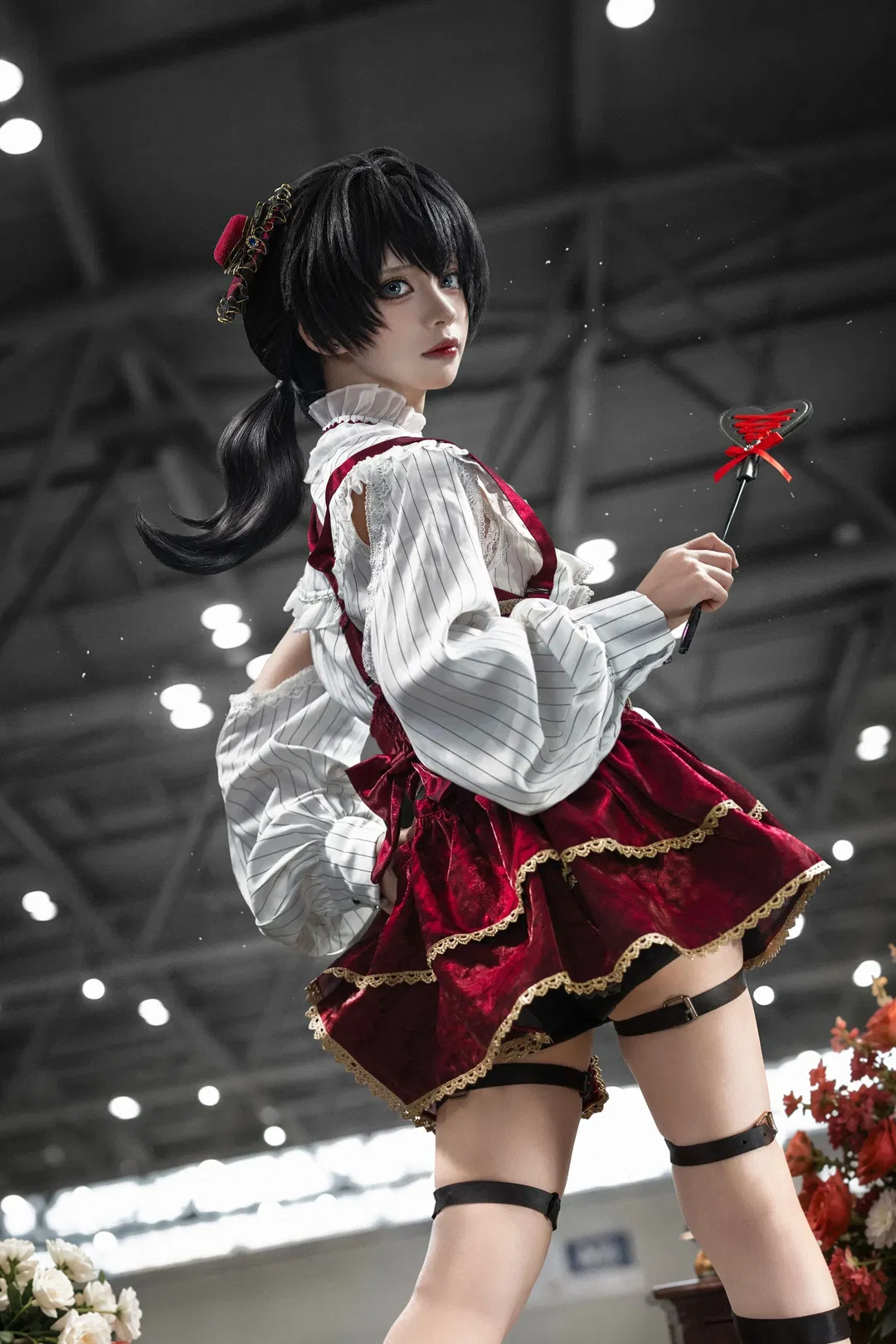
This time I tried Elizabeth Bathory's styling. The material layers of this outfit are extremely rich, and a lot of thought had to be put into showcasing the details during the shoot. The deep red velvet slip dress is prone to reflecting light under the overhead lighting of the exhibition hall, so during shooting, it was necessary to constantly adjust the model's positioning and facial angles facing the light so that the velvet texture looked high-end rather than dull. The white fine-striped puff-sleeve shirt underneath is a loose fit, and the cutout designs on the sides and back offer good breathability. However, the sleeves are very wide, so when making movements, one must be careful not to wrinkle the clothes too much, otherwise they might look insufficiently neat. To match the character's temperament, the head styling underwent major modifications. Black straight-cut bangs paired with a small ponytail at the back of the head, accented with a red-and-gold vintage hair accessory, create a strong sense of layering. In terms of makeup, to highlight that stern yet somewhat mysterious feel, I deliberately chose blue contact lenses, deepened the elongated effect at the outer corners of the eyes with eye makeup, and paired it with true red lipstick, making it highly recognizable in a dim-toned venue. The lower-body outfit is the part I personally like best. Red-and-black striped stockings paired with black platform leather shoes can visually lengthen the proportions of the calves very well. Combined with the black leather leg garters on the thighs, it adds bare skin breathing room when walking and posing, making the overall slightly heavy vintage dress look lighter. However, the elastic bands of the leg garters need to be adjusted properly; shooting convention photos involves high physical activity—too loose and they easily fall off, too tight and they dig into the flesh, so a balance must be found. The black cane prop in hand features a red heart decoration at the top; when shooting glancing-back or sideways poses, placing it in front of the body or lifting it slightly can effectively guide the audience's line of sight and make hand movements less awkward. For the full-body shot, I chose an angle with my back to the camera and turning sideways to glance back; this posture not only showcases the three-dimensional sense of the skirt's multi-layered pleats and the details of the golden lace trim, but also highlights curves through body twisting. Because the skirt hem has a natural fluffiness, applying a bit of strength during movements makes the arc of the skirt hem look even better. The second close-up shot was intended to showcase the upper body's striped fabric and facial makeup. A slightly low-angle upward shot can make the model appear more powerful. The ambient light in the exhibition hall is relatively complex, and the background vintage suitcases and vibrant floral arrangements as supporting elements can enrich the colors of the frame, but depth-of-field control during photography is crucial so that the background doesn't steal the visual focus from the character. Overall, every accessory of Elizabeth Bathory's styling, from the vintage hair accessory to the leg garters and stockings, needed to be carefully arranged and presented in front of the lens. Shooting in a noisy environment like an anime convention makes it easy for the model's state to be influenced by the surrounding crowd. Therefore, during shooting intervals, we tried to stay as focused as possible and communicate more with the photographer about the desired atmospheric vibe of the frame. For example, the landing point of the gaze—whether looking at the lens or to the side—conveys different emotions. For this set of photos, we tried a portrayal leaning towards coldness and a sense of distance, so we did some deliberate training on facial muscle relaxation and the sharpness of the gaze, which is also a key step in breaking the dimensional wall for a two-dimensional character.