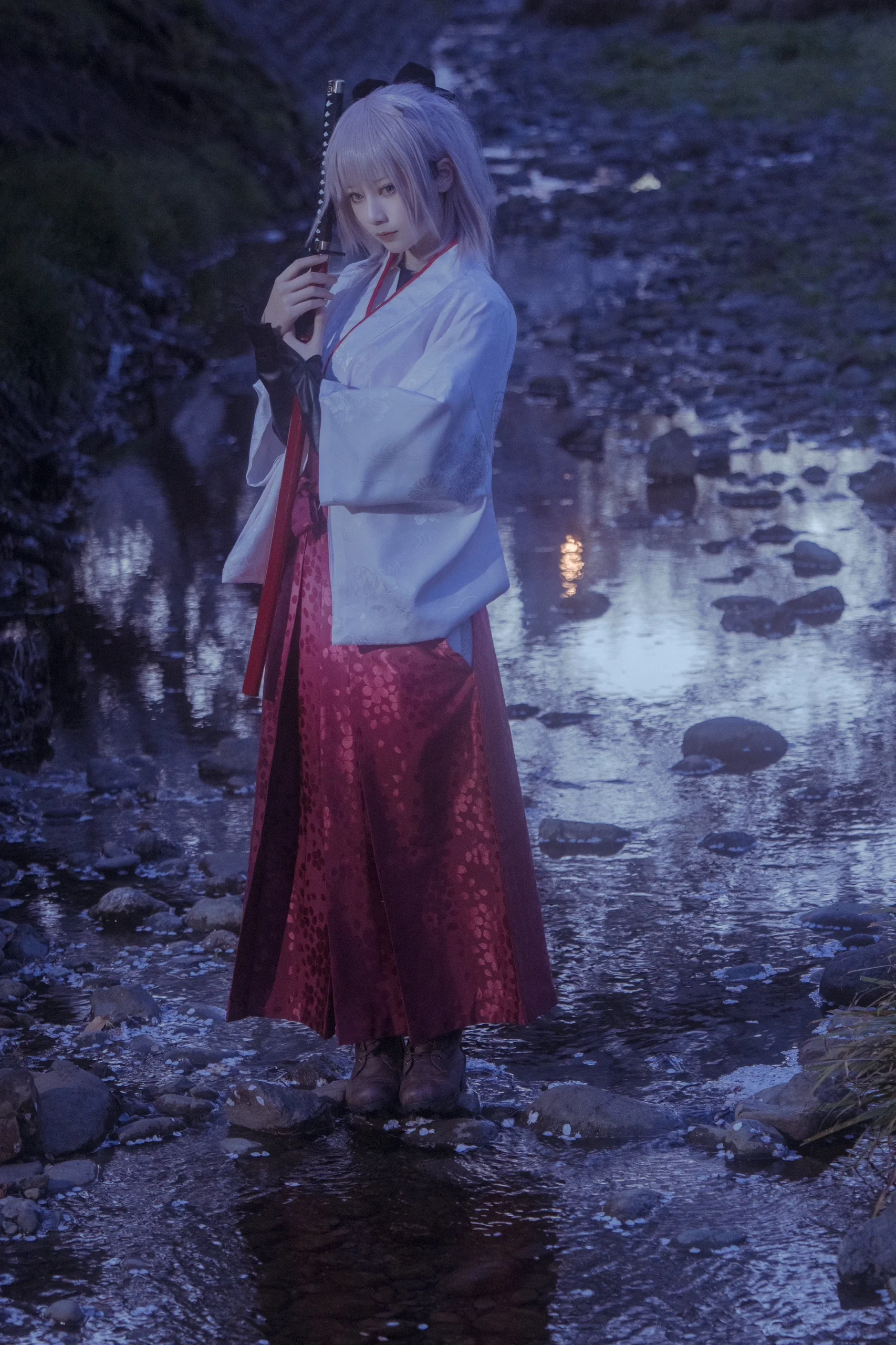
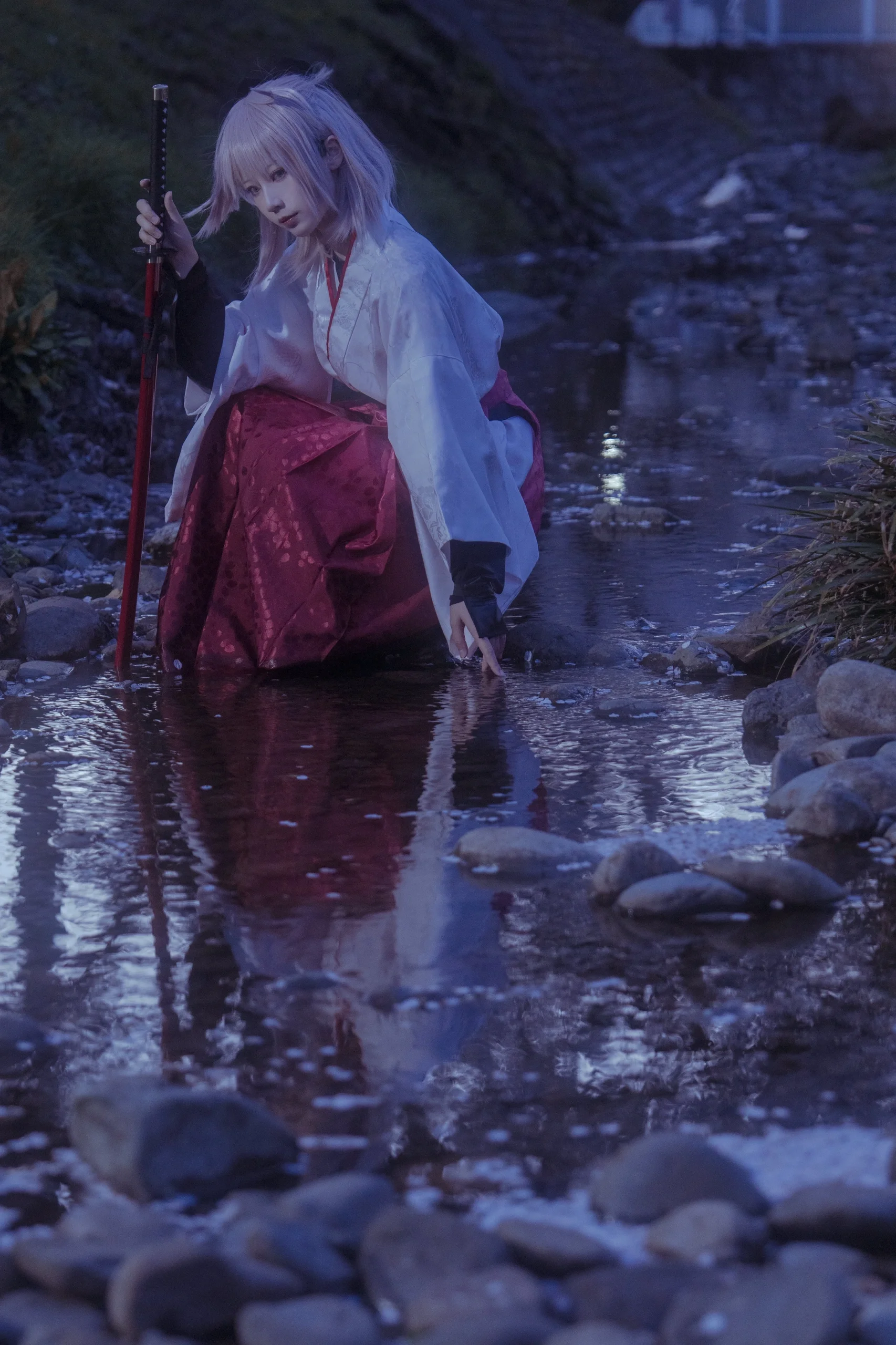
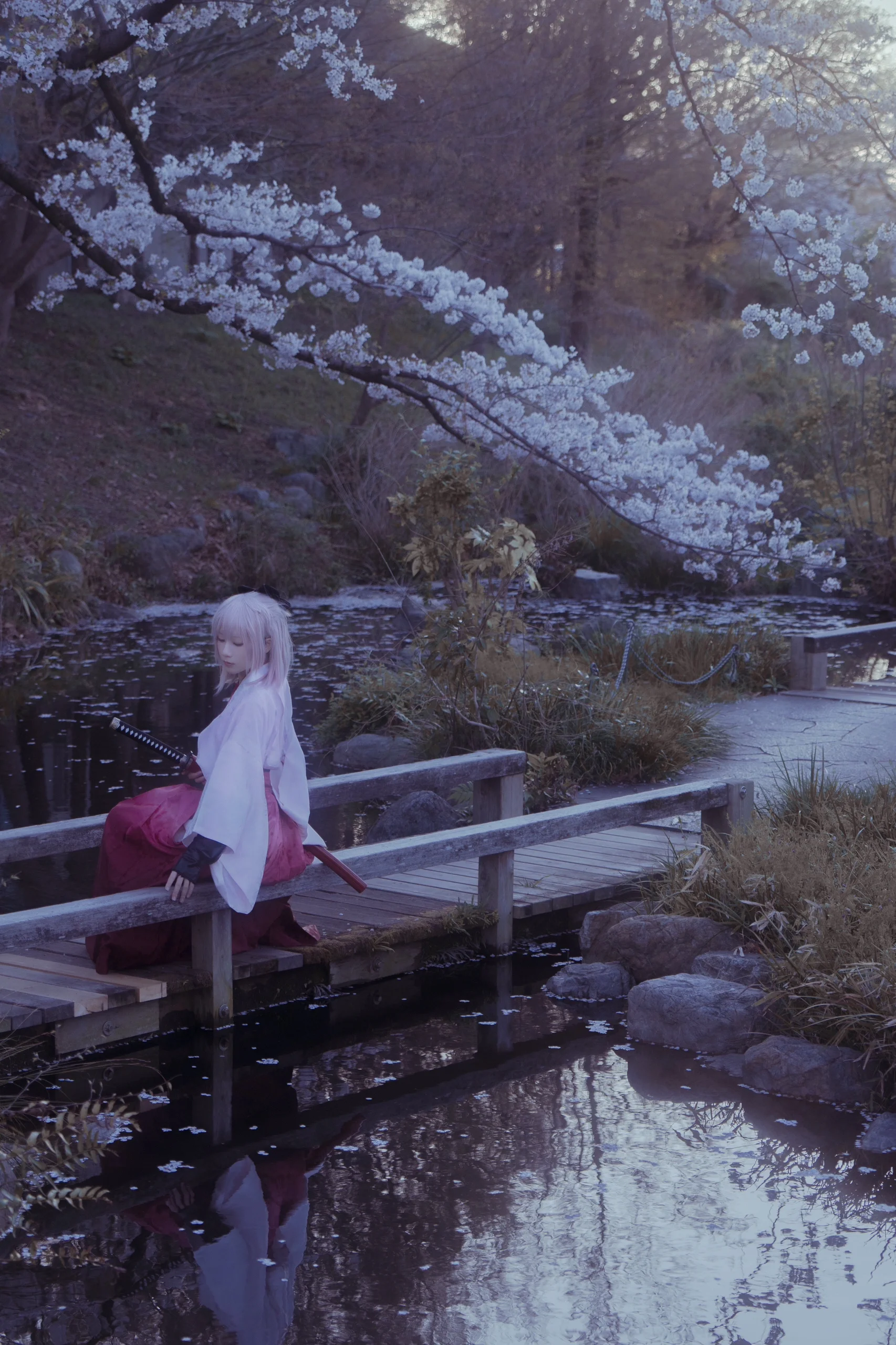
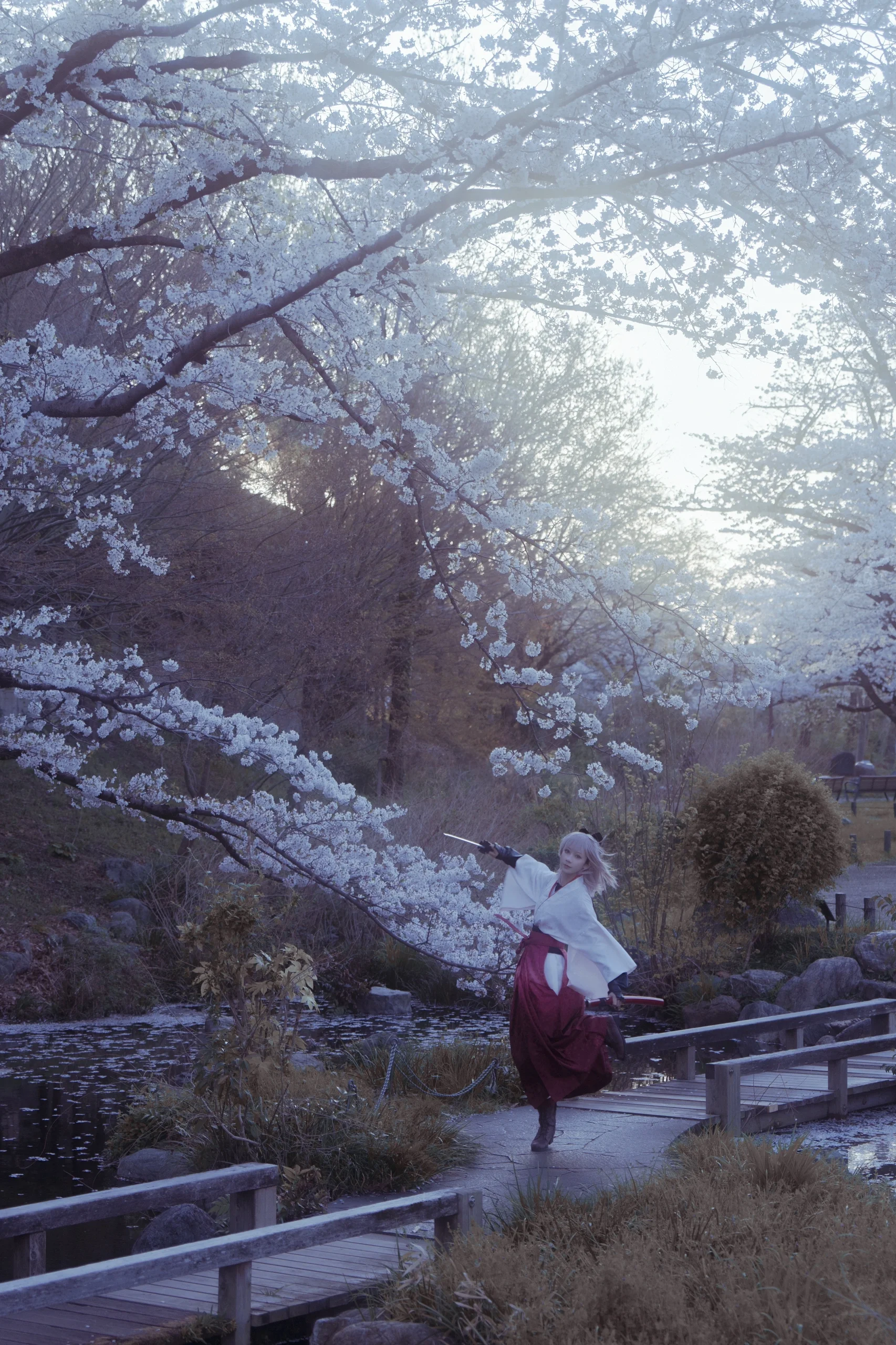
From the very beginning, this shoot of Okita Souji was set with a tone of 'stillness' and 'mono no aware.' The moment I stepped into the stream, the gravel bed was clearly felt through my boots, and the coolness of the water rising above my ankles indeed cleared my mind. Figures 1 and 2 were completed in the water. The reflection on the water's surface served as a highly natural framing; bending down half-way to touch the water with my fingertips, the subtle ripples broke up the seemingly static composition, adding a flowing sense of time as if in a movie. To avoid looking stiff, I paid special attention to relaxing my shoulders when adjusting my center of gravity, allowing the kimono's folds to drape naturally with the posture.
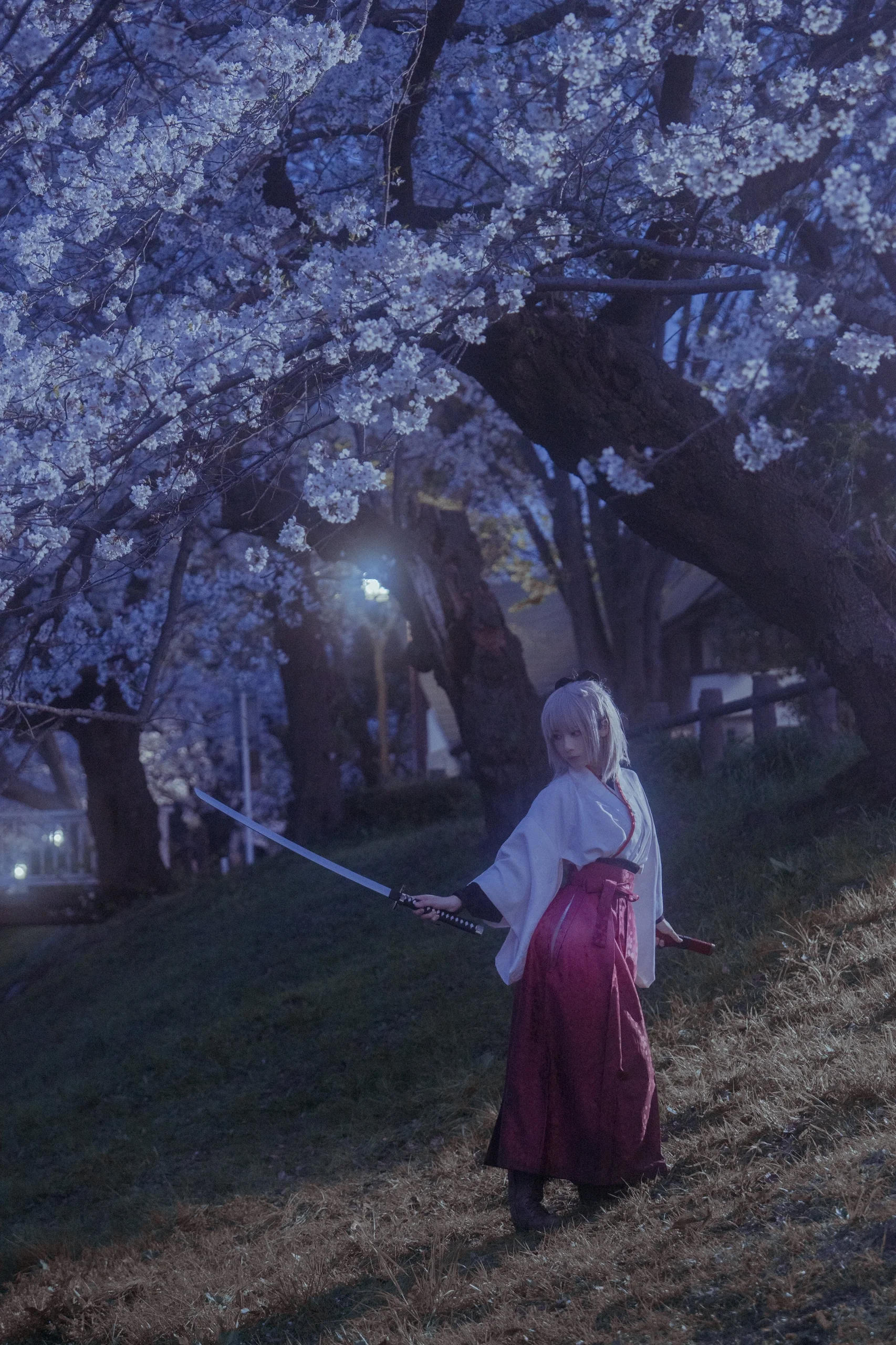
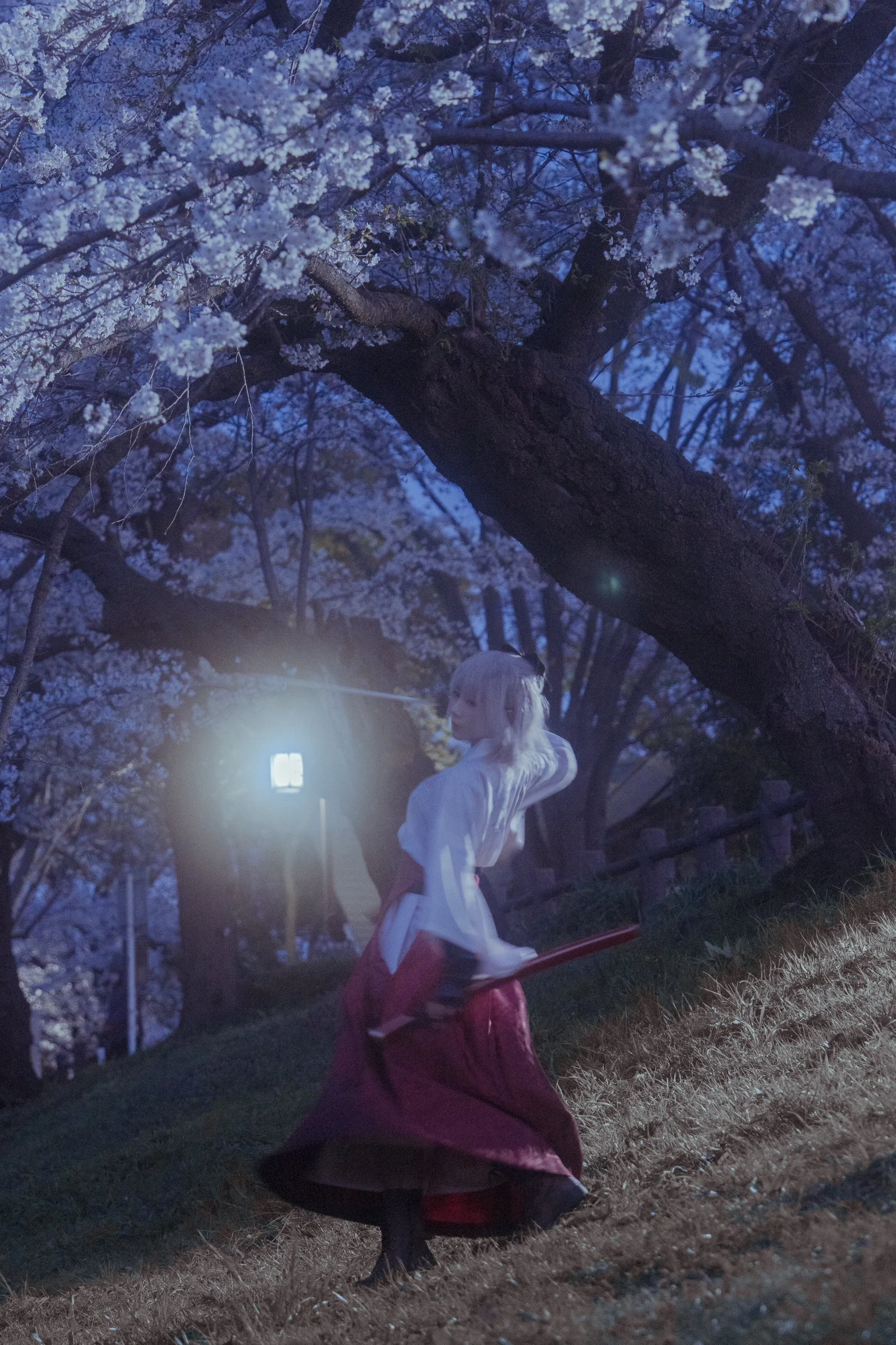
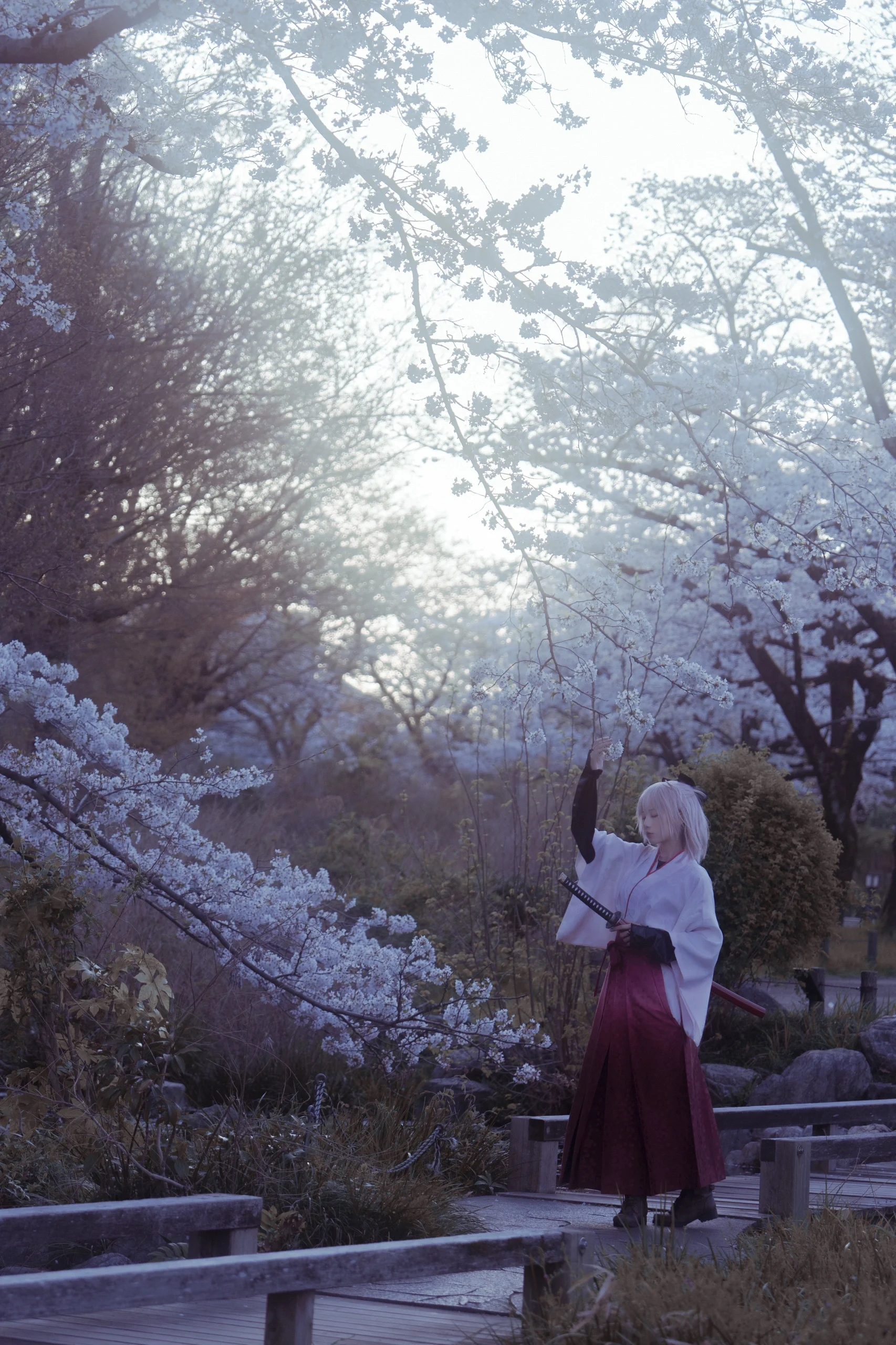
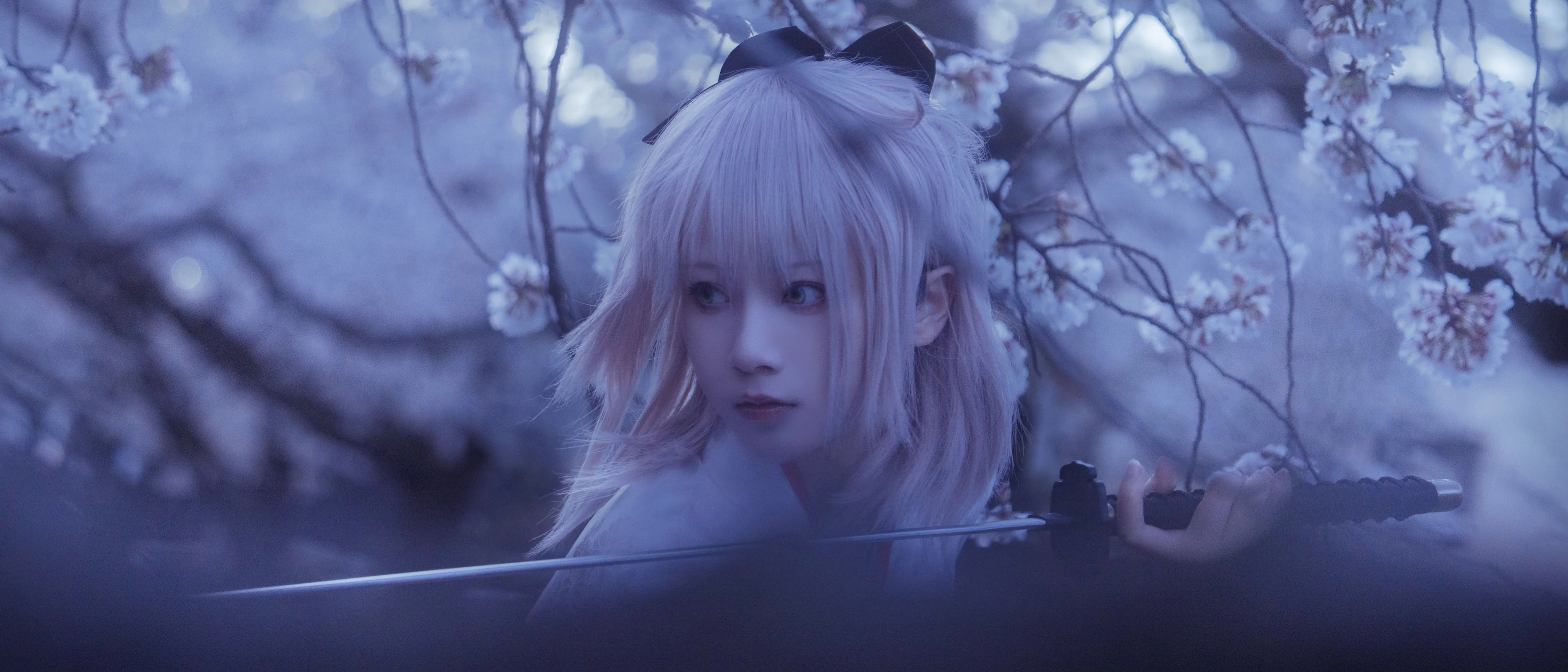
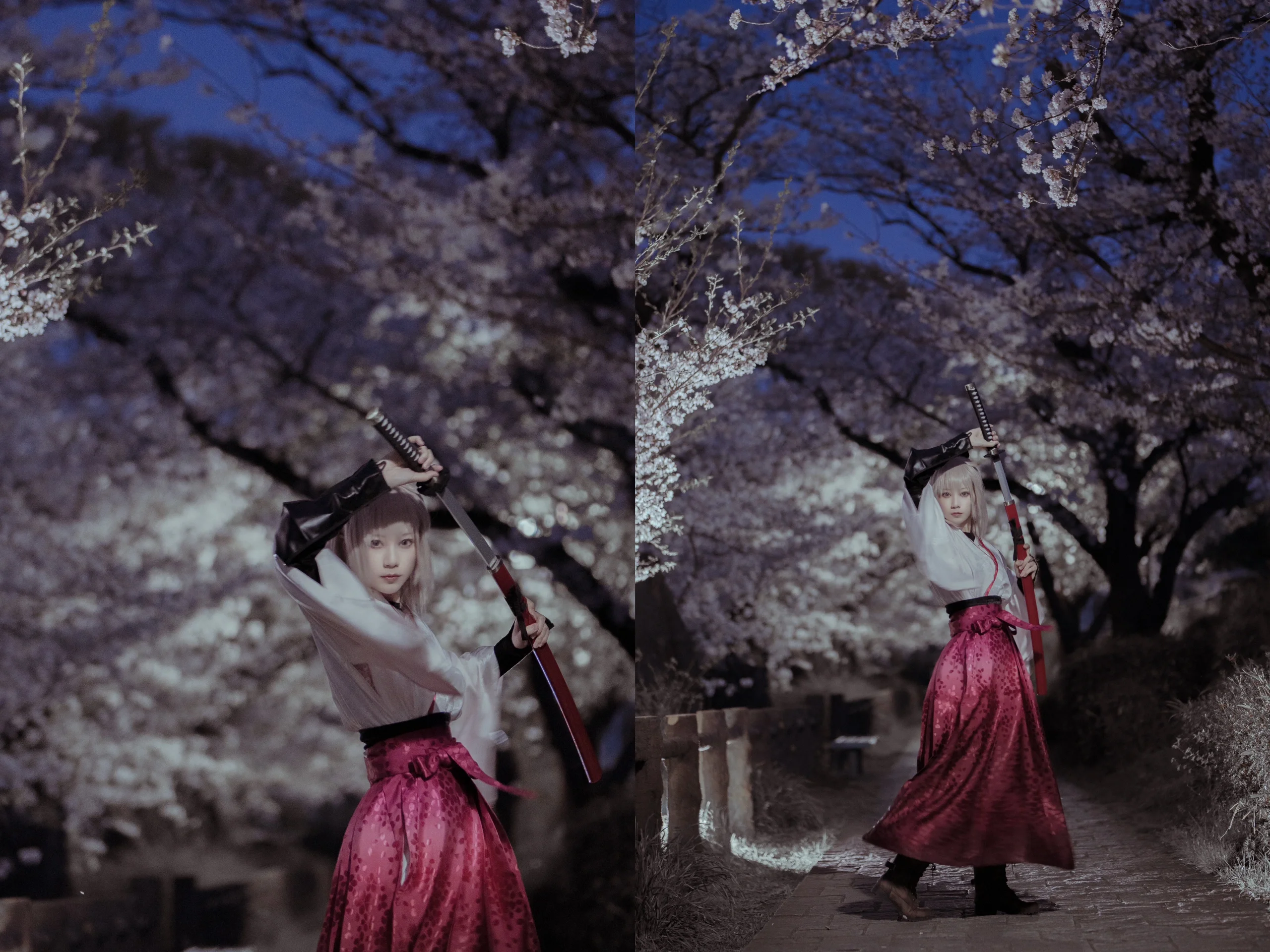
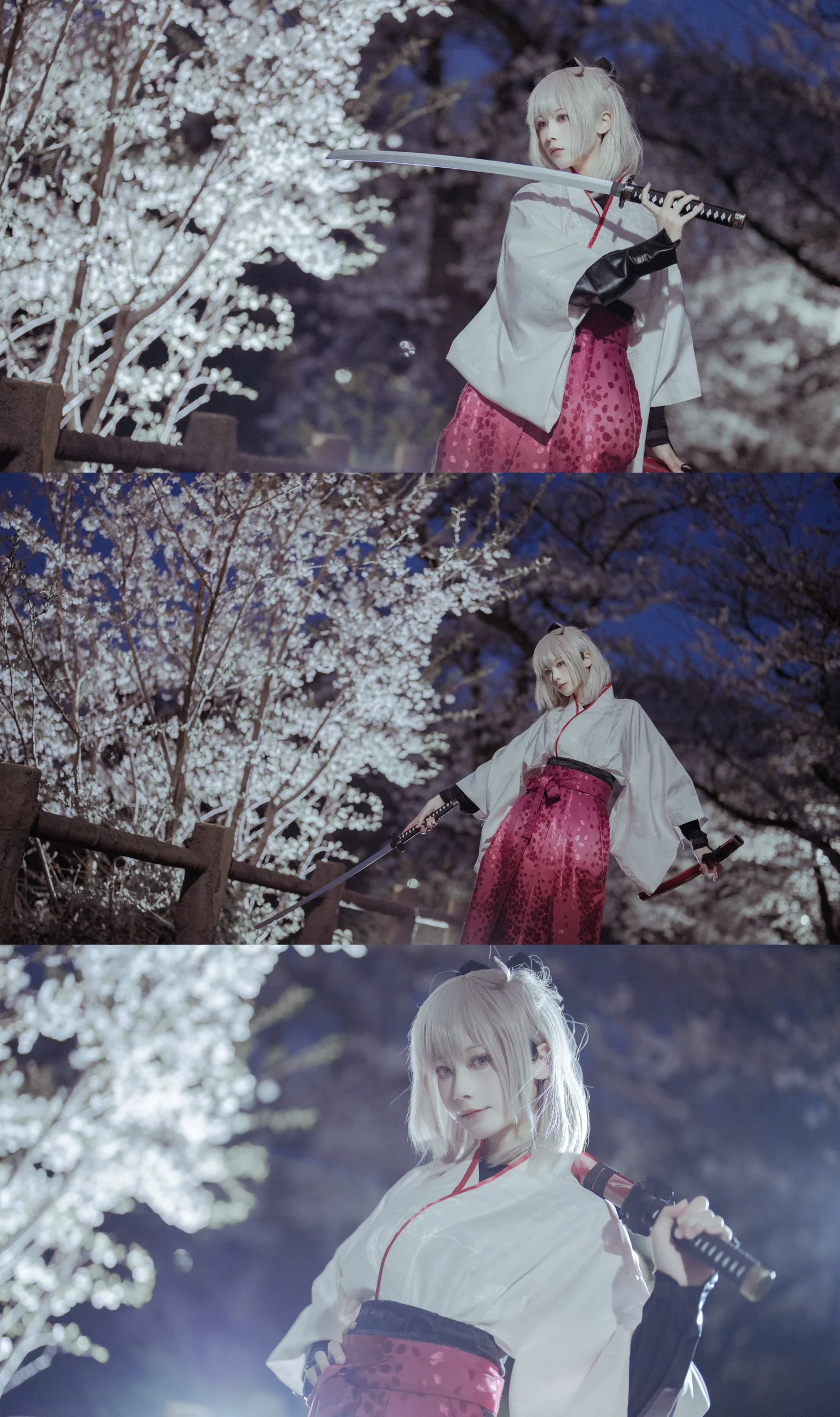
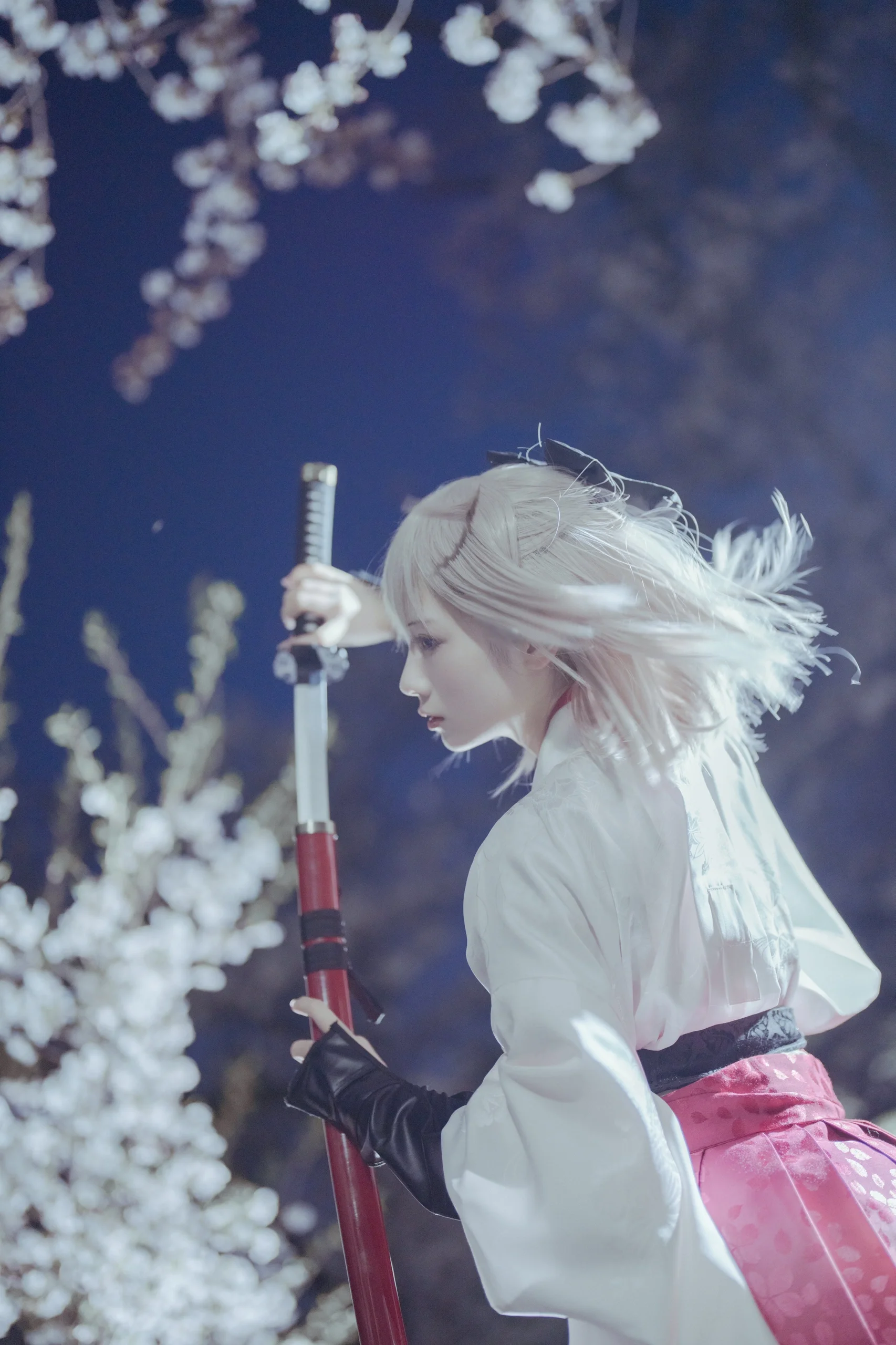
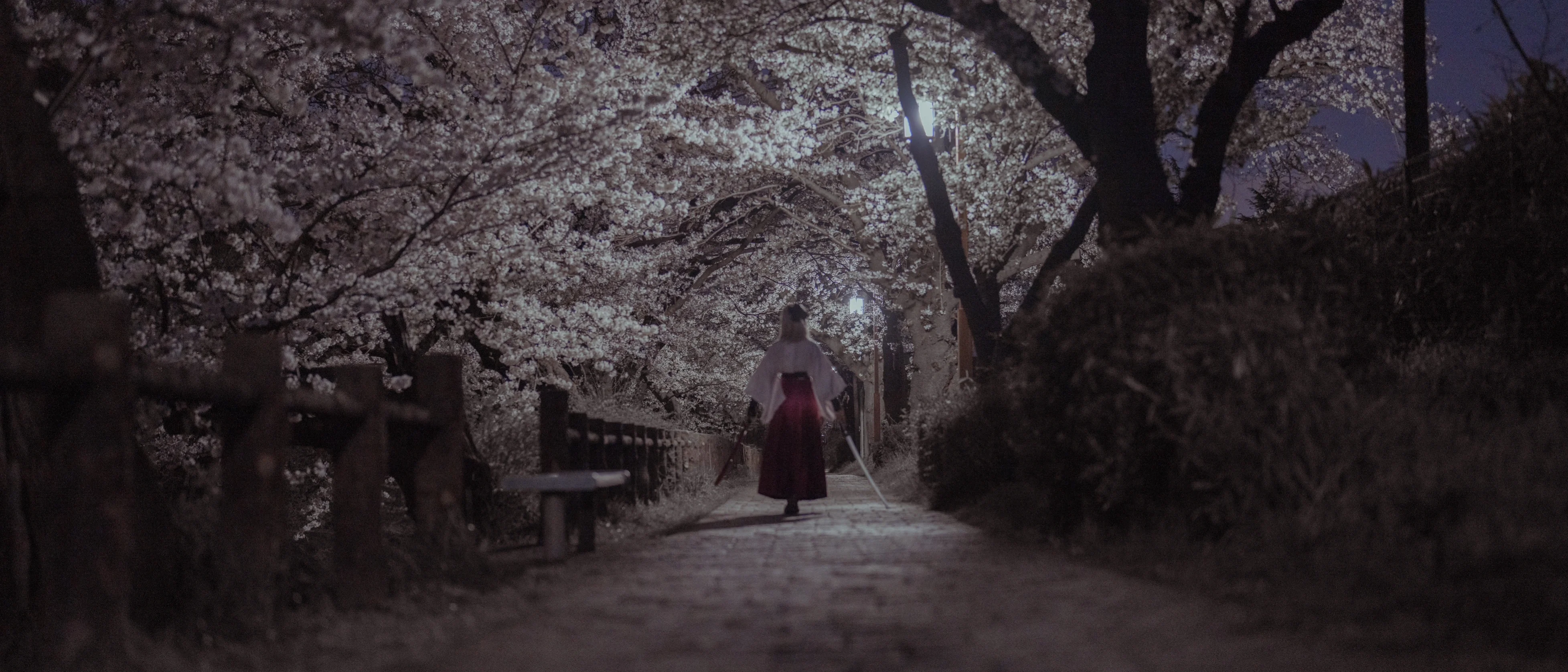
Later, we moved beneath the night sakura slope (Figures 3 and 4), where the environmental lighting became much more complex. The blooming Sakura Blossom on the trees interwoven with the warm glow of the streetlights. For the sword-drawing pose, I deliberately lowered my center of gravity and leaned slightly forward to mimic a ready-to-dash state. Figure 4, however, captures the exact moment of turning around. The photographer caught the sweeping arc of the katana and the dynamic swing of the hem, which, paired with the brilliant light flares in the background, presented a highly sharp street-style aesthetic. During movements with a large range of motion, the hardest part was controlling the red-and-white kimono and long hakama; a hem that is too heavy easily drops down, while one that is too light lacks visual tension, so it requires finding the rhythm of the fabric's airtime through repeated actions.
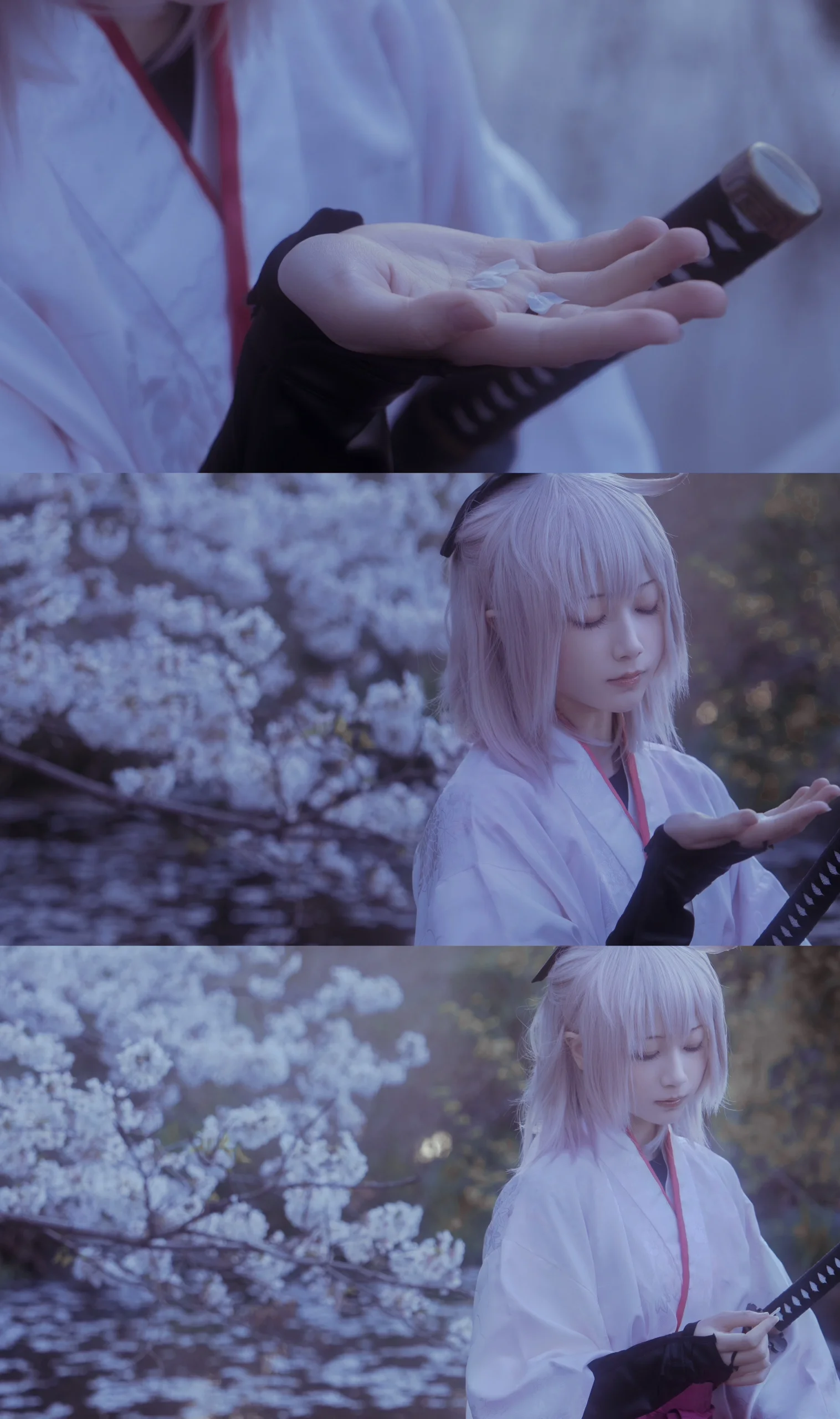
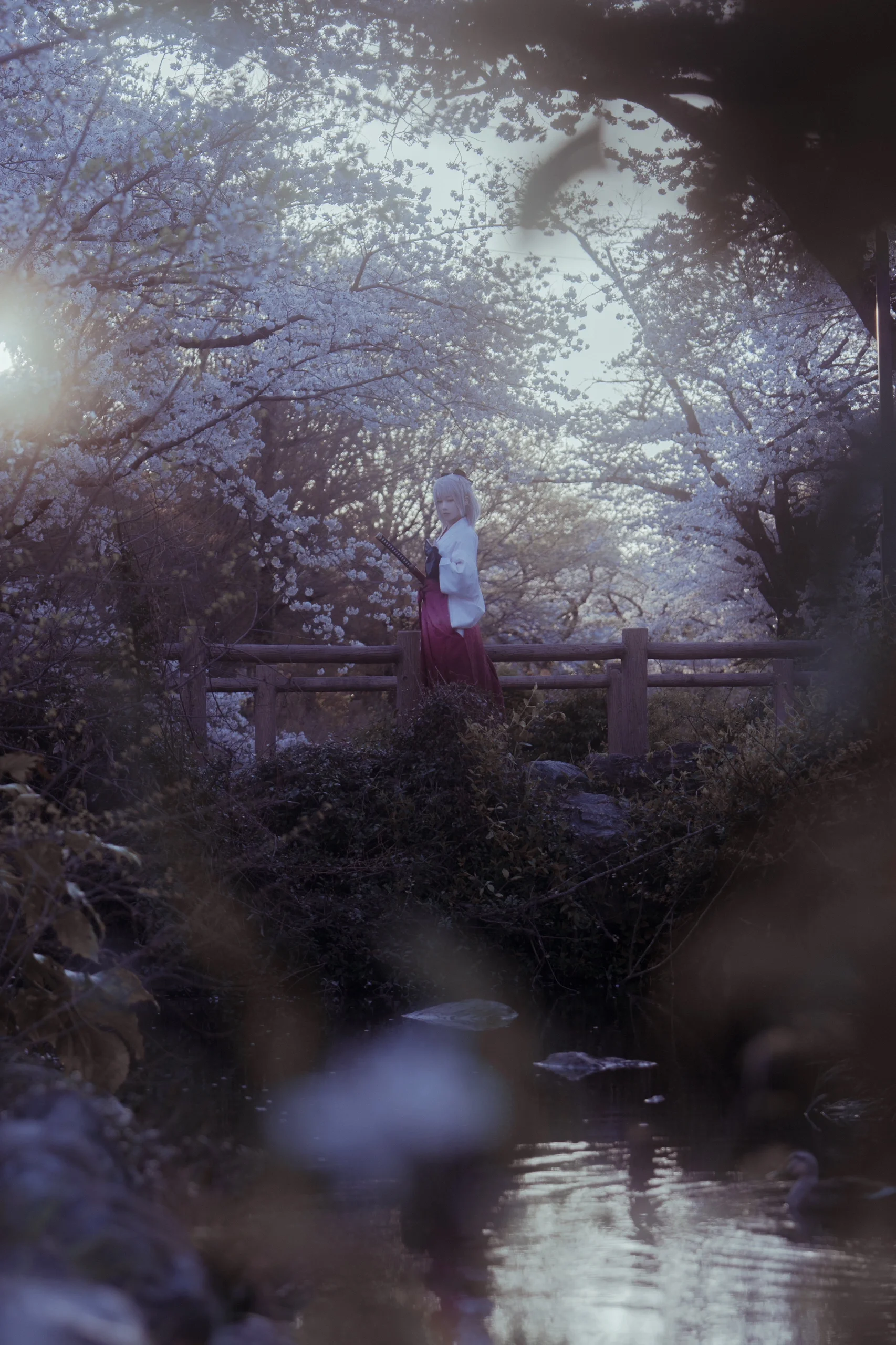
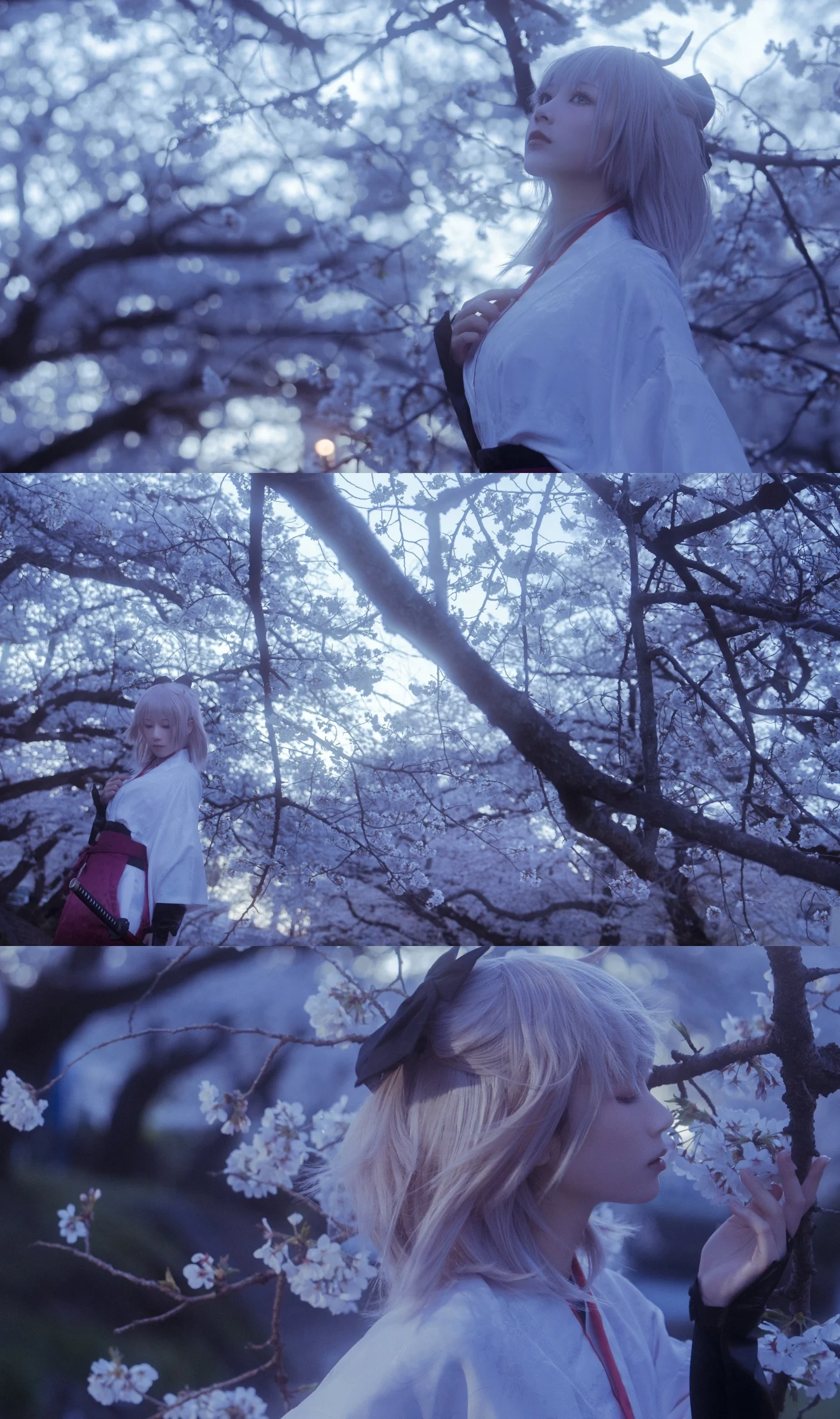
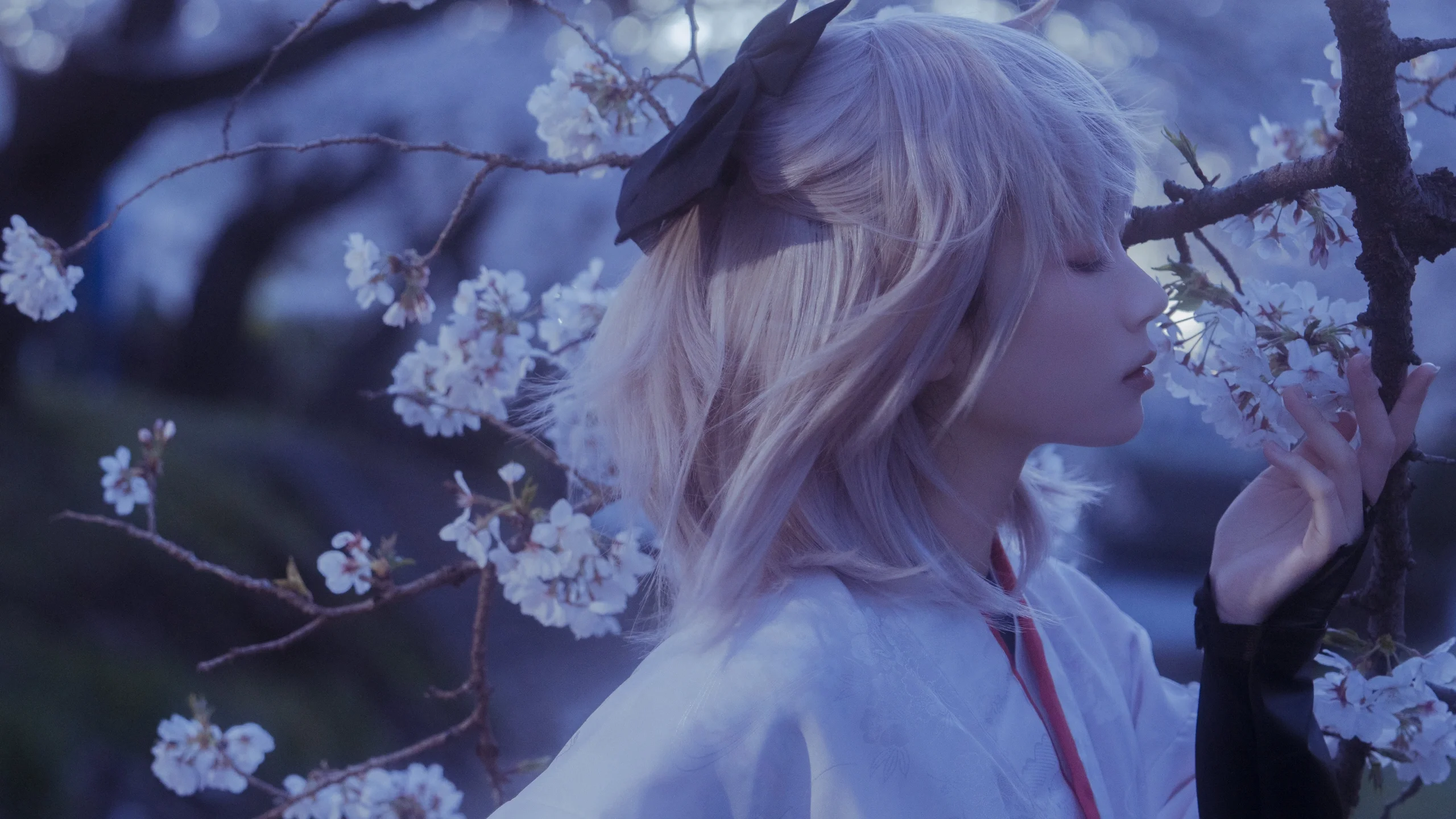
The three-shot sequence in Figure 5 represents the quietest moment of the entire set. Gently cradling fallen cherry blossom petals in my palm, my breathing slowed as I closed my eyes. There was no need to deliberately 'act' out a melancholy state—letting the peaceful frame before the lens convey the inner feelings was enough. Combined with the wide shot on the wooden bridge in Figure 6, where I was surrounded by cherry blossoms and enveloped in semi-backlighting, this sense of concealment is actually harder to capture than facing the camera directly. It requires the body language to be exceptionally relaxed to avoid looking forced.
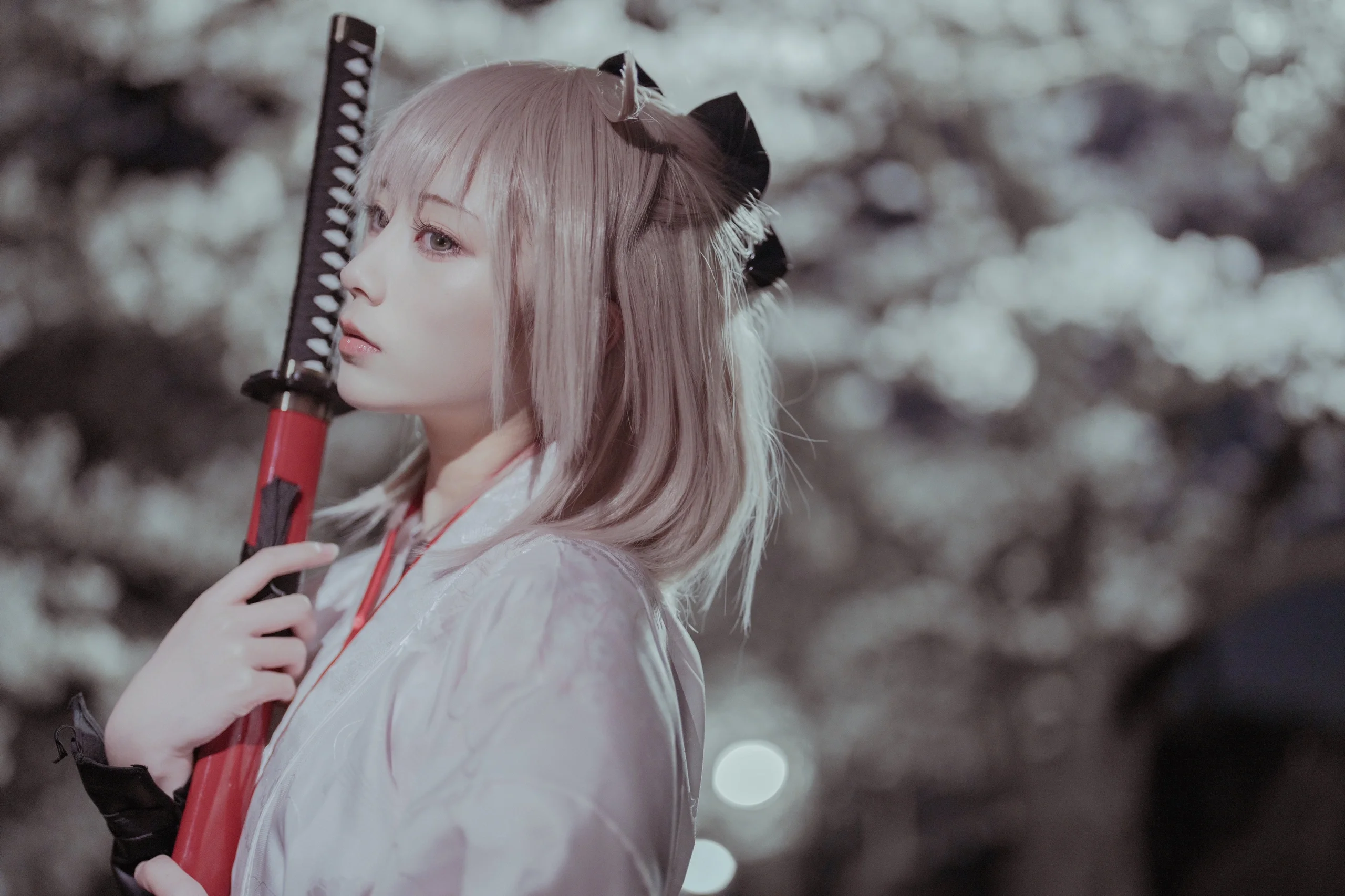
I also put some extra thought into the details of the kimono and katana. The white top and deep red hakama are highly memorable colors from the original design, and the red-and-black bracers and undergarment make the arm lines look much sharper. When holding the sheathed katana, the weight must always be suppressed in the hand. Since a long sword has a forward-leaning center of gravity, holding it single-handed can be quite strenuous on the wrist, and the tip of the blade easily drops if one is not careful. Therefore, in all static and dynamic frames, I deliberately trained my grip strength to keep the blade horizontal. Putting on the entire outfit takes an hour or two; the sash must be tied tightly, and the pleats of the hakama must be smoothed out to display crisp lines during turns.
This time, we didn't use any exaggerated lighting, relying entirely on the environment's natural light and streetlights to create the illusion of interwoven warm and cool tones. The photographer intentionally lowered the overall color temperature during grading, leaning the images toward a cool, deep blue tone to contrast with the colors of the red-and-white outfit. All emotional expression was restrained within the movements, without excessive facial expressions, leaving the blank spaces to be filled by the water reflections and cherry blossoms. This sense of mono no aware is not heavy, but rather a settled tranquility—like just returning from a battlefield, standing by the riverbank to gaze at the flowing water and cherry blossom petals in a brief daze. Running around on the water's edge and slopes in this full gear was indeed exhausting, but the quiet visual tension presented in the finished Japanese-style photography is more than enough to offset the physical fatigue.