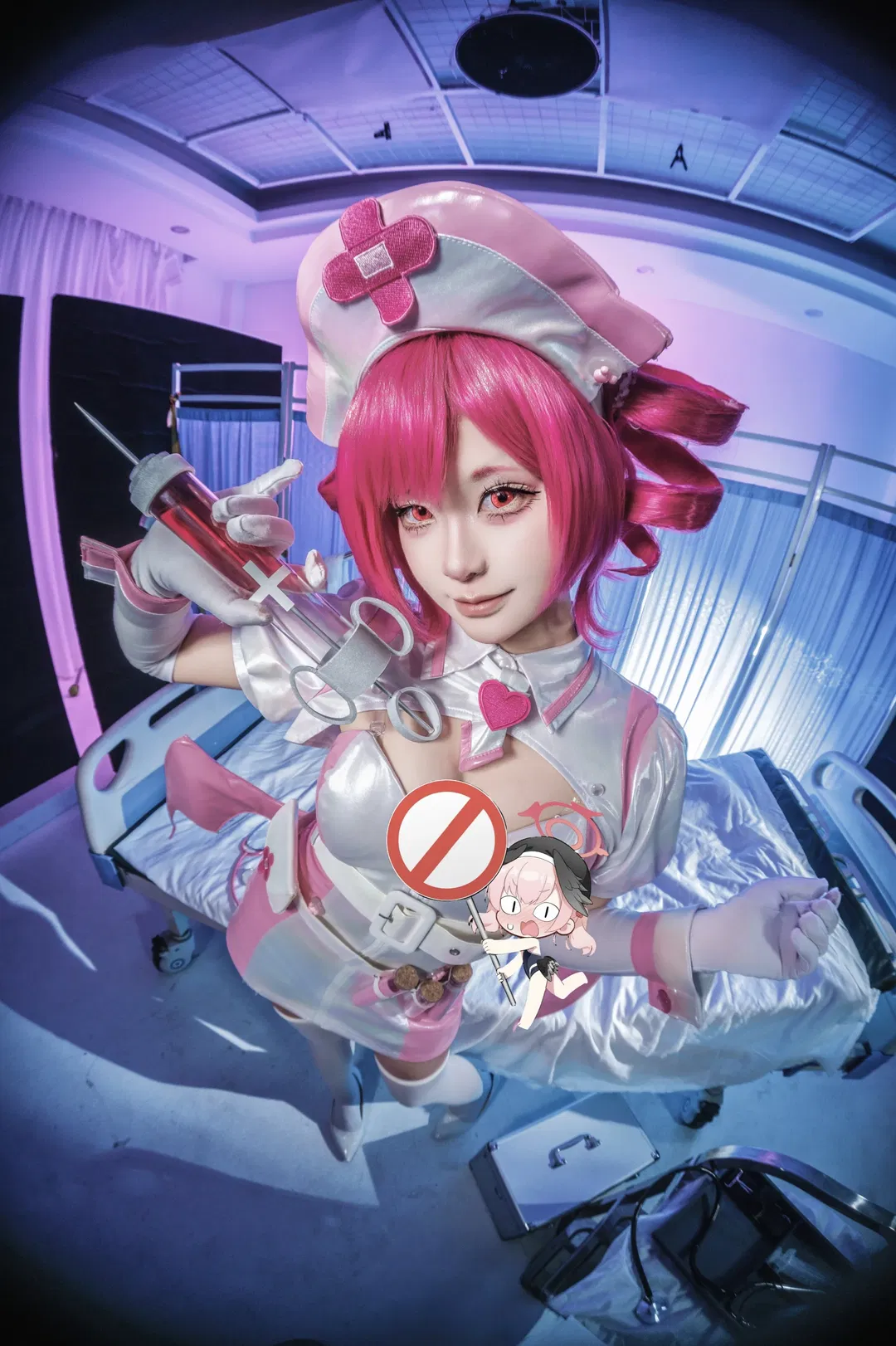
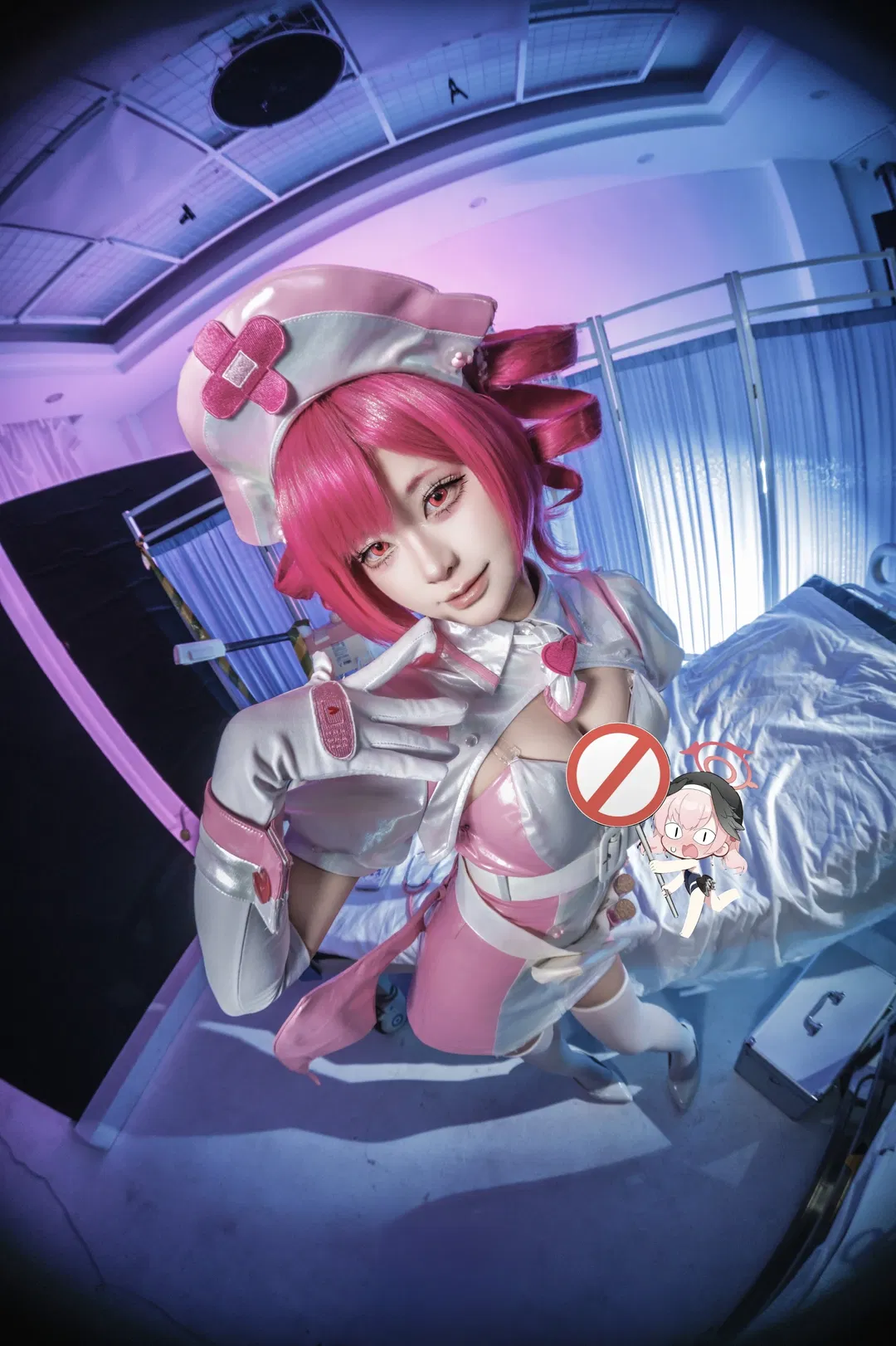
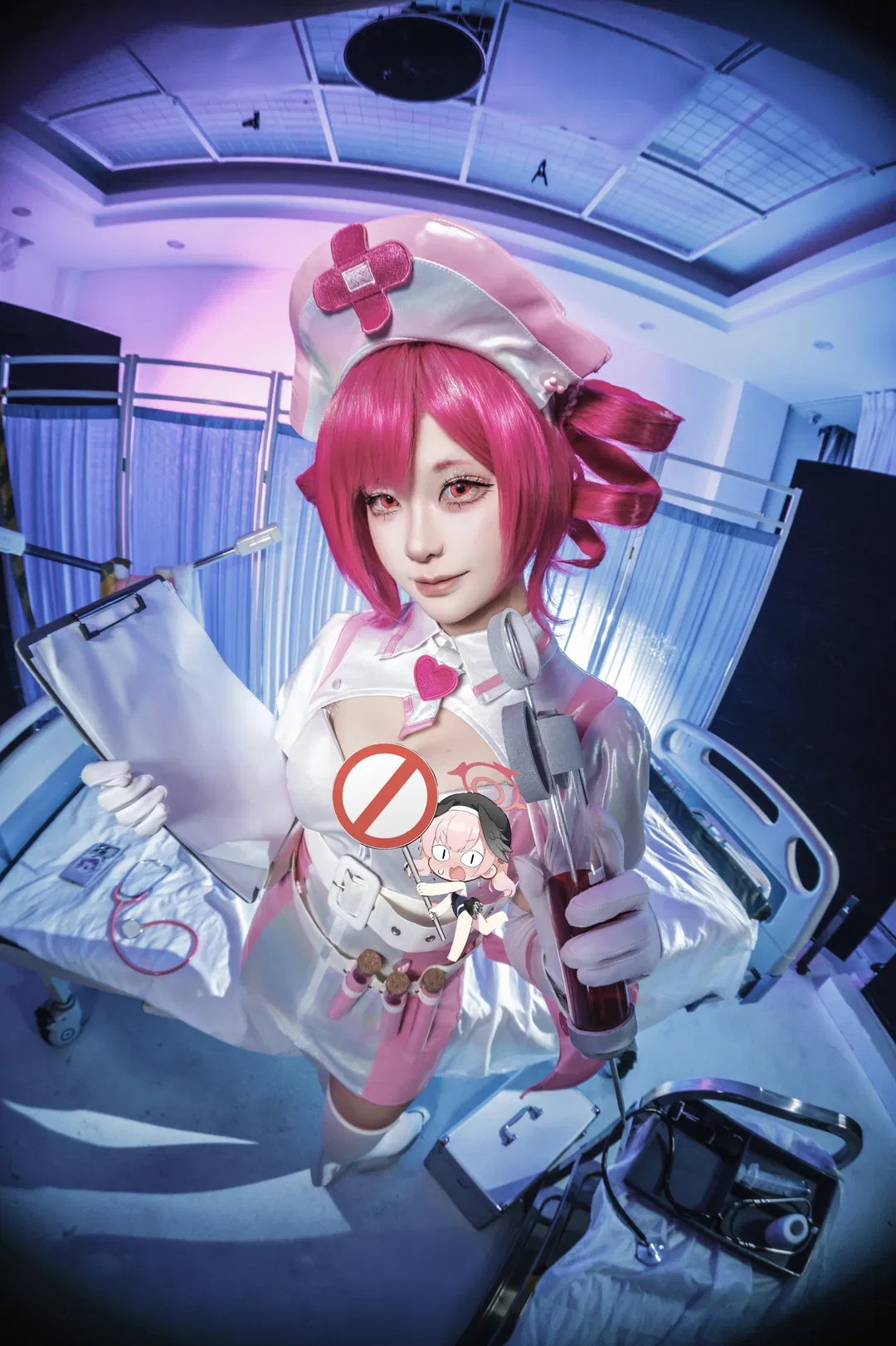
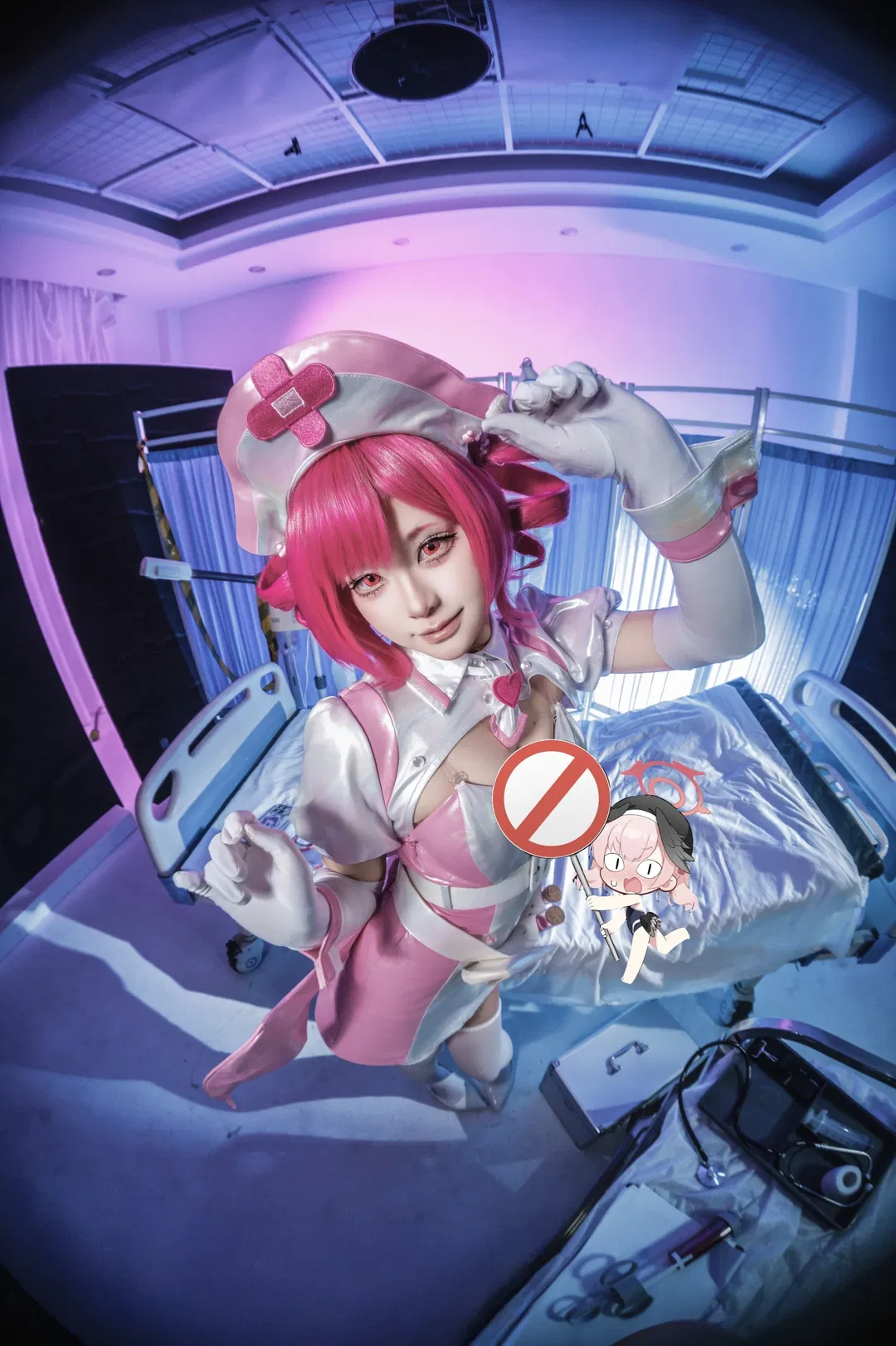
A lot of thought was indeed put into the material selection for this pink-and-white nurse-themed outfit. To present that somewhat 2D-leaning texture with a certain reflective effect, the main body of the costume used a PVC or high-gloss latex-like fabric. This fabric is extremely advantageous during studio lighting, reflecting ambient light wonderfully, but its downside is that it's completely non-breathable, making it actually very stuffy and hot during the shoot, requiring constant makeup touch-ups.
The pink cross patch on the nurse's hat was custom-made separately, adding overall layering while also echoing the heart-shaped decoration on the chest and the white belt buckle at the waist. To match the overall pink tone, a bright pink wig was specially worn, with curled styling done on both sides, which can better flatter the face shape during overhead shots. Red contact lenses were chosen to reinforce the dangerous yet charming nurse setting.
The most core highlight of this shoot is actually the use of lens language. As everyone can see, this set of photos uses an exaggerated fish-eye lens combined with a high-angle overhead camera position. This shooting technique produces strong spherical distortion, enlarging the head and upper body in the center of the frame, while shrinking the lower body and background toward the periphery. This perspective brings a strong visual sense of oppression to the audience, as if being manipulated, which perfectly matches the storyline-driven setting of naughty children needing an injection.
Under the wide-angle lens, the character's posture requires special attention. Because the edges will be stretched, one must try to avoid placing limbs at the very edge of the frame, otherwise they will distort too severely. For example, the interactive action of extending a finger in Figure 4 requires precise control of the hand's distance from the lens to make the proportions look normal. At the same time, to fill the visual voids brought by the wide-angle lens, we utilized props in the ward scene such as blue partition curtains, metal-textured hospital beds, and scattered medical suitcases, stethoscopes, and scissors on the ground, constructing a complete scene storyline.
The giant syringe prop in hand is one of the visual focal points; the red liquid was mixed with special pigments, making it particularly striking under cool-toned lighting. Also, that test tube and clipboard filled with dark red liquid were both meant to enrich the action changes during shooting, making the whole set of photos look like a coherent medical mini-theater rather than a mere staged pose. Shooting such themed sets, the cooperation of props and environment can elevate the photos' immersion by several levels.