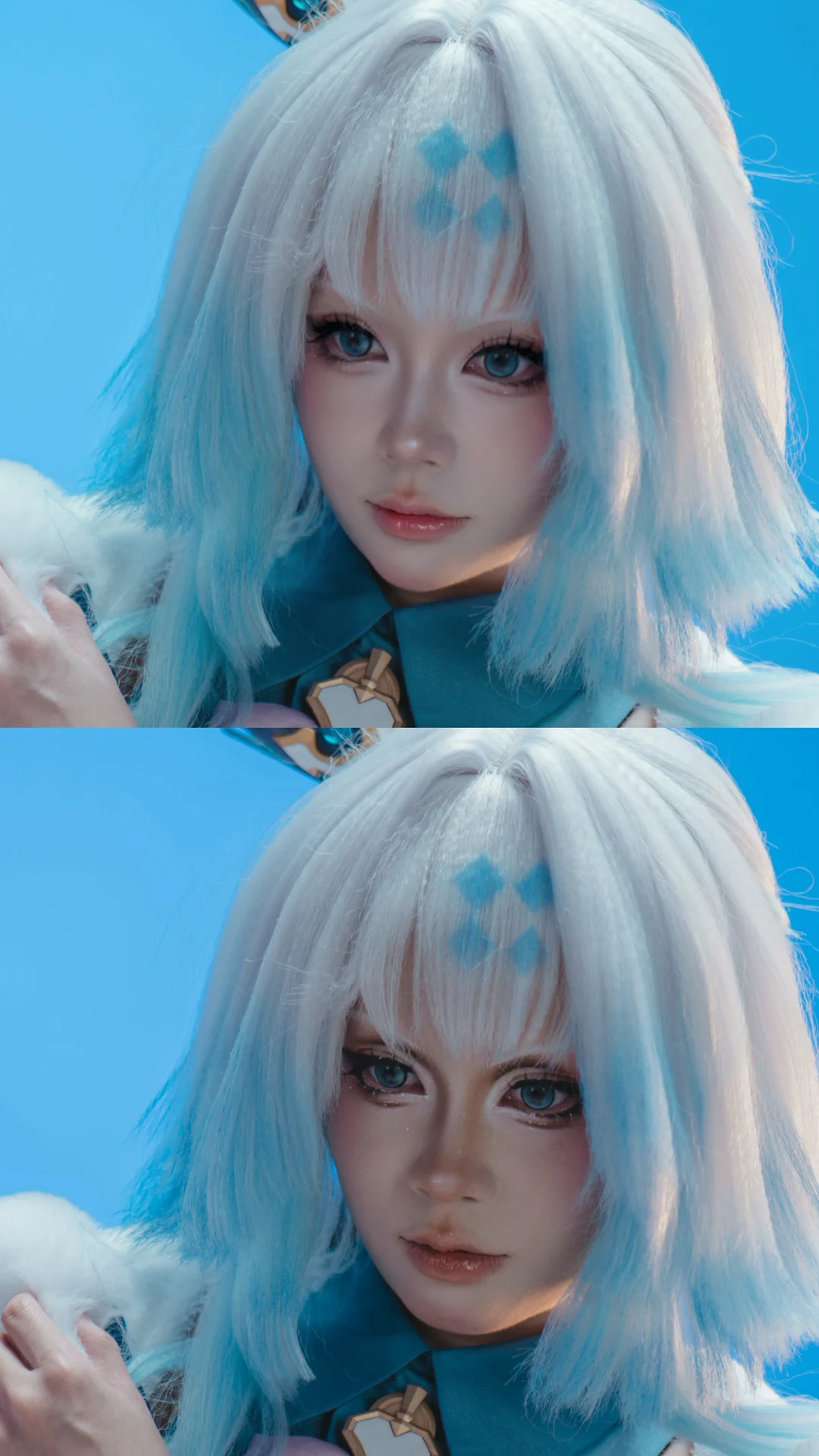
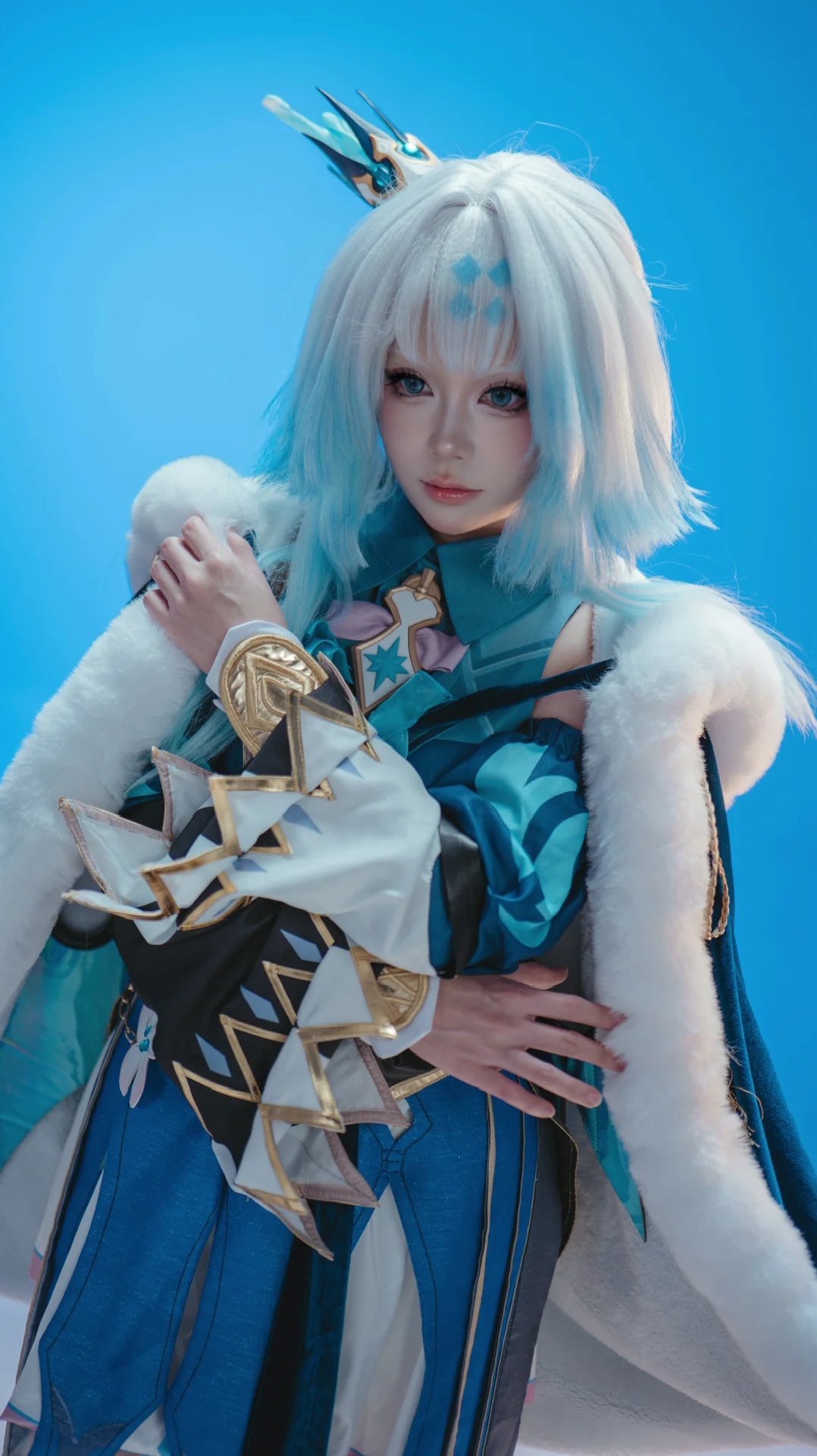
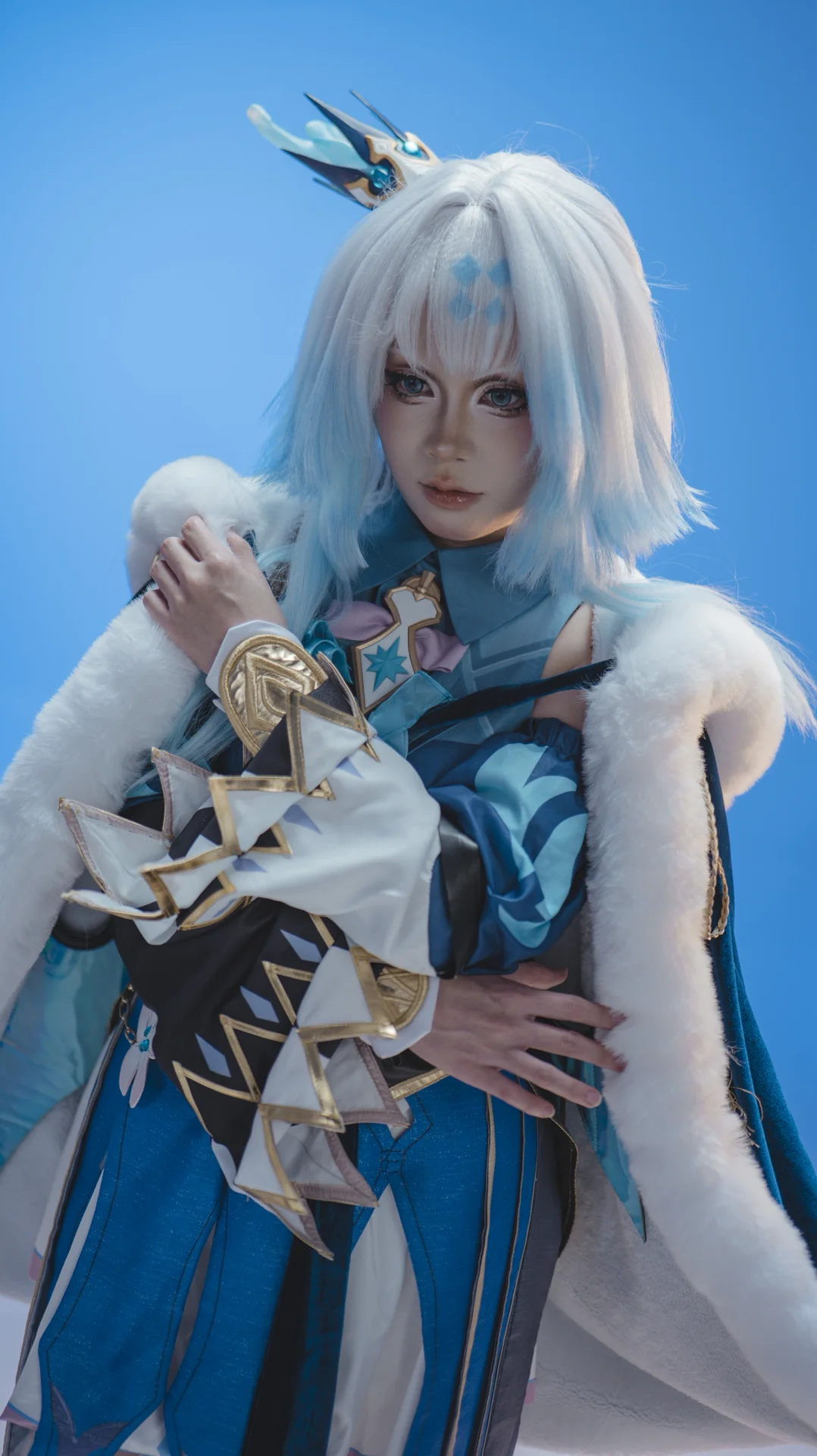
Directly posting the comparison between the edited makeup above and the original camera photo below. The main point is actually to discuss the issue of adaptability of cosplay makeup in post-processing. The makeup artist for this set of photos indeed worked hard for a full hour on the eye makeup—deepening the eye sockets, transitioning the nose contour, and outlining the aegyo-sal, the technique was extremely professional, and it was styled after the very popular modern 2D large-eye makeup. However, when I got the original photos and put them into the retouching software, I found a crucial problem: such heavy makeup emphasizing bone structure and three-dimensionality felt somewhat out of place on my face under real-life lighting, and even overshadowed the cold and translucent feel that the character herself should have.
So I made an adjustment during post-processing: I softened and weakened the heavy eye socket shadows, somewhat stiff nose contour lines, and the overly prominent aegyo-sal. The result is the picture above. After removing these shadows, the eye contours became cleaner, the facial flatness instantly improved, and the overall visual look became much better. This illustrates a very realistic situation: often in pursuit of three-dimensionality in front of the lens, makeup styling makes facial features very heavy because the lens itself heavily absorbs makeup. But for my personal facial features, taking a subtractive approach is actually more effective than an additive one. The makeup artist's technique is absolutely impeccable—the adherence of the base makeup, the color matching of the eyeshadow, and even the direction and application method of the false eyelashes were extremely delicate. It's just that I personally am indeed not suited for this heavy style emphasizing shadows.
In addition to the makeup adjustments, the costume this time also has unique characteristics. To showcase the character's traits, this outfit not only features a heavy white fluffy shawl, but also various rigid geometric shape splicings and golden piping designs. During shooting, I needed to gently clutch that mass of white fluff with my hand, maintaining a cold and calm expression. The wearing of the headpiece also required careful attention to angles to ensure the best three-dimensionality in front of the lens. This quiet and slightly distant posture, combined with the cleaned-up makeup after editing, was able to better highlight an ice-and-snow-like temperament.
Actually, the entire creative process of cosplay is a process of continuous trial and error and finding balance. One must recreate the character while combining one's own characteristics, and even consider the post-processing room for the final photos. This post-processing approach was a great accumulation of experience for me. Without completely overturning the makeup design, simply by reducing the facial shadows, I achieved a more natural effect that fits the character setting. The original camera photo has its irreplaceable realistic texture, while post-processing adjustments have their restorative magic. How to find the most suitable balance point between the two is a subject I have always been learning.