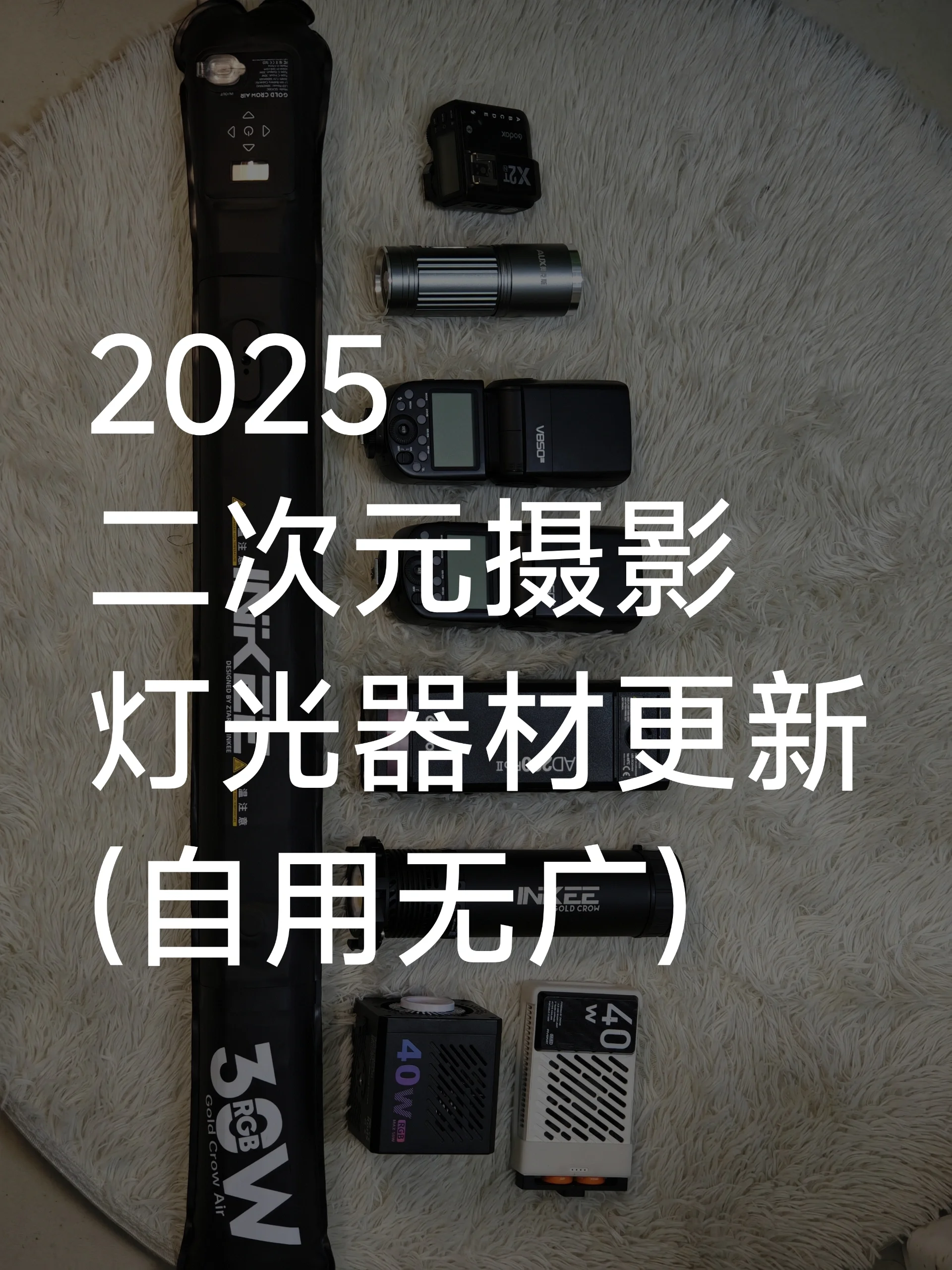
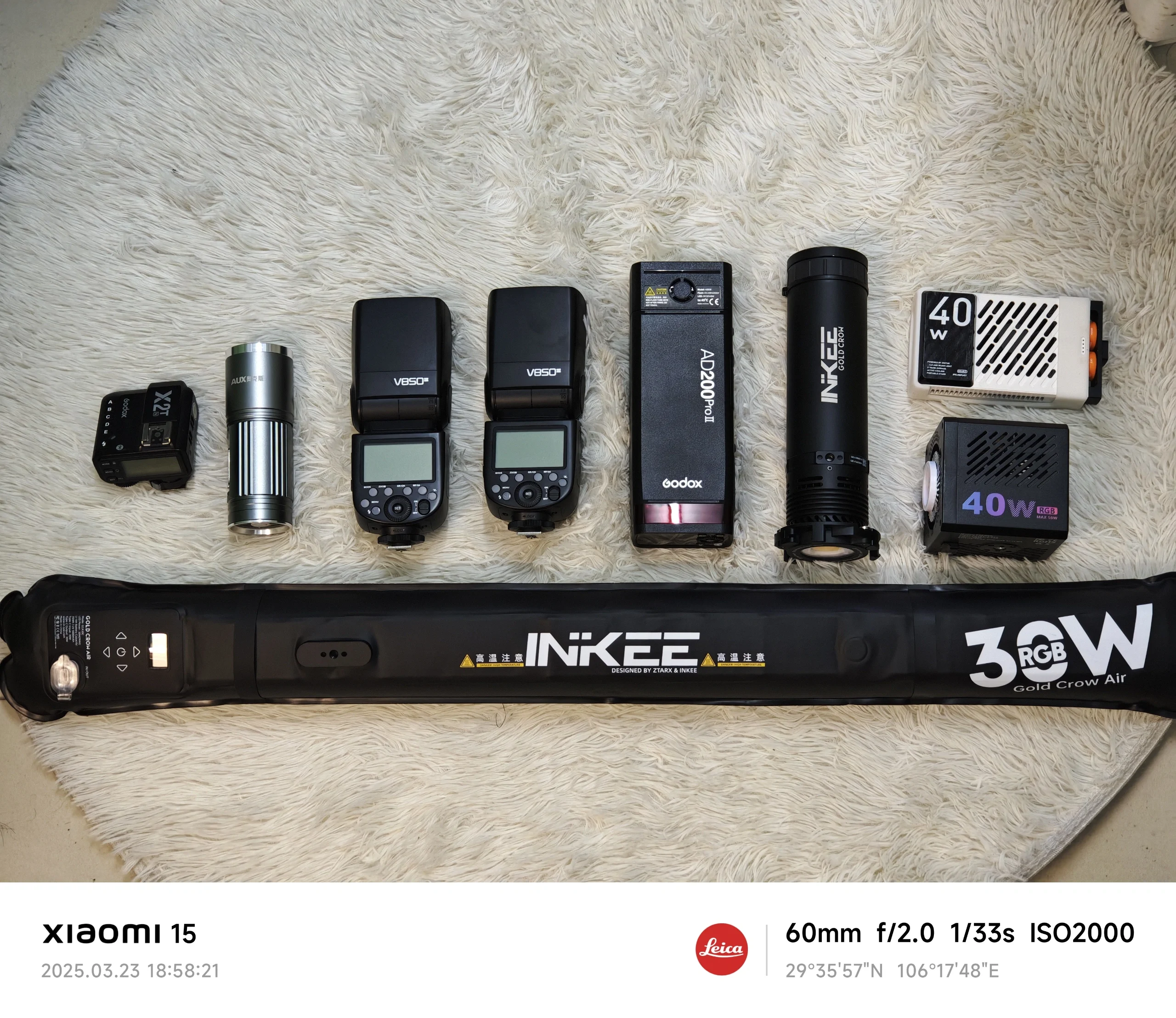
Taking advantage of recently upgrading all my photography lighting gear, I booked a photographer to shoot a few sets of photos in different environments. It's a great opportunity to talk about my thoughts on the final images under this new lighting setup.
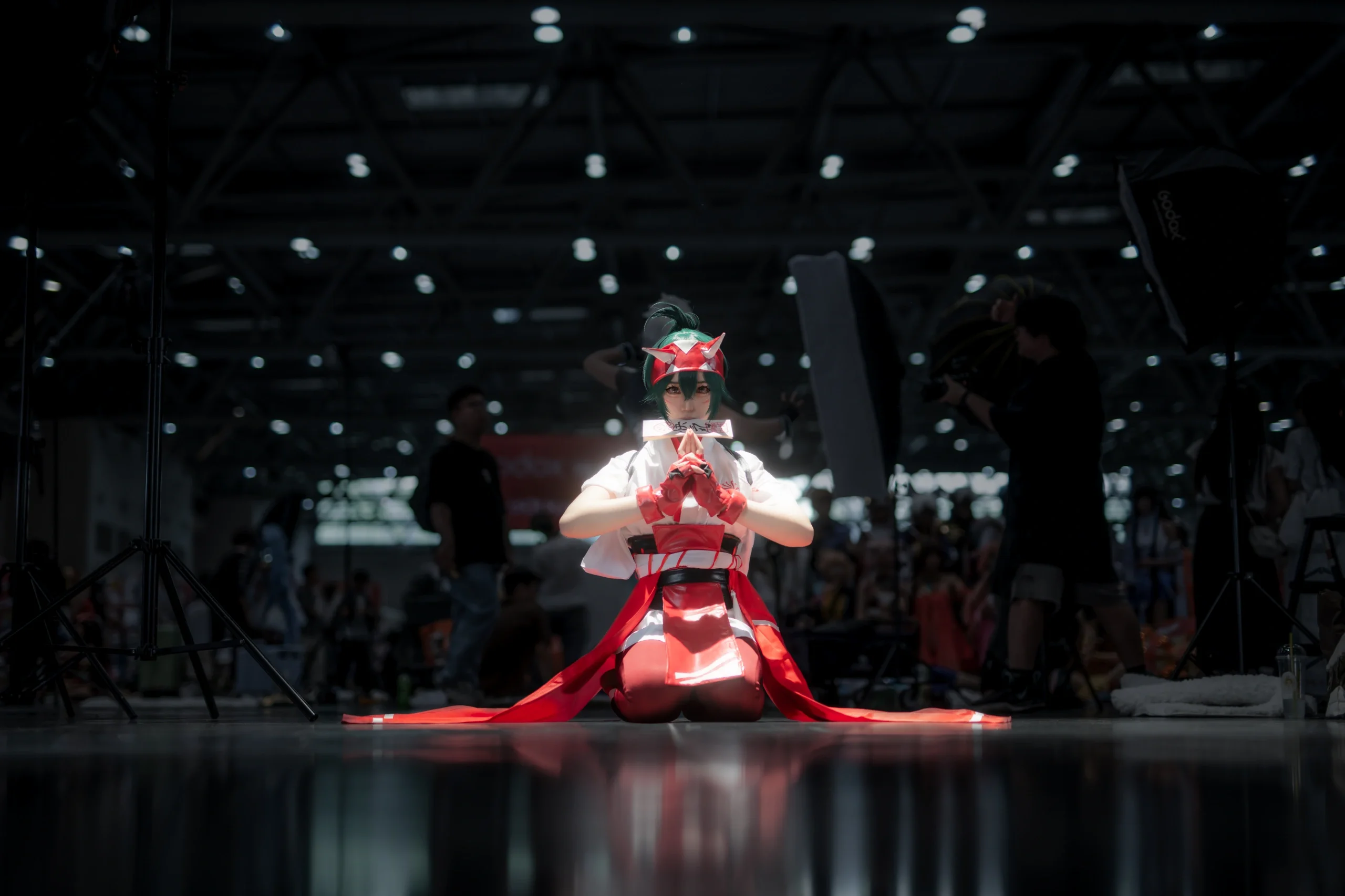
The first set of photos was taken inside a convention center. There were so many people that day, the background was packed with attendees, the ceiling was very high, and spotlighting filled the area overhead. The red-and-white panel outfit I wore had many ribbons and layers; if hit directly with flat light, the details would easily turn into a muddy mess. This time, the photographer used a newly acquired Godox trigger system and the AD200Pro II flash, paired with a large softbox placed off-axis to fill light from a side angle. The most immediate impression was how solidly the flash lit up the highlights on the main subject. Because the light angle was chosen well, it suppressed the chaotic ambient light of the venue and clearly separated the textures of the red-and-white outfit. The floor at the convention was a dark, reflective material; the reflection caught under this strong light was gorgeous, perfectly grounding the lower body of the pose. Without needing overly elaborate movements, just kneeling down with hands folded immediately stabilized the visual weight of the subject. Combined with the cool-toned contrast straight out of a Leica camera, it produced a truly classic anime-style convention photo.
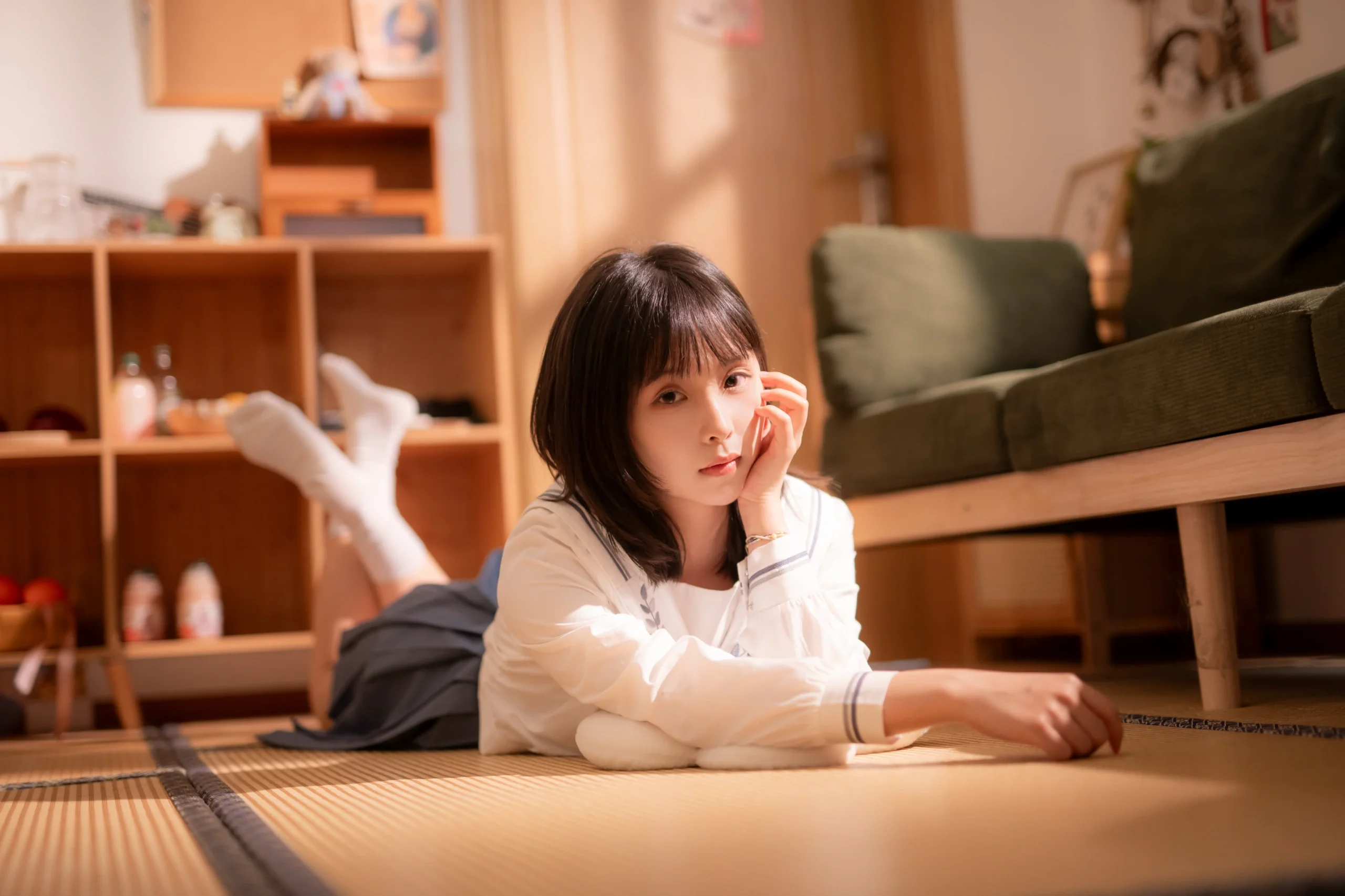
Next, we switched to an indoor venue for the shoot. The indoor setting featured a Japanese-style home decor layout with wooden shelving, a green leather sofa, and tatami flooring. To maintain a lazy, gentle atmospheric vibe in this setting, we naturally switched to continuous lighting as our primary light source. The photographer brought several portable lights and ultimately used a high-powered continuous light with a Fresnel lens to cast a soft side-backlight. Leaning on the tatami with my cheeks in my hands and looking at the camera, light filtered in from the right-hand window, tracing my silhouette and face with a soft, warm touch. Previously, my biggest fear with indoor shoots was underexposure or incorrect white balance turning skin tones greenish or pale. However, this new continuous light setup rendered skin tones exceptionally comfortably, with warm tones matching the mood of the indoor scene. Wearing a sailor-collared white top with a pleated skirt and white socks extending over the tatami, the light made the frame look clean and transparent—lacking the intense impact of convention shots, but adding plenty of cozy daily life vibes.
As a model who frequently gets photographed, I actually have quite high standards for photography lighting. In the past, I encountered photographers using speedlights powered by AA batteries, which frequently misfired or cycled extremely slowly after half a morning of shooting, leaving me frozen awkwardly in my pose waiting for the flash to pop. This upgraded Godox system used this time—especially the AD200Pro II—was top-notch. One battery lasted an entire day even under high-frequency rapid bursts at a convention without any recycle time anxiety. For continuous lights, the photographer brought many small 40W RGB lights, which, paired with the Likai Fresnel lens, kept the footprint compact while packing plenty of brightness. When shooting white studios or low-light environments at night, I clearly felt the light falloff was well-managed, and battery life was quite solid. For people who need to switch shooting locations frequently and don't want to carry heavy light stands, portability is truly essential. Though, to be fair, high-power continuous lights like the Yingqi GC60 deliver fantastic results, but their batteries are huge and heavy, making it exhausting to carry around all day at conventions or during location moves.
Ultimately, equipment serves the visual outcome. From the hardcore ambient suppression at the convention to the gentle, soft light on the tatami indoors, I could distinctly feel how adaptable this new photography lighting system is across different settings. Convention shots boast maxed-out contrast and strong three-dimensionality, while indoor shoots achieve smooth color transitions and low-saturation Japanese textures through the combo of softboxes and continuous lights. Though the style gap between these two photo sets is quite wide, the lighting adapted seamlessly to present the exact atmosphere we aimed for. In my opinion, treating light as a paintbrush is far superior to relying solely on post-processing color grading—the texture and depth in the final images are on a completely different level. Next time I get the chance, I'd love to experiment with lighting setups in a pitch-black environment; I feel like that would spark even more unique ideas.