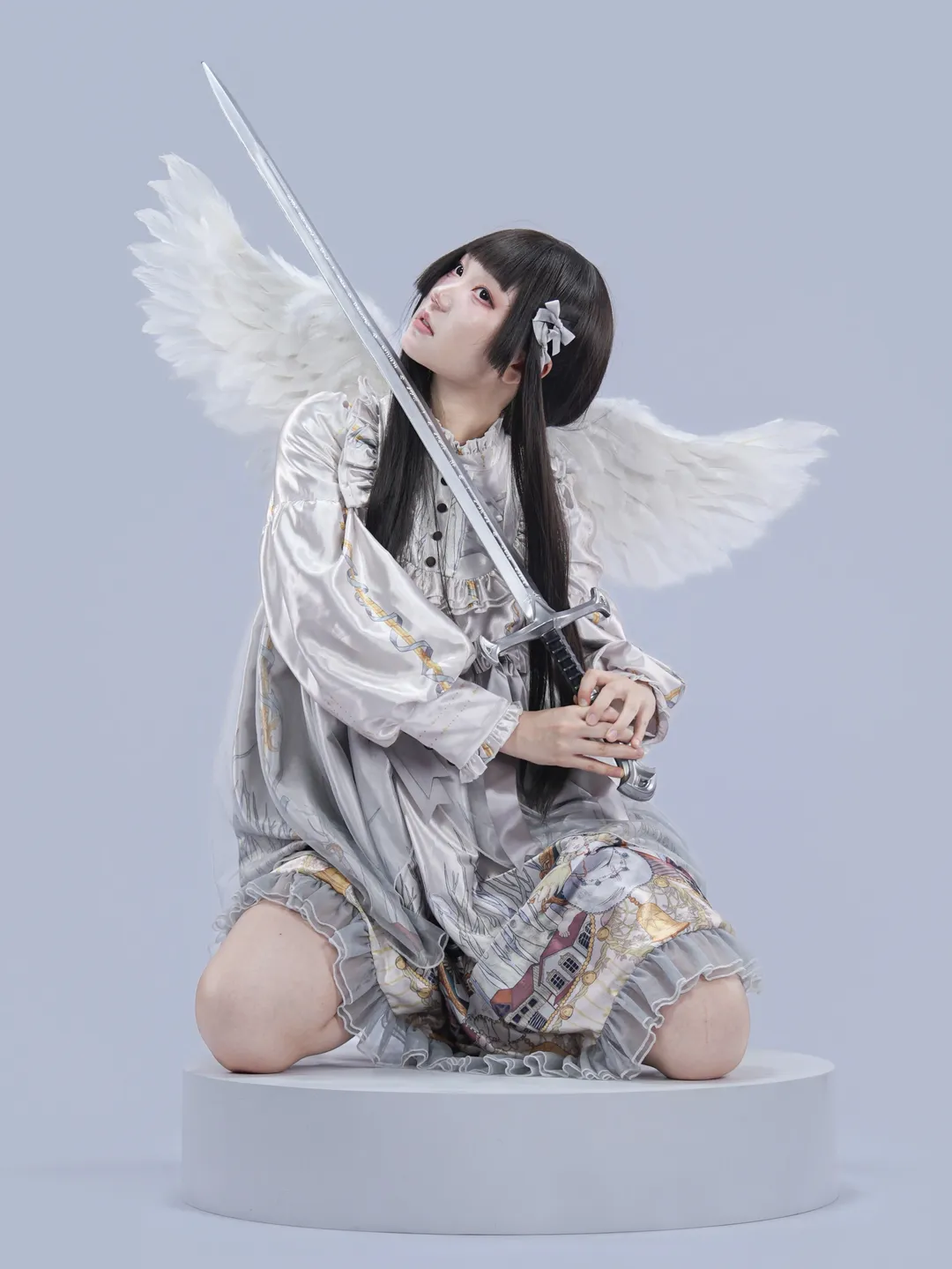
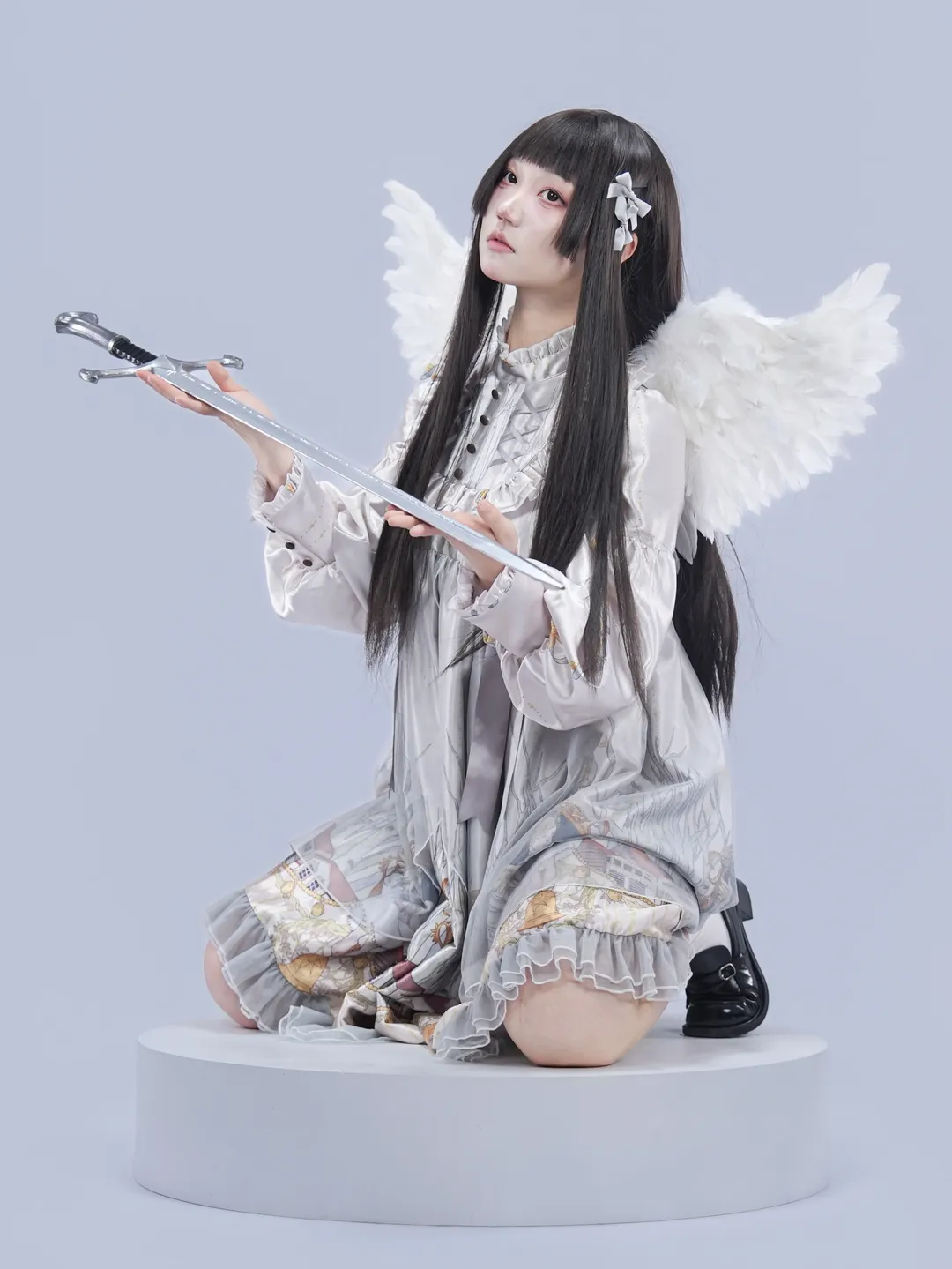
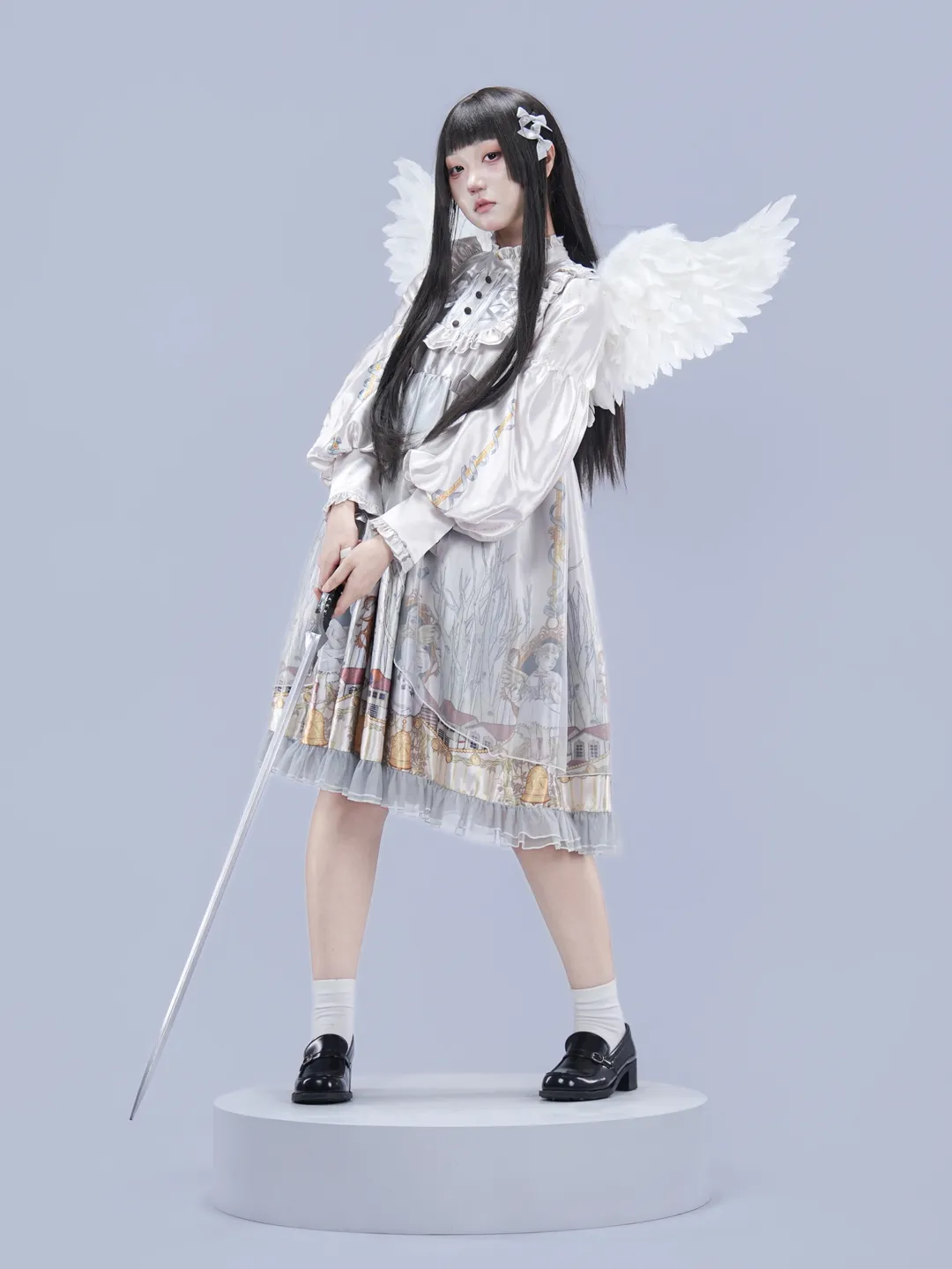
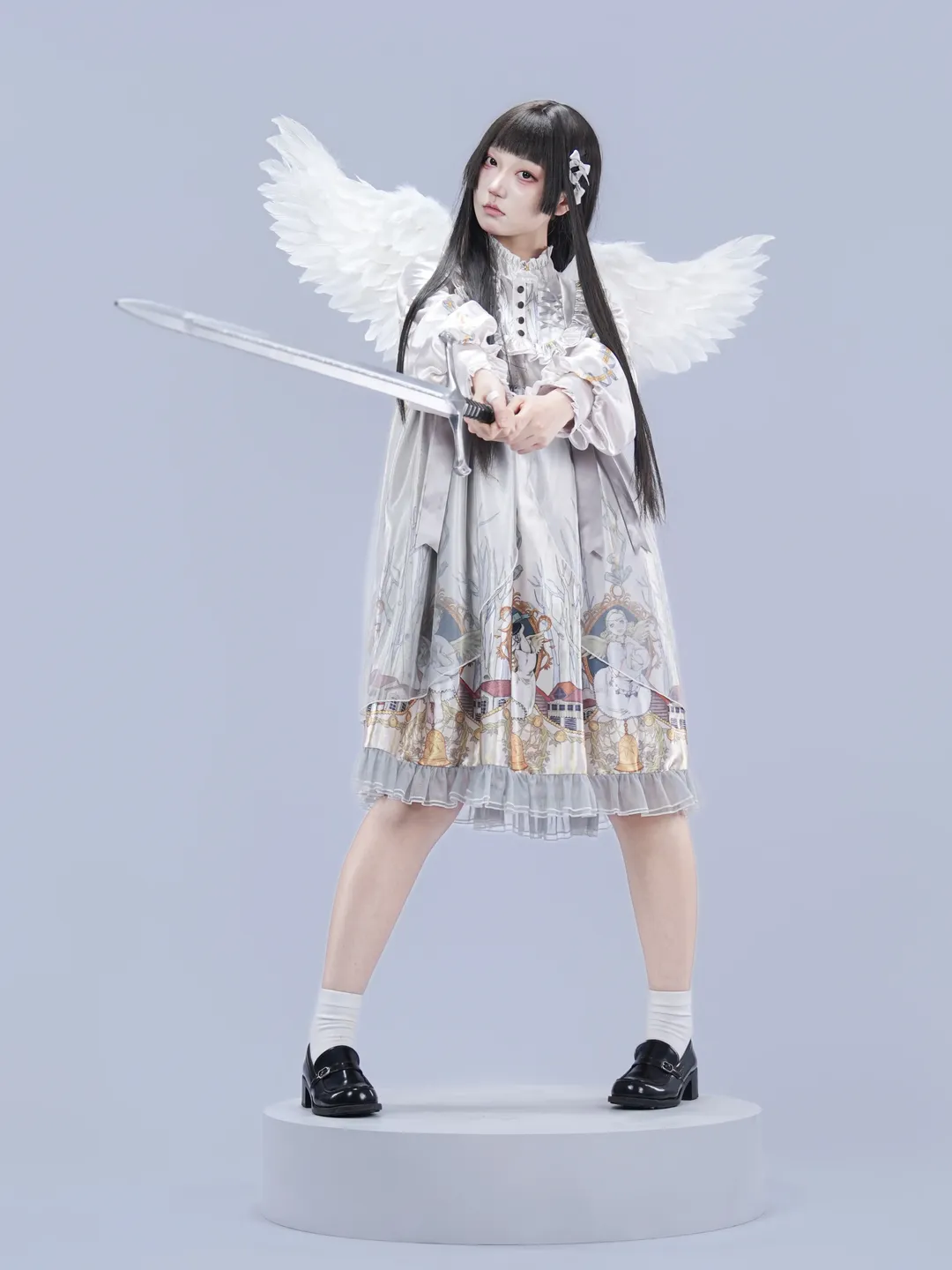
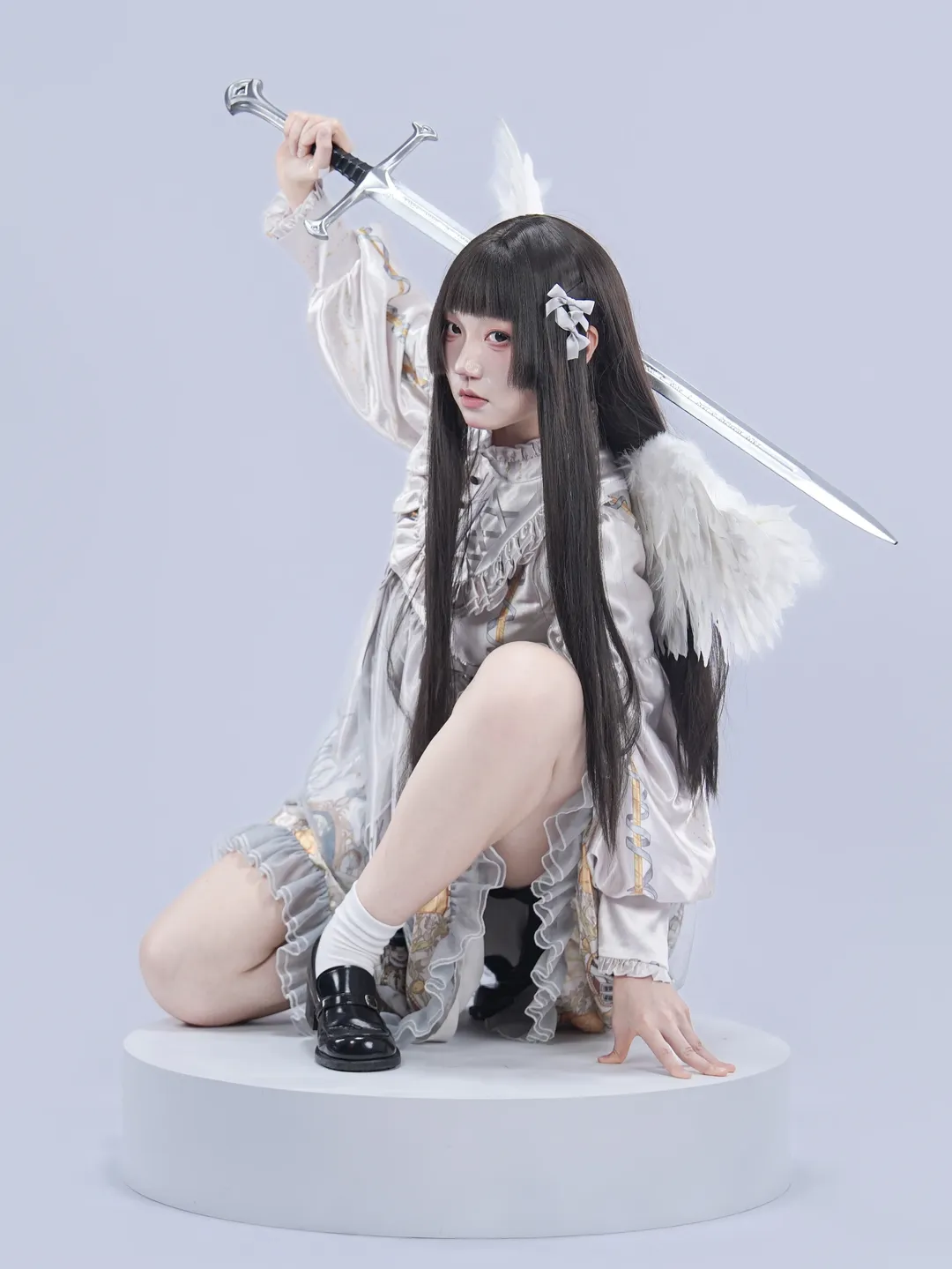
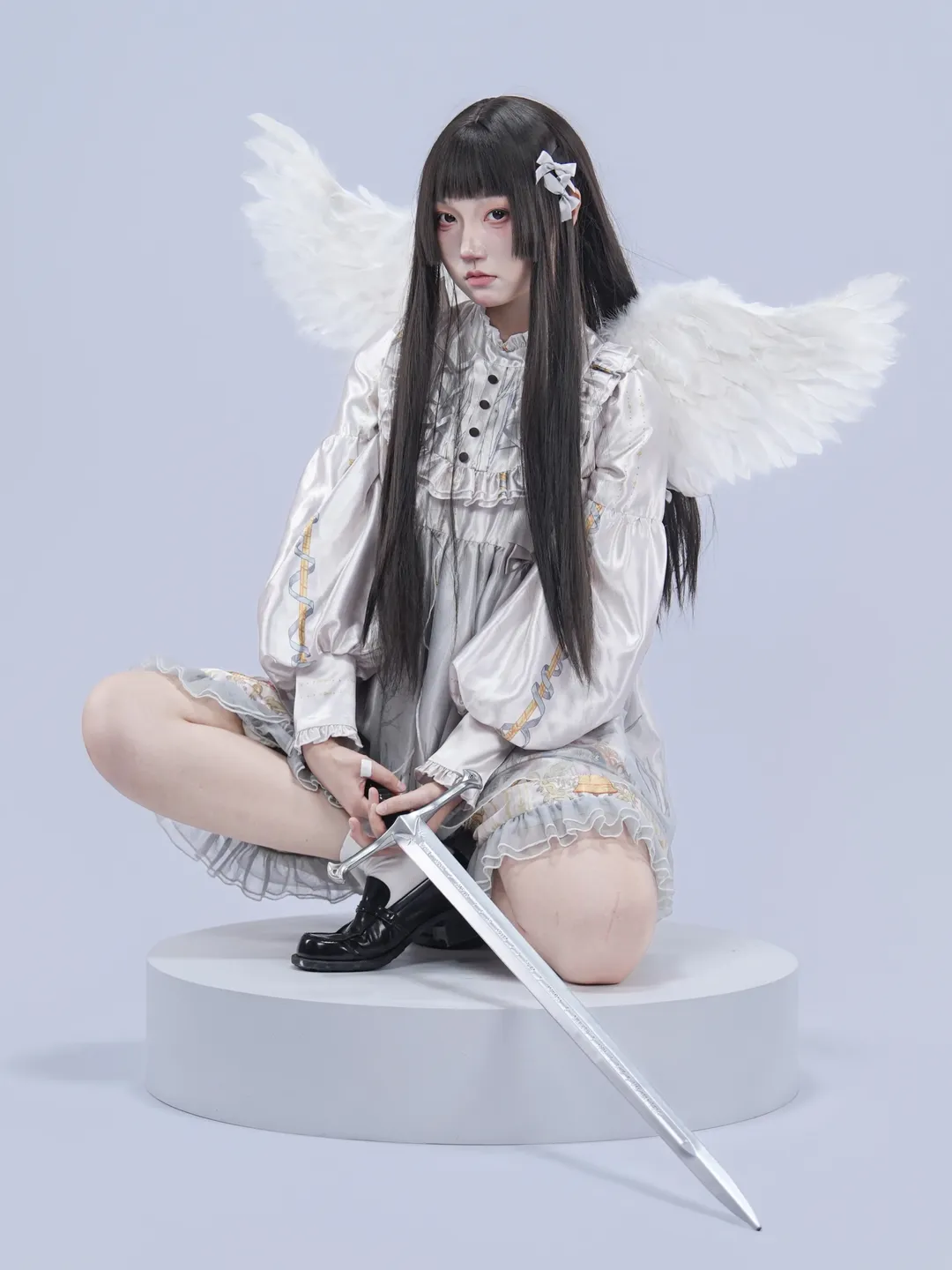
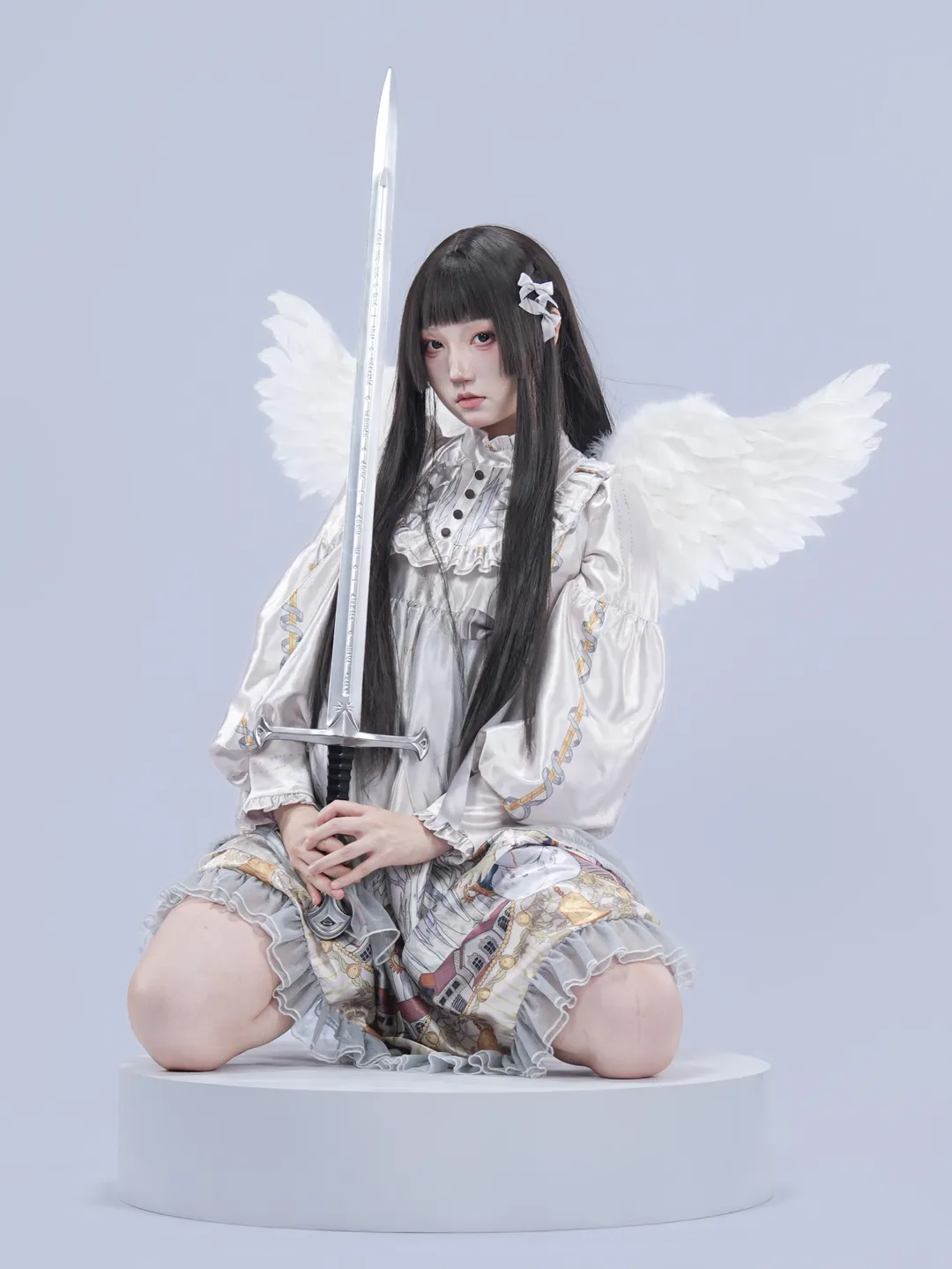
This Angel Street series marks our second session completed using white studio photography. The chosen silver-gray satin dress has a high natural sheen that easily washes out against a seamless white studio backdrop, so we deliberately intensified the side-rim backlighting to trace the ruffled hemlines and figure contours. Paired with white feathered wings and a silver cruciform sword—one airy, the other cold and rigid—it created a striking visual contrast.
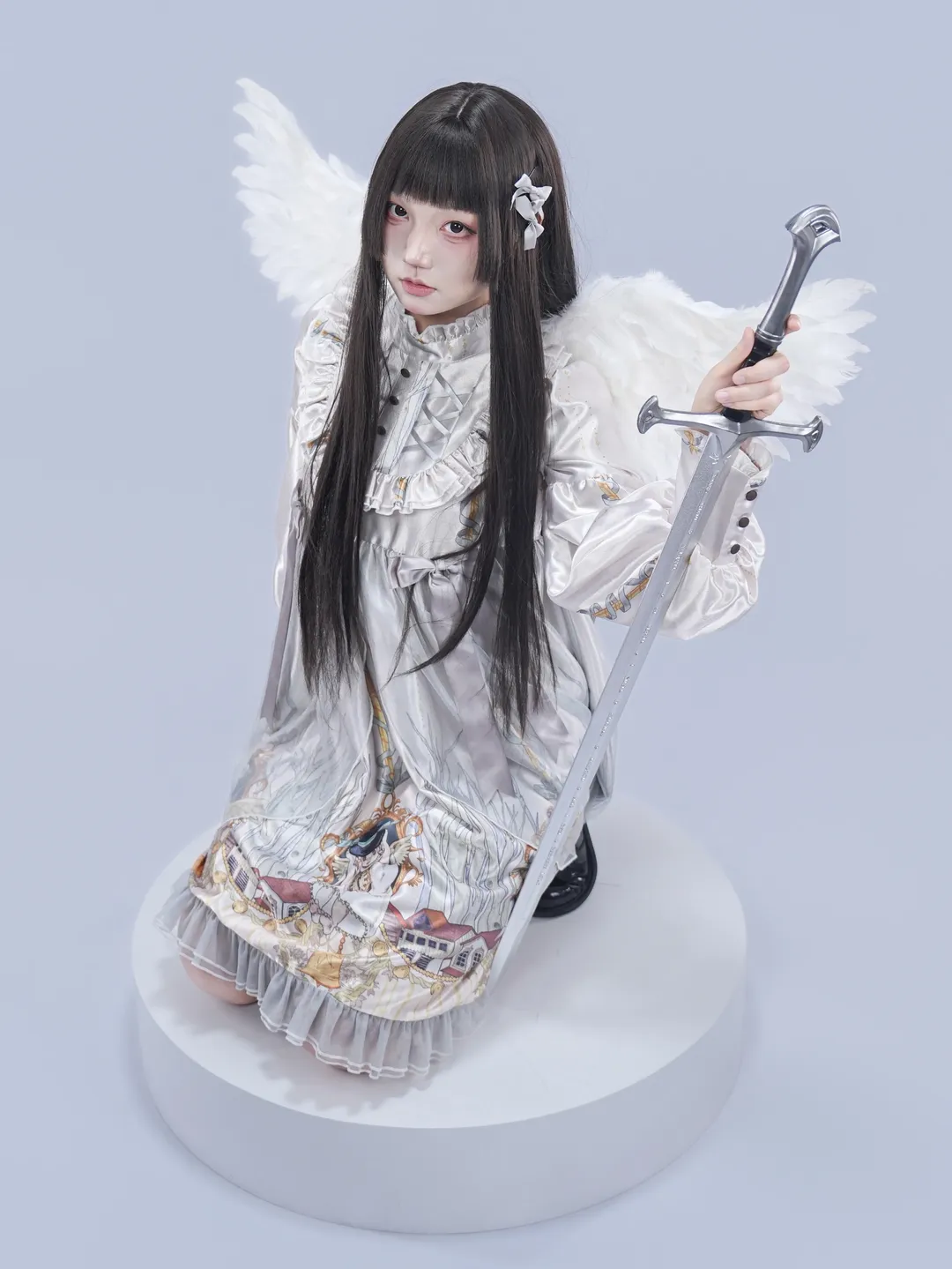
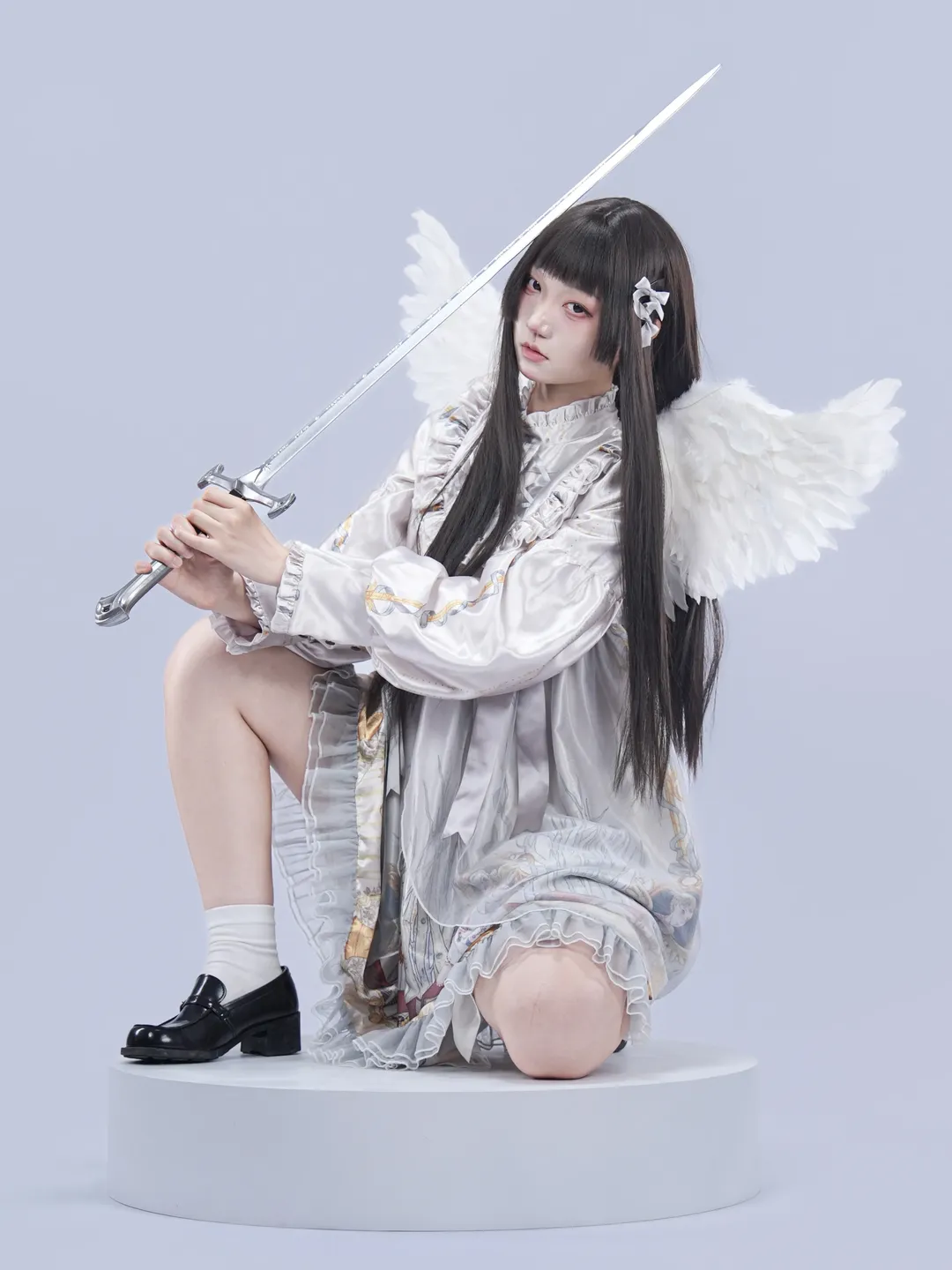
To showcase the ornate grandeur of this Lolita dress, I experimented with a variety of poses. When standing with the sword, shifting my weight onto one leg with the other slightly bent leveraged the A-line cut to visually elongate lower-body proportions. Kneeling and seated poses, on the other hand, focused on fanning out the skirt so the printed illustrations could be fully displayed. Many fellow creators often look for drawing reference and pose reference materials, so this set thoughtfully highlights details like sword grip placement, head tilt angles, and the spatial relationship between props and the body. I hope these serve as valuable materials for aesthetic enrichment.
Throughout the shoot, constant attention had to be paid to the placement of the feather wings to prevent them from looking messy or cluttered in frame. Stabilizing the sword's weight required arm and core strength to evoke a truly sharp presence. Most photos shared here preserve the clean white studio photography background, specifically to make the character and clothing details pop. For makeup, complementing straight long black hair, focus was placed on diffused red-toned eyeshadow to cultivate a cool, aloof yet subtly obsessive aura. The lips were kept in a subtle nude tone to avoid competing with the eyes and dress for visual attention.
Regarding prop usage, this silver cruciform longsword has notable weight; raising it horizontally one-handed severely tested my arm and core endurance. To make the blade look sharper, we used reflectors during the shoot to cast bright highlights along the blade. Securing the feather wings was another major engineering feat—the back straps needed to be completely hidden, while ensuring the wings flared open with a natural curvature rather than looking stiff. To keep the harness invisible when turning or sitting down, we tested numerous camera angles.
The greatest advantage of white studio photography is its sheer cleanliness, allowing the viewer's focus to lock entirely onto the subject and costume. Yet that is also its challenge: lacking environmental atmosphere, the subject's three-dimensionality relies entirely on lighting craftsmanship. This time, we experimented with varied lighting positions—from flat fill to side light and rim lighting—ultimately choosing this set with pronounced contrast. The printed artwork on the dress is rich in intricate detail, depicting townscapes, figures, and golden decorative borders; under the right angle of light, the lustrous sheen of the print was captured exquisitely.
When posing in a Lolita dress, managing the skirt's shape and volume is paramount. Whether lifting it gently with your hands or letting it drape naturally, adjustments must be made according to camera elevation and perspective. For instance, in crouching or seated poses, failing to smooth out the skirt can easily distort prints or cause clumsy bunching. We paid extra care to this detail, keeping the dress silhouette as structured and dimensional as possible. The completion of this set feels very high, yielding abundant experience in prop integration and lighting control. I hope these photos provide helpful pose reference and inspiration for both illustration and photography enthusiasts.