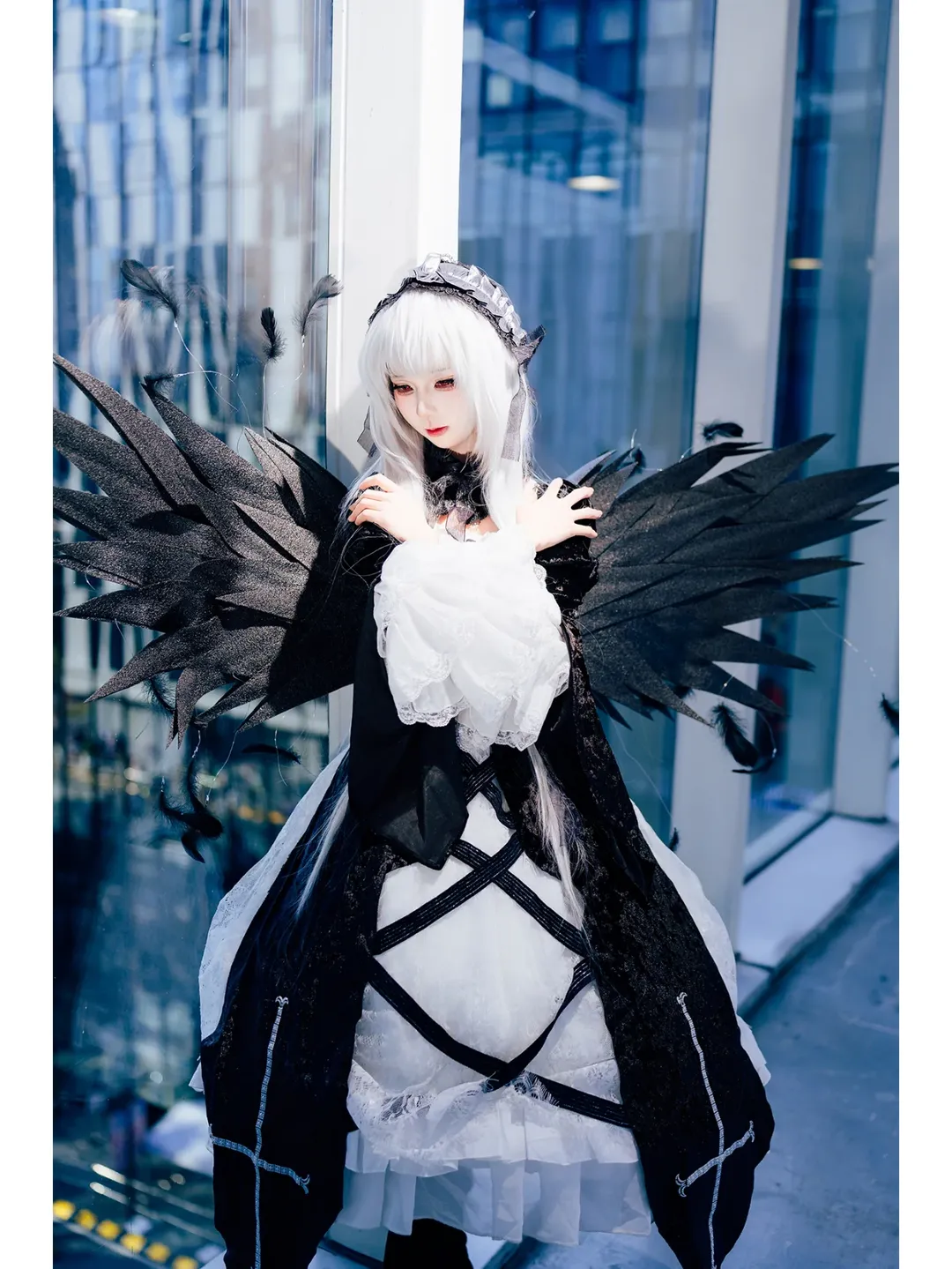
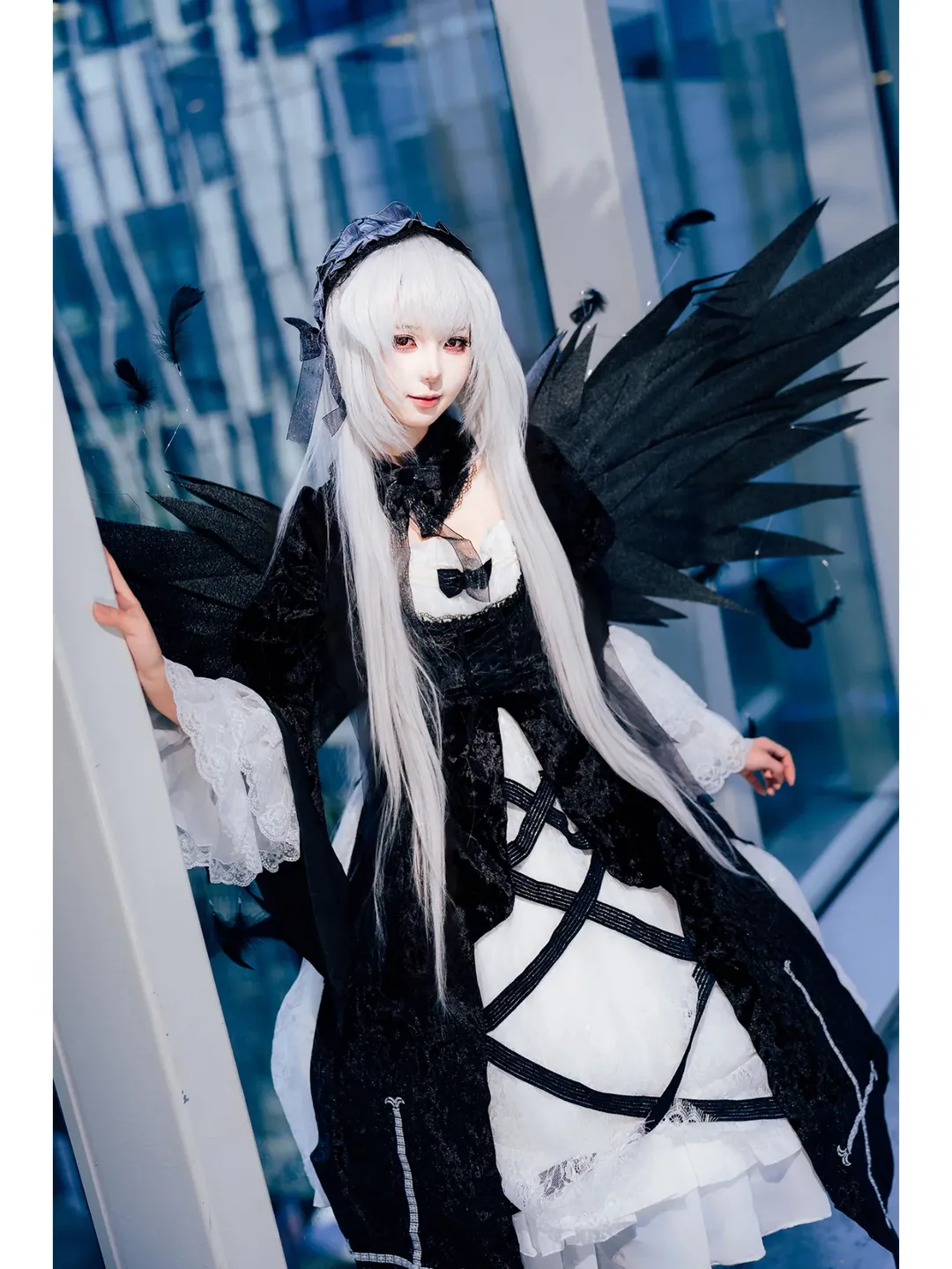
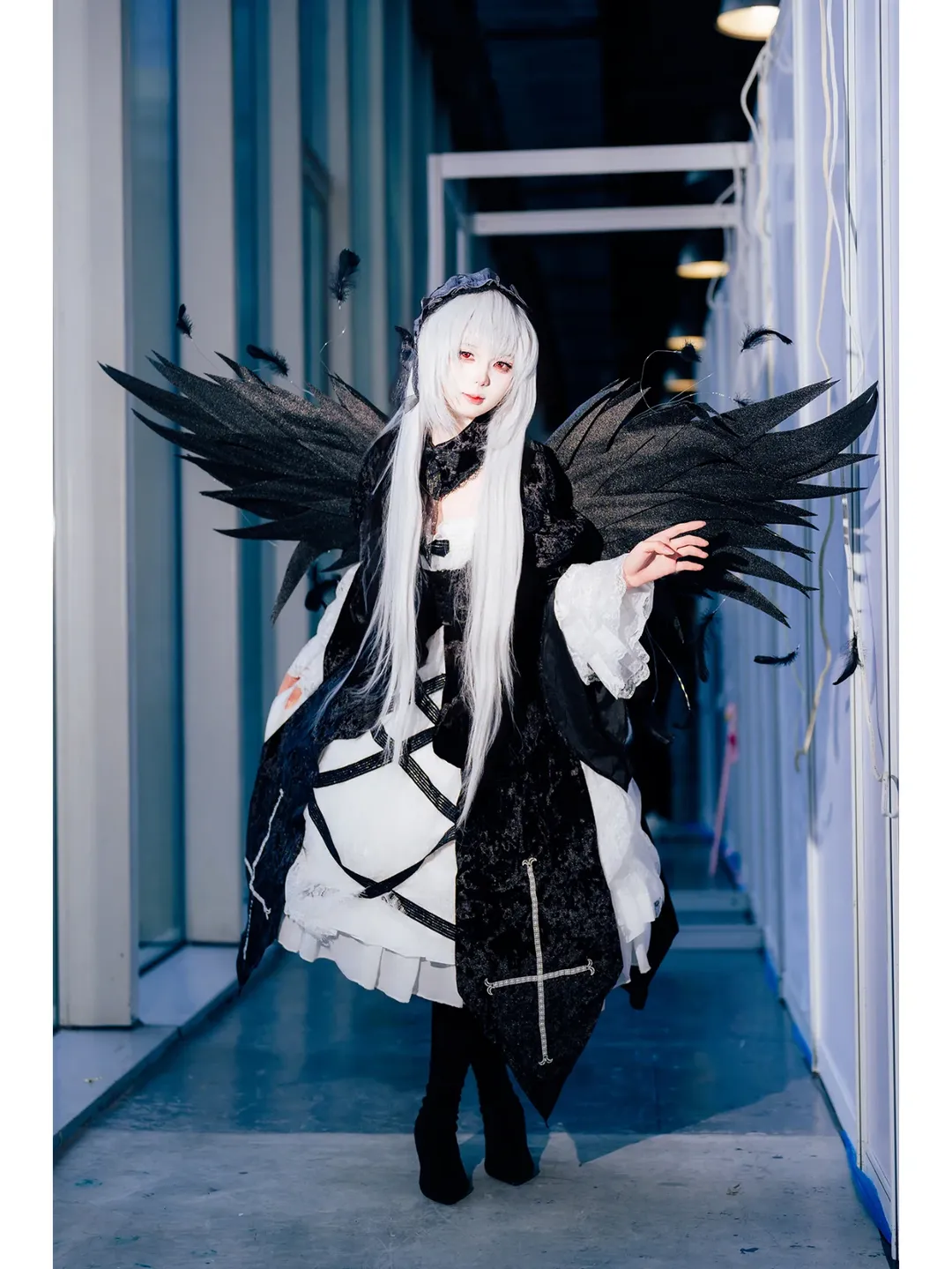
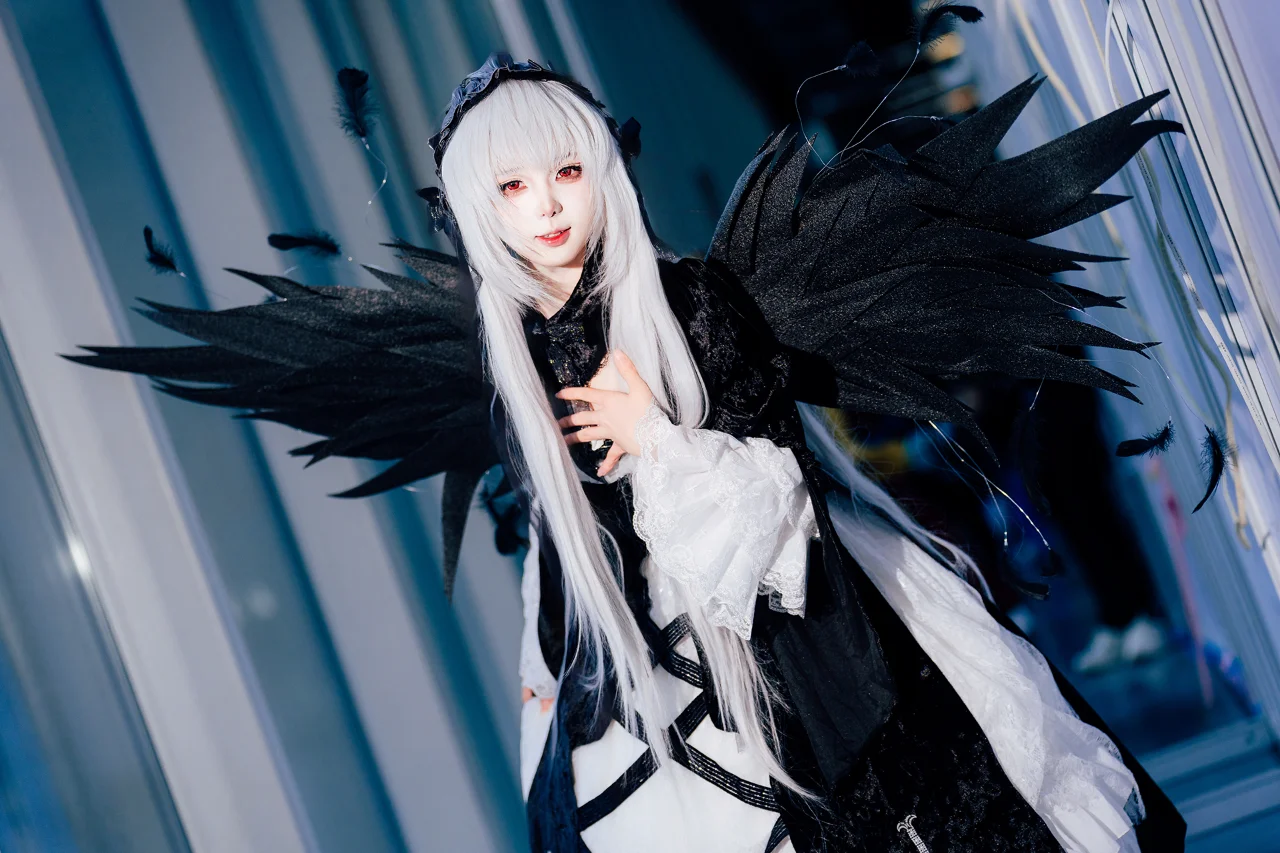
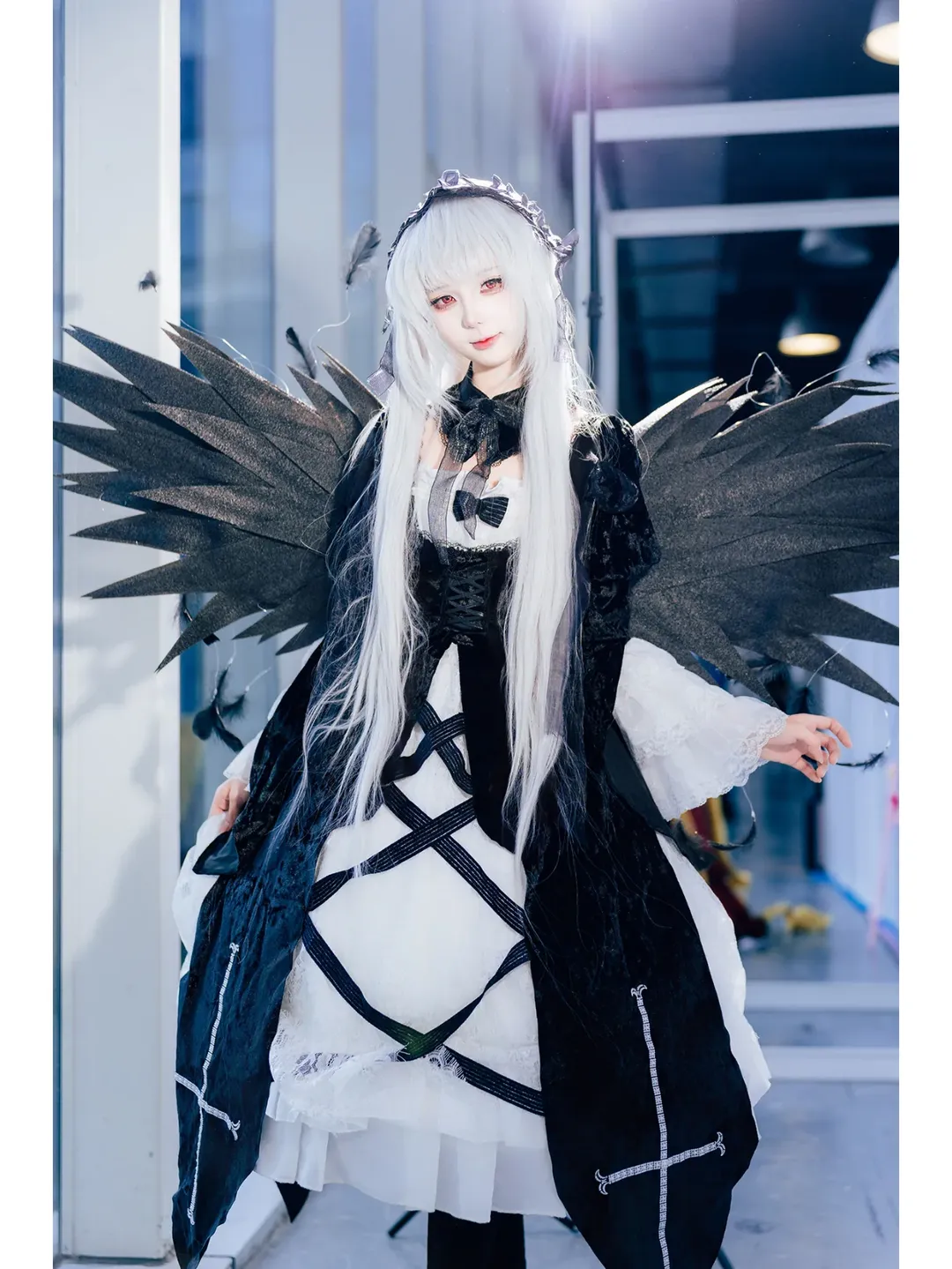
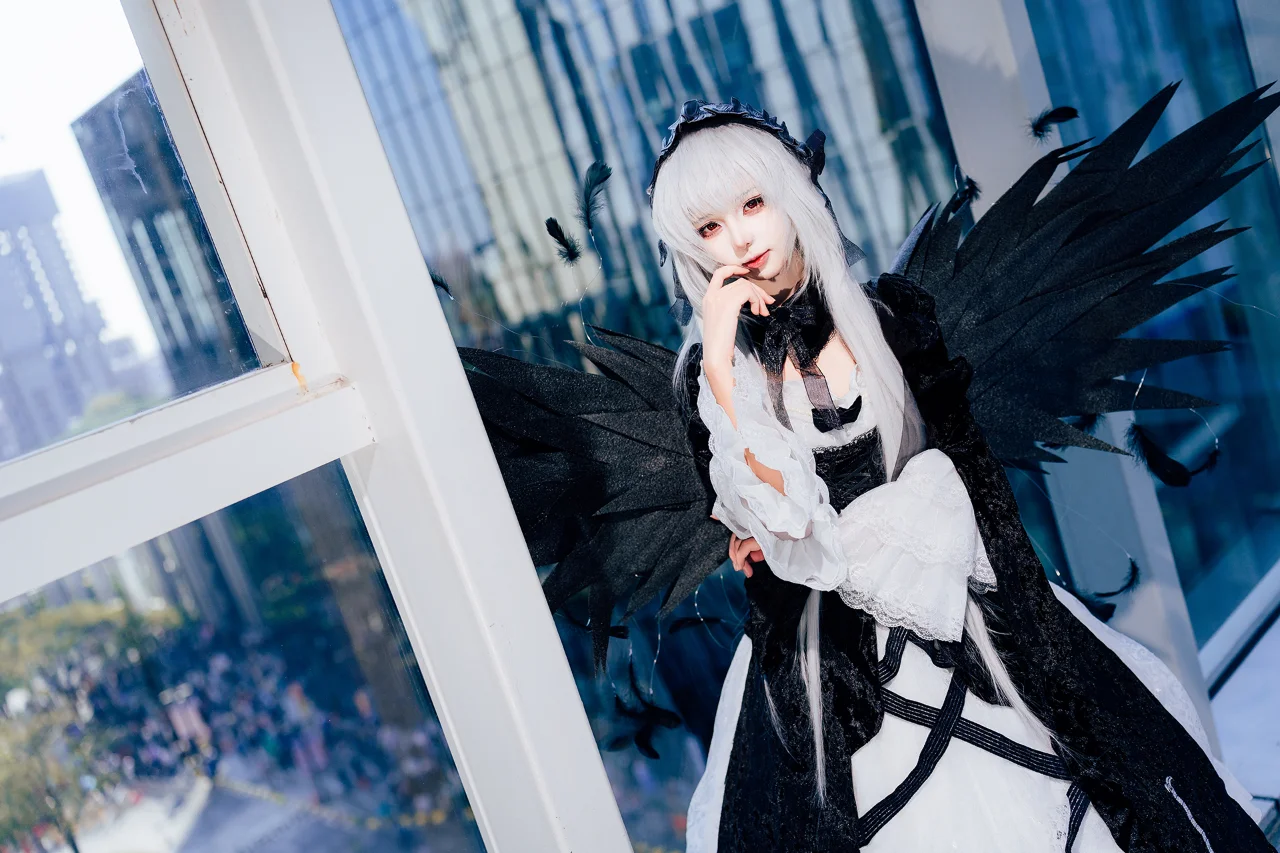
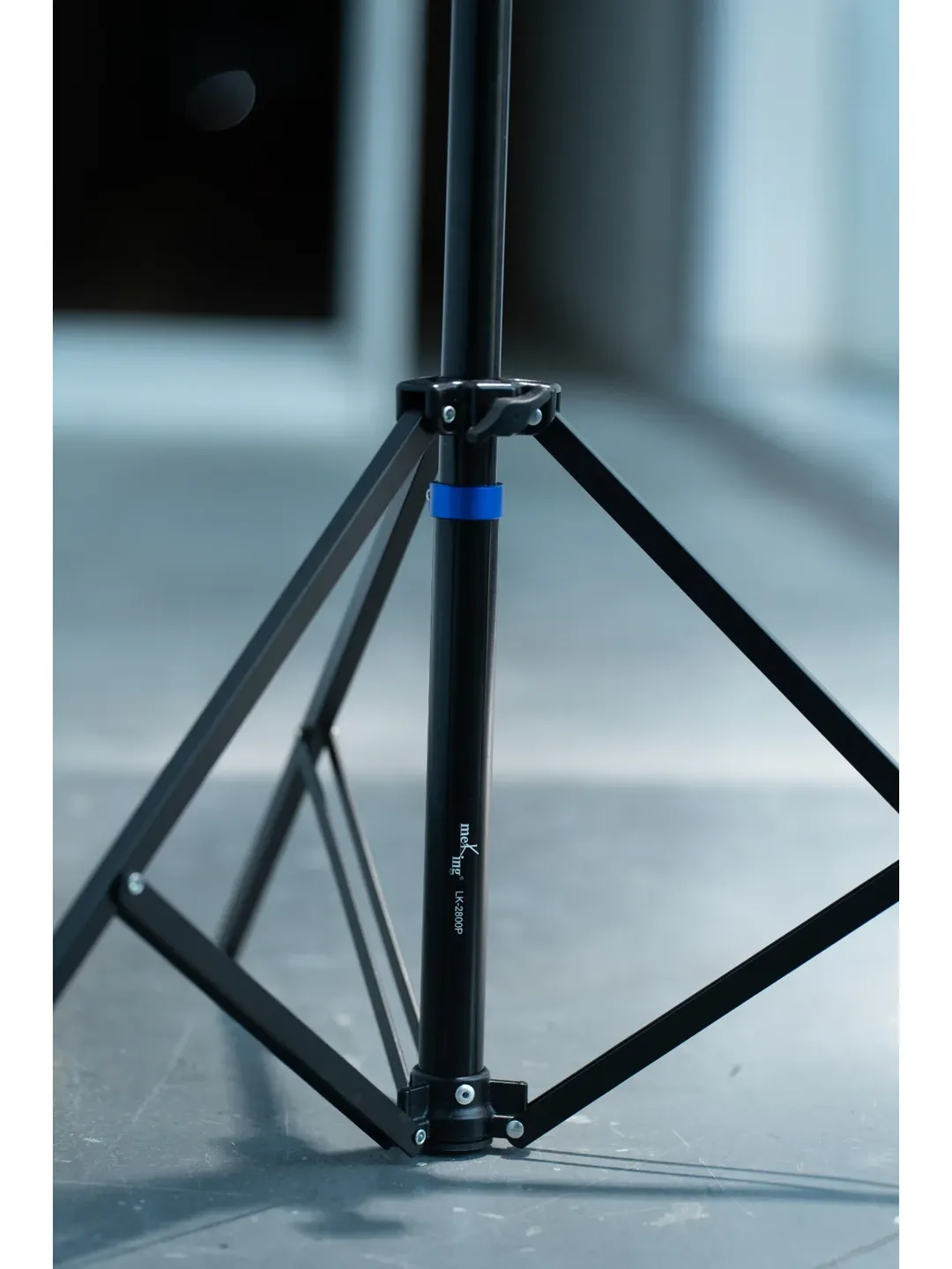
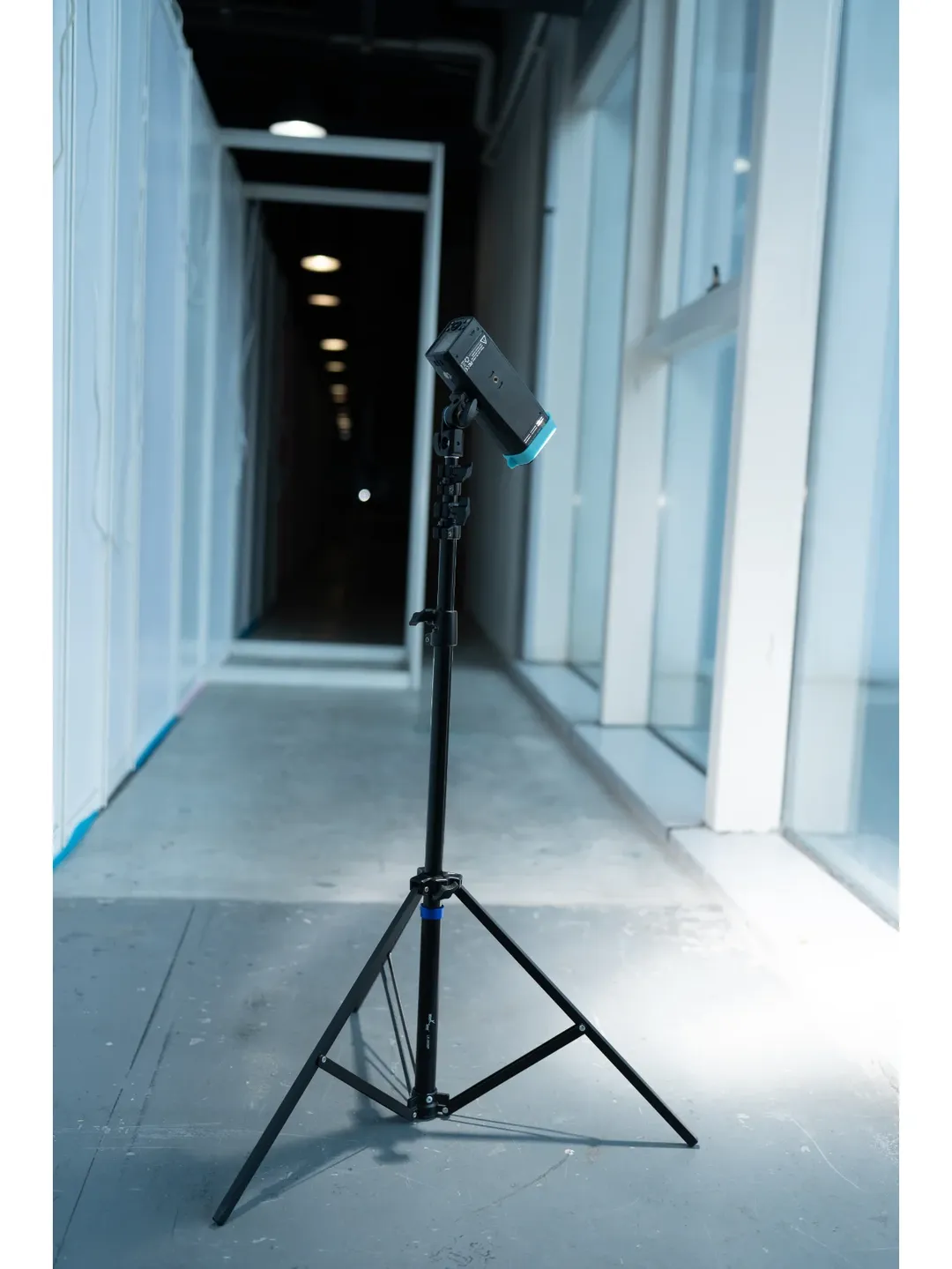
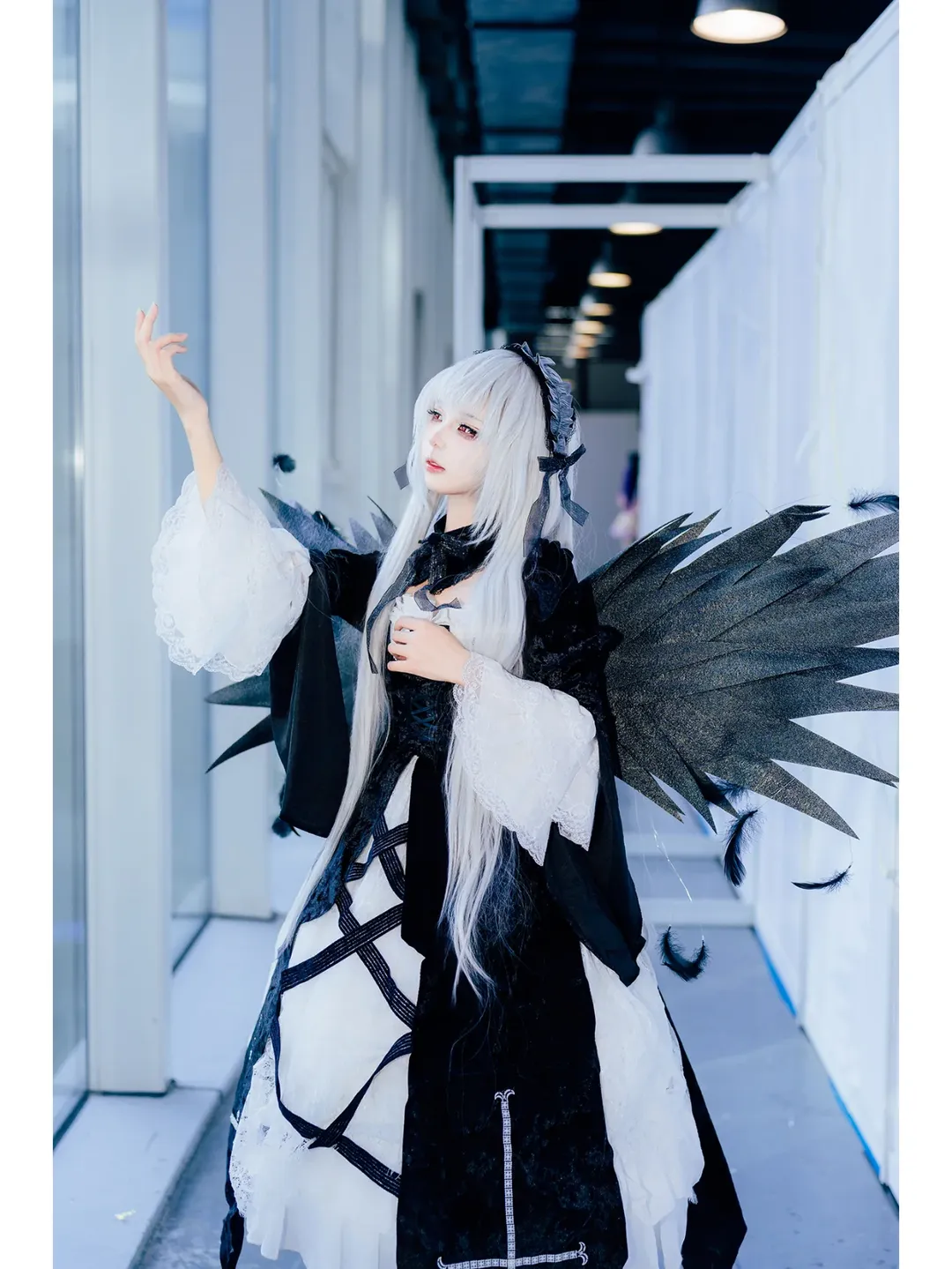
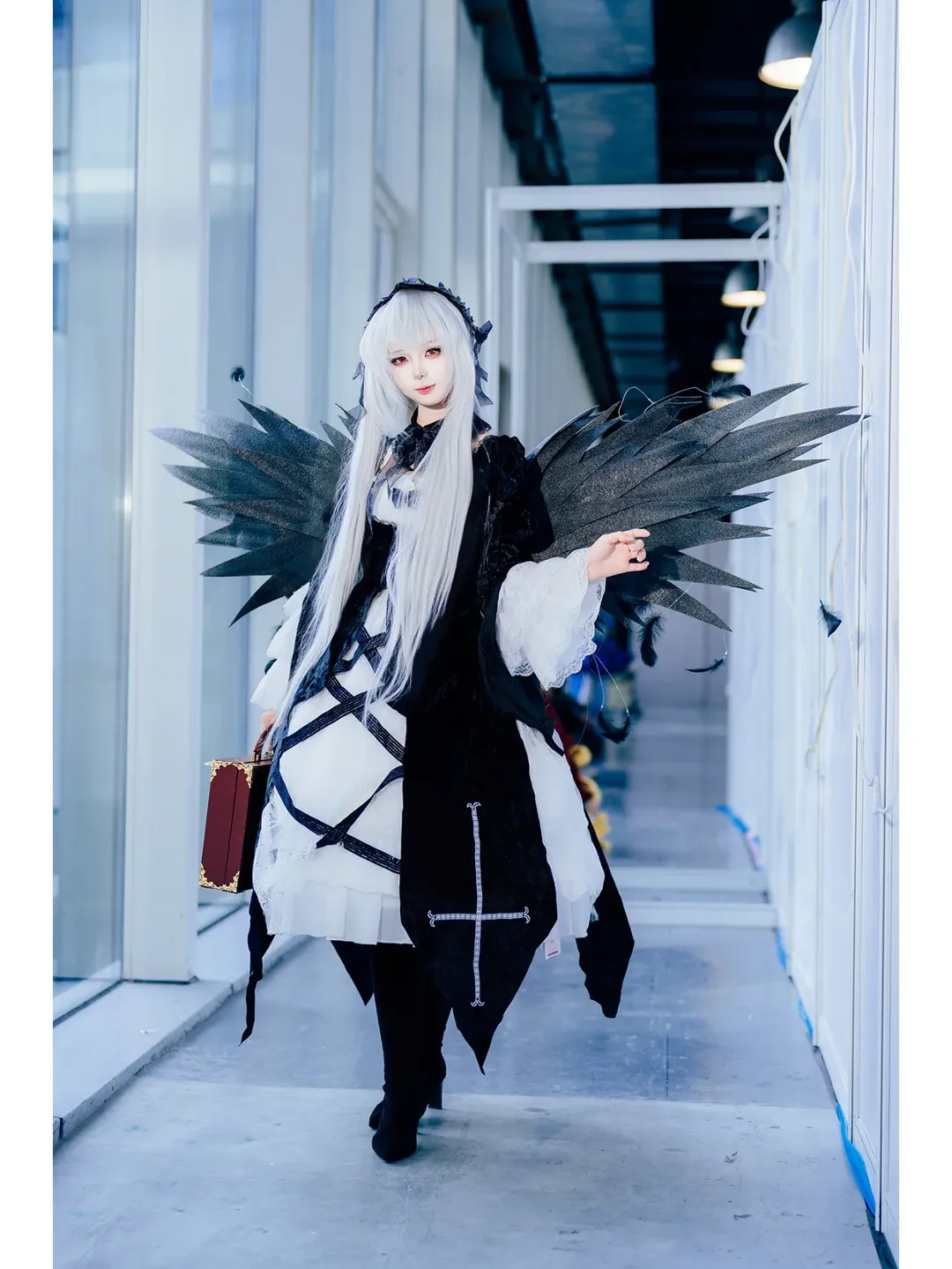
The main focus of these convention photos from the Firefly ACG Expo is to share with everyone how to utilize a window environment with a large lighting ratio combined with high-angle lighting to suppress ambient light and create high texture. For this shoot, I mainly used the Meikeng quick-open light stand, model LK-2800P, which proved extremely convenient to move and adjust on location. The core logic behind getting great shots is actually simple: raise the light stand to a position behind the cosplayer higher than their head, and angle the light downwards. This creates a very natural holy halo effect, as if light is pouring down vertically from above. Combined with the character's signature black wings and white hair from Rozen Maiden, the overall mood instantly clicked.
The 2.8-meter height of the stand was more than sufficient on site. Even in a crowded venue like the Firefly ACG Expo, finding an open spot to set it up was super fast. You can see great results from the first 6 photos in this set, especially Photos 4 and 5—the overhead lighting created a beautiful rim light on the white wig and black feathered wings, giving the light and shadow structure of the entire photo a strong three-dimensional feel. Compared to flat lighting, the boost in texture is remarkably clear.
The core of controlling light near windows lies in managing large exposure differences. Large glass windows at convention venues introduce natural light that creates extreme contrast with indoor lighting. If relying solely on natural light, the window background easily blows out to pure white, while the subject becomes dark without details. This is where the light stand shines: I used high-angle light to fill the subject while appropriately lowering camera exposure to keep the background within a darker range. This preserved depth in the surroundings while fully retaining facial details, outfit textures—especially the lace details on the white dress collar—and the highlight shine of the red eyes.
The white hair look and black wings are extremely light-dependent. If the light is too dim, you lose layers; if it's too flat, it looks cheap. High-angle lighting presents wig texture brilliantly; you can see the white hair displaying translucency and strand sheen under the light, which is nearly impossible with frontal flat lighting. The costume is a black-and-white patched vintage Gothic dress, paired with an inner white chiffon dress and black cross straps, finished with white stockings and black high-heeled boots. The sharp black-and-white contrast forms clear light-and-shadow boundary lines under top lighting, which elevates proportions and highlights skirt layers.
I want to specifically mention Photos 9 and 10, which were taken without a light stand, relying purely on ambient corridor natural light. Comparing them directly with the previous six lighted shots reveals a huge drop in texture. In Photo 9, the hallway light was originally very flat; though the depth of the background looks nice, the subject appears completely flat in this environment, failing to emphasize the outfit's black-and-white layering. Photo 10 with the suitcase is even more obvious: side light combined with diffuse reflection from hallway ceiling lights made the subject look embedded into the environment, weakening costume details and wing contours. This proves that having a reliable, fast-adjusting lighting system on site enables a qualitative leap in photos.
In practical operation, the quick-open design of this Meikeng light stand made moving through convention hallways for fill lighting effortless. A single latch pull quickly raised it to the ideal height without wasting time turning knobs, leaving more energy to communicate poses with the photographer and capture dynamic snapshots. Whether it's the quiet pose leaning against the window sill in Photo 6 or the subtle hand movement snapshots in the walkway in Photos 3 and 9, light angles could be easily fine-tuned without frequently moving the stand itself. This simple high-angle lighting method is perfect for narrow spaces like anime conventions where elaborate studio setups aren't feasible. Leveraging height advantages yields immediate results. This lighting logic works great not only at the Firefly ACG Expo but also across other convention photos or indoor venues.