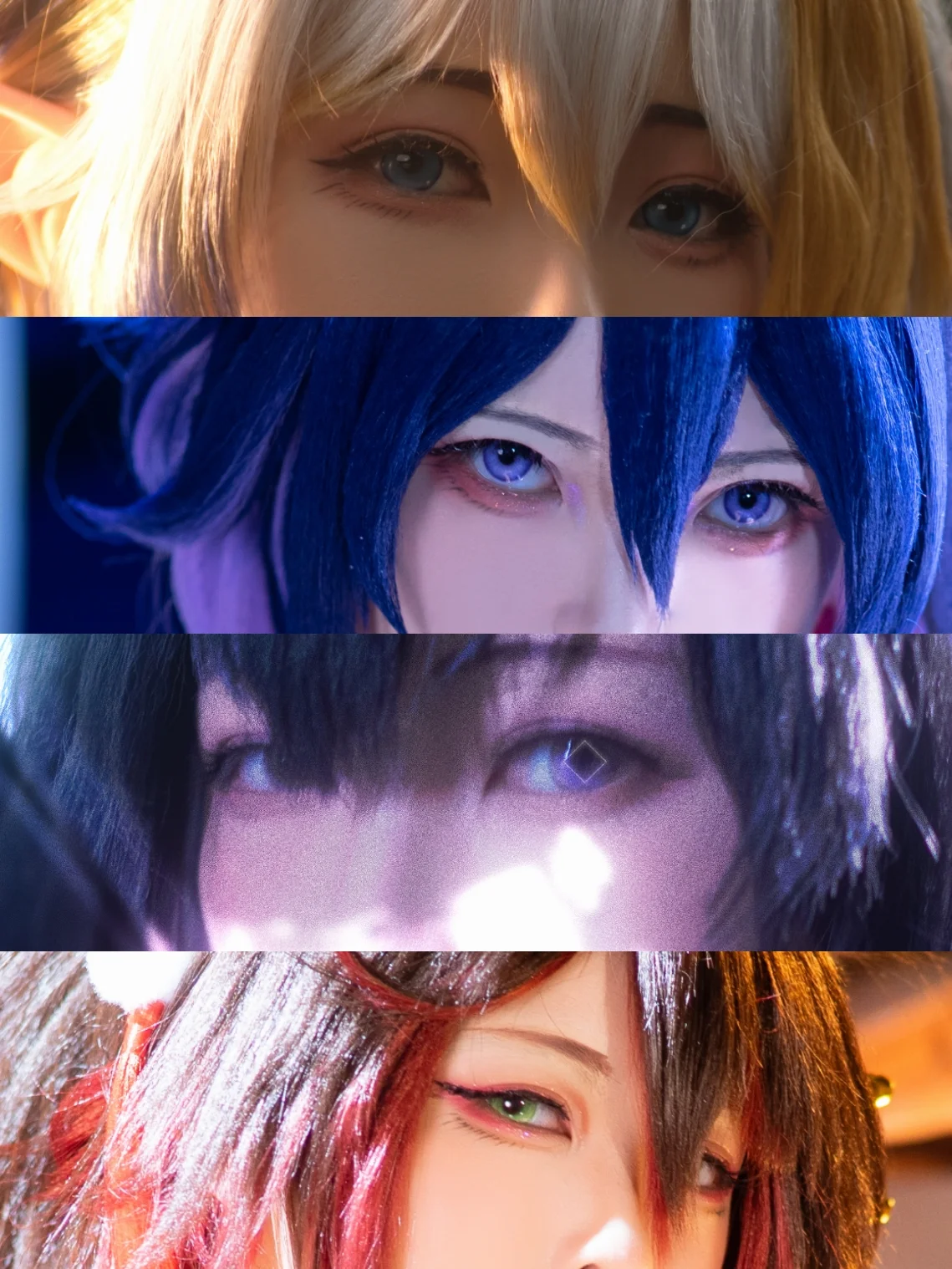
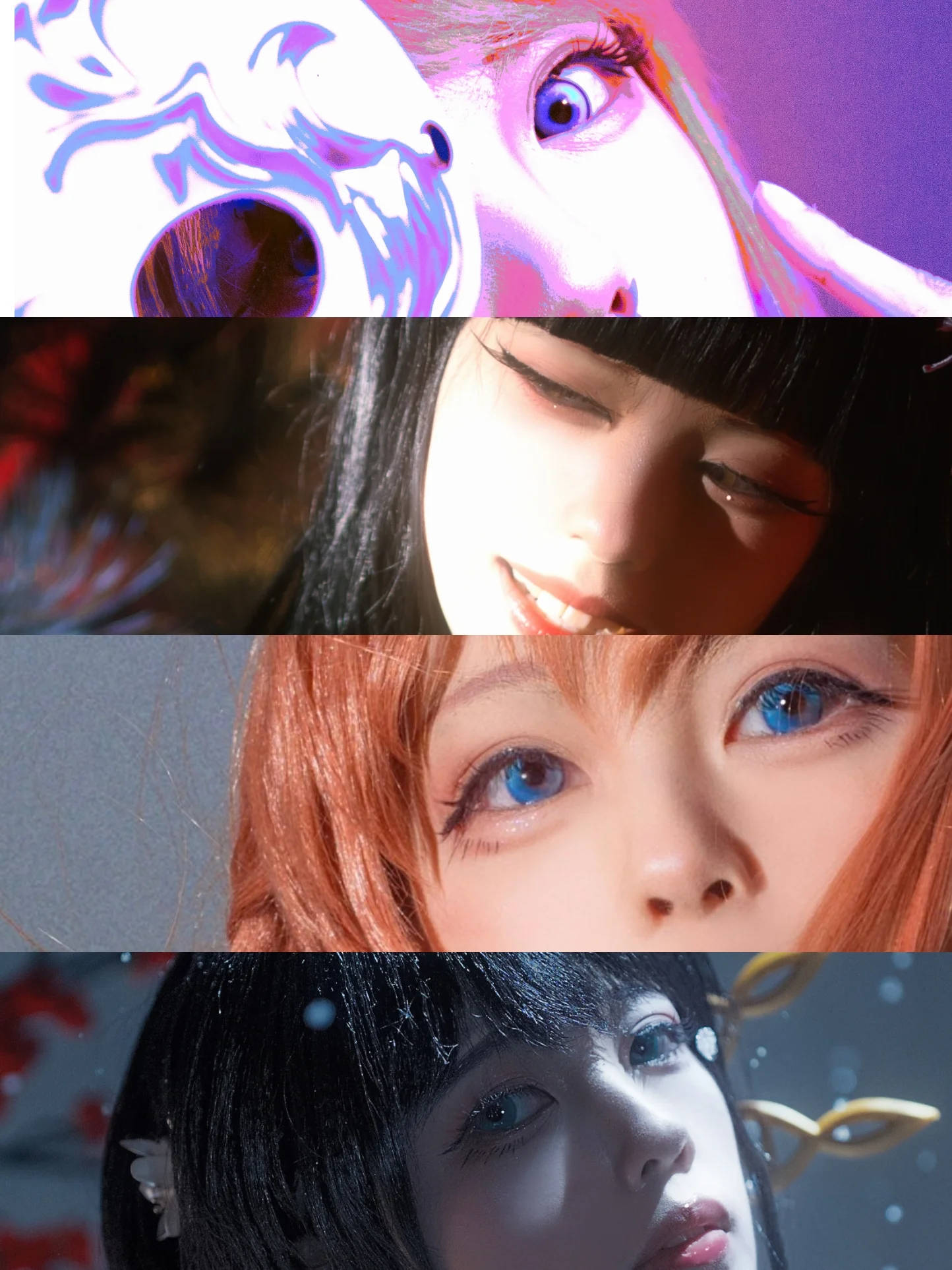
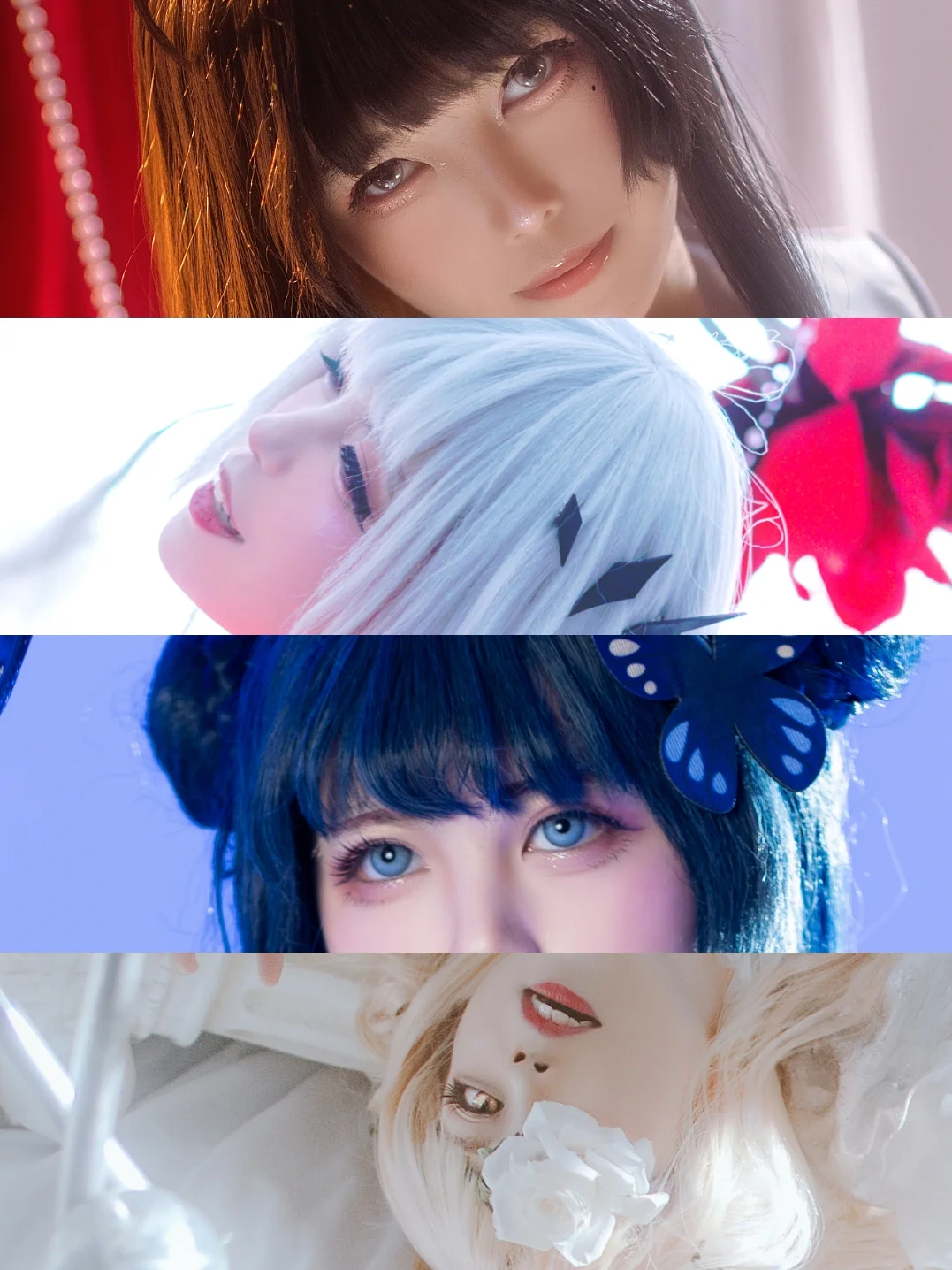
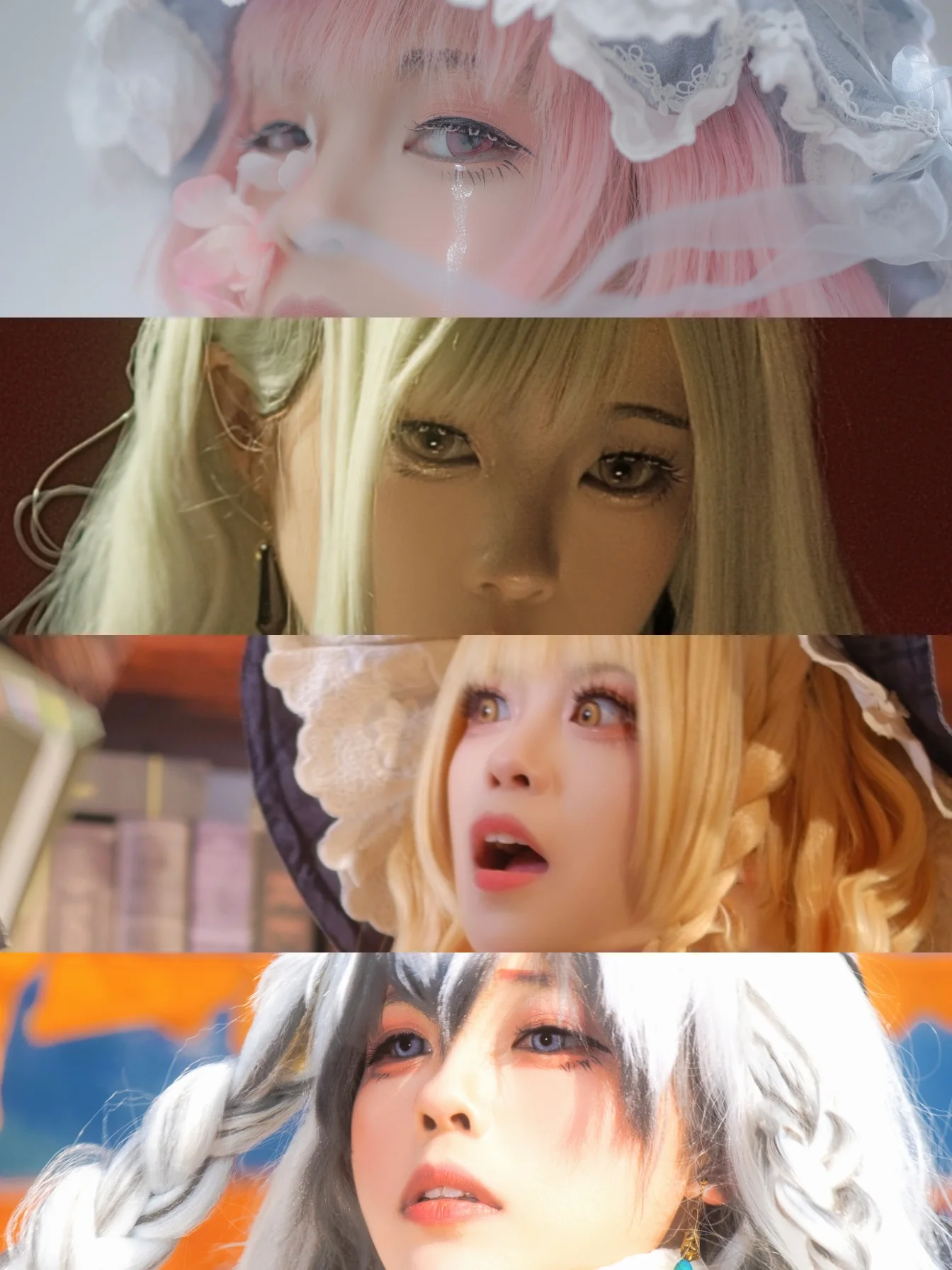
Makeup can be compensated for with technique, but the core of a character is often hidden in that split-second gaze. In this set of photos, I intentionally enlarged the eye close-ups because I wanted to talk about my insights into eye expression management. Although the eye makeup isn't incredibly exquisite, during the shoot I completely treated myself as them, experiencing their stories, and the state of my eyes naturally fell into place.
First, you must establish a sense of immersion in the character's personality. If the character is cool and aloof, the emotional anchor points should be etherealness and a sense of distance. In this state, do not focus your pupils too sharply; zone out slightly, look slightly above or to the side of the lens, and combine this with slightly raised eyebrows and relaxed lips to bring out that aloofness. The blue-eyed and grey-white styled gazes in the photos were controlled using this method—looking non-aggressive, yet carrying a quiet confidence that keeps people at a distance. This is a very useful approach for building unique vibes in anime-style photography.
If it's the energetic, quirky, or confident and expressive type, the gaze must be captivating. You need to lock onto the camera like a cat, seizing the visual focus of that split second, perhaps even adding a slight lift of the eyebrows or a tilt of the chin. The feeling captured this way stares straight into the soul and carries immense impact. Styles that emphasize lower eyeshadow and rounded eye shapes are perfect for this direct gaze.
When encountering characters with intense emotions or a touch of brokenness, the texture of the gaze must be softened like water. You shouldn't widen your eyes; instead, let your eyelids relax slightly, allowing your eyes to wander. Alternatively, utilize small facial movements—such as tensing the jawline or slightly parting the lips, paired with teardrop gems or a pink blend across the lower eyelid—to instantly max out the vulnerability. Even if there are no large movements in the frame, that stubborn, unregretful emotion can be precisely conveyed to the audience through your eyes.
Another highly practical detail is controlling where your gaze lands. Even if your eyes are staring in the same direction, the height of the landing point can produce entirely different effects. Staring slightly below the center line of the lens usually looks innocent and submissive, suitable for greenhorn or aggrieved emotions; whereas staring slightly above the center of the lens often creates a condescending, commanding presence. This trick is extremely useful when shooting medium close-ups and extreme close-ups.
Another point is coordination beyond just the gaze. Eye expression management isn't just about the eyeballs; the tension of the eyelids, the movement of the brow bone, and even the direction of the eyelashes are all part of the whole. If you want soft, gentle emotions, try keeping your eyes half-open to reduce exposed sclera, paired with soft strands of hair for obstruction. Under half-lit, half-shadowed lighting, a hazy ambiance will emerge naturally. If you want a sharp, fierce feel, the inner corners of the eyes must look powerful, while slightly knitting the brow—contracting the facial muscles to give the gaze that killer instinct. This level of facial expression control is what defines high-level results.
In truth, we often unconsciously tense up in front of the camera, causing our eyes to look vacant, which is the root cause of breaking character. My personal approach is to take a few deep breaths before the shutter clicks and quickly run through the character's recent experiences in my head. Visualizing that scene in your mind before looking at the lens naturally infuses your eyes with a story. And make sure to relax your jaw; as soon as the masseter muscles tense up, your facial expression will stiffen, and your eyes will follow suit by looking unnatural.
For this selection, I specifically chose sets with a wide span of eye changes. Whether cool, melancholy, resilient, or fragile, none of these states were built through rigid posing, but rather through interaction with the photographer and immersion in the atmosphere. Even if the makeup isn't 100% perfect, when you are fully invested, your eyes can tell the deepest stories. This is why I believe that in cosplay, expression will always triumph over makeup, and mastering these cosplay techniques is what truly brings a character to life.