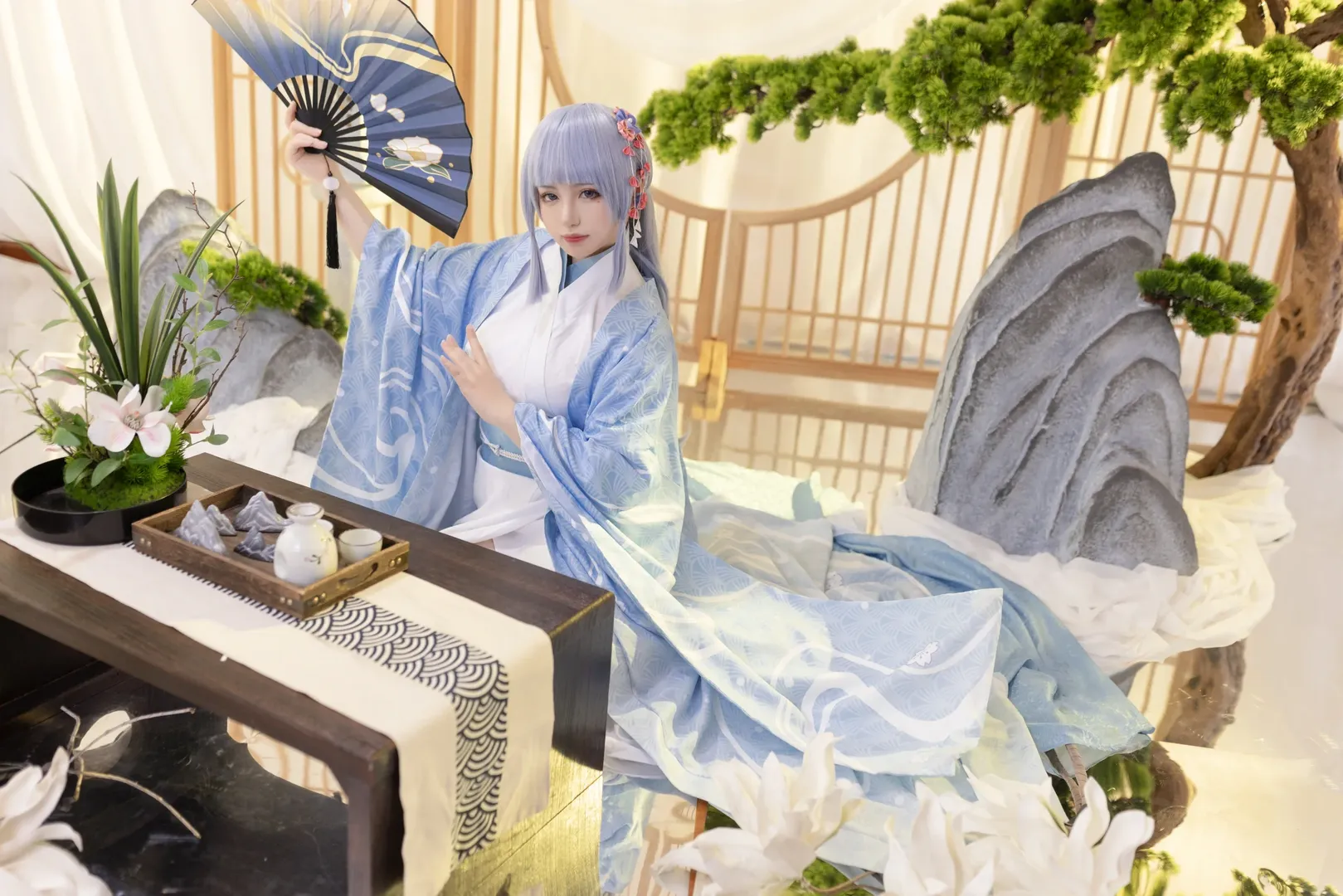
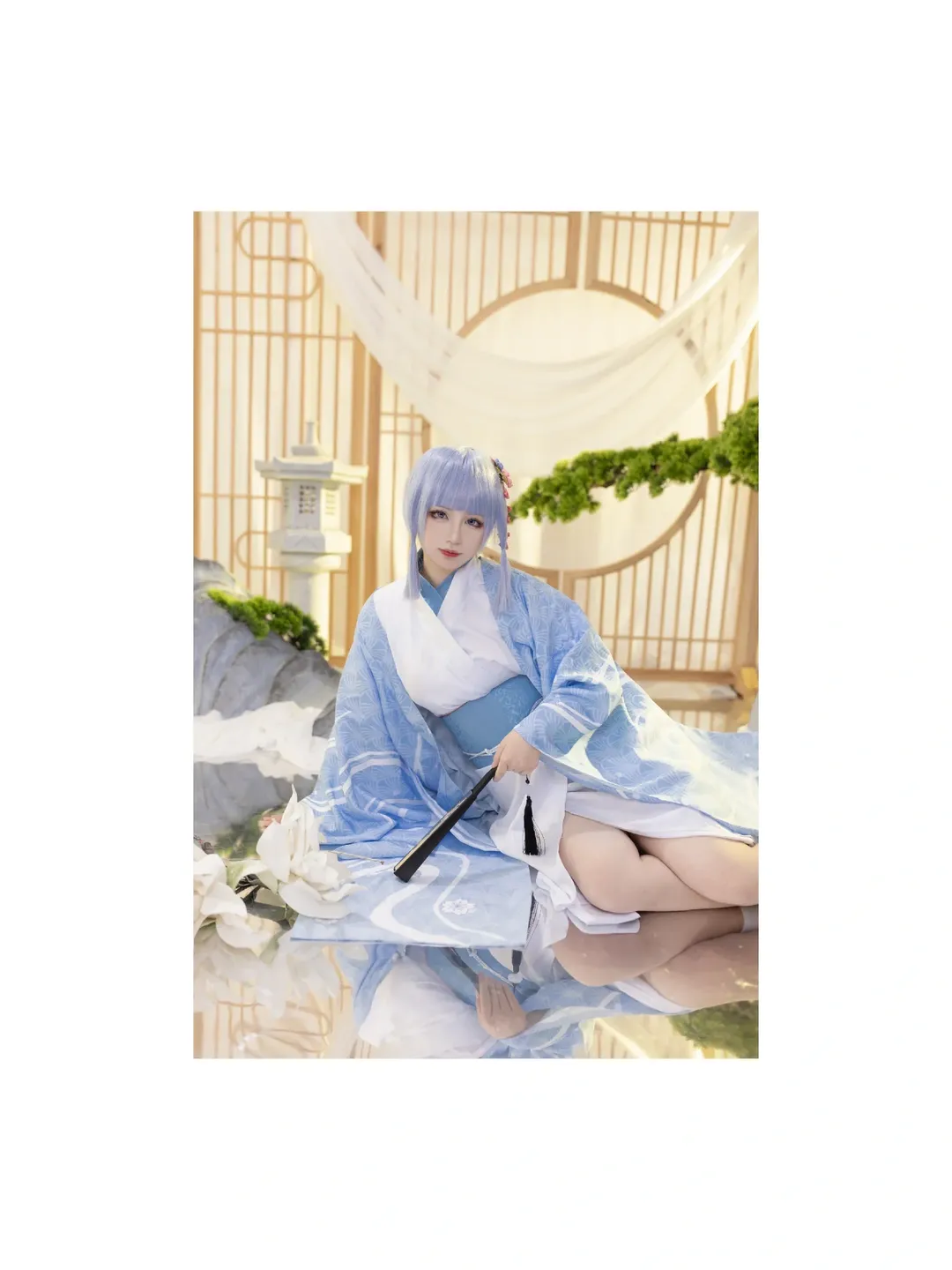
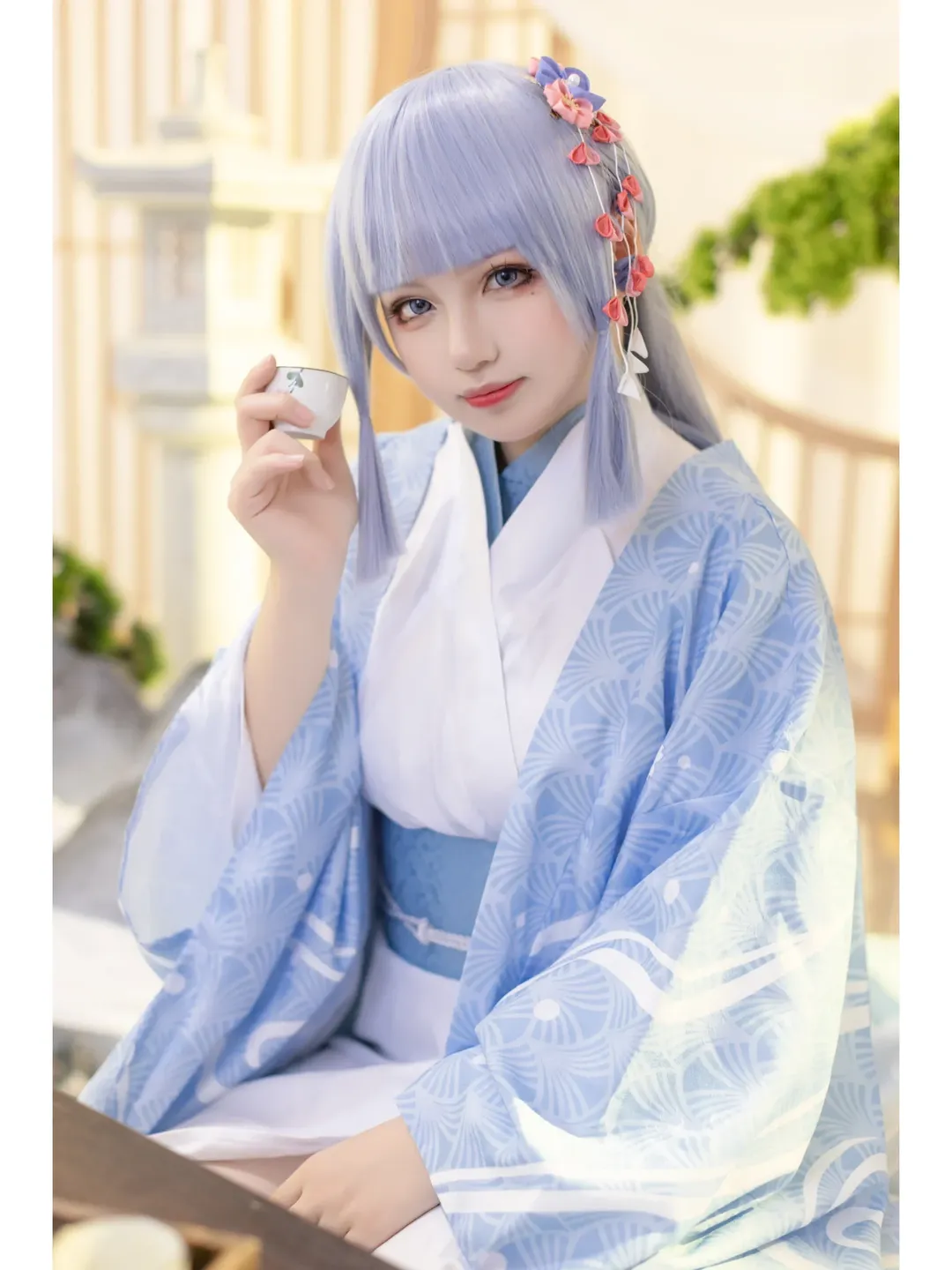
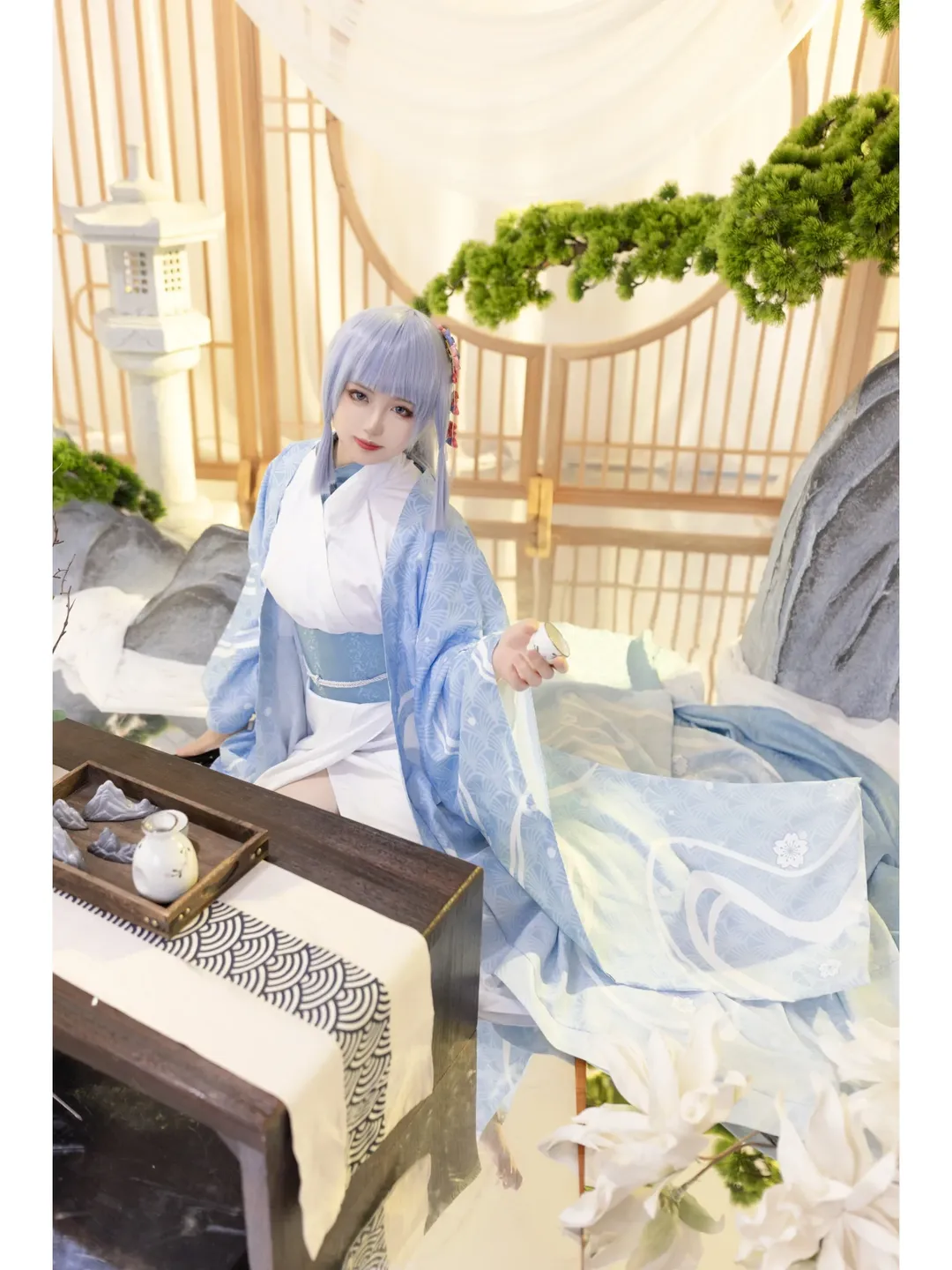
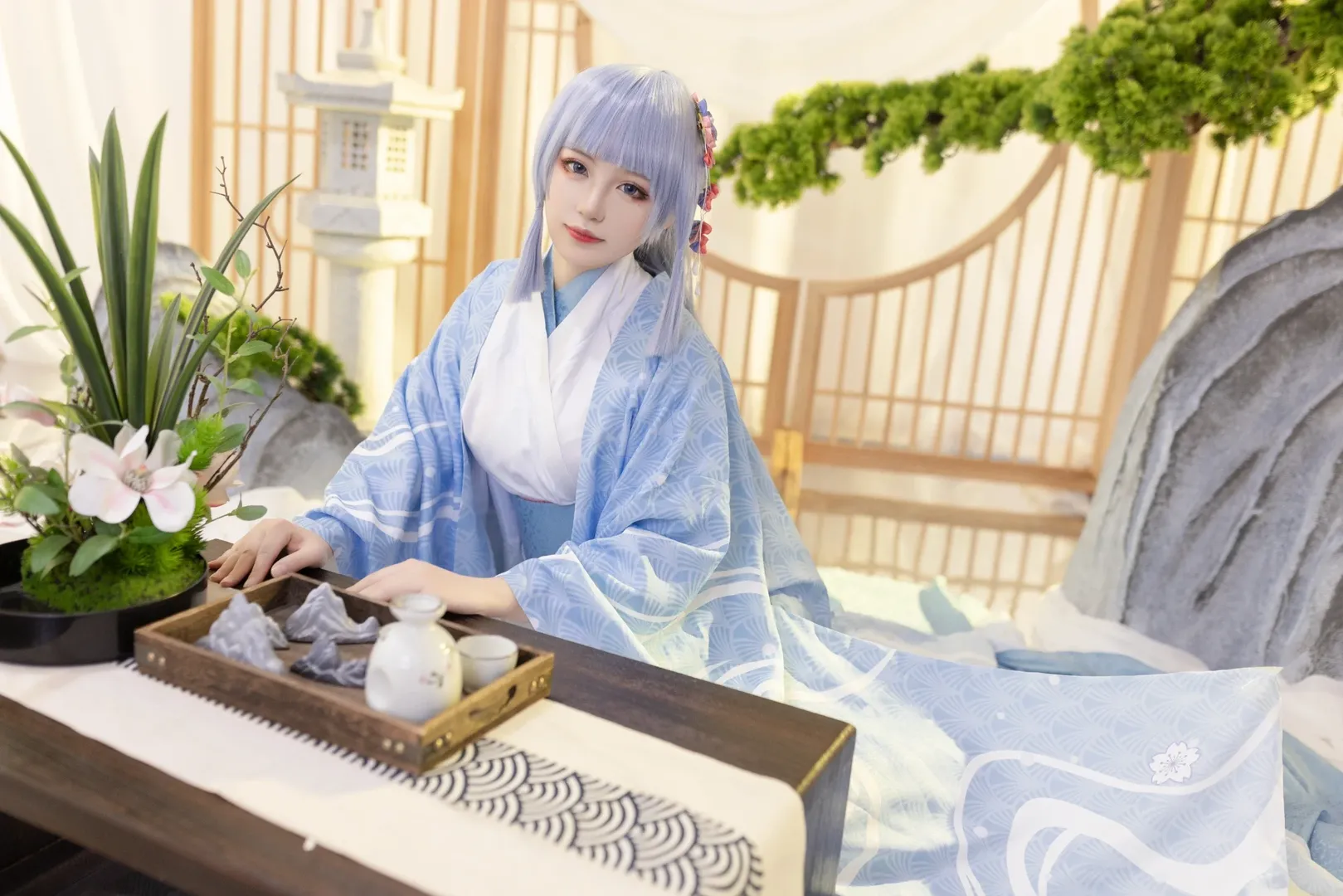
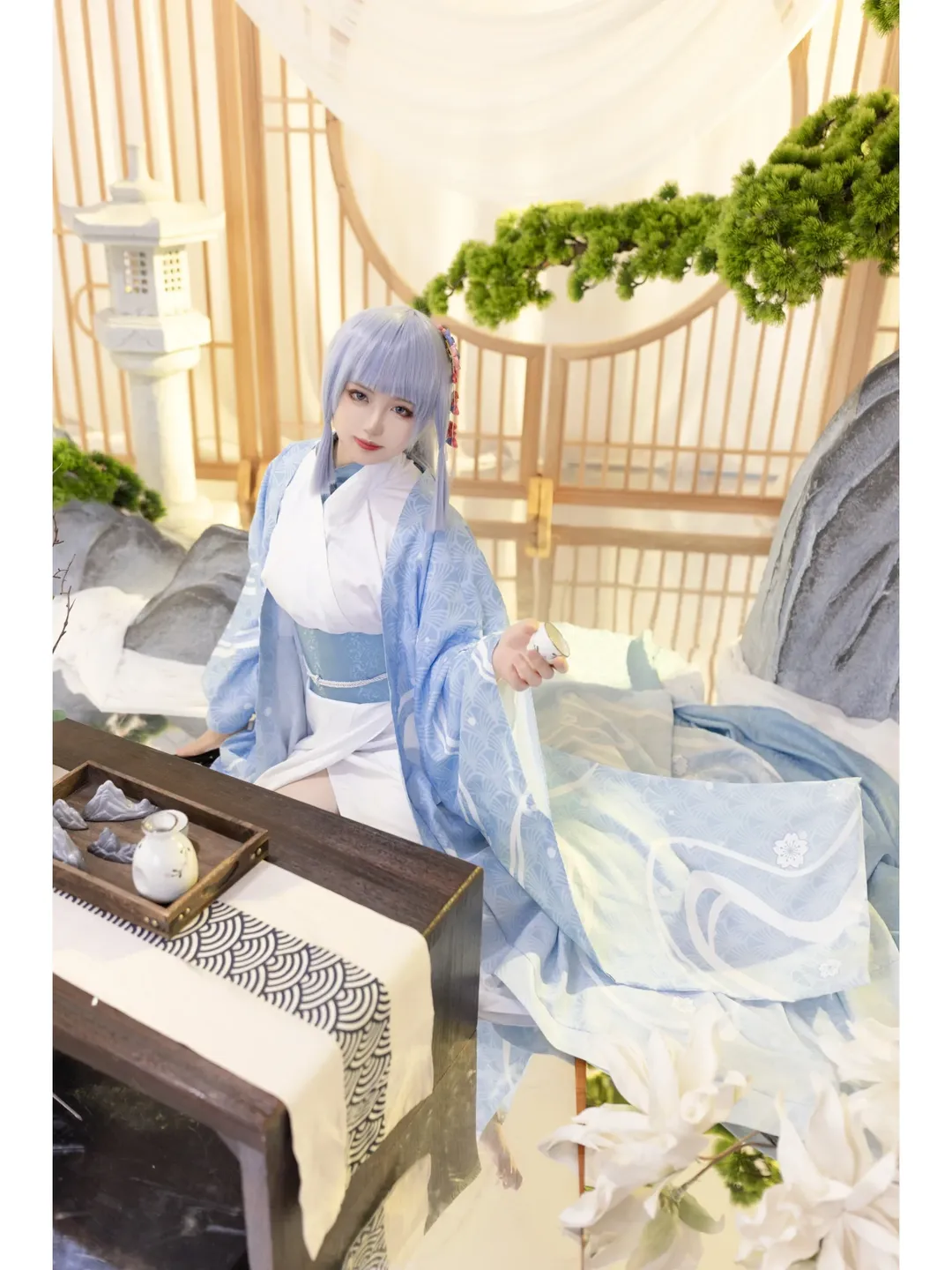
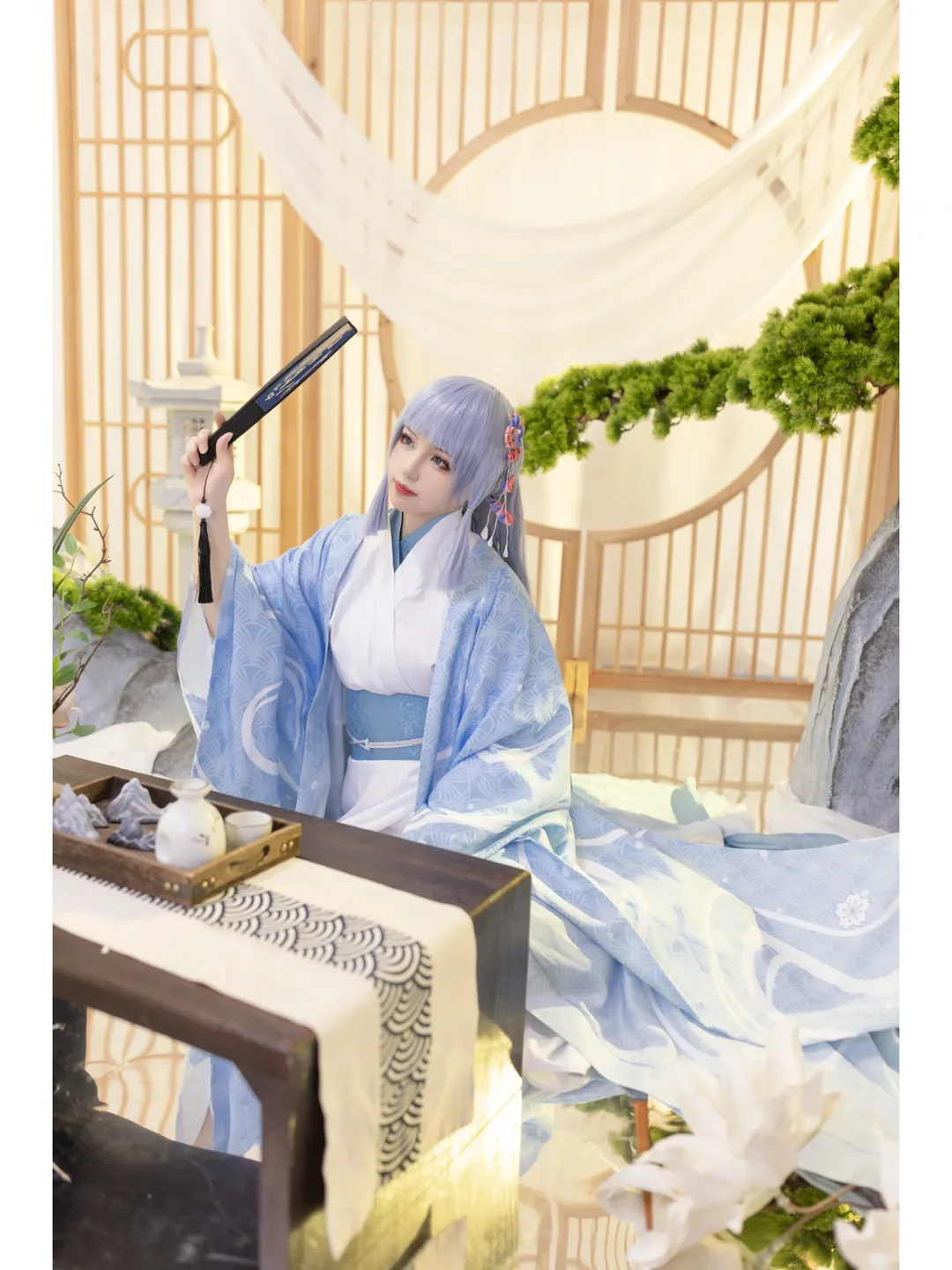
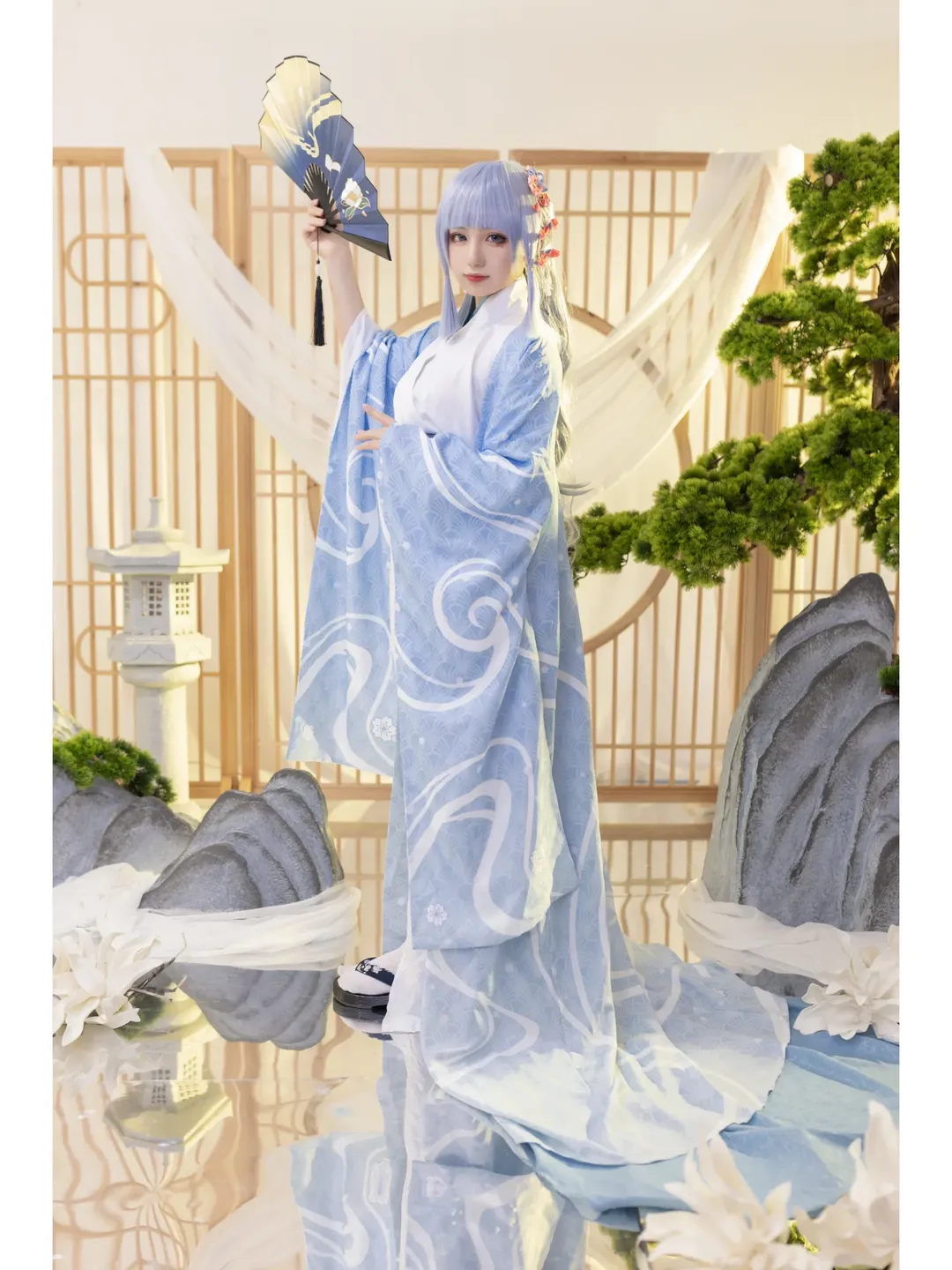
This set of work for Kamisato Ayaka cosplay captures a rather Zen and serene atmosphere. Before producing this set of photos, I gave some thought to the character's outer traits and inner disposition. Kamisato Ayaka is designed as the etiquette-minded and elegant Shirasagi Himegimi in Genshin Impact, so we kept pose designs restrained, avoiding overly dramatic movements. Instead, we conveyed that quiet yet aloof feeling through gestures, eye contact, and props such as folding fans and tea sets.
For the costume, a main color palette of light blue and white was chosen, featuring white water ripples and fan patterns. The texture is lightweight, requiring a graceful posture to capture the flowing feel of the outfit. The wig was trimmed into straight bangs and matching long hair, adorned with red flowers and tassel hair accessories to create a subtle pop of color around the face so it wouldn't be entirely blue and white. Special care was also needed to smooth out the layers between the outer white collar and the light blue obi sash to avoid a bulky look; staff repeatedly helped adjust the tightness of the sash during breaks.
Great effort went into designing the shooting set. Japanese-style wooden lattice screens served as the backdrop, ensuring light could penetrate the wooden slats to create soft shadows. Hanging white gauze at the top combined with artificial rockwork constructed a fairly complete indoor garden feel. The reflective mirror floor at the bottom was crucial—it instantly gave the otherwise flat composition a top-and-bottom depth, while adding richer layerings to the skirt folds spread across the floor in reflection. The dark wooden tea tray and sake pot placed on the table served to anchor the bottom of the frame in composition, balancing perfectly with the white tea cups for just the right contrast. The black bonsai and white flowers on the left added a touch of natural botanical life, preventing the backdrop from appearing overly rigid in this Japanese-style photography setup.
During the official shoot, handling the folding fan was a key technique. When posing with the fan raised high in one hand, upper body flexibility needed to be maintained while aligning sightlines with the fan or camera direction to capture a frame that was both natural and story-rich. For close-ups holding a teacup, attention shifted to coordinating hand movements with gaze, where relaxing facial expressions yielded a much smoother posture. Since the robe is quite voluminous, spreading the skirt hem when sitting down was equally important—arranging it too neatly looked forced, while too messily ruined the character's refined texture. This set utilized seated, semi-crouched, and standing angles to highlight various facets of the character.
A small challenge arose during shooting because of the reflective floor: every posture shift required checking if unwanted props leaked into the reflected frame. Staff had to constantly monitor frame edges to adjust rocks or table positions. Sometimes, finding a satisfying reflection angle meant repeating a pose many times until composition and lighting achieved the desired state.
Fortunately, photographer Lan Lin was incredibly patient, constantly offering posing guidance and fine-tuning suggestions, while retoucher Hu Li spent a great deal of time refining light, shadow, and details. I am deeply grateful for the dedication of both photographer and retoucher—this meticulous attitude toward every detail is what allowed us to collectively translate the vision in our minds into photos. Without their assistance, I could not have found the most comfortable state before the lens alone. I feel very satisfied with the final presentation of this set, as the quiet atmosphere was completely preserved on camera, making this a truly rewarding creative experience in 2D culture and cosplay art.