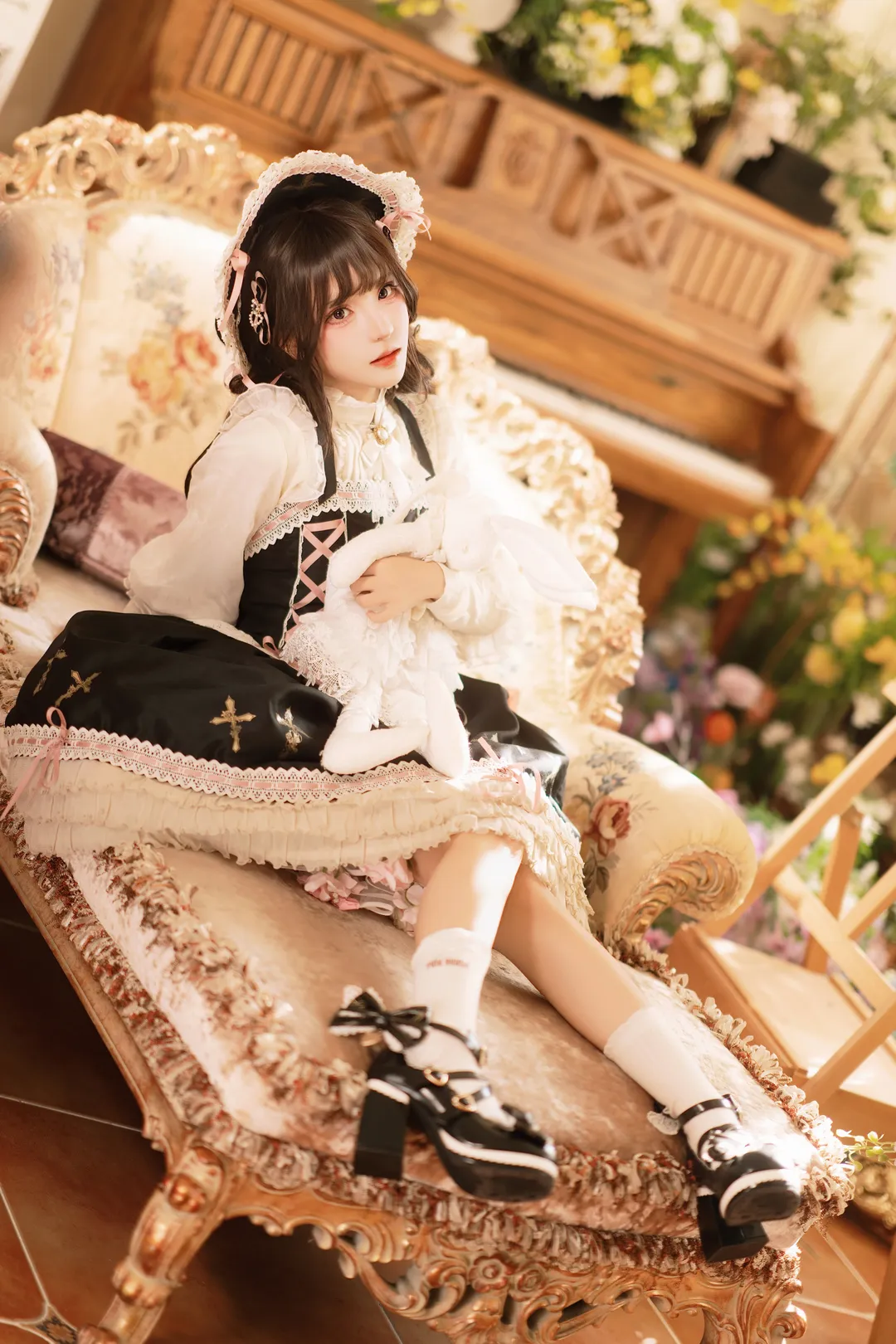
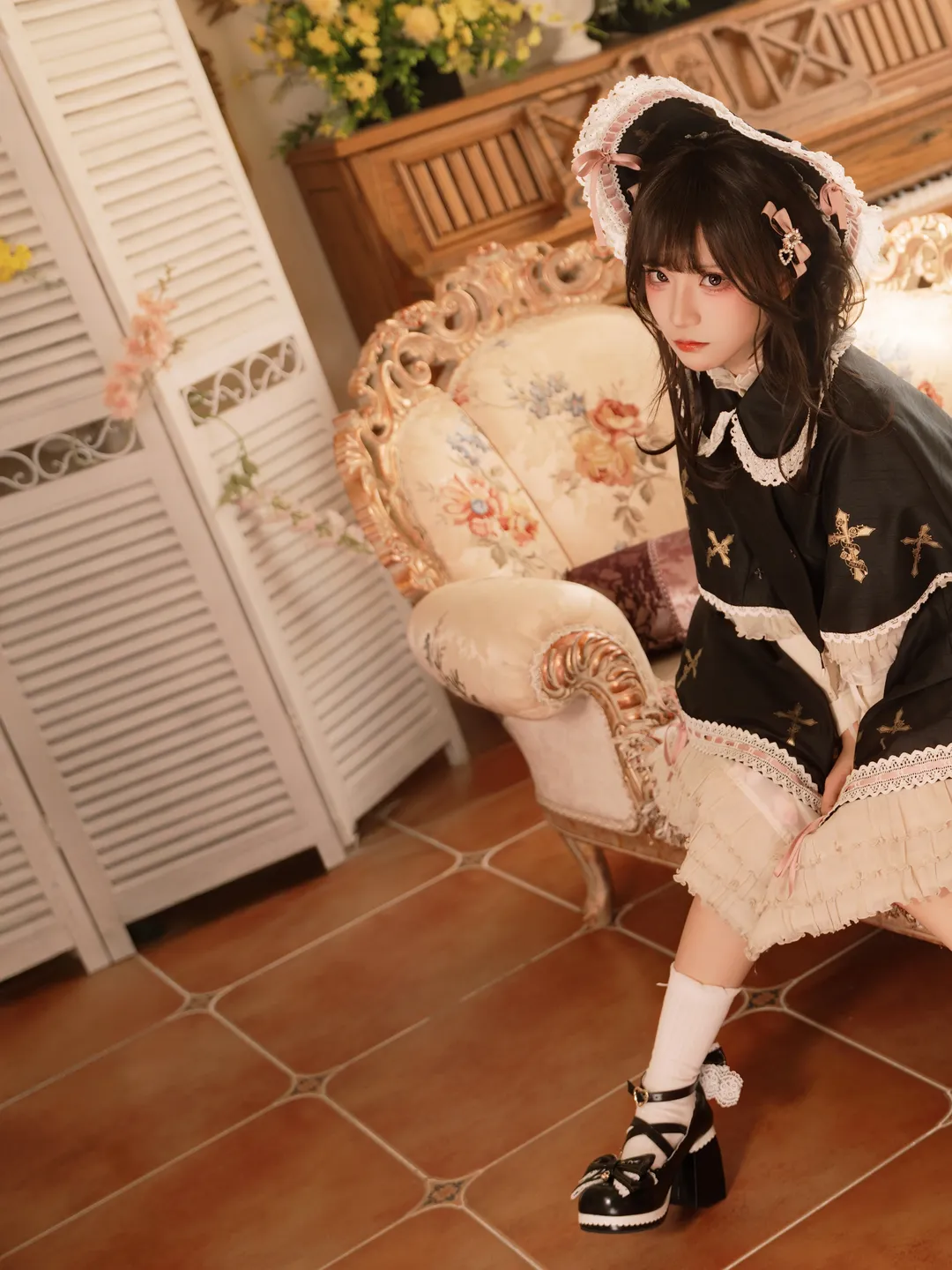
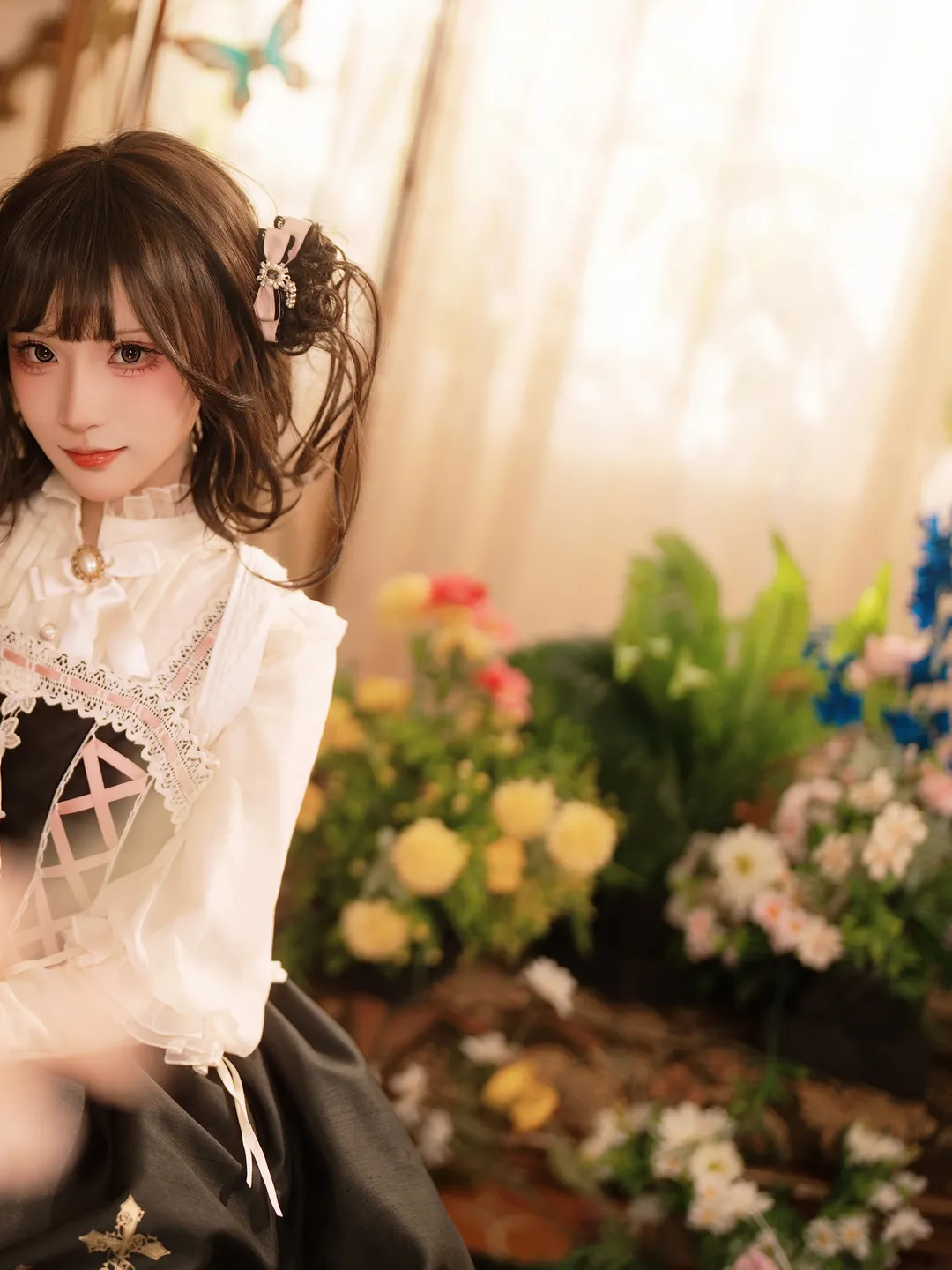
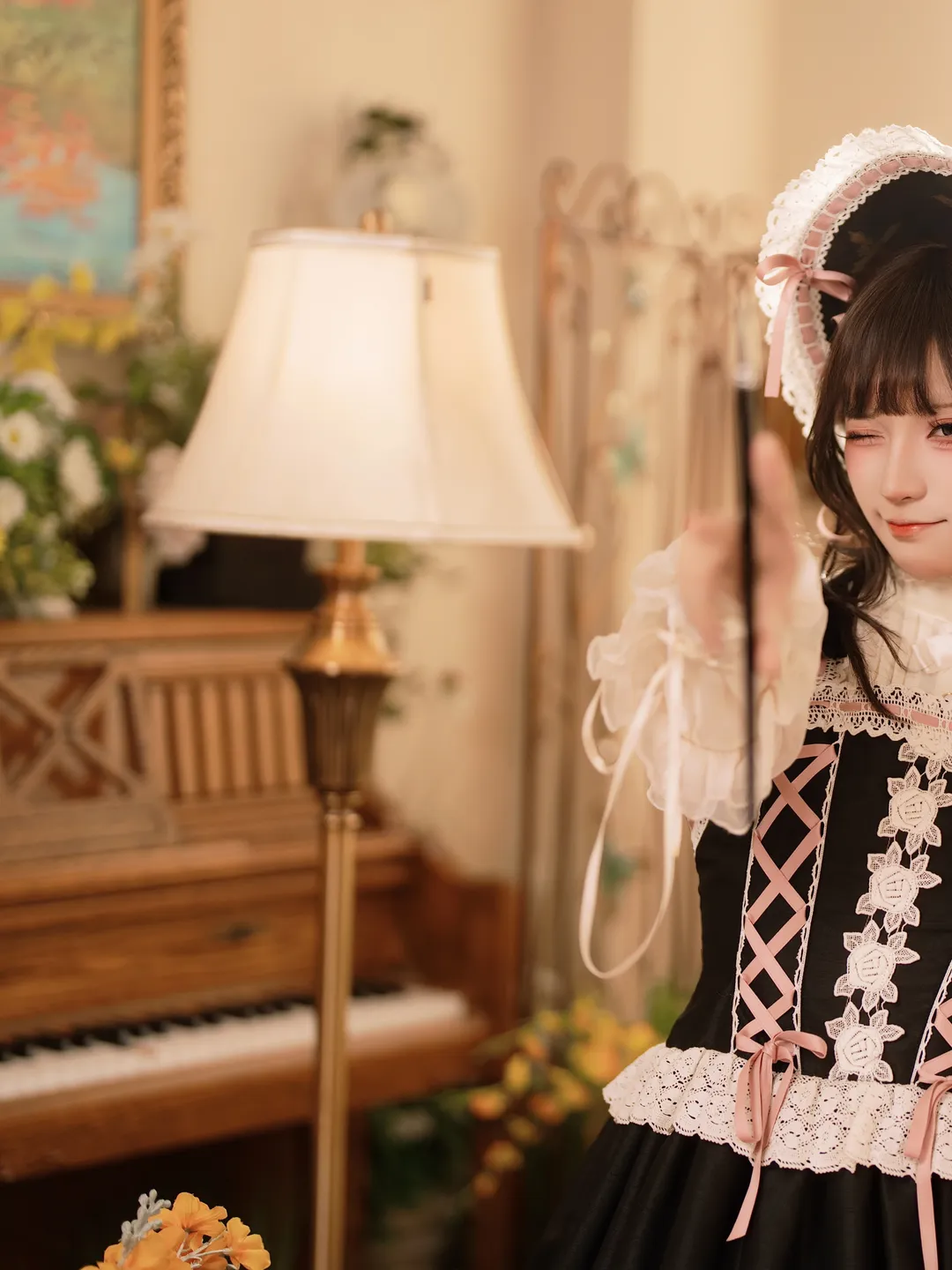
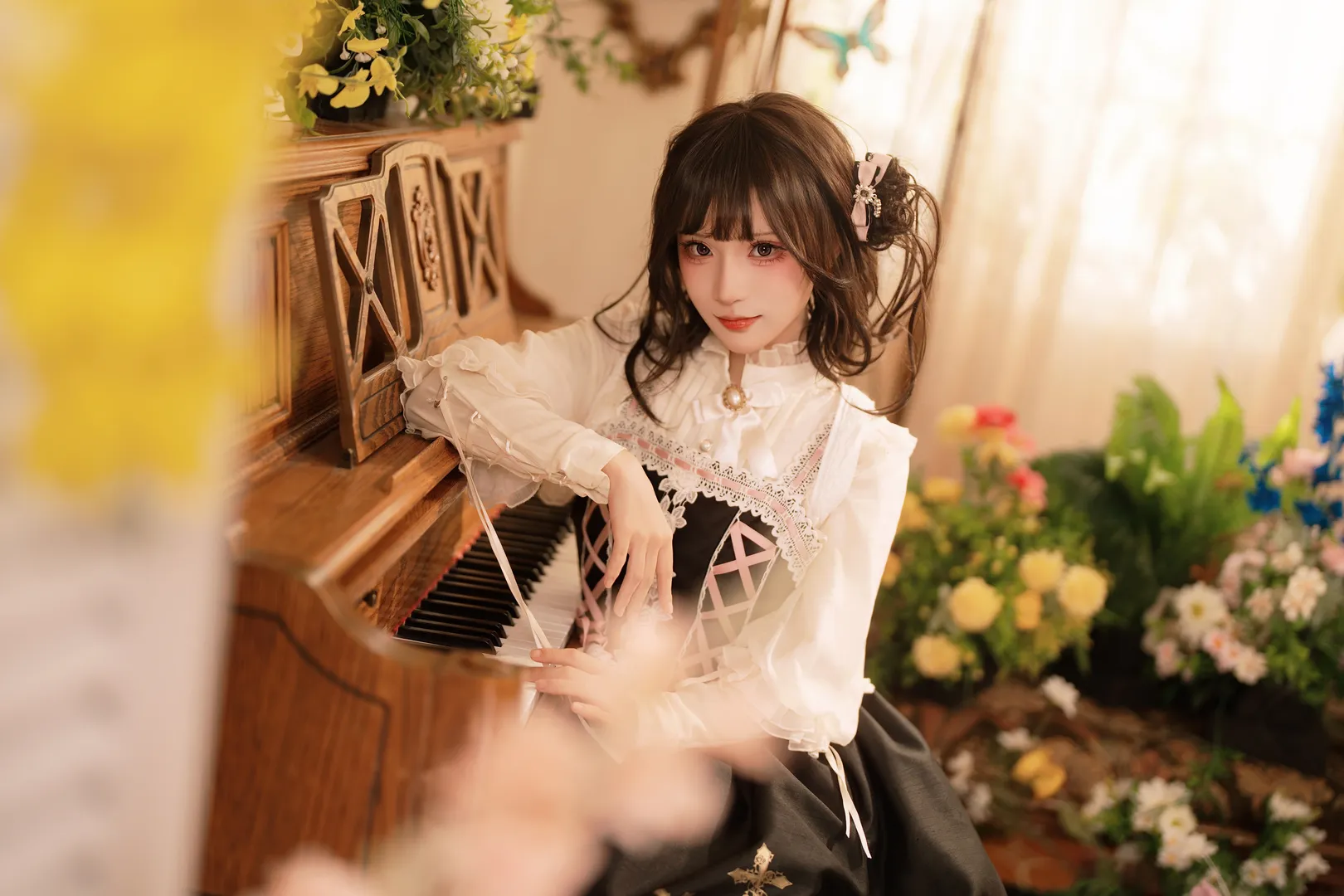
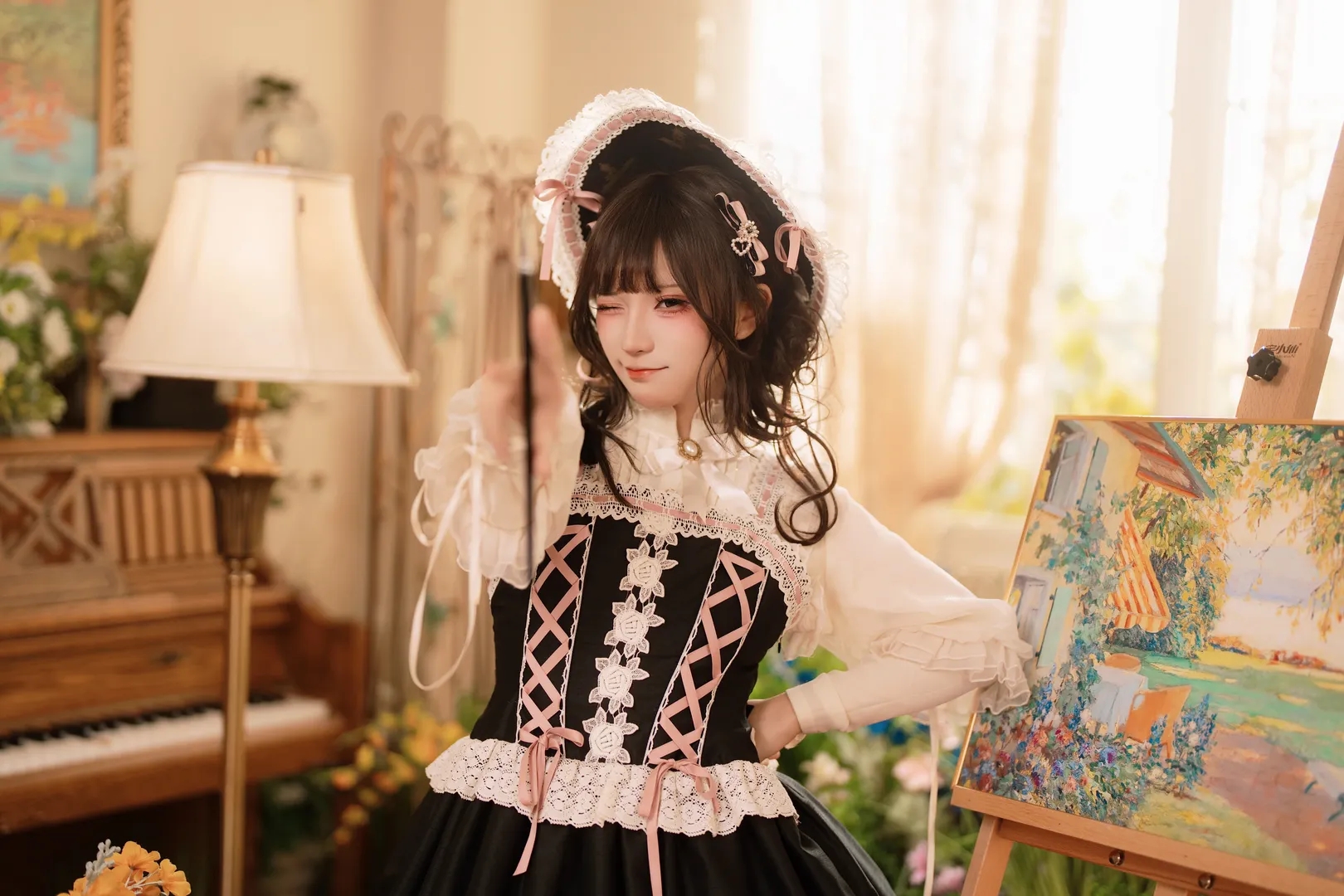
The gown selected for this shoot was the iconic Ginger Doll, whose black-and-pink palette, intricate white lace trims, and criss-cross lacing aligned seamlessly with our Doll-like photography concept. To complement this Lolita aesthetic, I intensified the blush in my makeup to evoke the rosy flush of a delicate porcelain doll. For the headdress, I picked a bonnet adorned with pearls and pink bows, paired with deep brown spiral curls and blunt bangs to channel an authentically French retro demeanor.
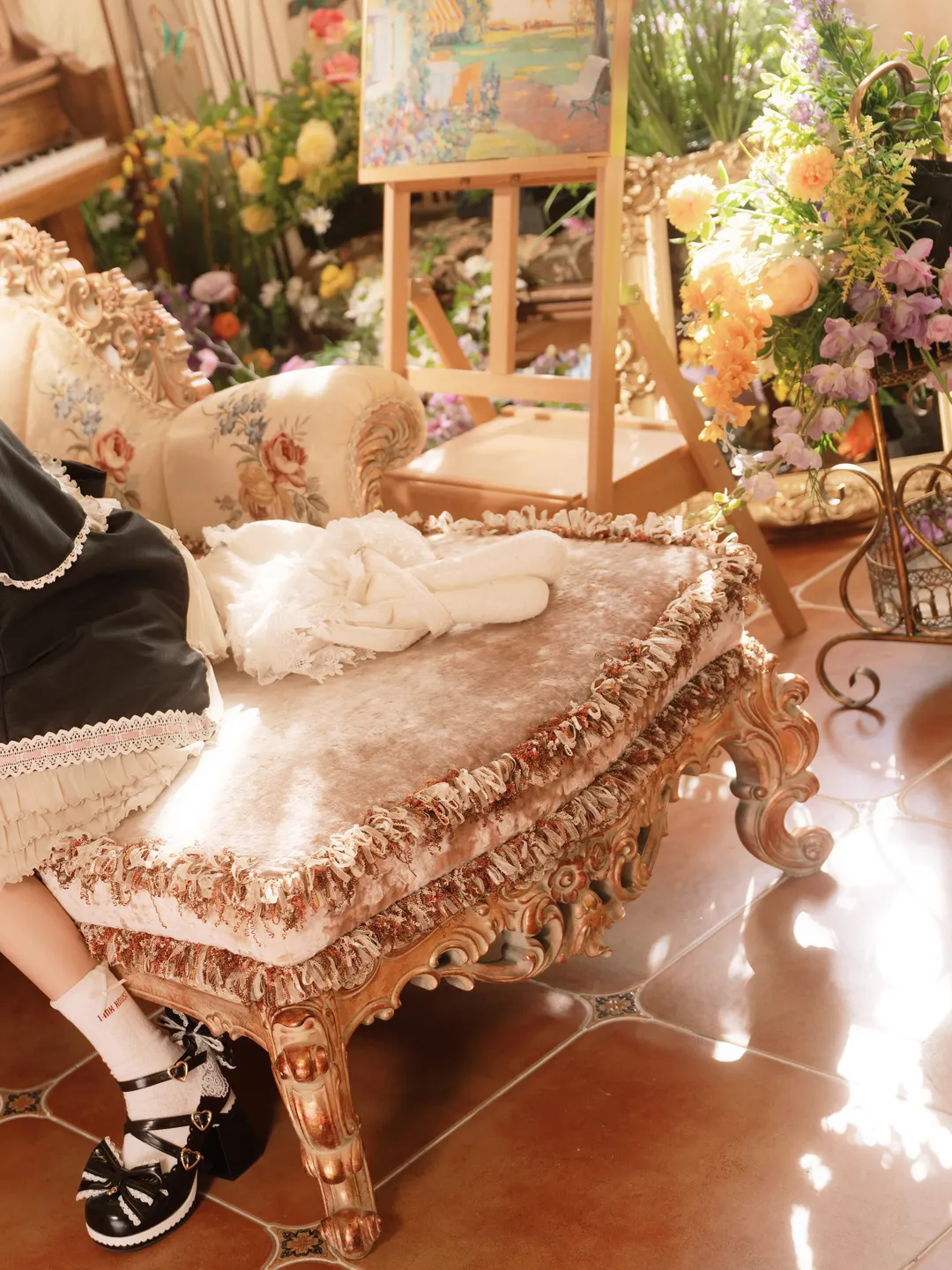
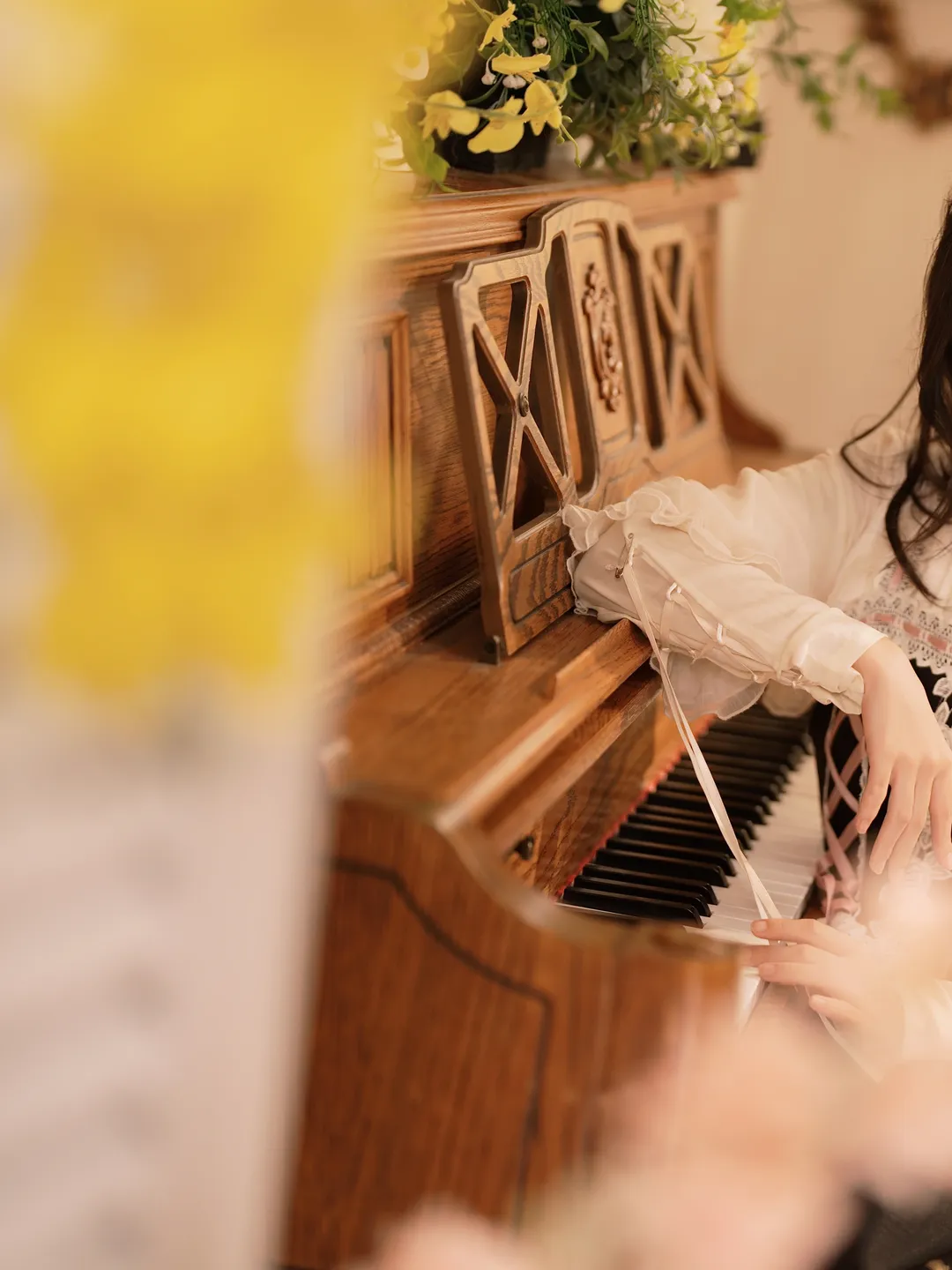
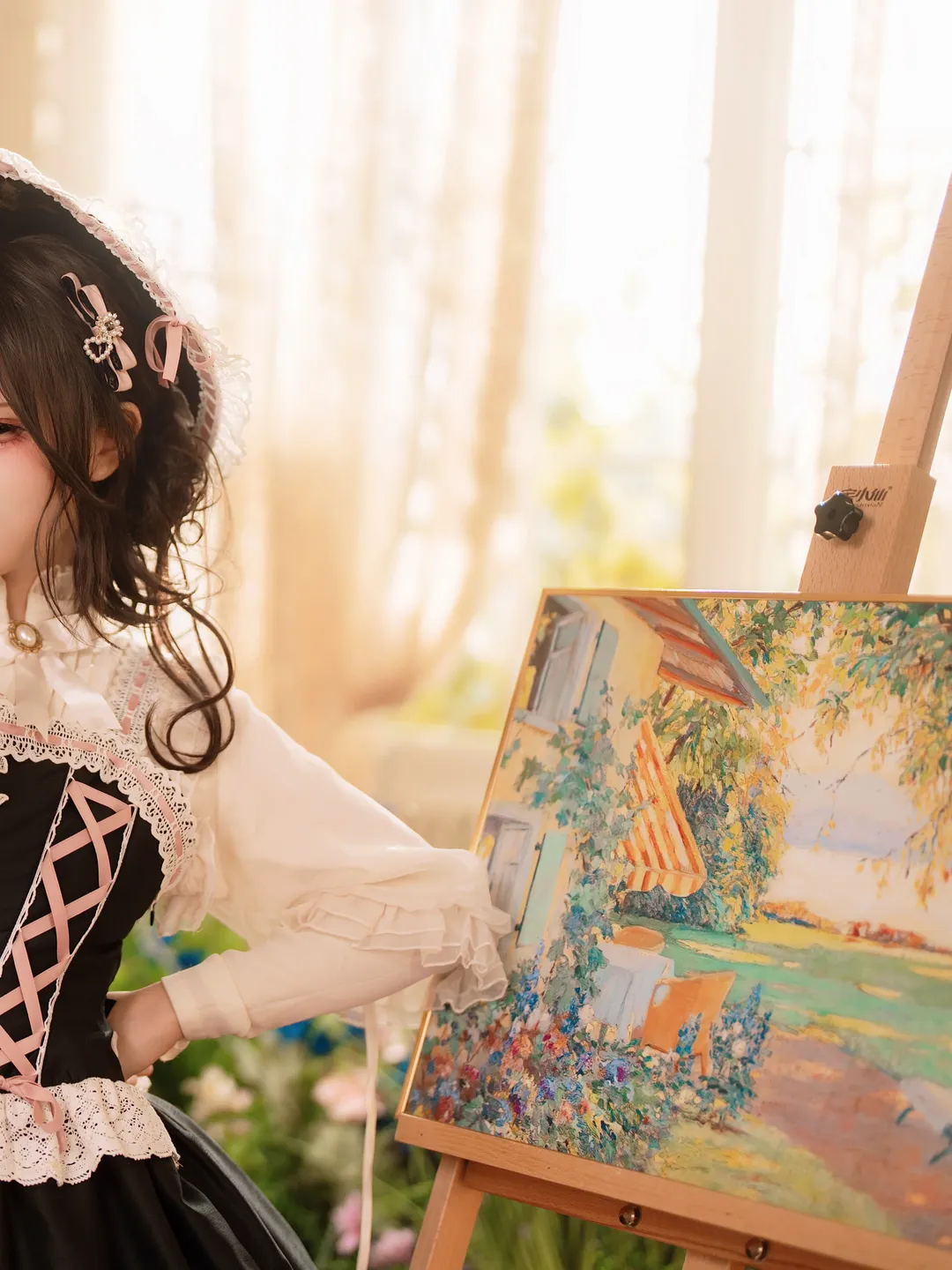
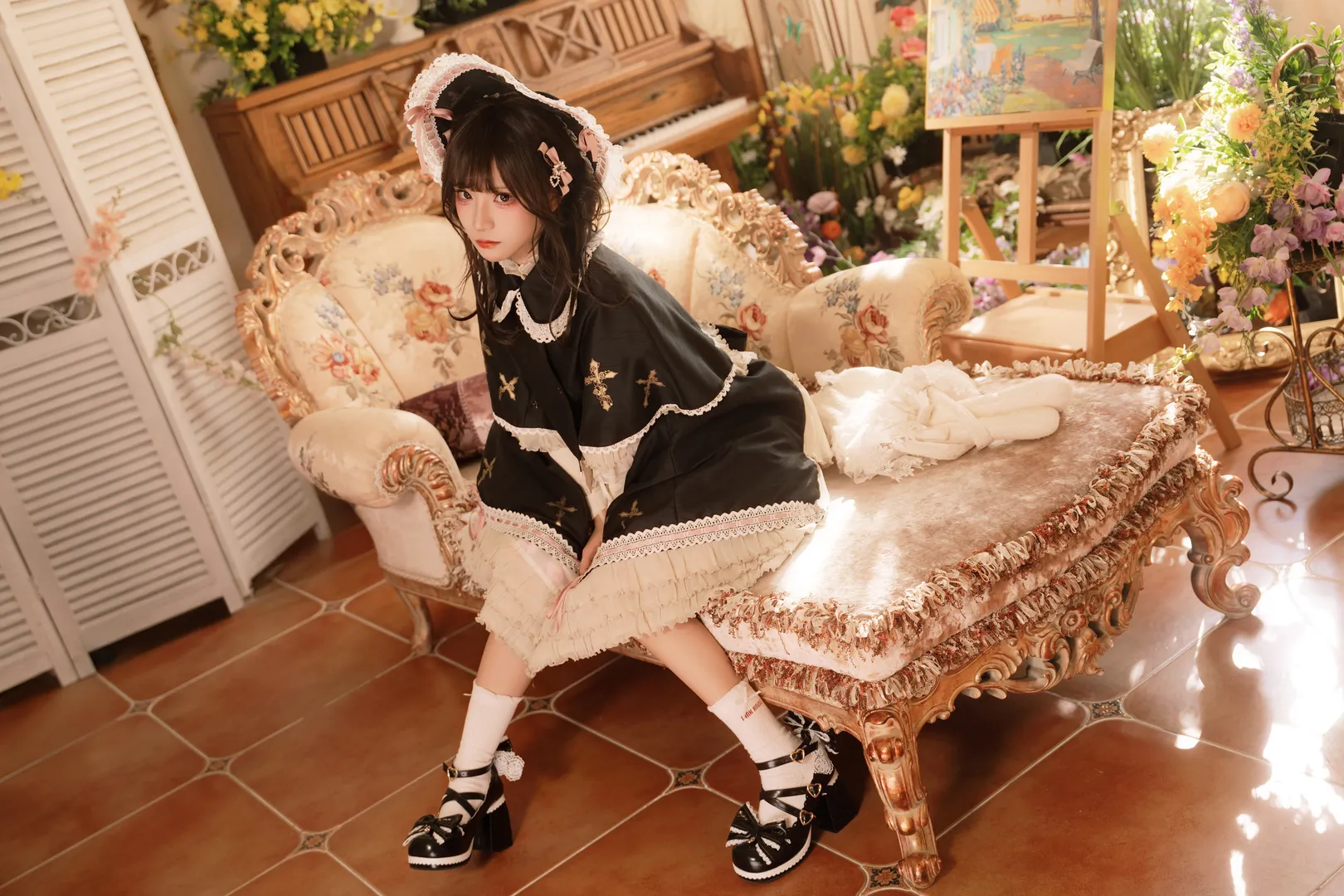
Set styling provides tremendous value to Lolita fashion shoots. Ornate carved settees, a polished wooden upright piano, an artist's easel, and warm floral arrangements instantly elevated the antique elegance of the space. During the session, I wore knee-high White stockings paired with black platform Mary Jane shoes featuring bow and buckle detailing, grounding the lower half with visual weight while elegantly sculpting leg contours. When executing this style of Lolita outfit coordination, leveraging environmental props—such as leaning thoughtfully against an easel or perching poised beside the piano—naturally relaxes bodily posture and prevents stiffness.
Crafting evocative Lolita imagery hinges heavily on subtle lighting and posing direction. Warm tungsten studio lights intermingled with soft natural daylight spilling through windows, rolling smooth gradients across velvet fabrics and carved moldings while lending skin a clean, translucent glow. Cradling a white cloth doll or posing as if about to sketch at the easel provided organic physical anchors while layering cinematic narrative into each frame. Compositionally, shooting through soft, blurred foreground blossoms generated immediate depth of field, guiding visual focus squarely onto the subject—a foreground framing technique that works wonders in vintage environments.
Lower-body coordination demands meticulous attention: pairing platform Mary Janes with lace-trimmed White stockings visually elongates the calves while harmonizing with the voluminous, tiered lace hemline of the dress. Lolita outfit coordination is fundamentally about holistic cohesion; every element from hair strands to shoe buckles must share a unified design language. The cross embroidery and boned corset silhouette of the Ginger Doll evoke a graceful fusion of gothic romance and period nostalgia, prompting me to keep physical gestures composed and dignified. To cultivate that painted-doll poise stepped out of an oil canvas, I paid close attention to eye lines relative to the camera—softly downcast gazes or three-quarter profiles to sculpt sharper facial contours.
In terms of makeup nuances beyond generous blush draping, I chose a warm reddish-brown lip color paired with wide-eyed contouring to align closely with an ornate vintage doll persona. Fabric weaves and lace filigrees revealed distinctive depths under directional lighting, so I deliberately posed to accentuate the ruffled cuffs and layered skirt hems. Perching sideways on the sofa edge, for instance, allowed the tiered skirt to fan out fully while framing the curves of the White stockings, delivering Lolita refinement touched with playful allure.
Choosing a French retro aesthetic was also a conscious attempt to challenge the preconception that Lolita garments belong solely in predictable studio sets. Lolita fashion carries an innate narrative weight; within an art-steeped atelier, the easel, piano, and intricate lace hems elevate one another organically. By utilizing expressive props and intentional lighting, anyone can realize their aesthetic vision. Uniting period nostalgia with sweet sartorial elements celebrates the grandeur of the dress while grounding the subject in effortless, timeless poise.