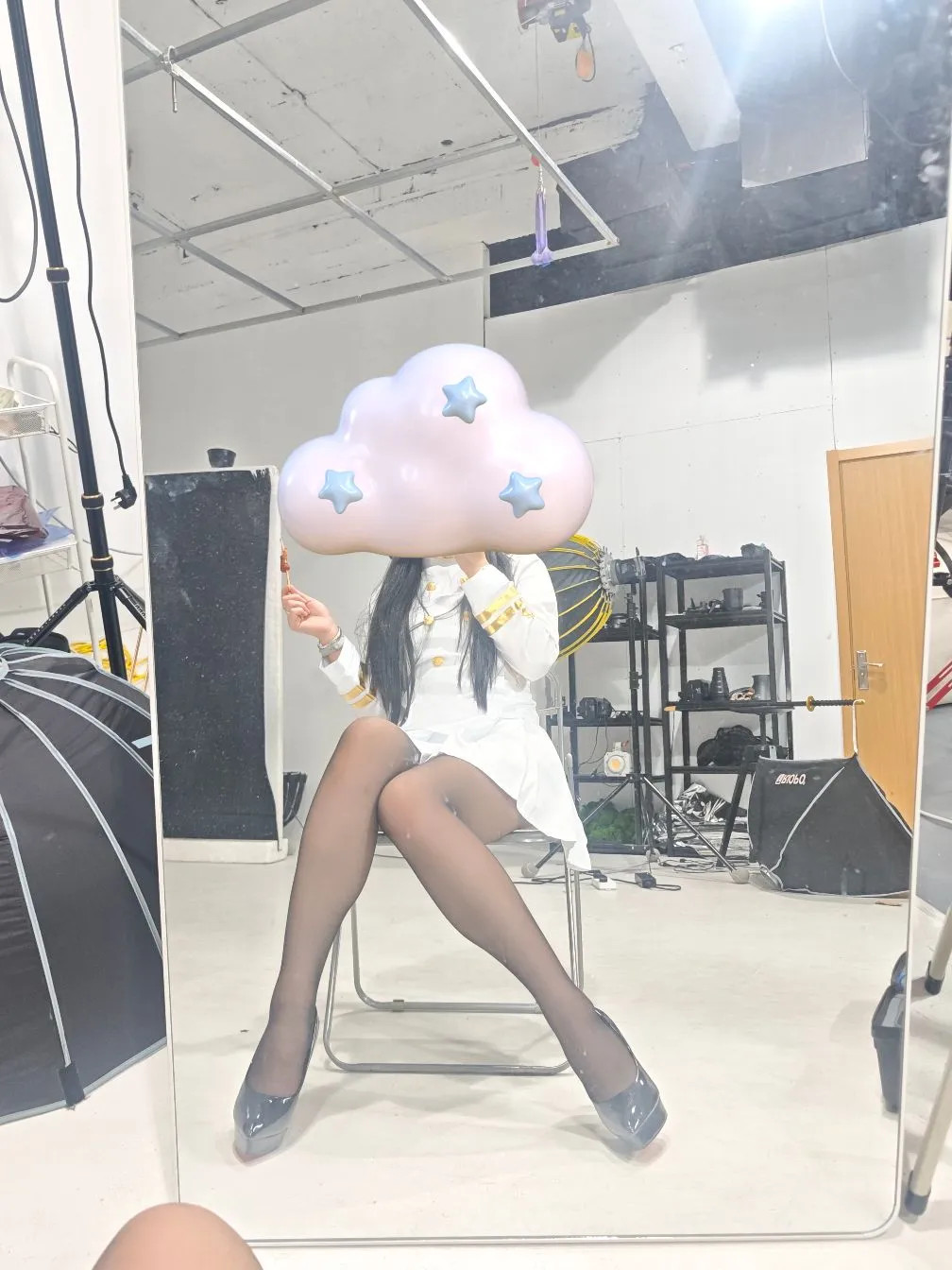
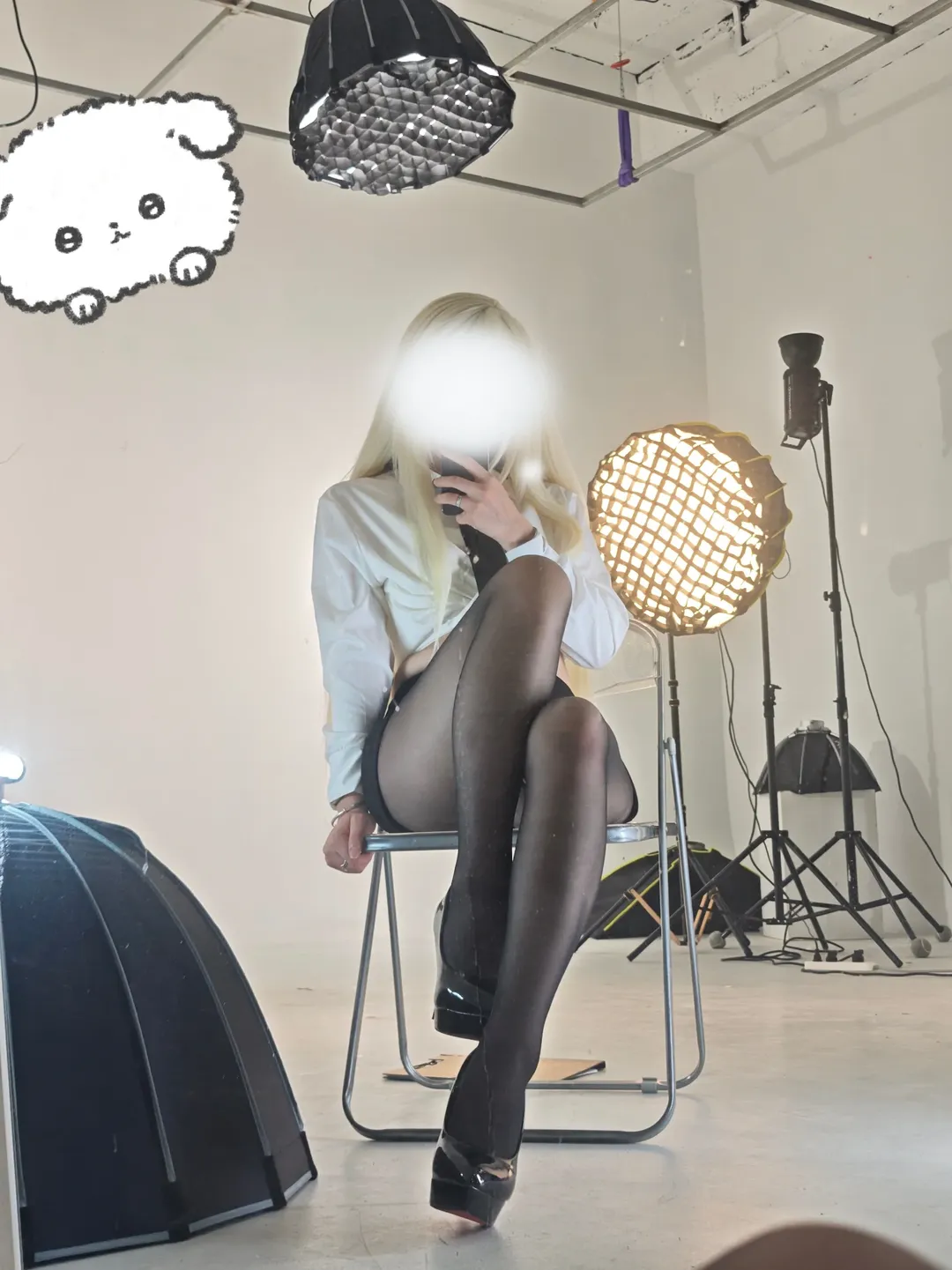
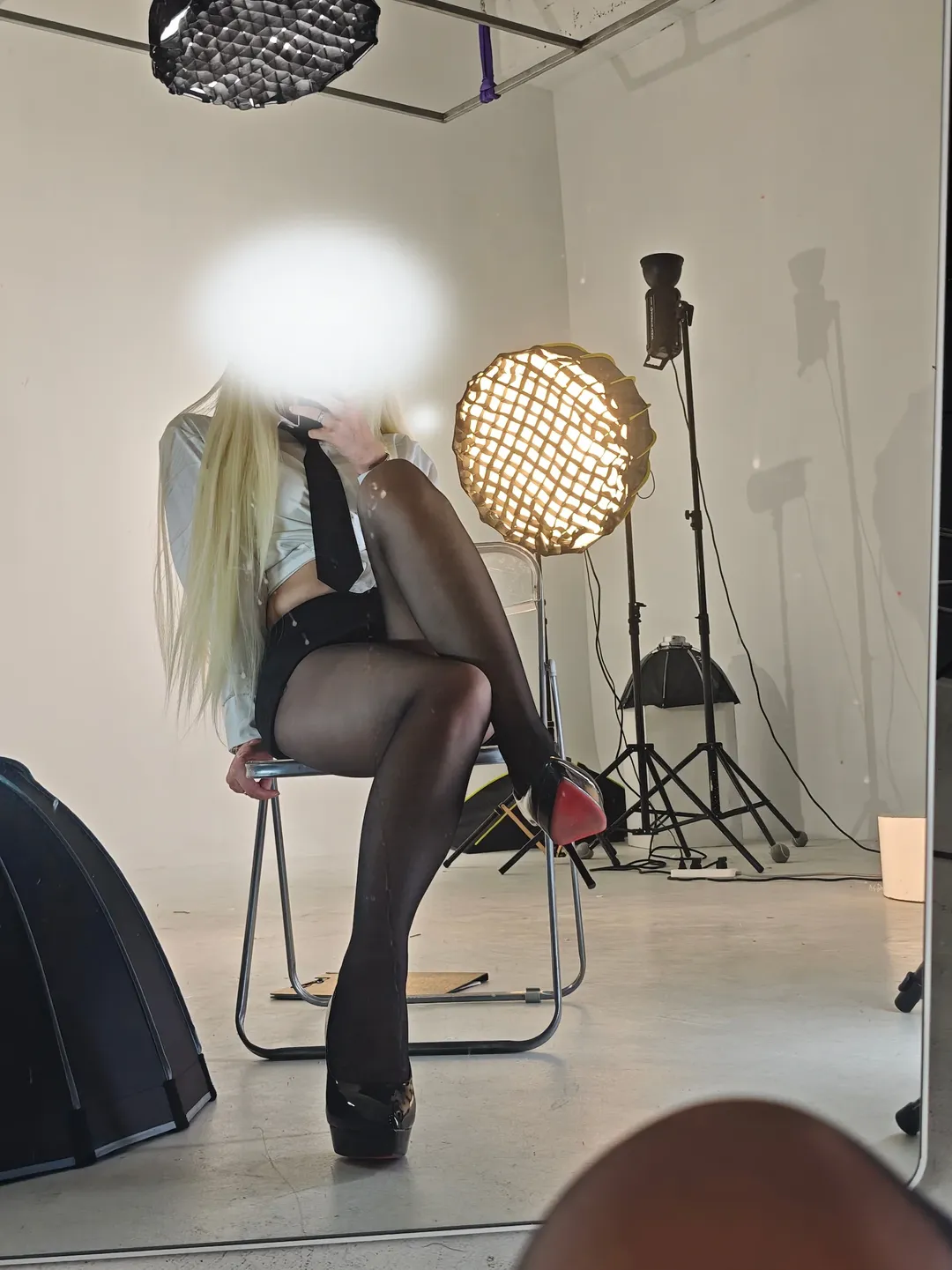
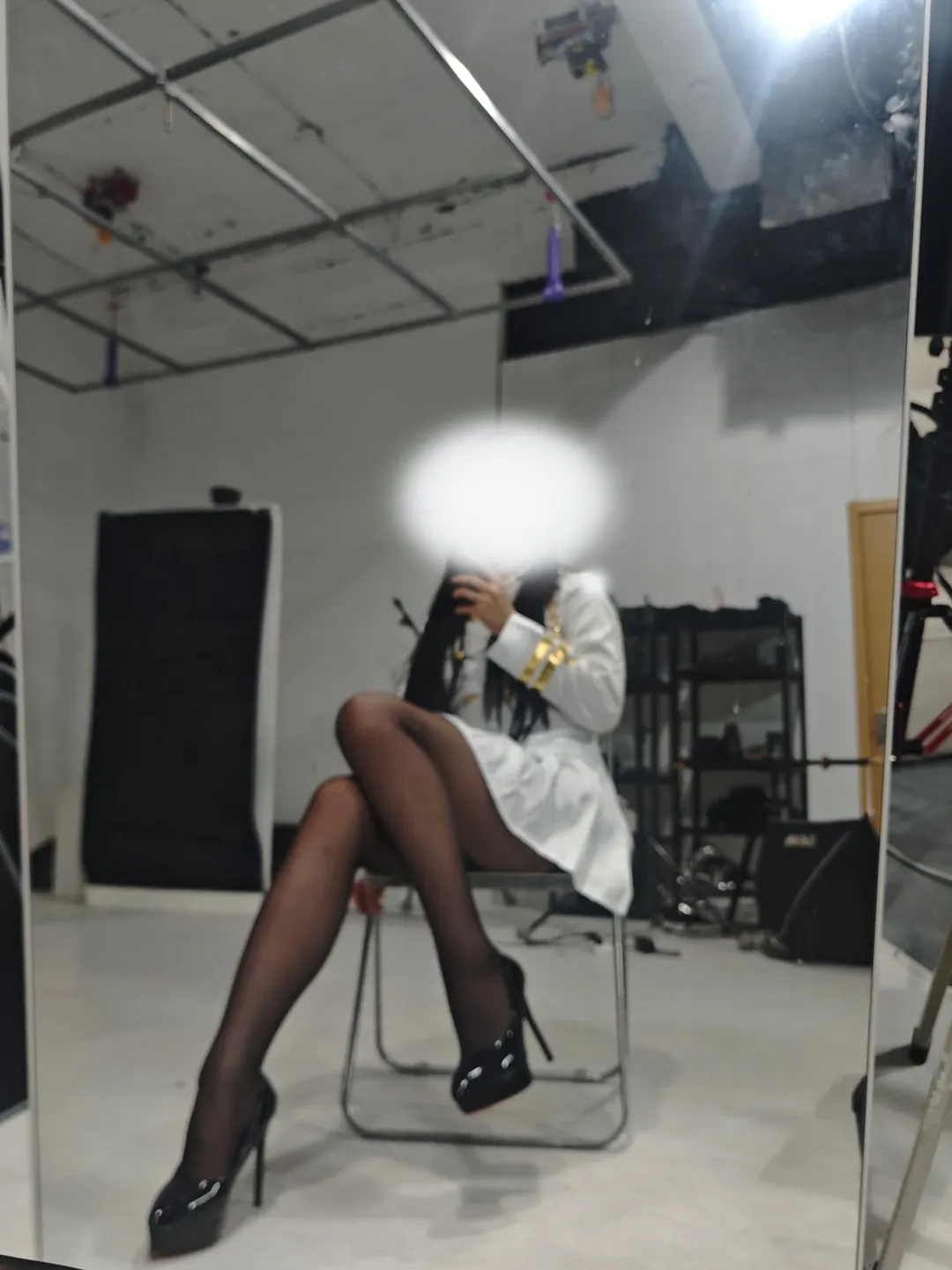
Today, I snapped a few Mirror selfie shots in the studio, and when the final cuts came out, I was genuinely thrilled with the results. Combining mirror reflections with professional photography lighting truly brings out body proportions and sleek contours to their fullest. Many friends frequently ask why my legs look so extraordinarily long in photos; in truth, my bare height is 170 cm, which is already on the taller side for women, but leveraging intentional mirror selfie angles and practical staging elongates visual proportions almost boundlessly. For this coordinate, I selected a classic Uniform style foundation: a crisp white collared shirt paired with a neat black tie and tailored black shorts. To add dimensional depth, I styled it with semi-sheer black pantyhose and classic black high heels. The sharp contrast between pure white and solid black creates a remarkably clean, commanding aesthetic.
During a studio shoot, lighting serves as the core foundation dictating textural quality. The photographer rigged an overhead softbox equipped with an eggcrate grid, supplemented by a directional fill light from the flank. Experimenting with positioning, I realized that side-angled lighting sculpted the musculature and shadows along the legs with far greater three-dimensionality. This is especially vital when wearing black pantyhose: because synthetic hosiery inherently carries subtle sheen, the light source must stay soft and diffused to prevent harsh hotspot glares or crushed, muddy shadows. Sheer denier thickness is equally crucial—opaque tights look heavy and visually dense, while overly sheer hosiery risks accentuating skin irregularities. This semi-sheer denier struck the golden mean: smoothing leg contours while seamlessly flowing into the pointed black stilettos, visually extending the lower leg line.
The greatest advantage of a Mirror selfie lies in the ability to monitor one's posture and micro-expressions in real time. Before the lens, I usually raise my phone slightly above chest level, but avoid lifting it excessively to prevent wide-angle mirror distortion from warping head-to-body ratios. When crossing the legs, never compress the thighs forcefully against each other—doing so distorts muscle lines; simply resting one leg lightly atop the other with pointed toes keeps the silhouette fluid and elongated. For staging, I picked a simple folding metal chair. The surrounding studio gear in the backdrop—black blackout drapes, C-stands, and lighting softboxes—actually lent an authentic Studio daily creative vibe. With balanced lighting and high-contrast styling doing the heavy lifting, minimal props were needed, allowing a relaxed seated posture to command the entire composition.
Retouching this set was minimal, focusing mainly on micro-adjustments to exposure and contrast to give the black tones layered gradation. Many assume mirror selfies are merely casual shutter snaps, but capturing an effortless yet arresting image requires extensive groundwork—from background cleanliness and light direction to core balance. Every shutter release is a test of bodily poise. Finding the angles and styling that complement your individuality matters infinitely more than following trends blindly. This coordinate works effortlessly for both daily wear and studio shoots, balancing structured formality with nonchalant ease. I look forward to exploring more creative mirror lighting experiments in the future to capture diverse facets of myself.