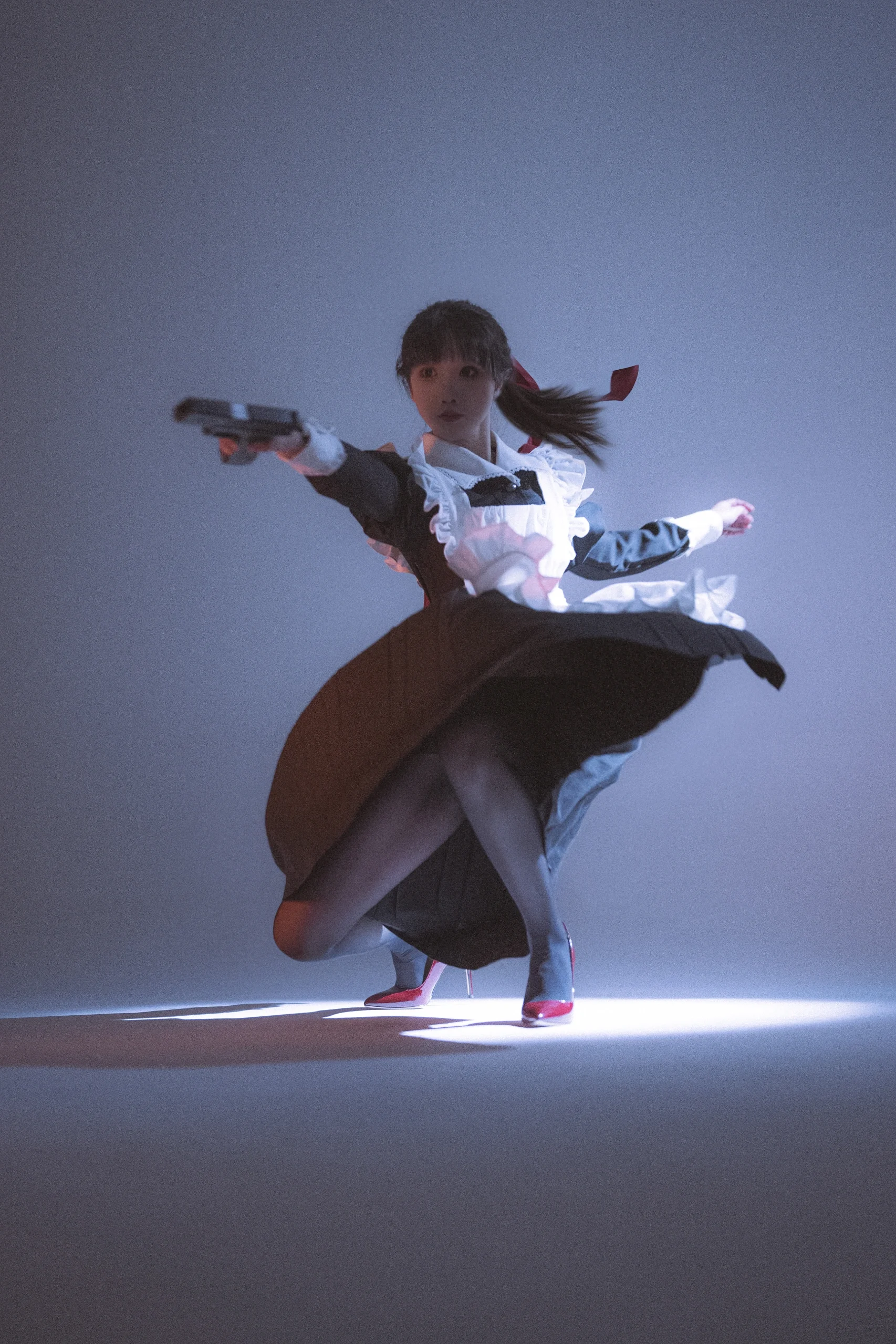
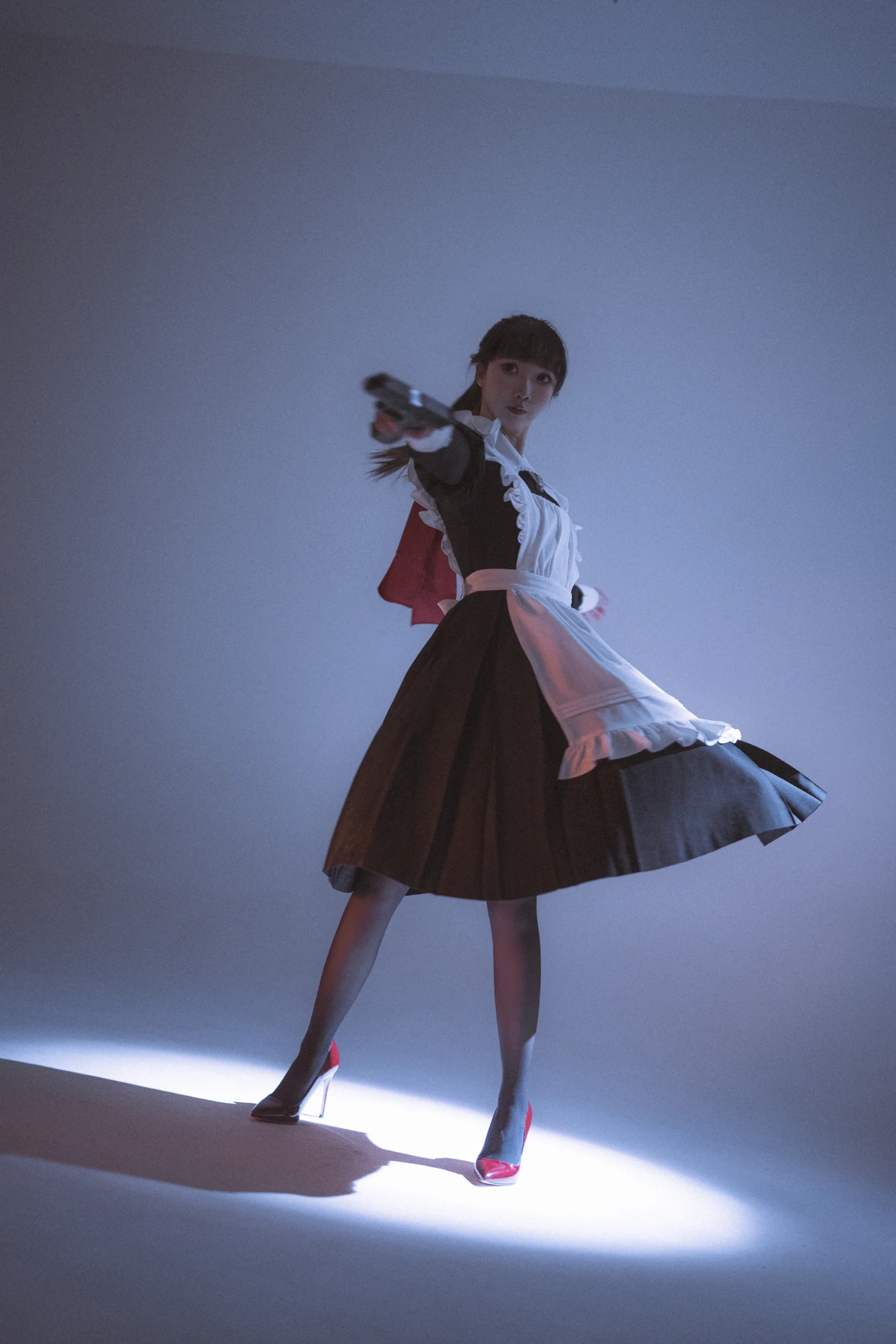
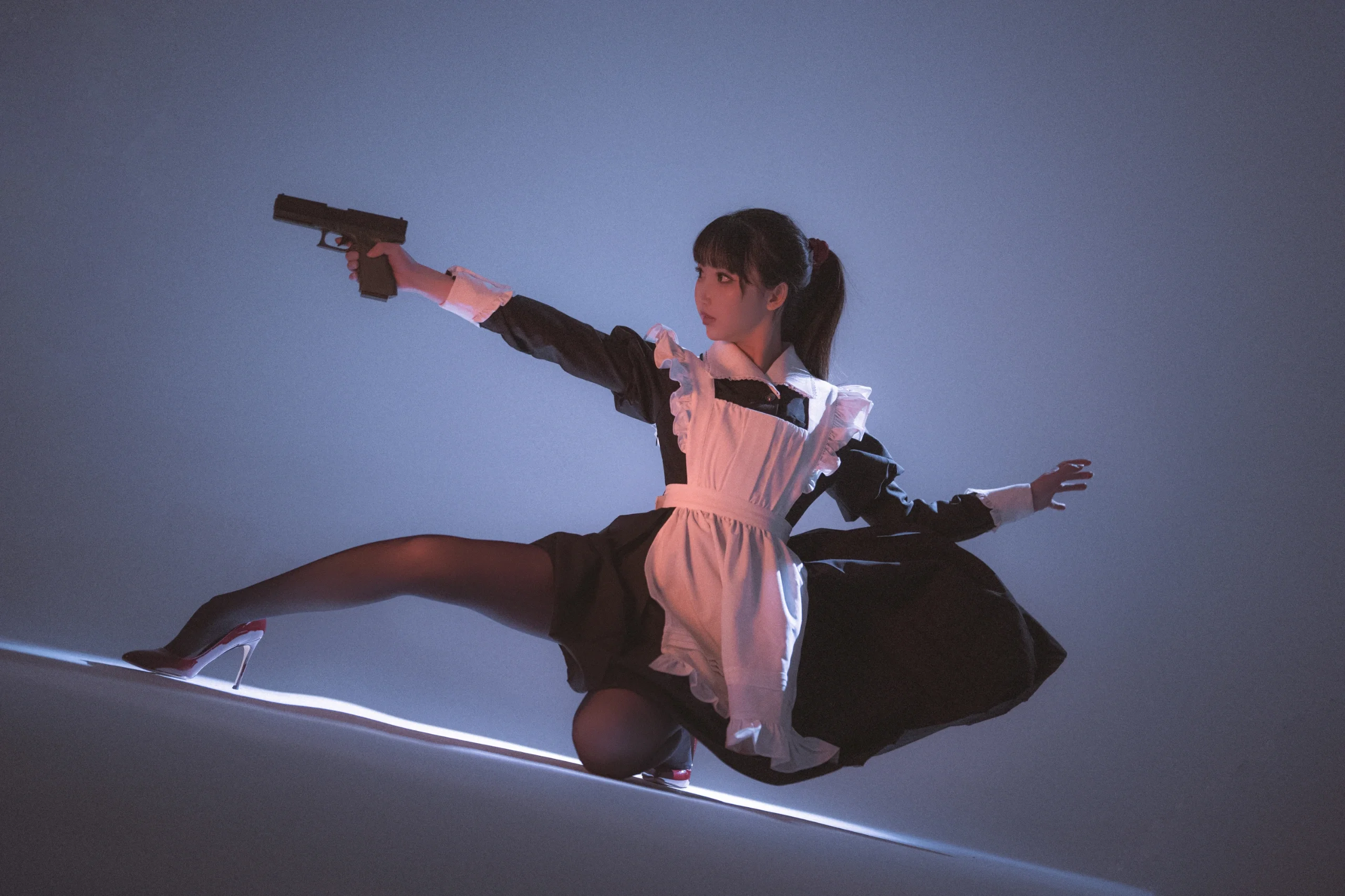
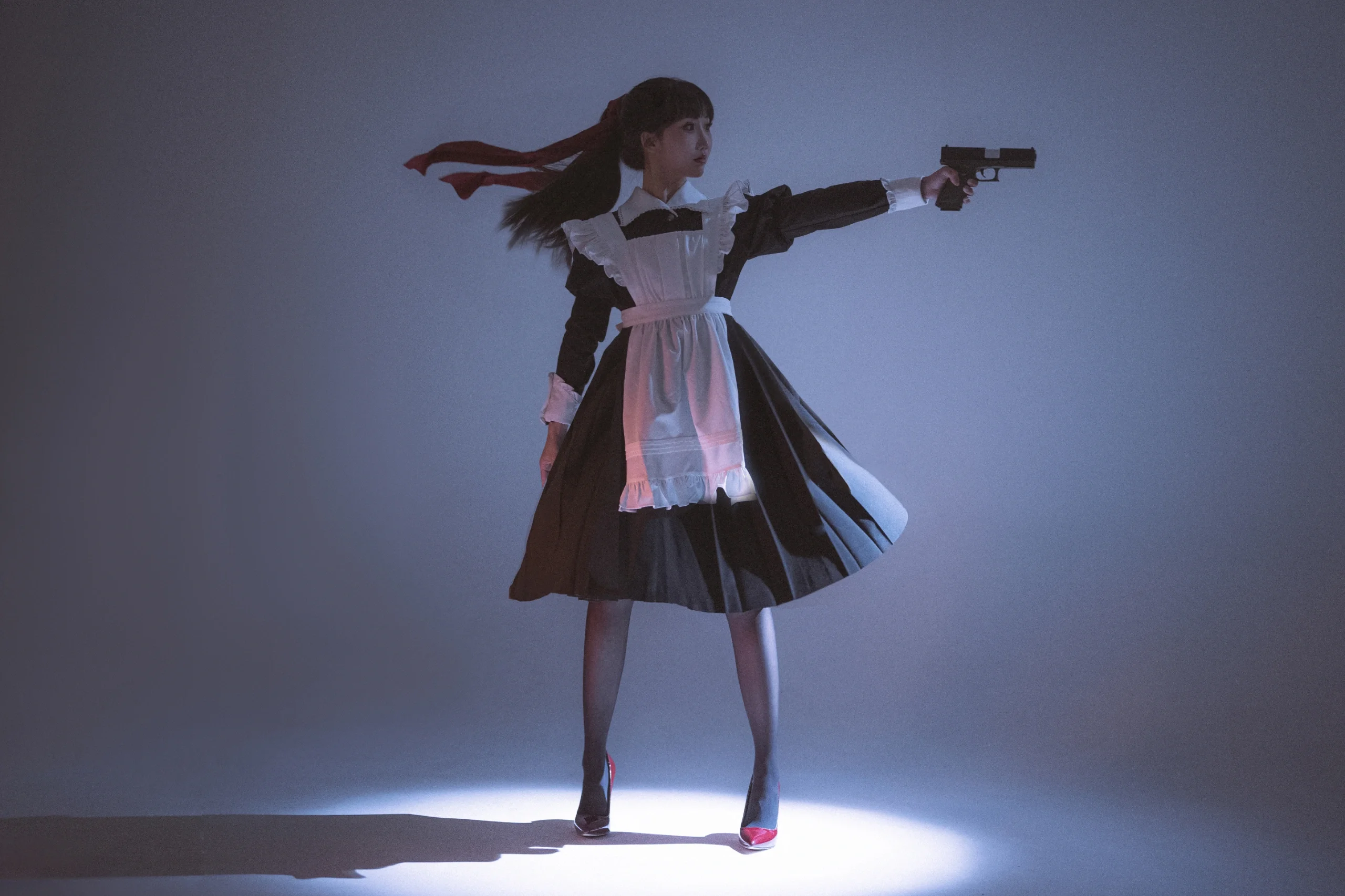
Looking at these six combat maid photos in sequence actually gives a strong sense of storytelling. I didn't base it on any specific work; I simply wanted to do a studio shoot featuring continuous, high-tension visuals combining firearms and skirts. In the raw shots, the combination of a black dress, white apron, red hair ribbon, and high heels already carries strong visual symbolism. Paired with cool blue-violet studio lighting, the overall atmosphere feels icy, dreamlike, yet rhythmically paced.
For the cover photo, I chose the half-squat pose with one leg extended while aiming the gun. That movement actually requires quite a bit of core strength—especially maintaining balance and keeping precise aim while wearing high heels, all while keeping a calm facial expression. Many people easily lose their center of gravity in a studio shoot when doing dynamic poses. My trick is to use the outer edge of the foot for grip while lightly resting the back knee near the floor to distribute weight, which allows the drapes and swoops of the skirt to look natural.
The rhythmic design of the whole set flows from stealth to confrontation, into a pivot, landing, and finally ending in calmness. Photo 1 shows a low-center-of-gravity alert posture, with arms extending the gun forward to balance the body; the sense of wind is strong here, and the wavy folds of the skirt support the dynamic motion of the entire image. Photo 2 is a frontal gun stance with a wider feet positioning, giving a moment to catch one's breath while showing off the slender leg lines created by the high heels and stockings. Photo 3 captures a side leap—the lighting here is fantastic: a spotlight directly below frames the figure, highlighting the texture of the red-soled heels in the cool light, while edge shadows sharply define the three-dimensional action.
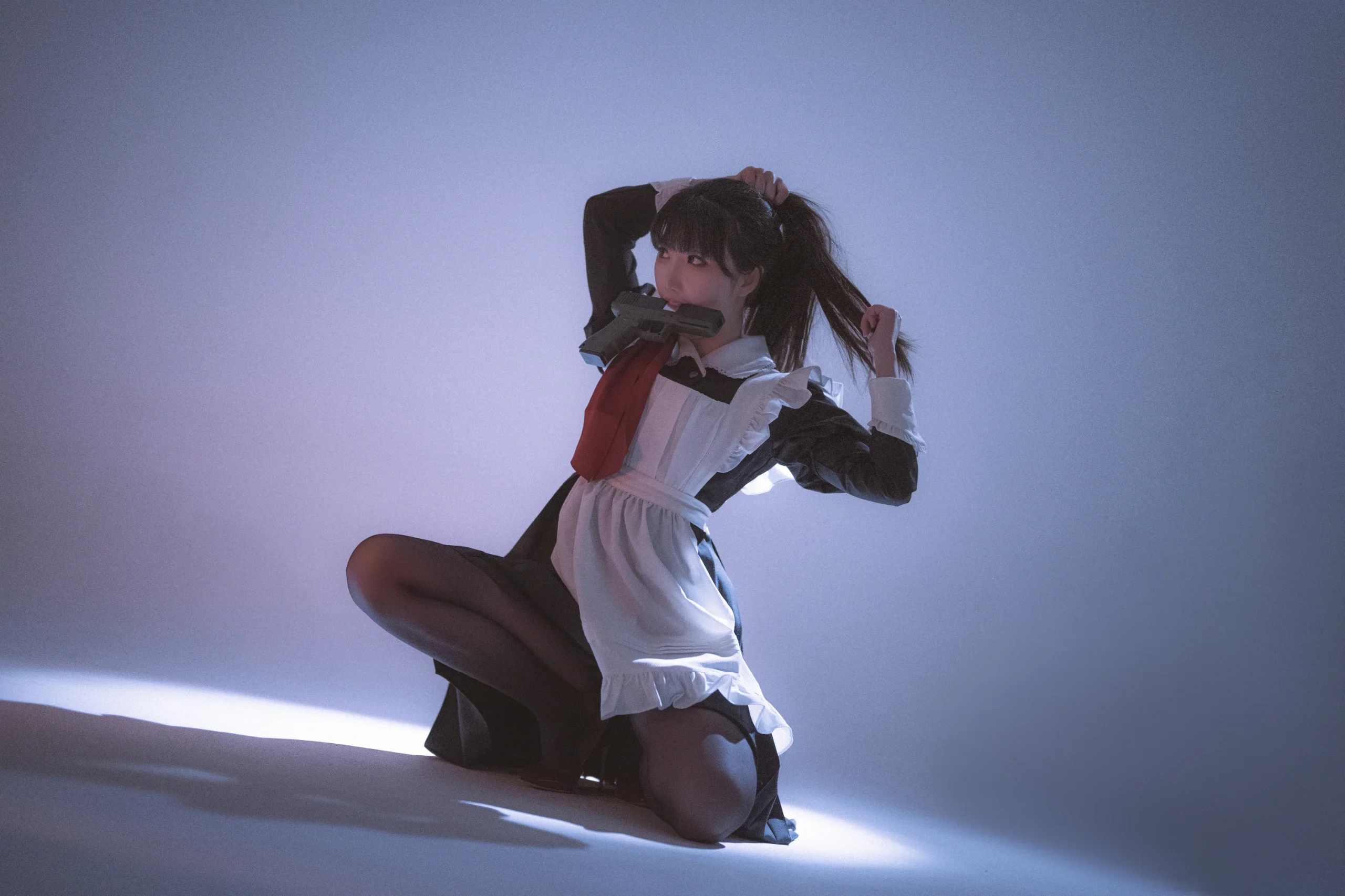
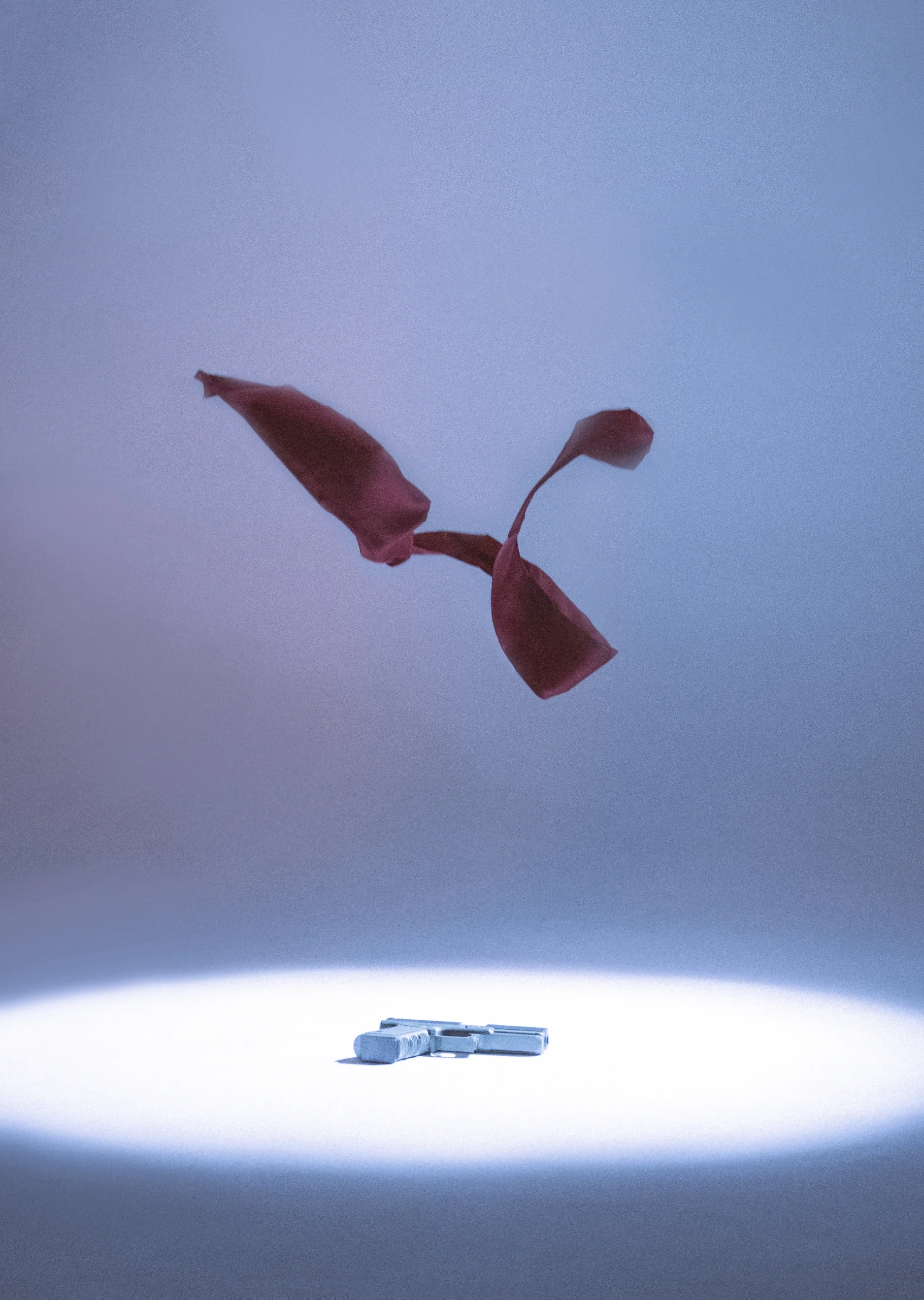
Photo 4 shows drawing the gun mid-turn, capturing the motion as the ribbon whips through the air. Photo 5 serves as a transition during a lull in battle, with hands behind the head tying a high ponytail—a brief moment of emotional relaxation in the visual that highlights the line of the shoulders, neck, and collarbones. The final photo is a static shot: the gun sits in the center of the spotlight's halo while the red hair ribbon hovers mid-air, creating a poetic stillness like the settling of dust after battle. To ensure continuity from Photo 1 to 5, the photographer and I executed all movements virtually in one take, as the clothing shape, hair sway, and ribbon curves in each frame had to seamlessly match the preceding second.
Getting back to studio shoot lighting techniques, this setup is known in portrait photography as a single low-angle key light paired with side-backlighting, which tests the model's facial control. Since the light travels upward, tilting the head back too much flattens the neck's contour. So, I kept reminding myself to tuck my chin slightly and half-lower my eyelids; this kept catchlights in the eyes while letting light and shadow create natural, high-contrast contours along the nose bridge. Handling firearm props is another art—prop guns are light, but holding them limply destroys the oppressive presence a real weapon should convey. The trigger hand and web of the thumb must remain taut, and as you push the gun out, bending the elbow slightly adds muscle tension, making the weapon visually feel heavy.
Adding a bit more on styling: combining a maid outfit with black stockings and red-bottom heels was a setup I was thrilled with. Pointed-toe heels elongate leg lines beautifully while reflecting a captivating red glow under bottom lighting. The red hair ribbon and tie provided great color contrast in this cool-toned setting, preventing the image from looking washed out under the blue-violet filter. In action-themed studio shoots, details and mood complement each other—movements don't need to be rushed, but angles should be sharp and postures firm. When continuous shots are woven together through editing and layout, the emotional energy becomes rich and immersive, like a tight mini-theater piece. Wrapping up and putting down the props, looking at that illuminated beam on the floor, I realized that this seemingly simple studio shoot setup actually demands deep coordination in movement transitions and light control. It was an immensely satisfying creative experience.