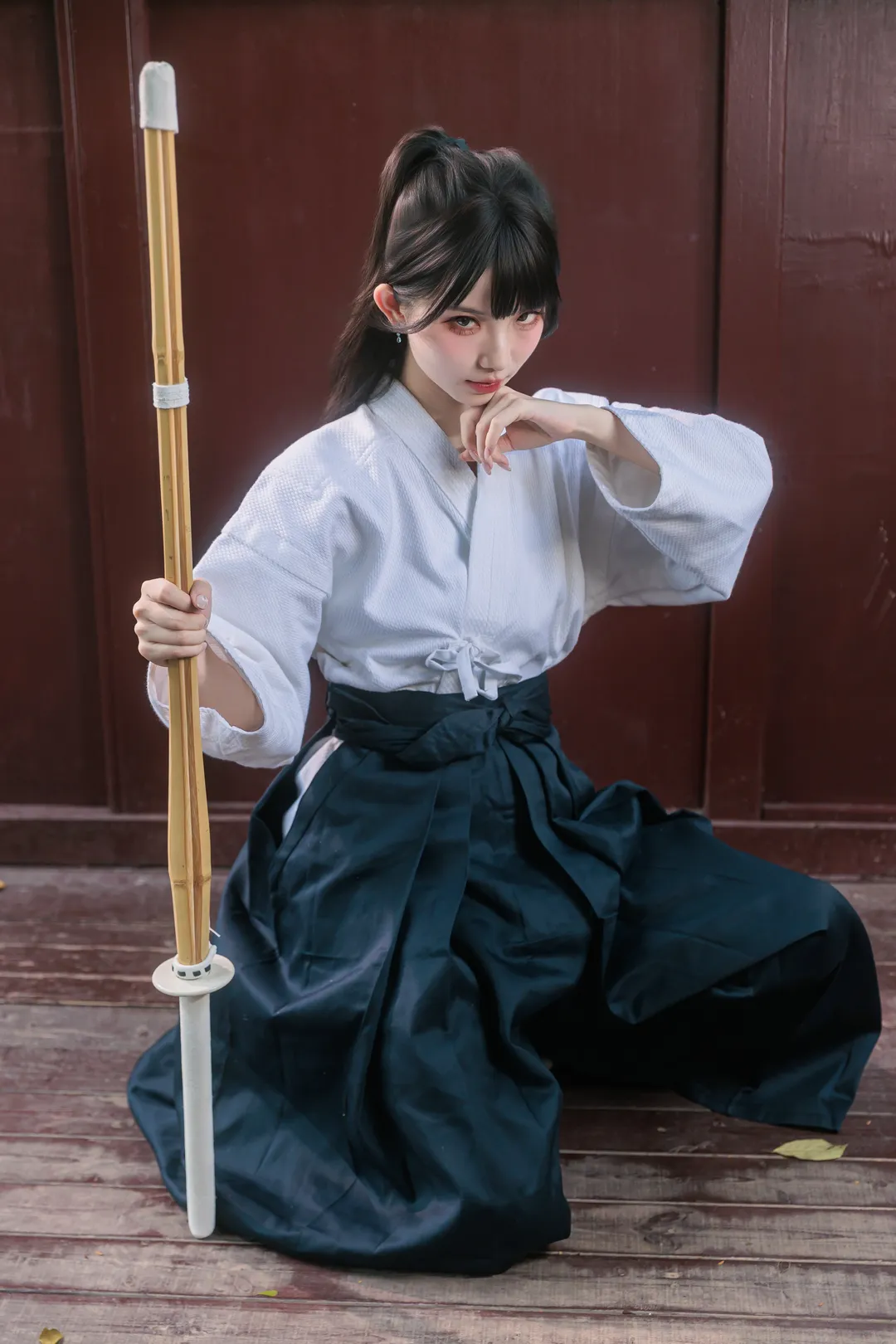
The moment I put on this white Kendo uniform, fastened the dark obi sash, and gripped the Bamboo Blade in my hands, my center of gravity naturally settled downward, and my fingers instinctively wrapped tight around the tsuka hilt. The fabric features a fine diamond-grid weave that creates a subtle structured texture under natural daylight; it is exceptionally breathable yet crisp, making it ideal for executing expansive, dynamic movements. The dark, wide-legged pleated hakama skirt on the lower half possesses a rich, heavy drape; during single-knee drops or low crouches, the pleats fan out naturally without restricting mobility. Thanks to the textured grid weave, the white dogi top retains a gentle flex, allowing unrestricted arm extensions, while the high ponytail anchors a clean, brisk silhouette.
The shooting location was an outdoor heritage setting paved with timber decking and framed by weathered deep-red mahogany doors. The aged patina of the mahogany formed a bold, striking contrast against the clean white-and-indigo ensemble. For the opening frame, I held the Bamboo Blade vertically in my right hand with the tip resting against the wooden floorboards, while my left hand lightly rested near my chin. This posture demanded an upright spine and a piercing, resolute gaze to honor the disciplined aura of budo and martial arts. Gripping the bamboo stave one-handed, the cool touch of the bamboo slats seeped into my palm, quickly grounding me in an intense state of focus.
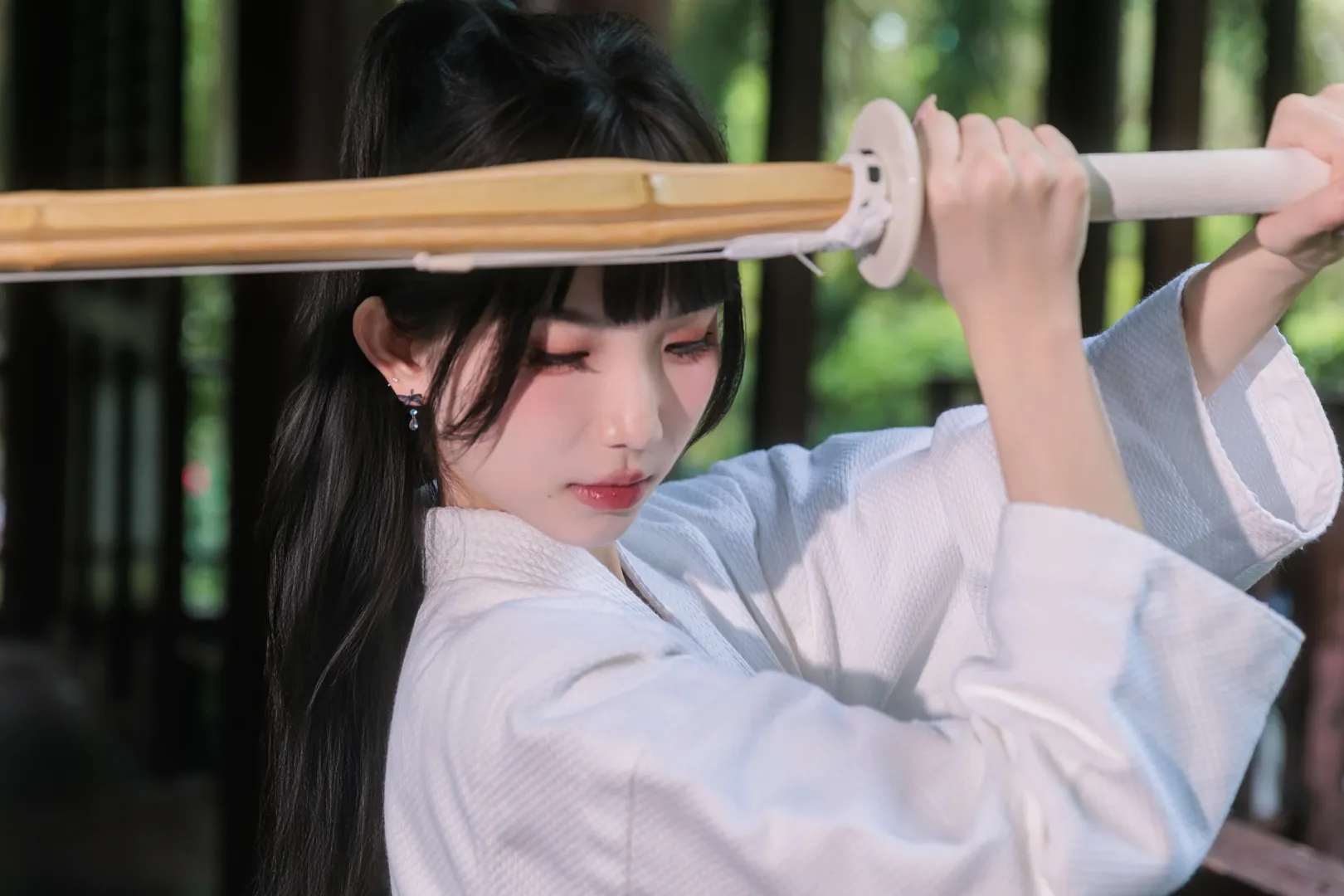
Moving to another setup, we shifted into an open corridor lined with wooden lattice screens and framed by verdant garden greenery. Natural light filtered through overhead leaves and wooden grilles, casting dappled, intricate shadows across the garments. Holding the Bamboo Blade horizontally before my chest with both hands gripping the hilt, eyes locked onto the midsection of the bamboo stave, the frame projected an aura of absolute concentration. The bamboo sword carries a balanced heft; though lighter than a live steel blade, wielding it steadily still requires deliberate muscle control, particularly during one-handed overhead raises or shoulder rests where wrist tendons must actively maintain balance.
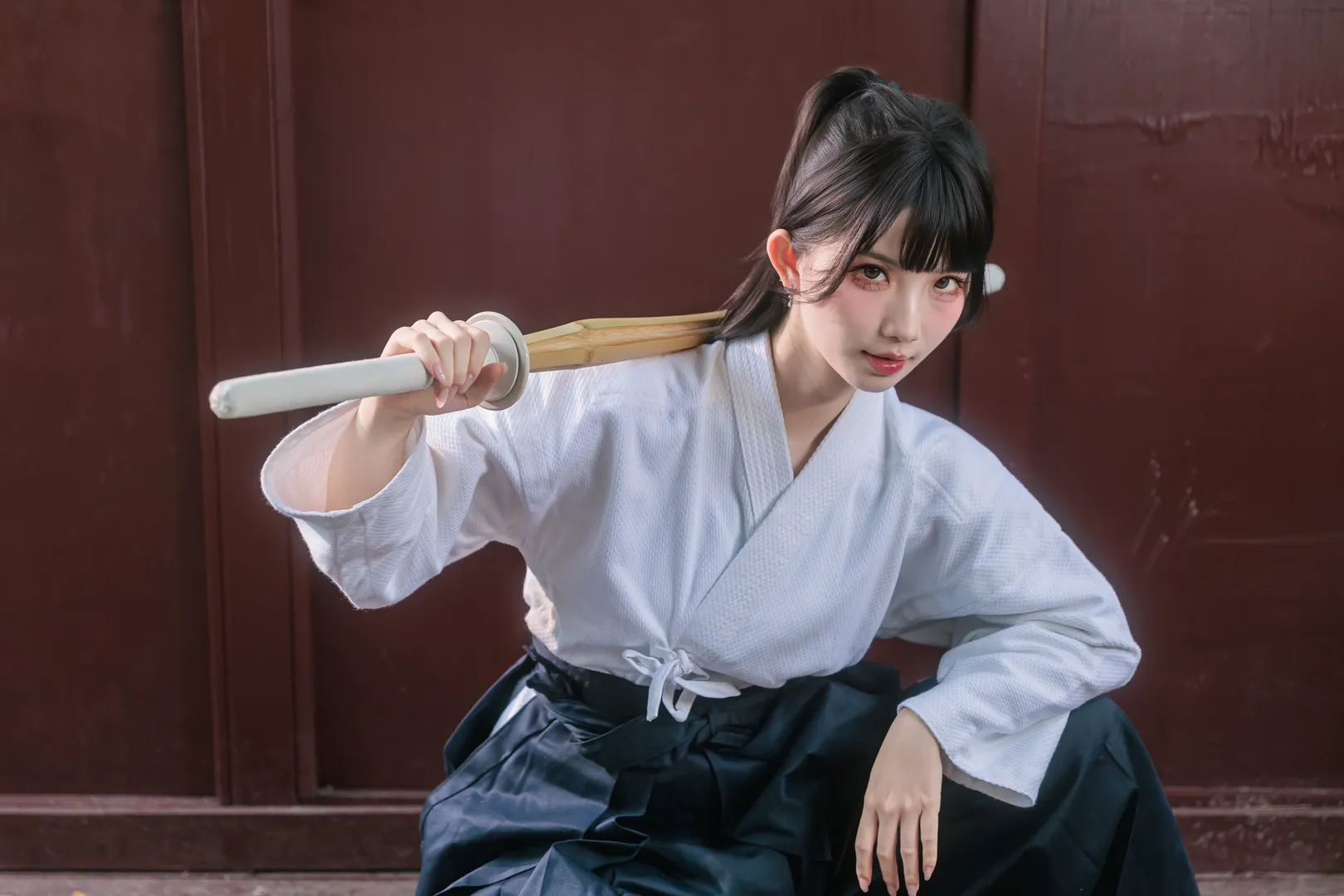
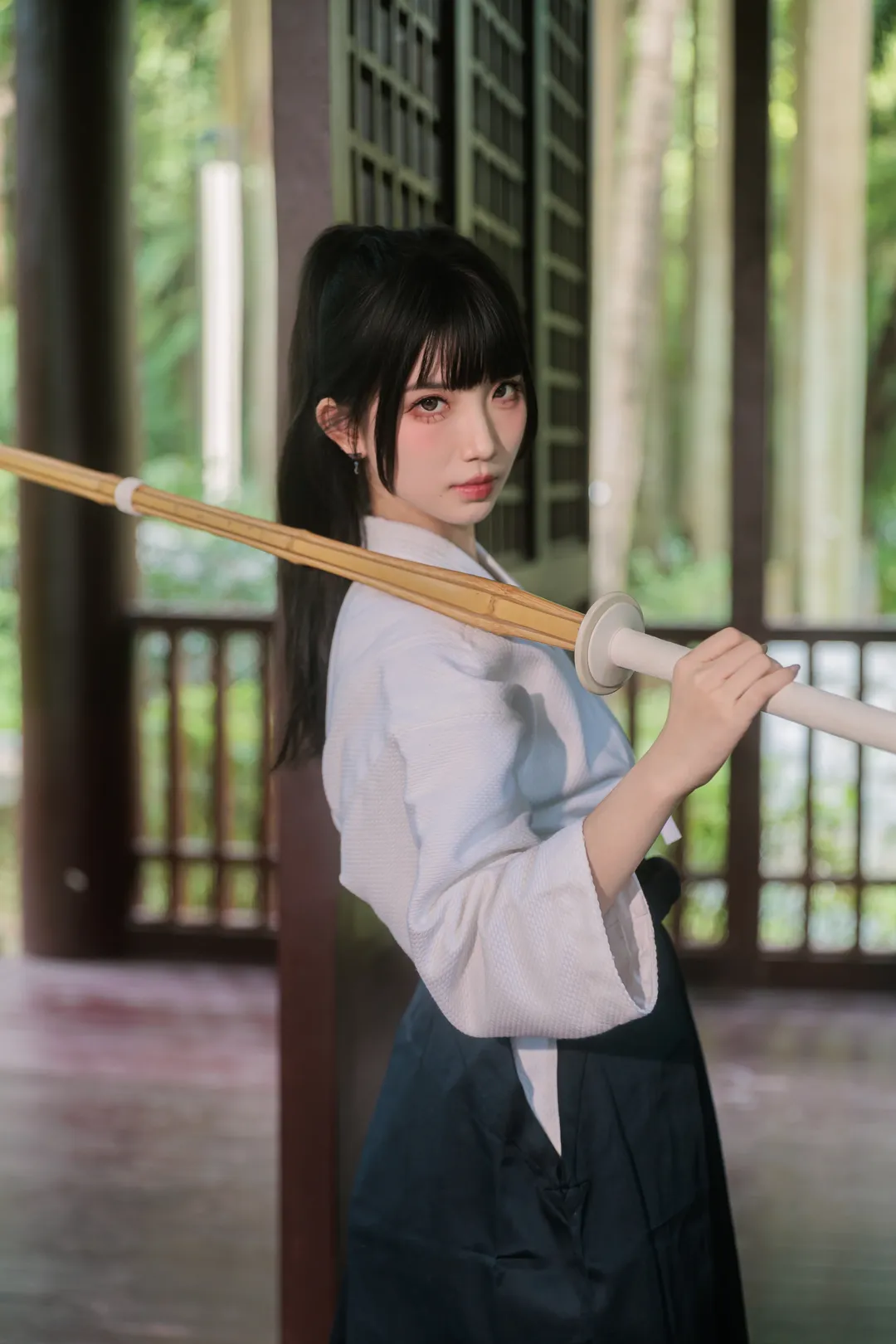
For the low crouch with the sword resting across my shoulder, I shifted my center of gravity onto my rear leg, slung the Bamboo Blade over my right shoulder, and tilted my head slightly toward the lens. In this stance, keeping the neck and shoulder lines loose and relaxed was vital to avoid looking stiff. The final over-the-shoulder frame positioned the bamboo blade horizontally behind my nape, utilizing the linear length of the bamboo to draw deep diagonal perspective across the frame, while the softly blurred greenery and wooden window mullions cleanly isolated the subject.
We deliberately scheduled the shoot for mid-afternoon, capitalizing on the angled sunbeams to sculpt the fabric's tactile weave and the three-dimensional curvature of the bamboo blade. Sunlight filtering through the canopy dappled the white training uniform with delicate flecks of shadow, enriching tonal depth. Staged against timber floorboards and the crimson doors, the warm wood grain reflected soft daylight, while the dark hakama pooling over the floor contrasted crisply against the white crossover top. Every slight adjustment to the sword's angle—lowering the kissaki tip or raising the hilt—transformed the visual leading lines across the frame.
The entire series was graded with natural, understated tones, eschewing exaggerated digital post-processing. The diamond-grid weave of the white top, the structured pleats of the dark hakama, and the organic grain of the bamboo slats were preserved with tack-sharp clarity. From the disciplined posture of Kendo to the untamed freedom of Wuxia style, this ensemble offered immense expressive breadth. Diverse sword stances not only highlighted the tactile craftsmanship of the garments, but also communicated a tranquil yet potent martial spirit. Blending Japanese budo elements with Chinese martial arts requires clean, precise physical lines, stripping away extraneous fidgeting to protect the visual weight of the frame. In martial-themed photography, breath control is just as critical: holding one's breath breeds stiffness, whereas rhythmic breathing keeps transitions fluid and effortless. Bypassing forced facial drama in favor of natural composure best honored the spirit of this outfit. The compositions largely relied on the linear path of the Bamboo Blade to guide the viewer's eye, harmonizing subject and prop into an organic whole. No superfluous ornamentation was needed—a single bamboo blade and a canopy of green shade were more than enough to weave a compelling story in this Ancient style photography set.