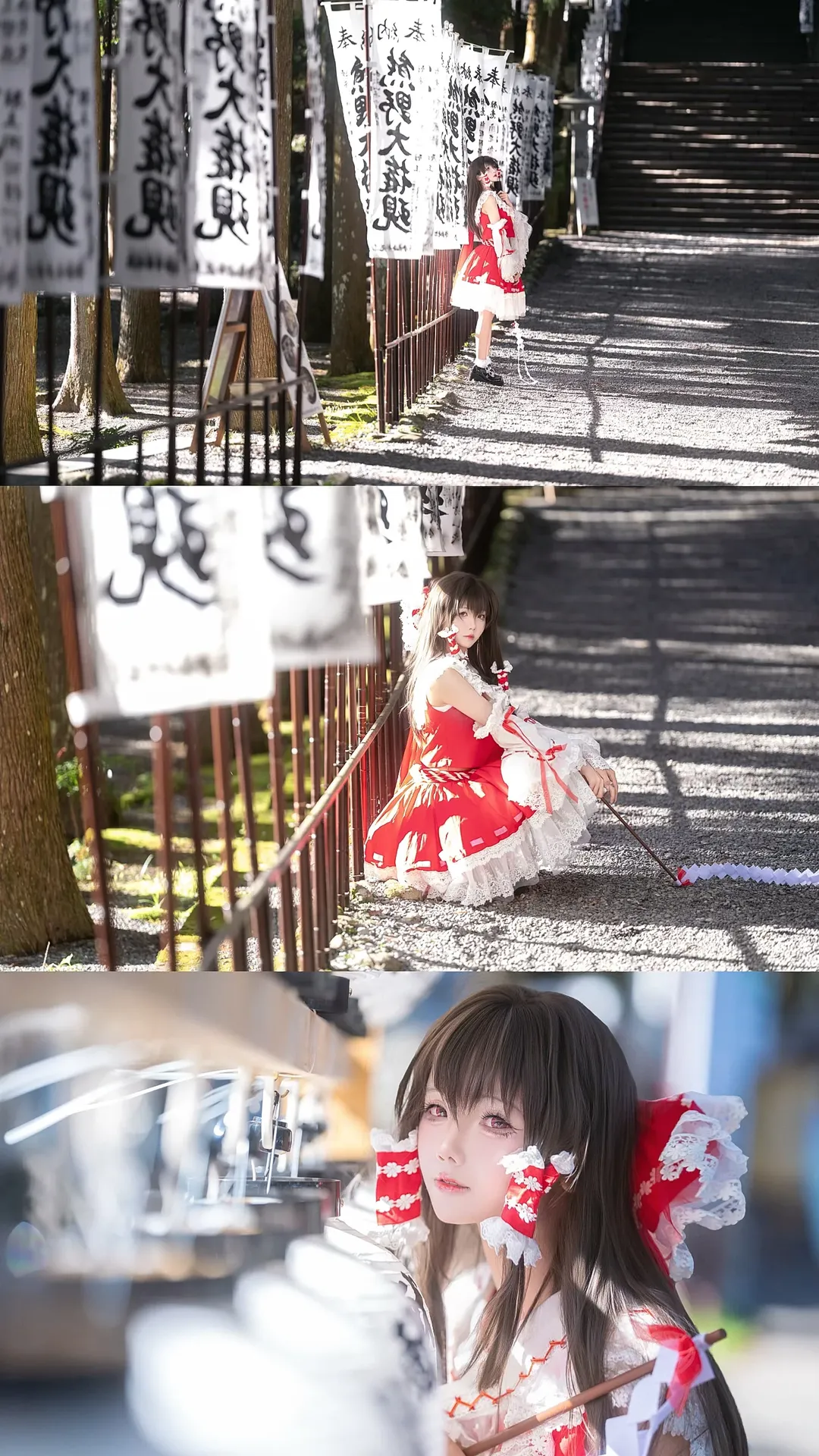
Under the torii gate of Kumano Hongu Taisha, the moment the shutter clicked, getting the ambiance right for Reimu Hakurei was actually harder than imagined. The location for this shoot was Kumano Hongu Taisha in Wakayama Prefecture. This thousand-year-old shrine, with its wooden structures, stone paths, ancient towering trees, and fences hung with calligraphic drapes, serves as a fantastic outdoor location that aligns perfectly with the lore of Touhou Project. However, the most challenging aspects of the actual shoot, besides dodging constant tourists within the shrine to snap pictures during brief lulls, were direct natural factors. As soon as the wind blew, the white paper shide attached to the long wooden rod began swaying uncontrollably, and combined with my cylindrical red-and-white hair ornaments and the giant red bow tie on my back, securing everything became a tough battle. As I frankly mentioned in my post, the hair decorations kept dropping, and headpieces kept falling off. To press the support frames and clips firmly into the hair strands, we made adjustments repeatedly. Often, right after a great composition was framed, a gust of mountain wind would tilt the headpieces to the other side, forcing me to restart my facial expression and body posture all over again.
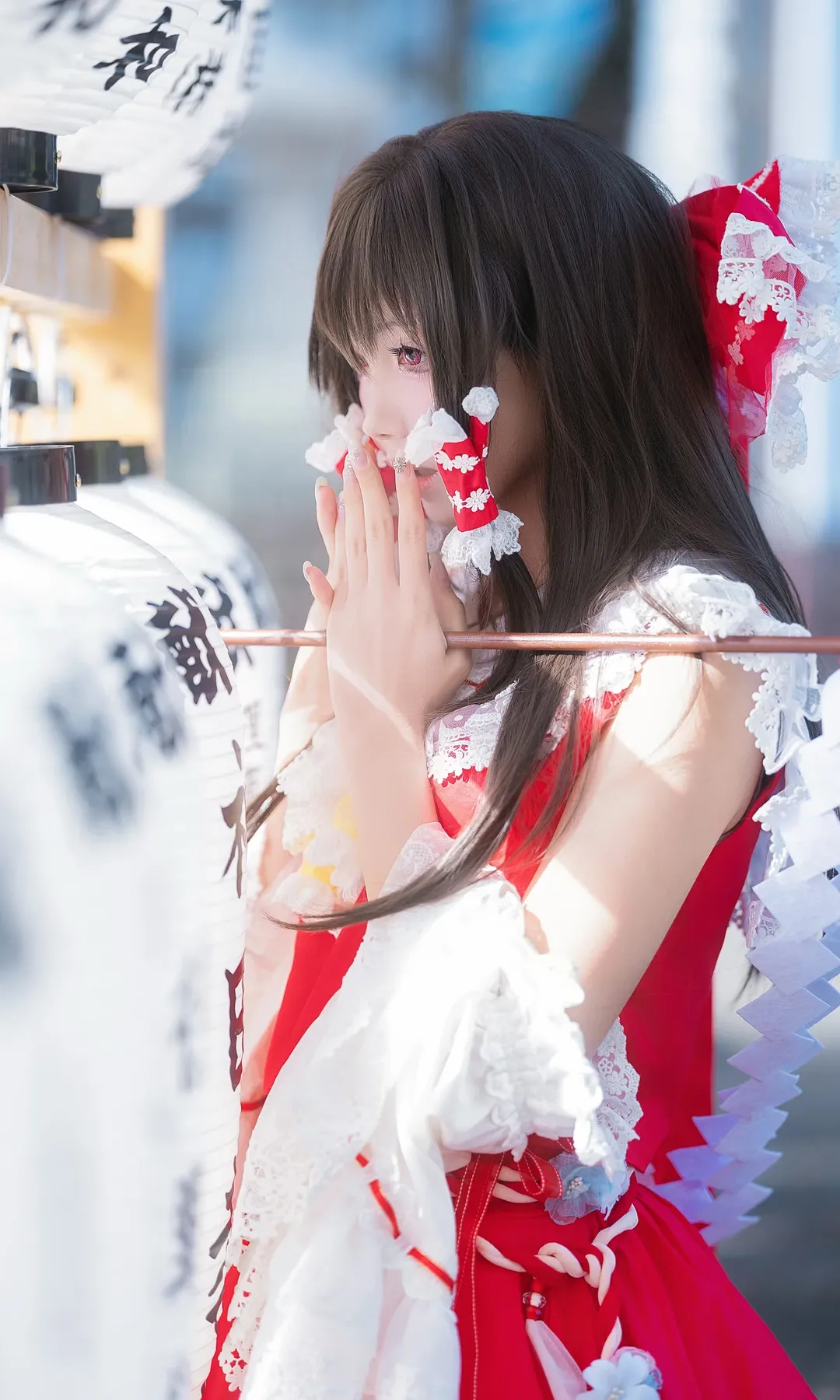
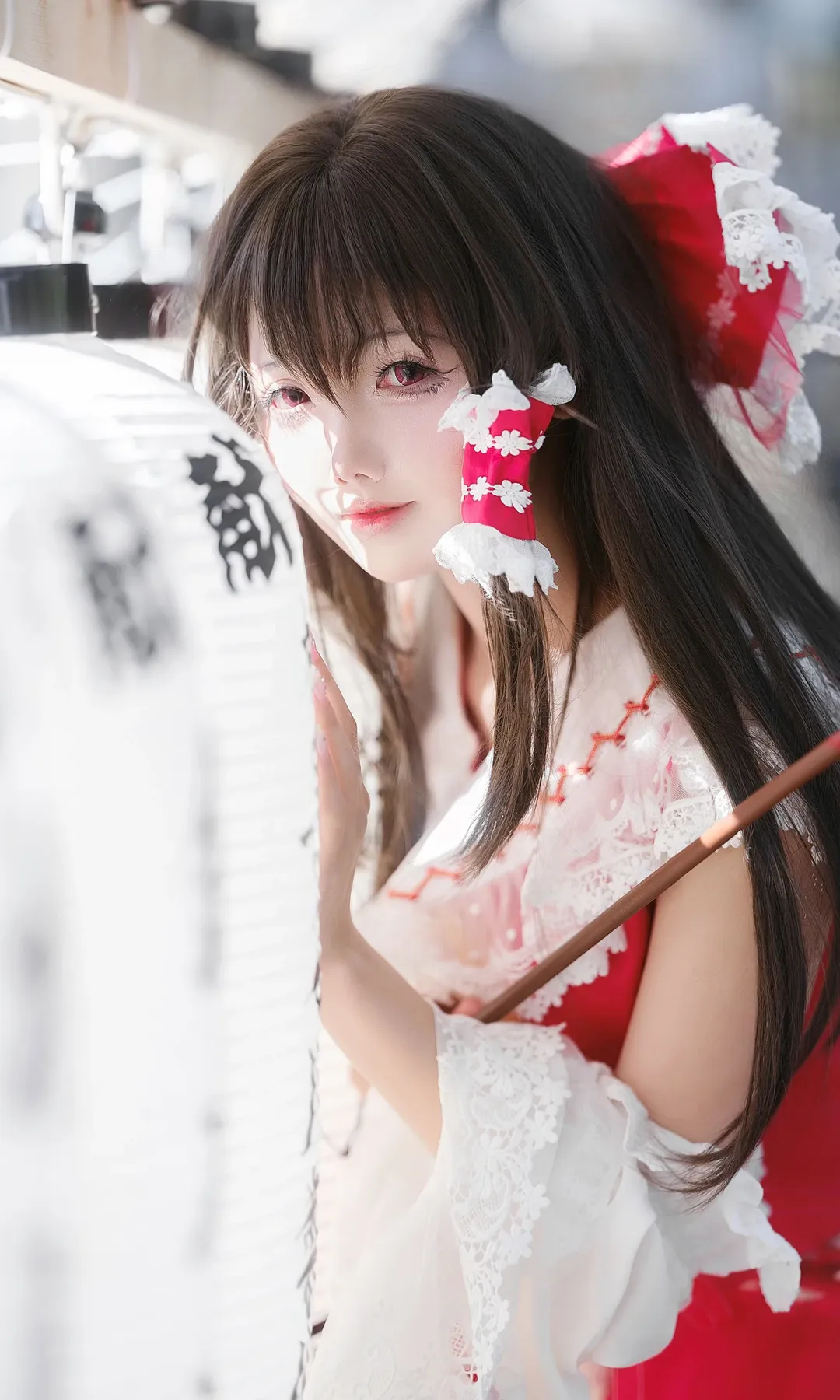
To make the visual layering of this photo set richer, I intentionally selected paper lanterns as foreground obstructions and background anchors in my composition, while holding the wooden rod with paper shide in my hand. The costume is the core of this work. To ensure the red-and-white shrine maiden dress maintained texture under sunlight, a fabric with a certain degree of stiffness was chosen, layered with abundant lace trimming along the edges and neckline, while intricate red cord weaving around the waist also added difficulty to putting on and taking off the outfit. Against the historically rich backdrop of Kumano Hongu Taisha, the red-and-white color contrast looked exceptionally striking, letting the character instantly stand out from the environment. Meanwhile, the white lace sleeve cuffs created a translucent light-passing effect under backlighting, allowing the contours of the shoulders and arms to remain crisp under direct strong sunlight, preventing light-dark imbalances during post-processing.
This shoot relied entirely on natural light. The sunlight at 2 or 3 p.m. was very harsh, casting dappled, high-contrast shadows across the stone pavement. Maintaining skin texture in such a high-contrast lighting environment wasn't easy. During the main shoot, I intentionally adjusted my body and facial orientation to avoid direct, glaring sunlight, utilizing soft fill light reflected off the paper lanterns to make my face look translucent and natural. As for pose design, I attempted to convey three different sides of her personality. The first wide shot established scene depth and environmental detail as I stood by the stairs, recreating a serene sense of the character patrolling the shrine grounds; the second adopted a crouching posture paired with a casual demeanor, reflecting the character's everyday ease; the third was a facial close-up leaning against a lantern with the wooden rod in hand, which is my favorite shot. Although many discarded shots were taken on-site due to strong winds and hairpiece failures, I personally feel that these final three shots successfully captured that unforced, easygoing yet slightly crisp temperament.
Furthermore, regarding location selection and scene setup for Shrine photography, I believe many fellow cosplayers worry about encountering obstacles when shooting at traditional famous landmarks. My experience is that as long as you check the official site's photography rules in advance, stay within peripheral areas away from the core worship areas of main buildings, and avoid occupying walkways for long periods to hinder other tourists, it is usually permitted. Therefore, I'm especially grateful to the photographer and logistics crew in my team, who held reflectors under scorching heat within a limited movement range to help me fill light. Ultimately, this work's composition and light-shadow play make me feel that all previous struggles were completely worthwhile. In the collision between red-and-white lace and wooden architecture, and within the flow of light and shadow, I tried my best to align with the true essence of this Japanese style shrine maiden character, hoping these finished shots convey the unique tolerance and tranquility of Hakurei Shrine.