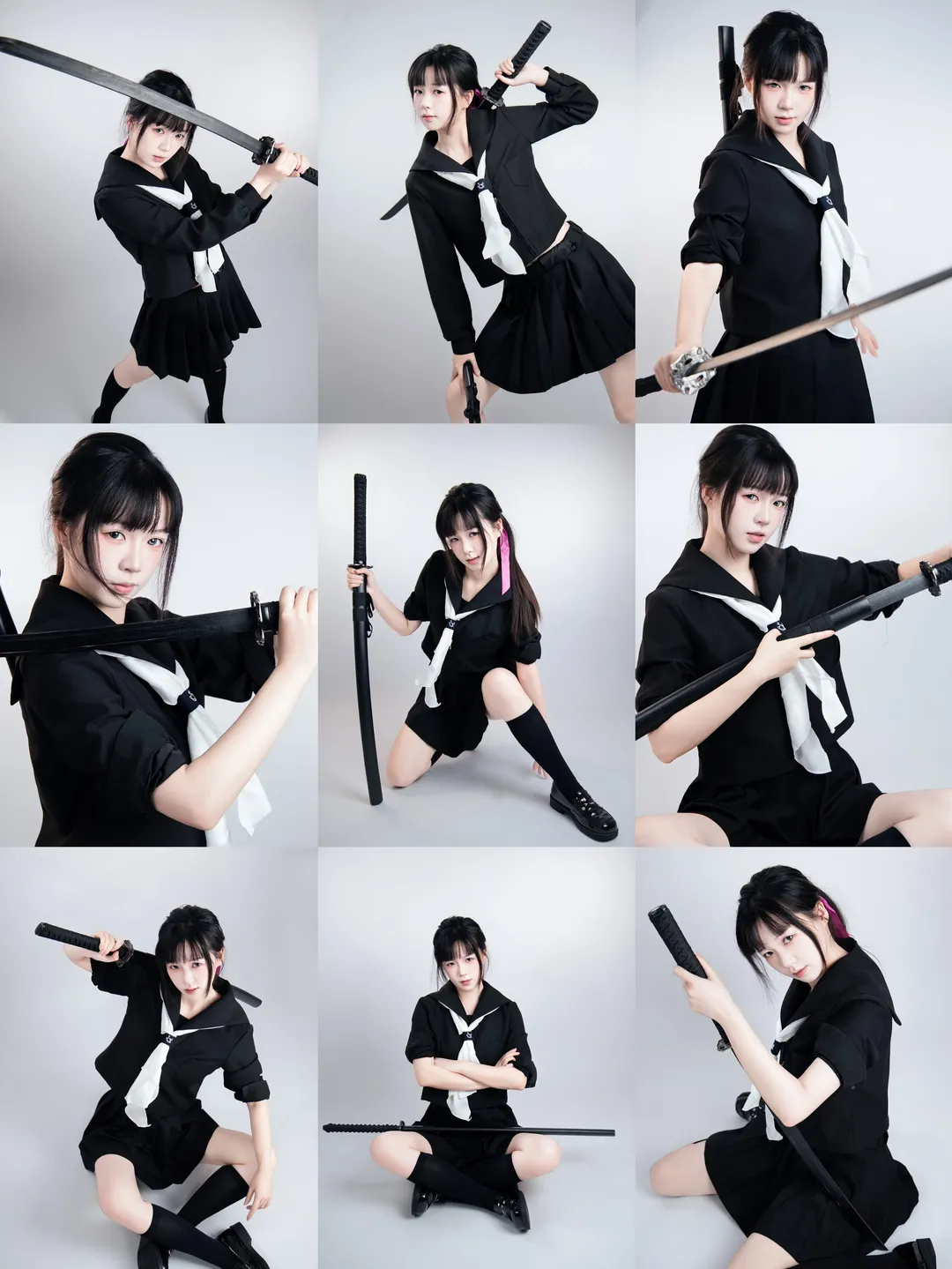
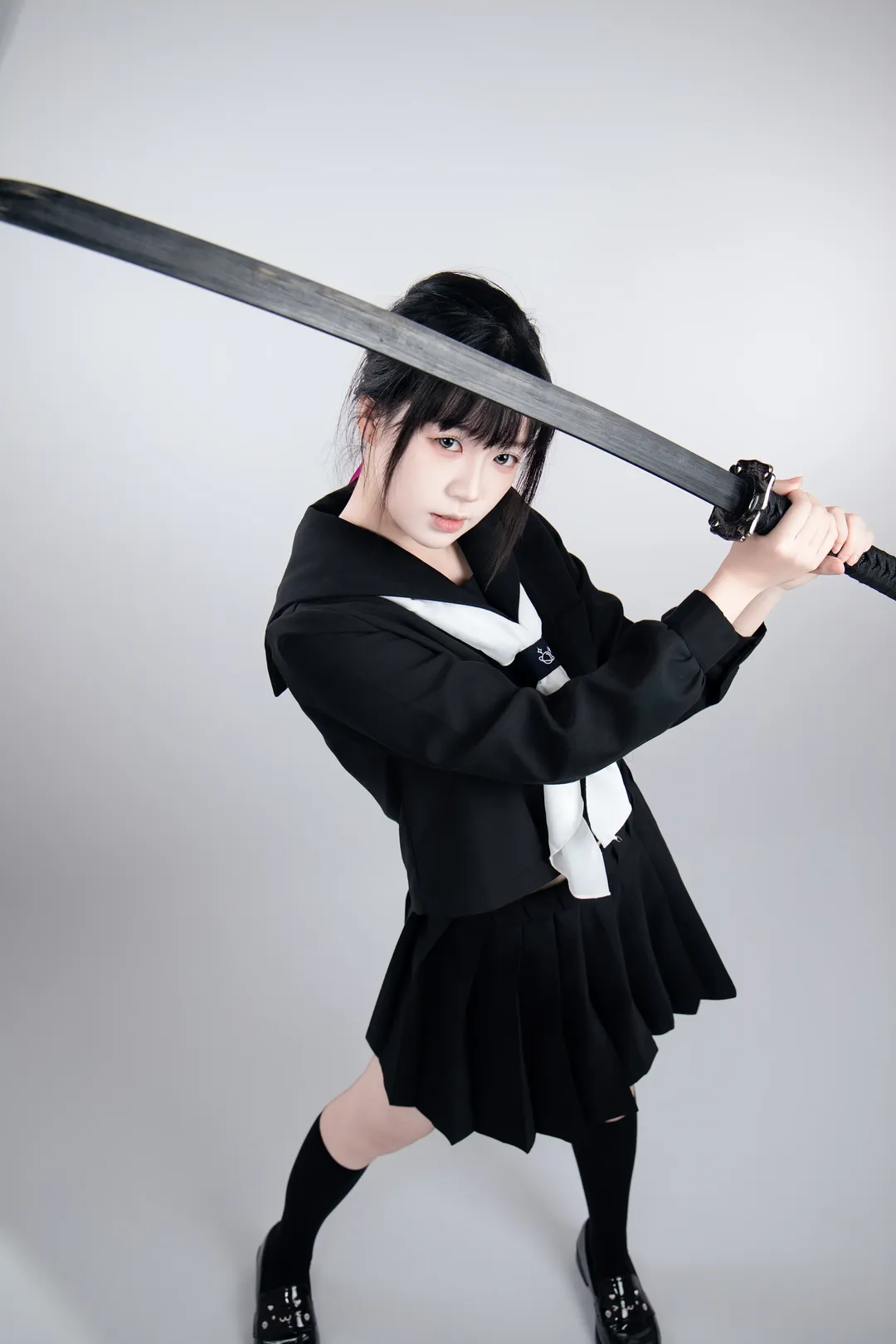
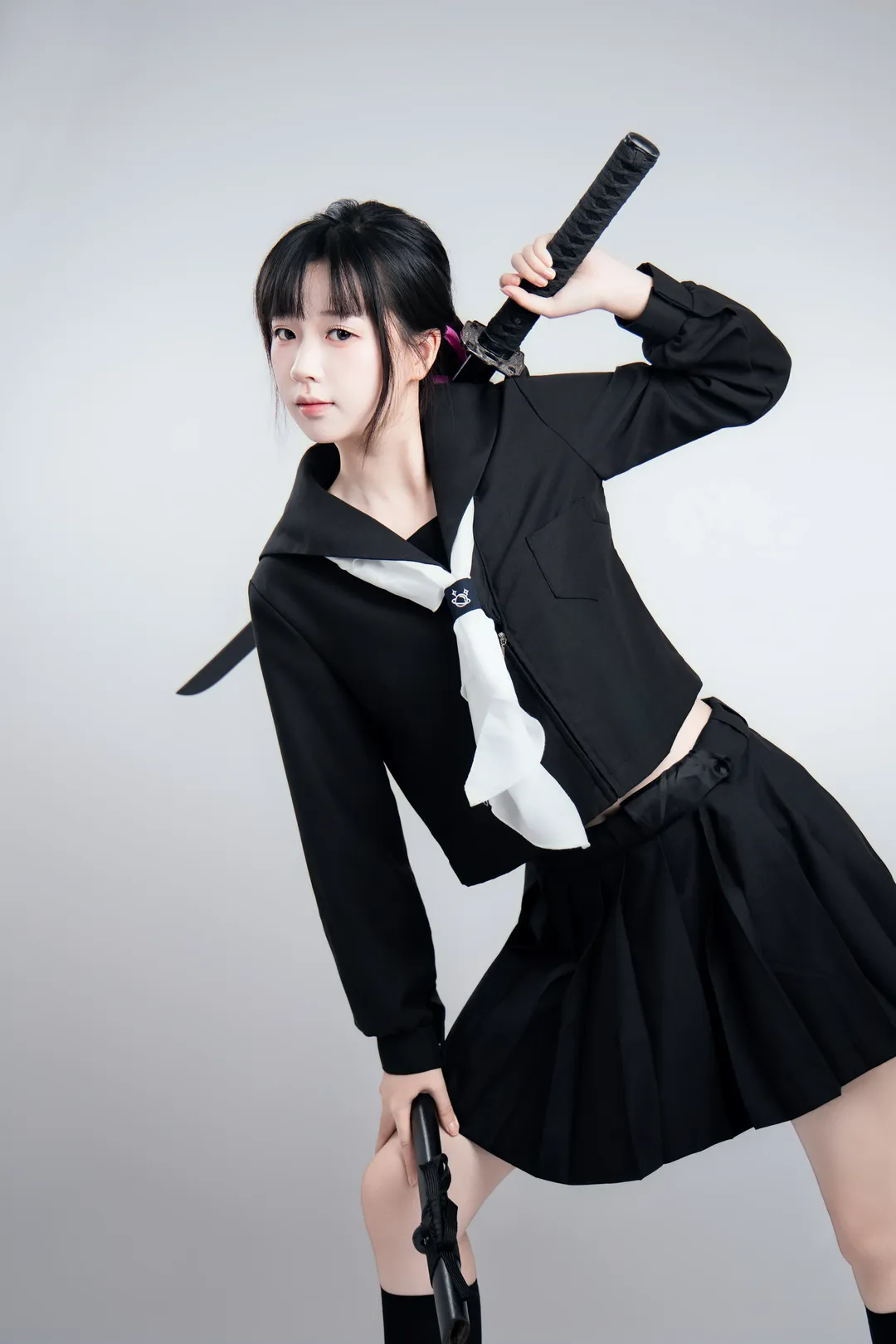
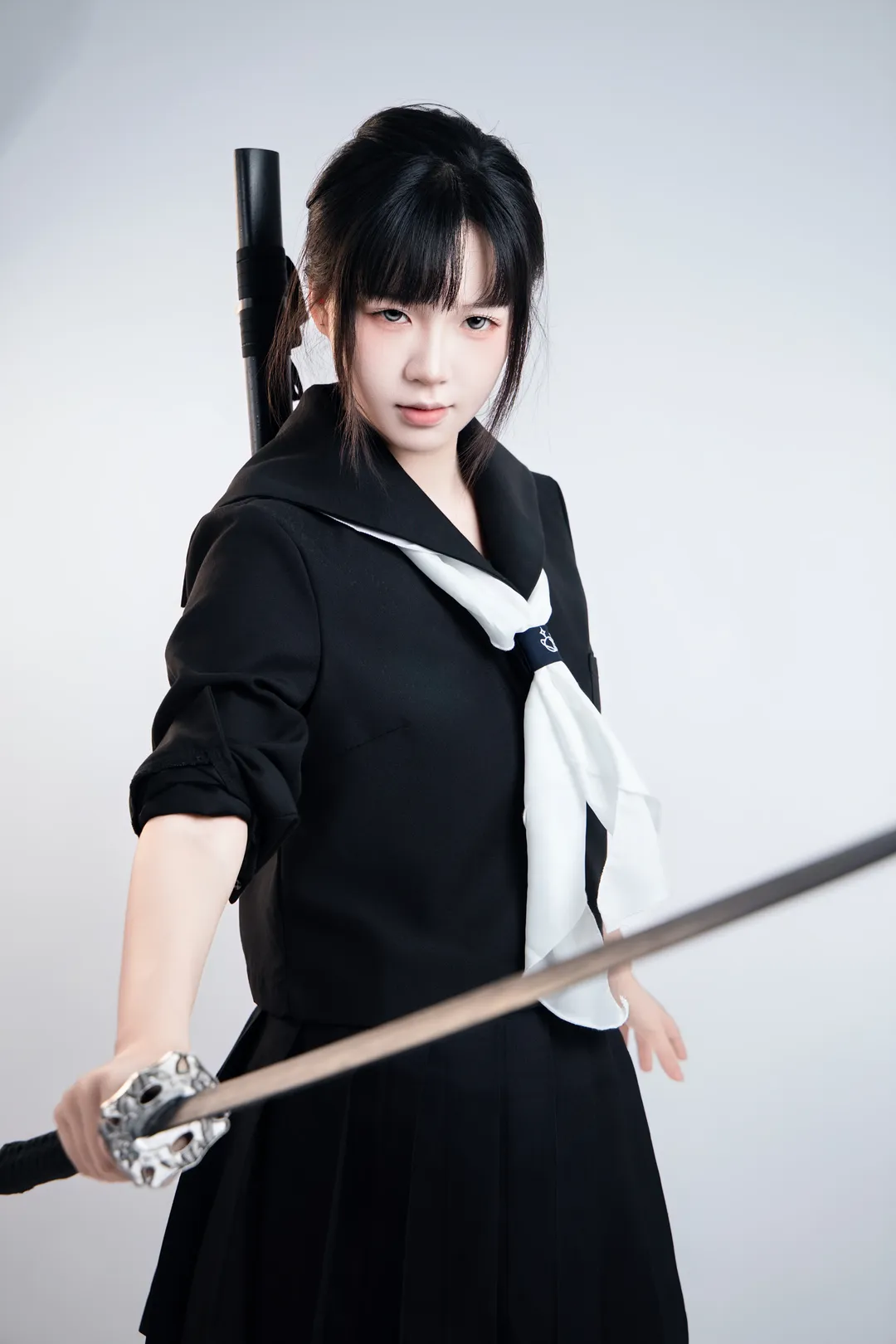
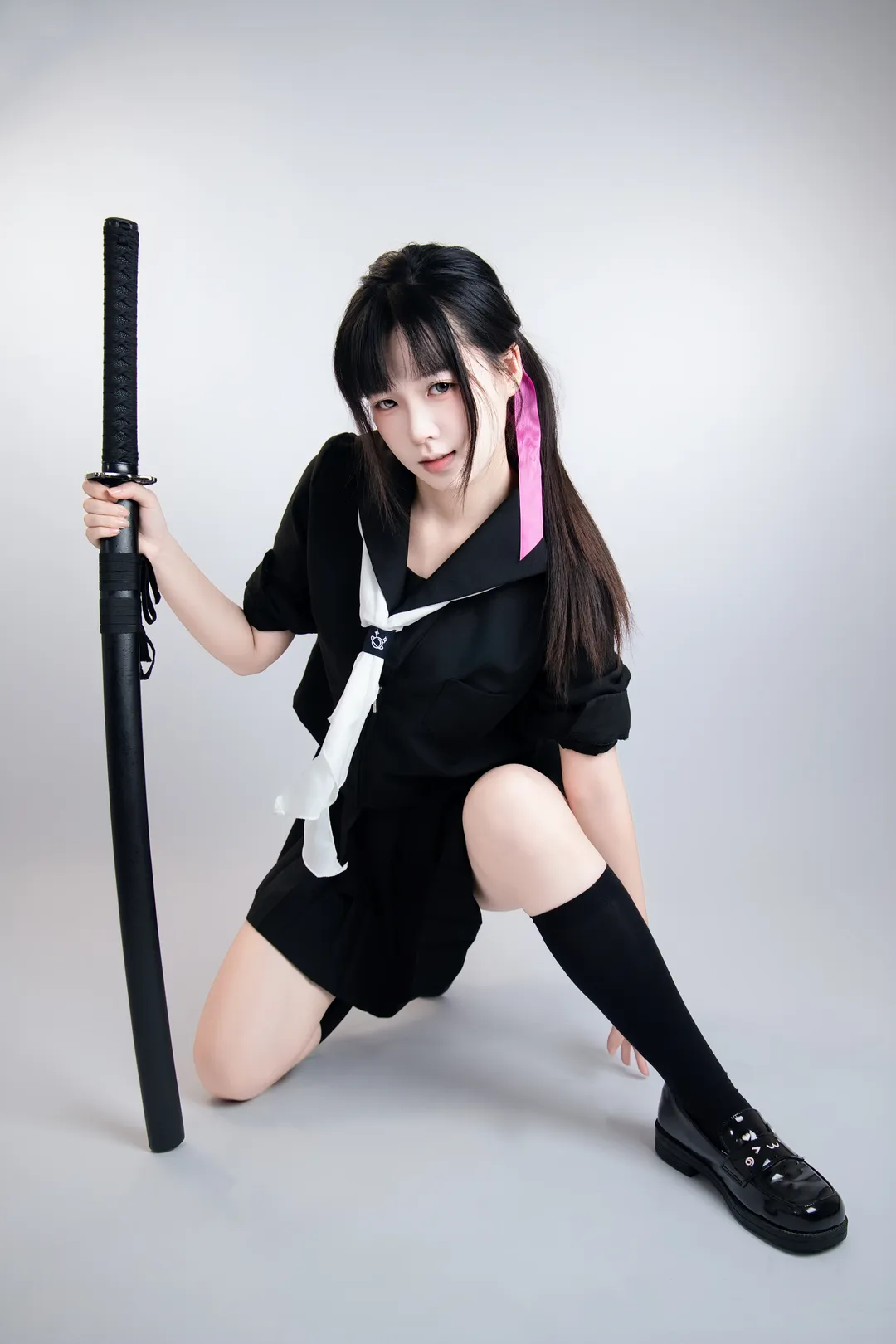
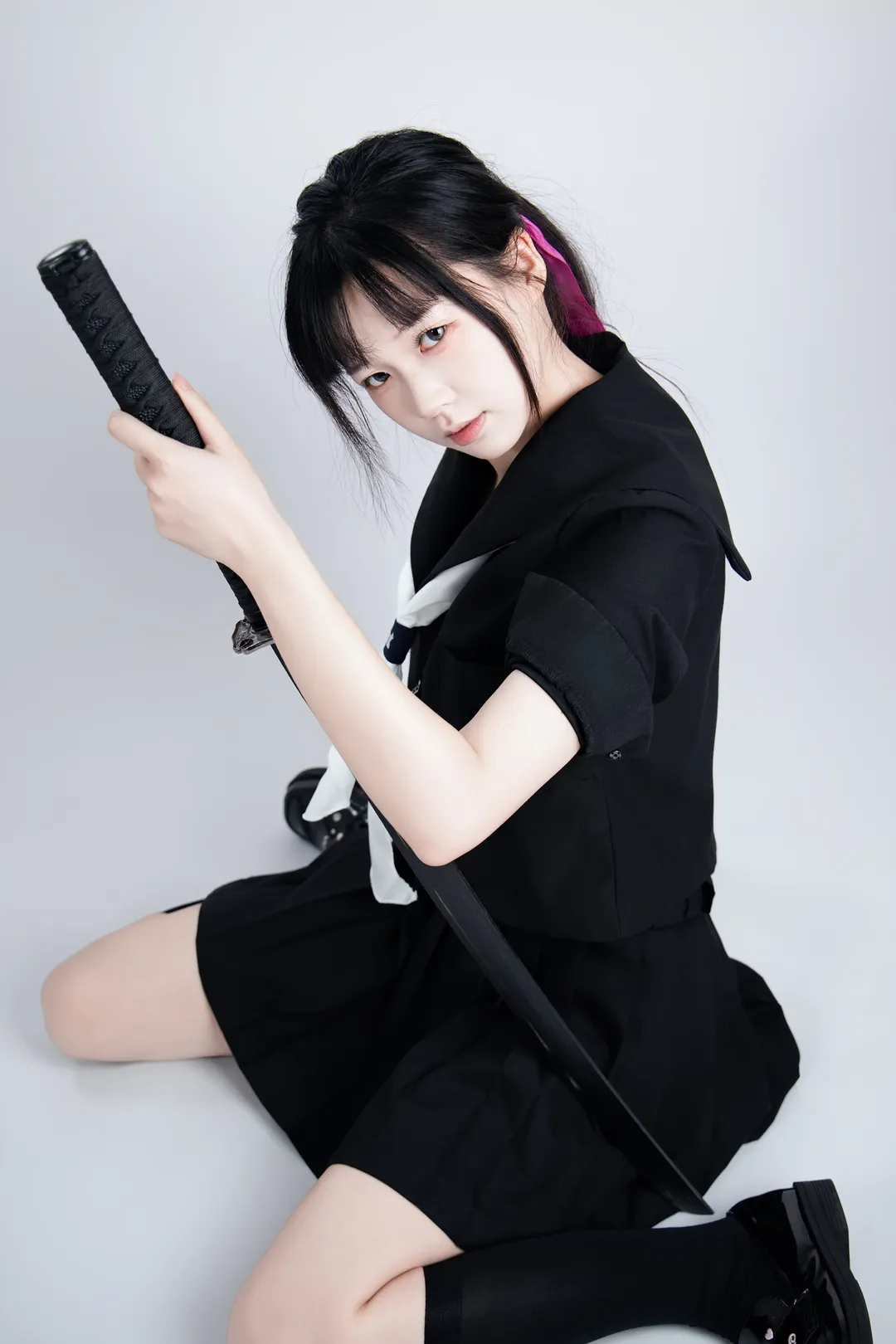
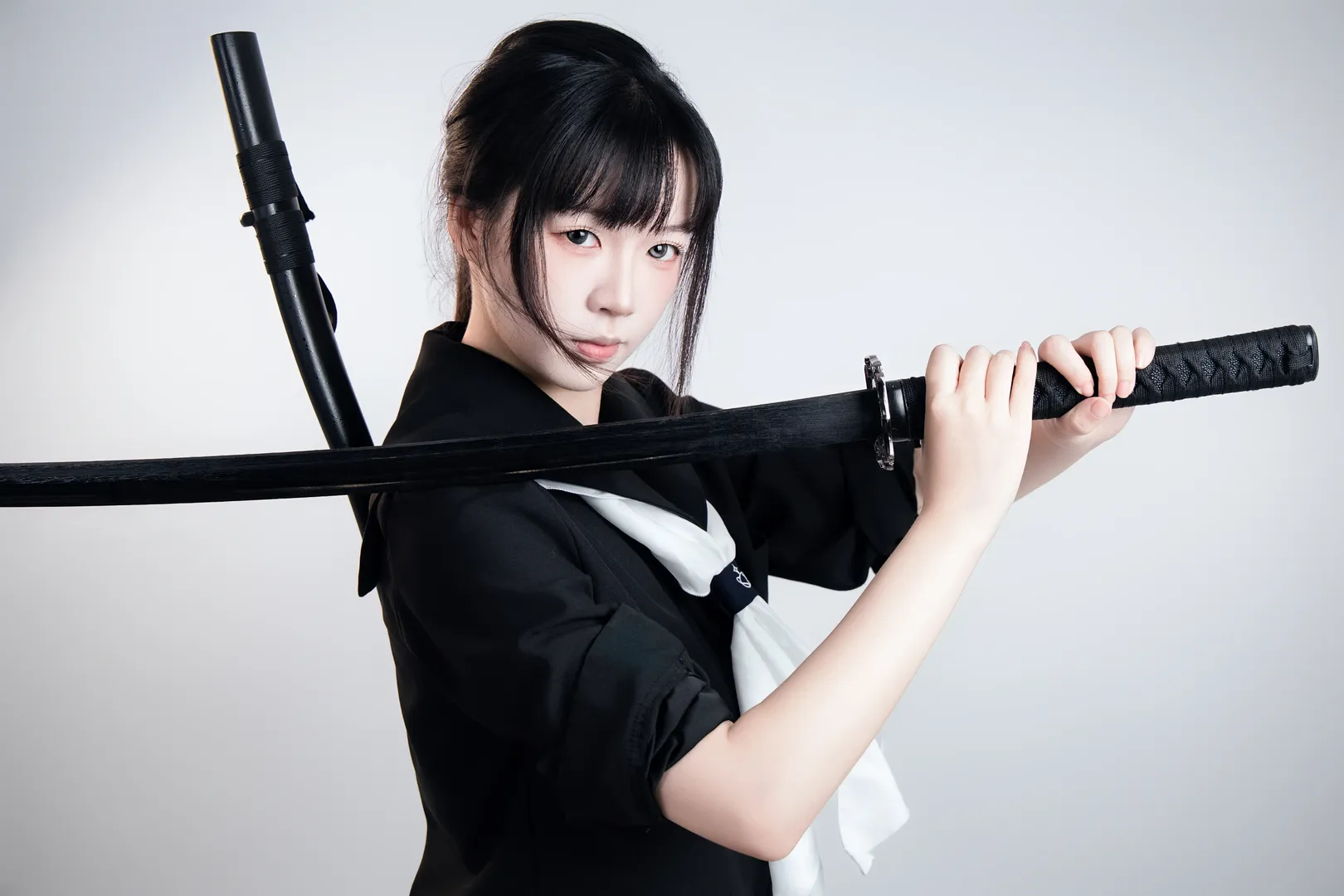
Here is Part 2 of our dynamic posing series tailored for Sketch reference. Artist friends frequently mention struggling to find expressive pose references with clean lines, so I geared up as a model to help out. The styling features a black sailor-collar top with a white neckerchief and black pleated skirt, paired with black calf socks and glossy uniform loafers. Grounded in a high-contrast monochrome palette, this ensemble renders ultra-sharp silhouettes on camera. A vivid hot-pink ribbon tied behind the ear provides a subtle visual accent against the sea of black.
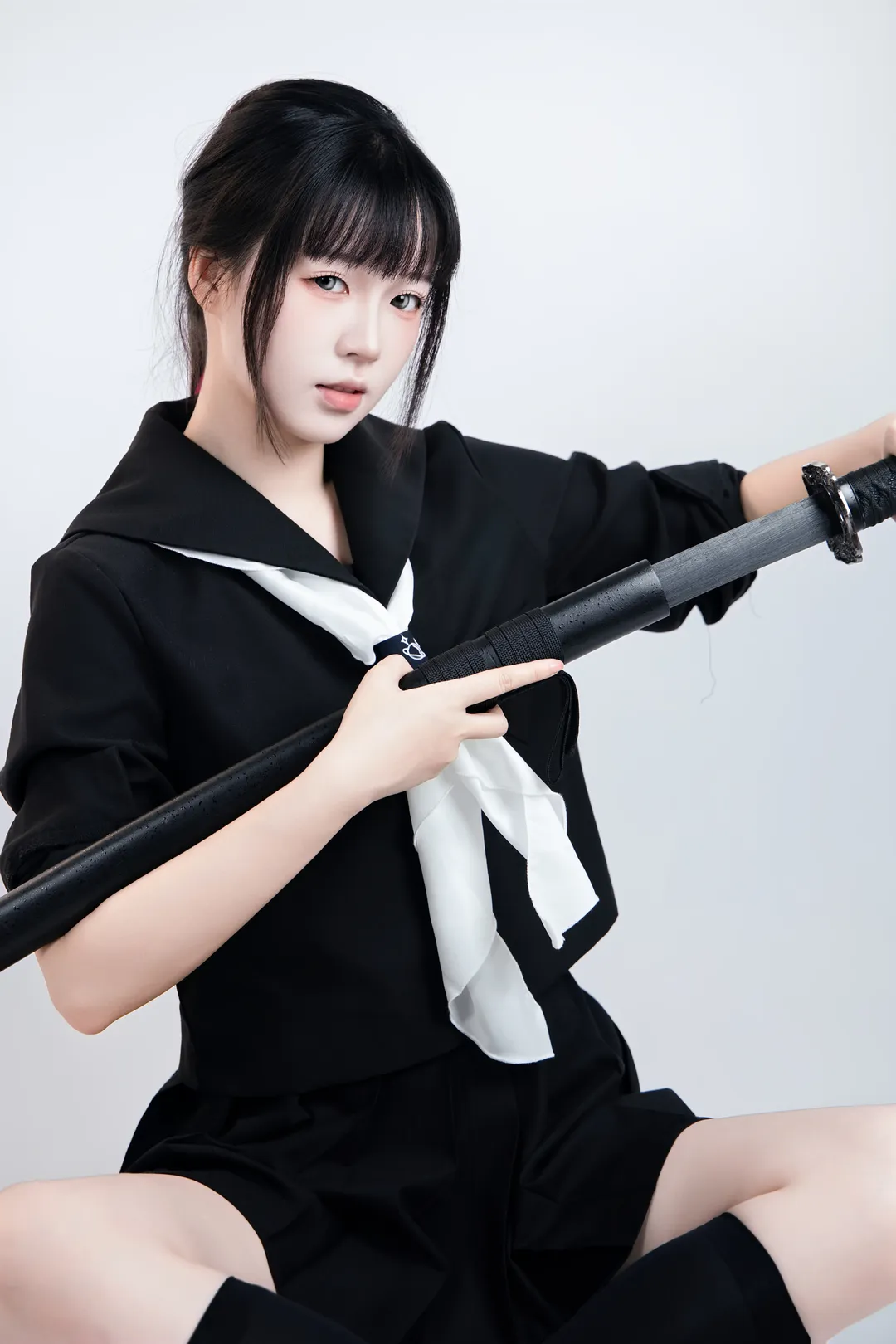
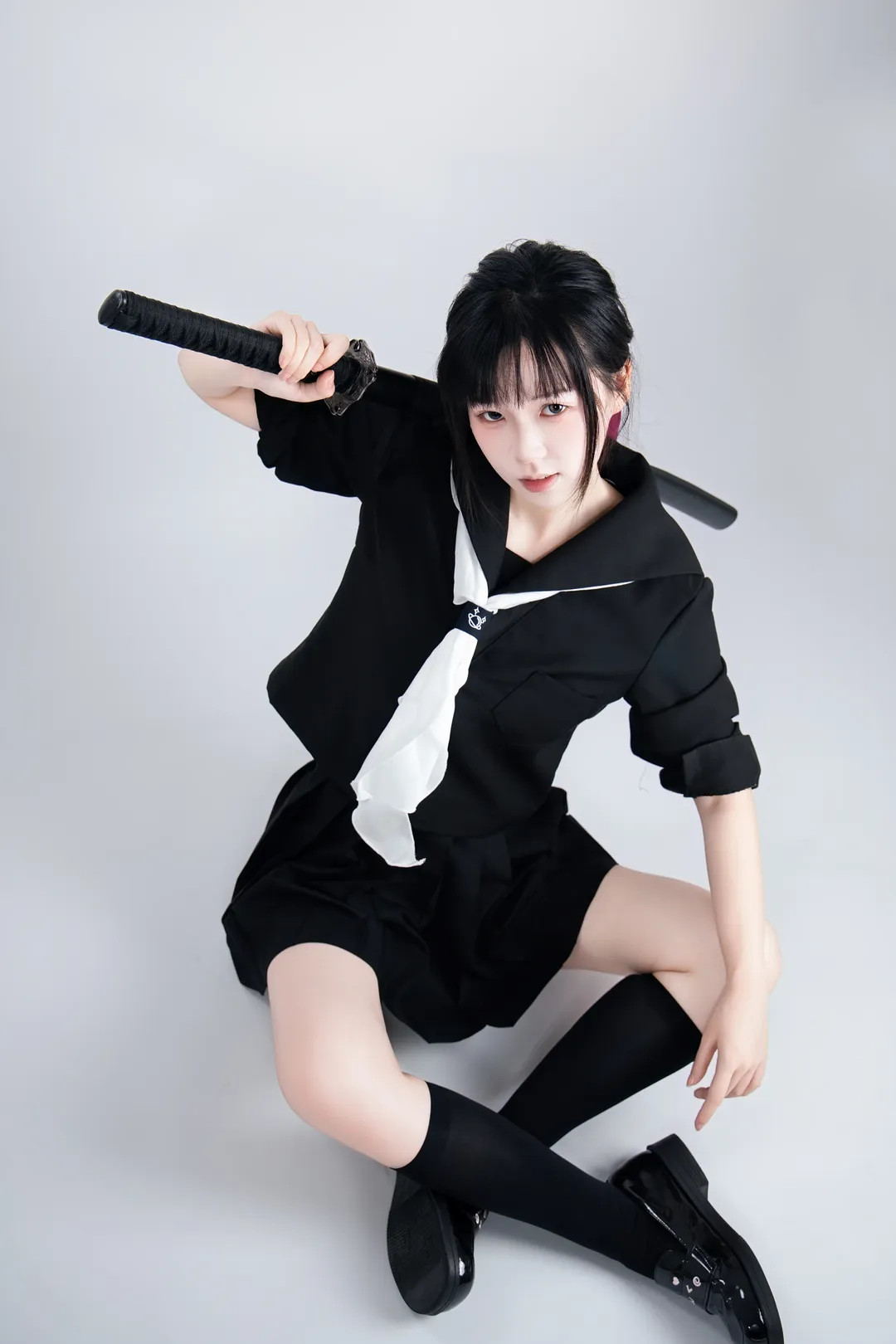
Beyond wardrobe, the Katana held in hand is the central prop. I captured poses both sheathed and unsheathed, as the rigid linear geometry of the blade rigorously tests bodily balance. Postures such as resting the blade across the shoulder, holding it horizontally across the chest, or bracing it into the ground while kneeling on one knee all demand core engagement—the slightest slackening immediately makes the shoulders appear stiff. When gripping the tsuka hilt, finger positioning is critical: the visual tension of genuine kinetic torque looks entirely different from a loose, passive hold. To give artists clear foreshortening across varied perspectives, I also shot close-up mid-body frames depicting drawing and resheathing actions.
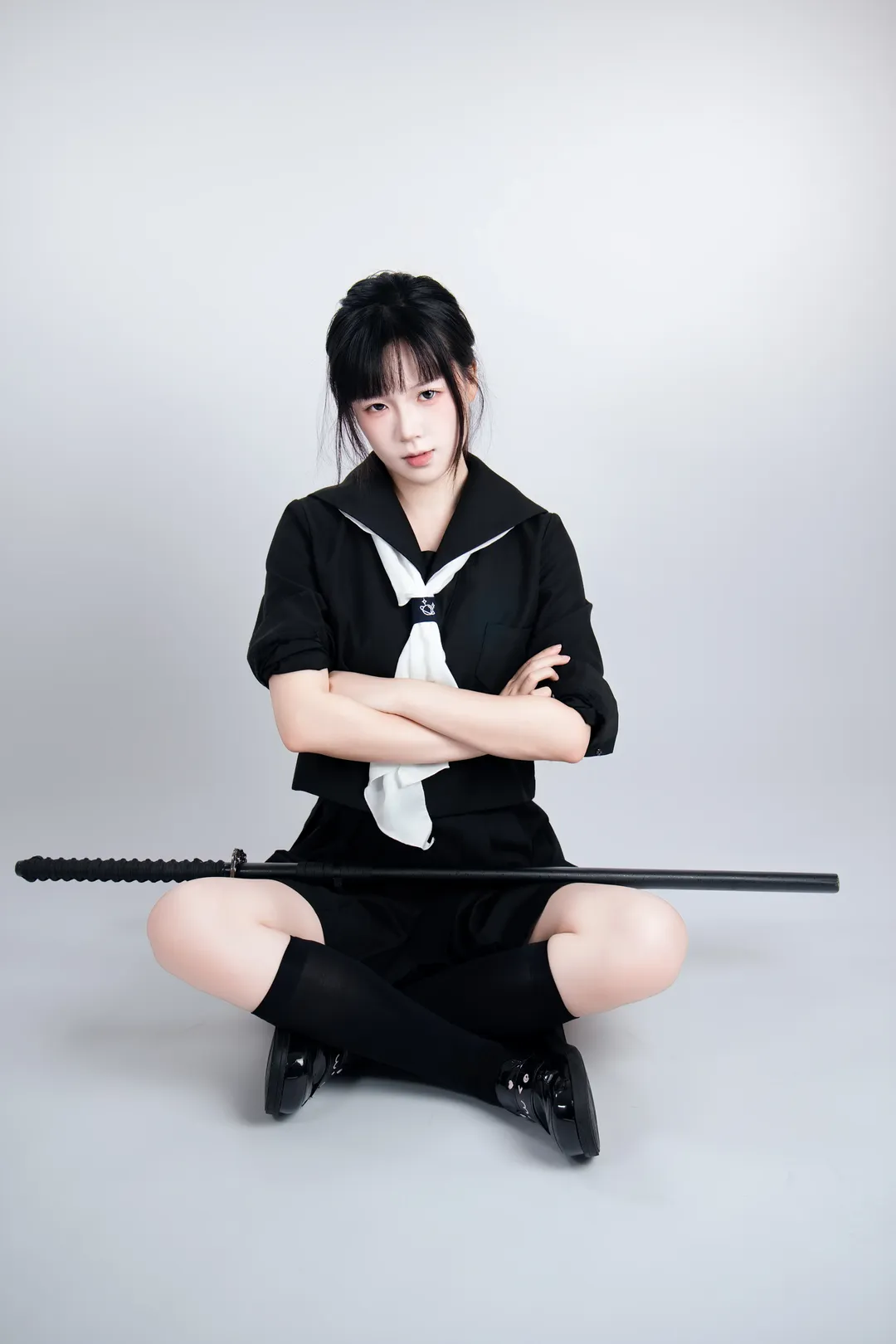
Throughout the shoot, I continuously monitored the shifting center of gravity. Lowering the stance in standing poses grounds the figure with visual weight; extending one leg forward in a deep crouch forms dynamic triangular relationships connecting knees and elbows, which artists will find exceptionally intuitive to capture when blocking in shapes. In a cross-legged seated posture, resting the blade across the knees with arms crossed offers a balanced, grounded composition ideal for practicing symmetry and weight distribution. A profile seated pose, meanwhile, extends the hilt forward to shatter the frame's boundary.
Gaze alignment was equally deliberate: tracking the eyes parallel to the edge of the blade injects palpable dramatic tension. For artists using this for sketches, pay close attention to spatial occlusions created by the scabbard across the body—such as how the saya overlaps leg contours in a crouch, or the tension folds sweeping across the torso during rotational twists. While dark fabric folds can be subtle under direct light, they offer a prime opportunity to practice defining anatomical mass through confident linework.
Holding a one-handed high guard or a single-knee crouch for minutes at a time quickly caused muscles to tremble, yet maintaining tension was essential to deliver crisp, dynamic contours. I hope these diverse multi-angle references spark fresh creative inspiration in your figure sketching.