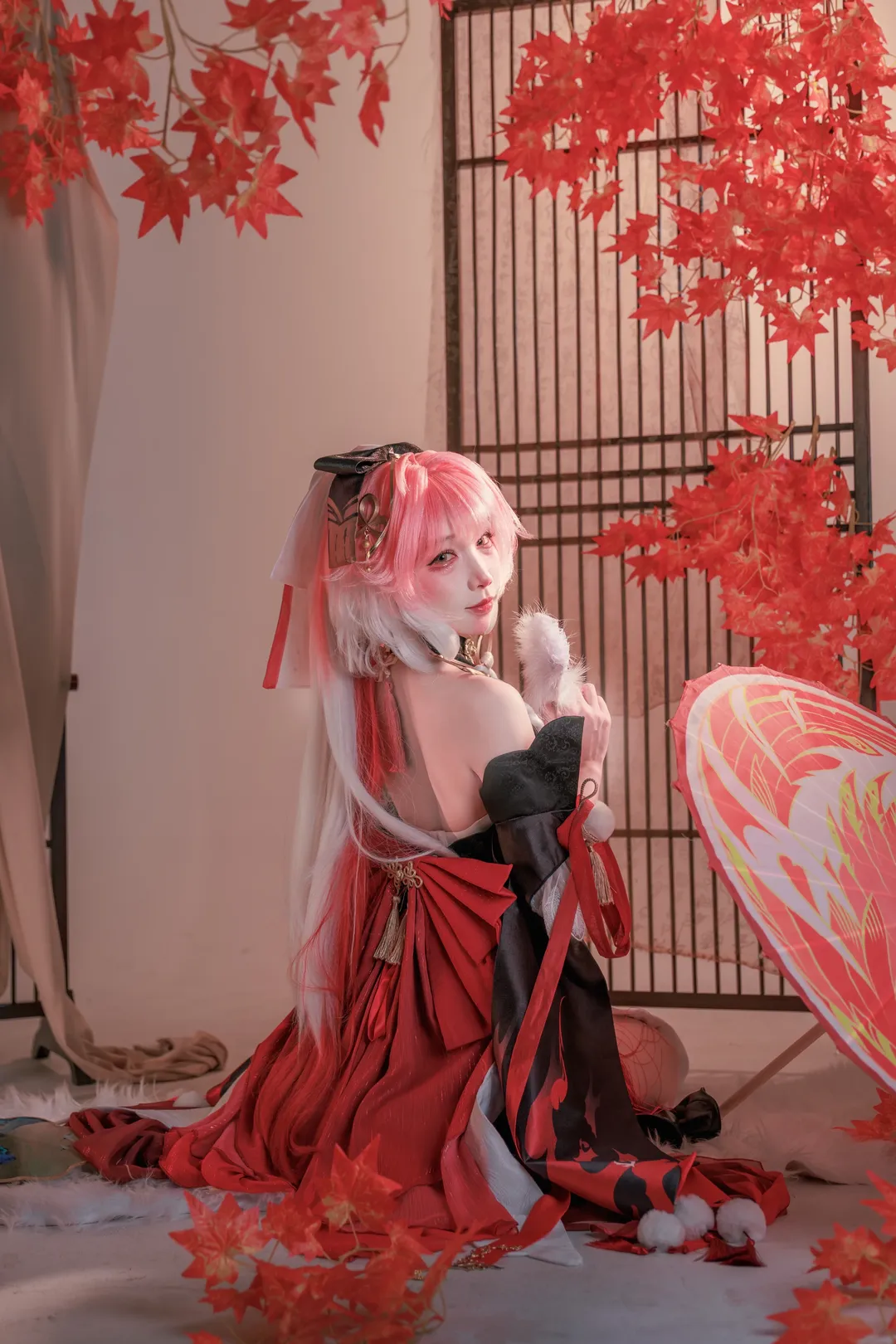
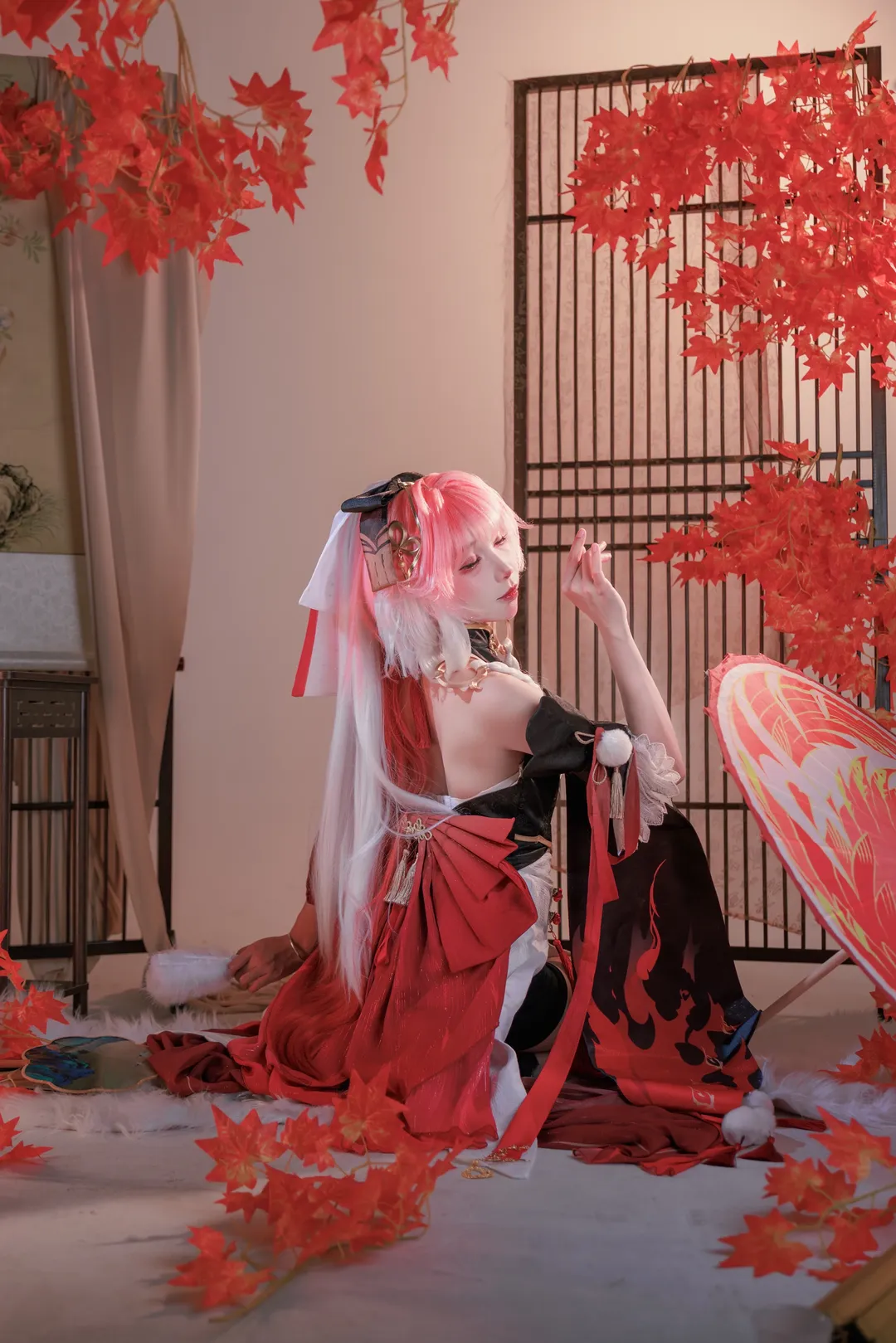
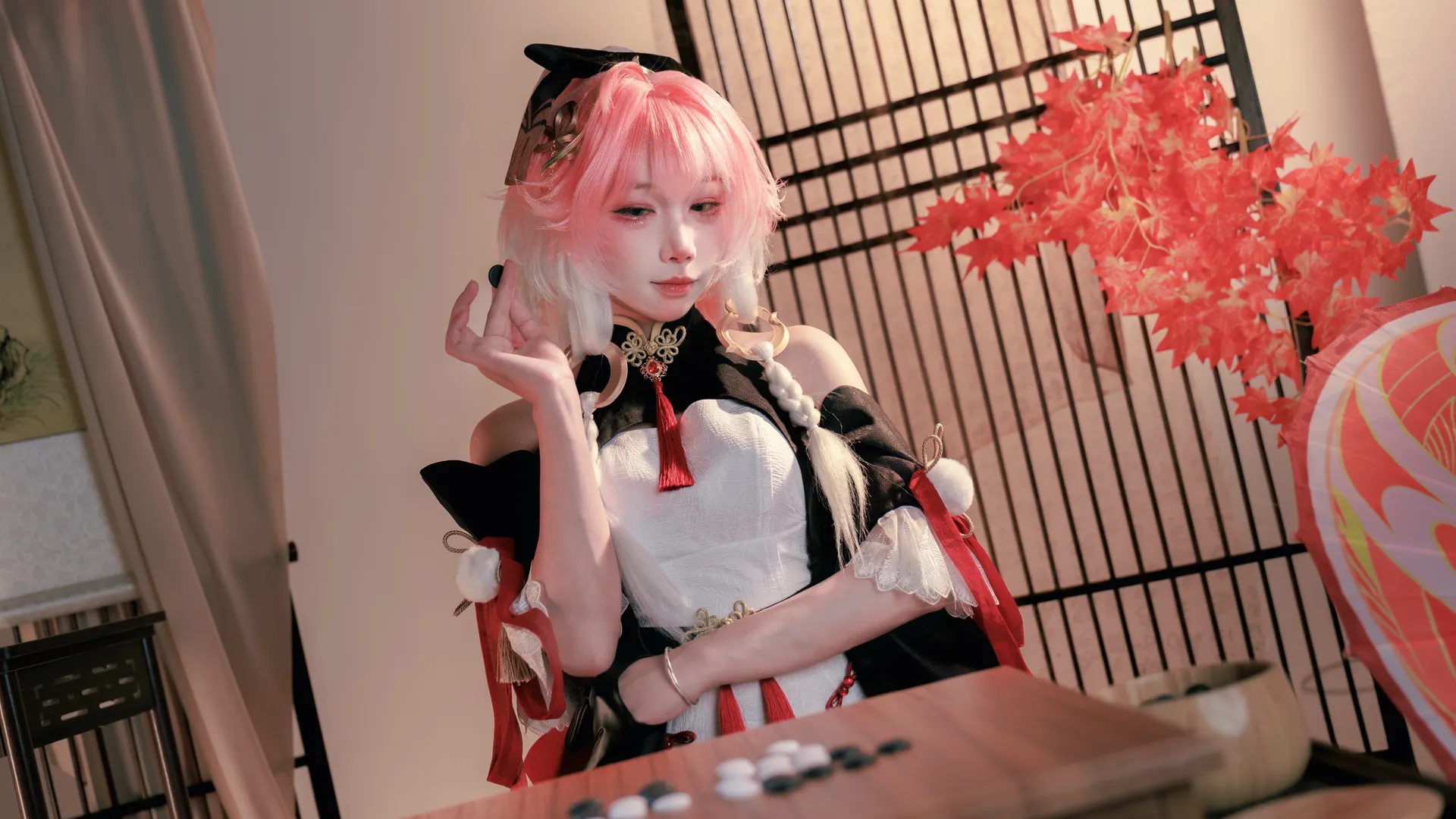

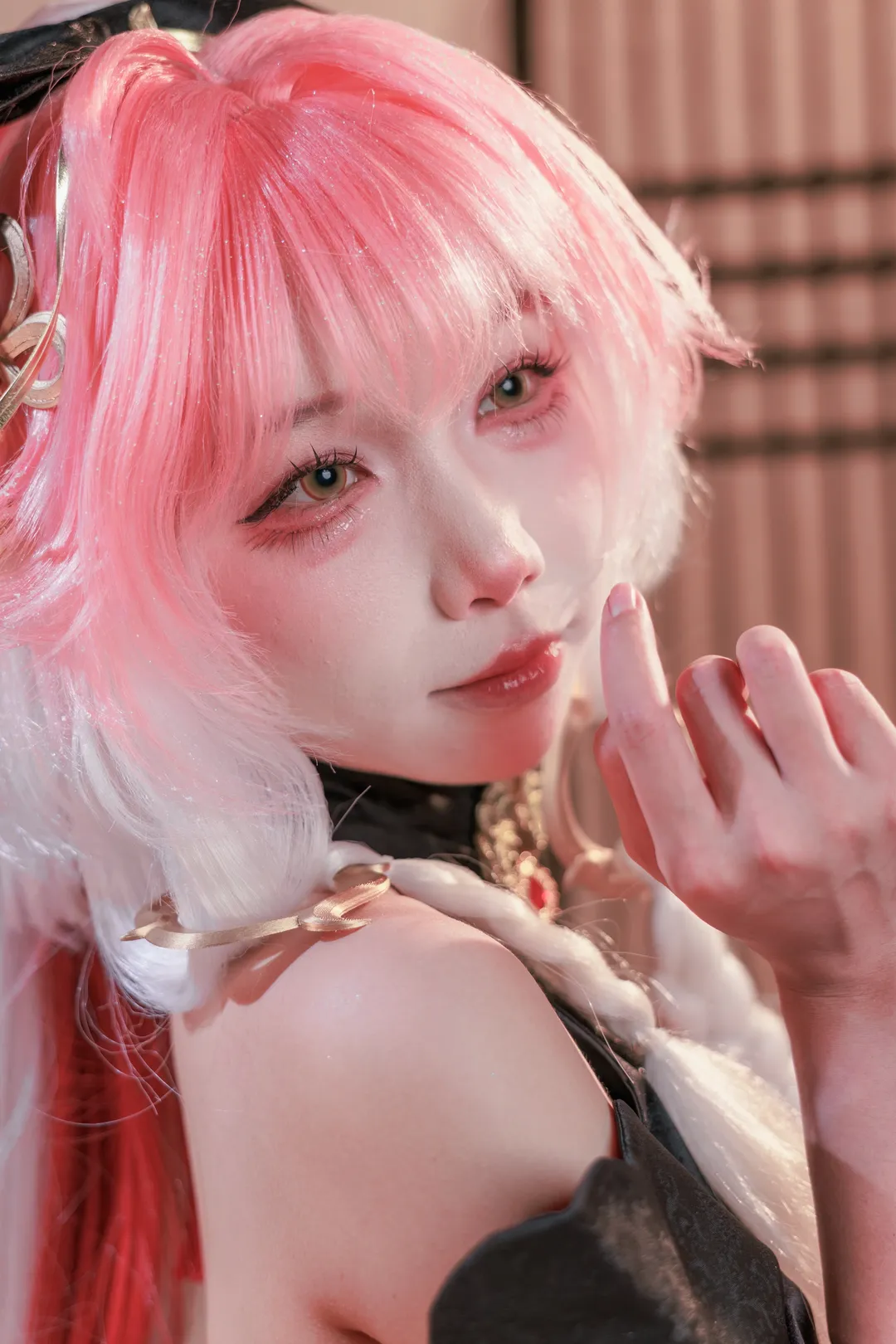
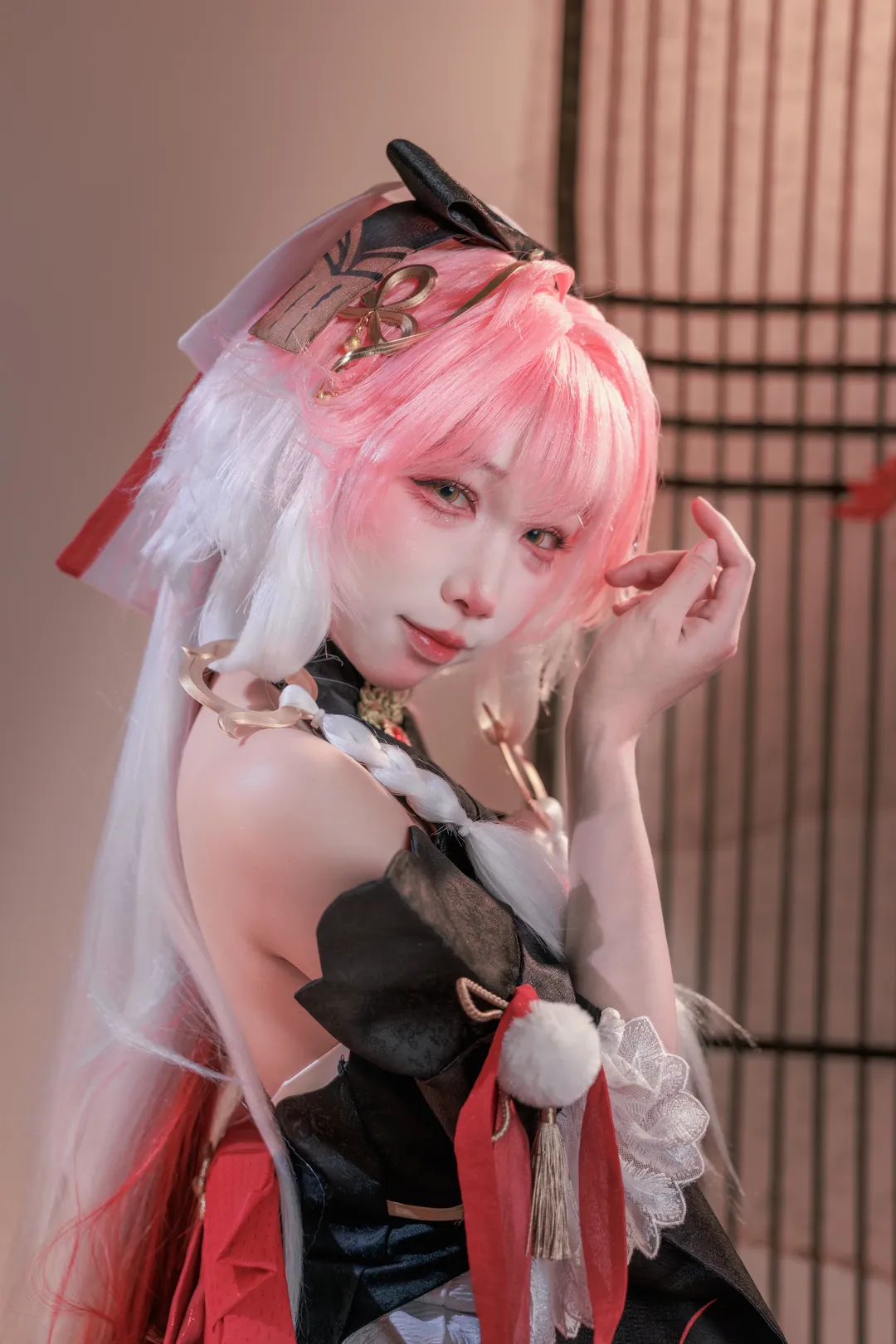
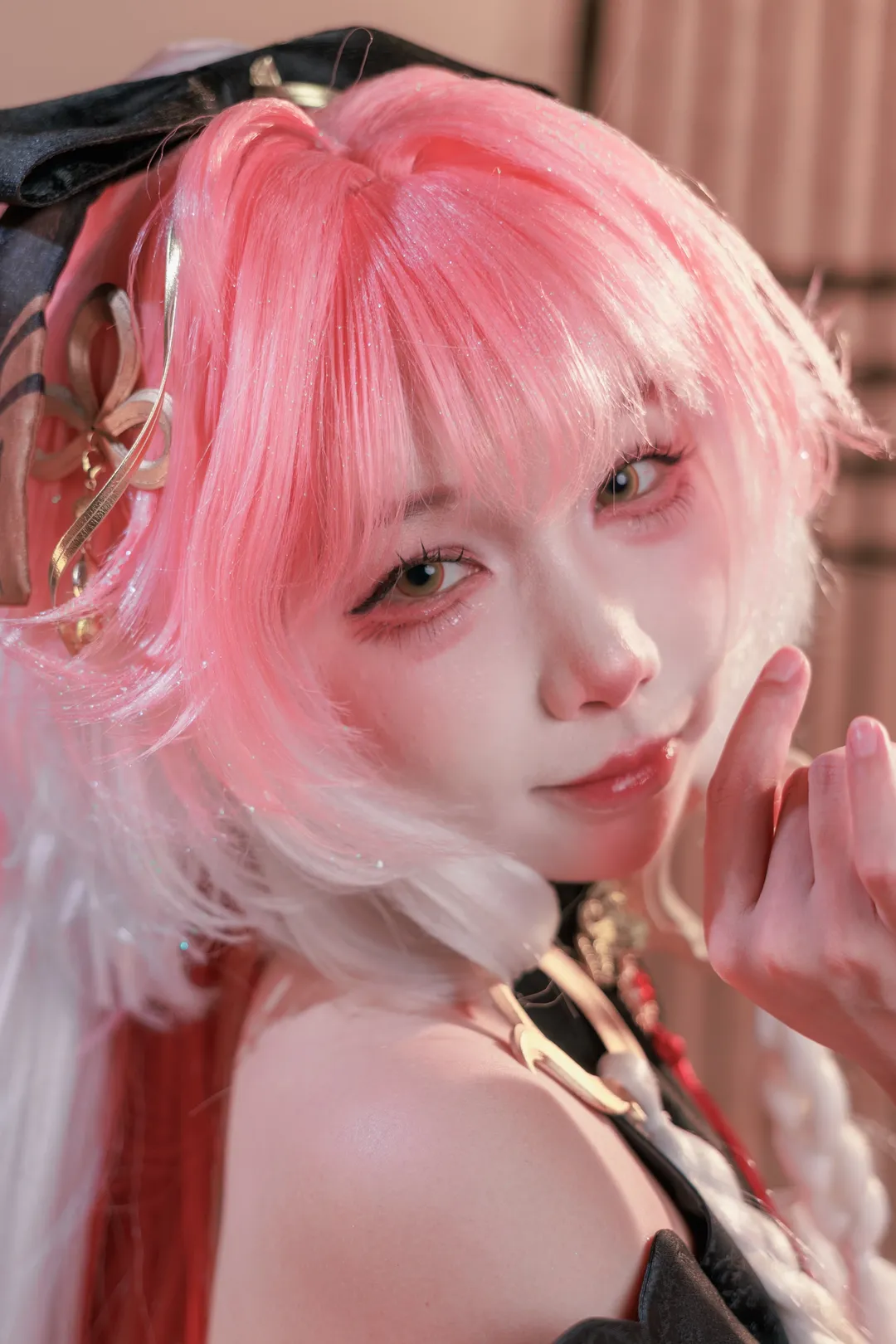
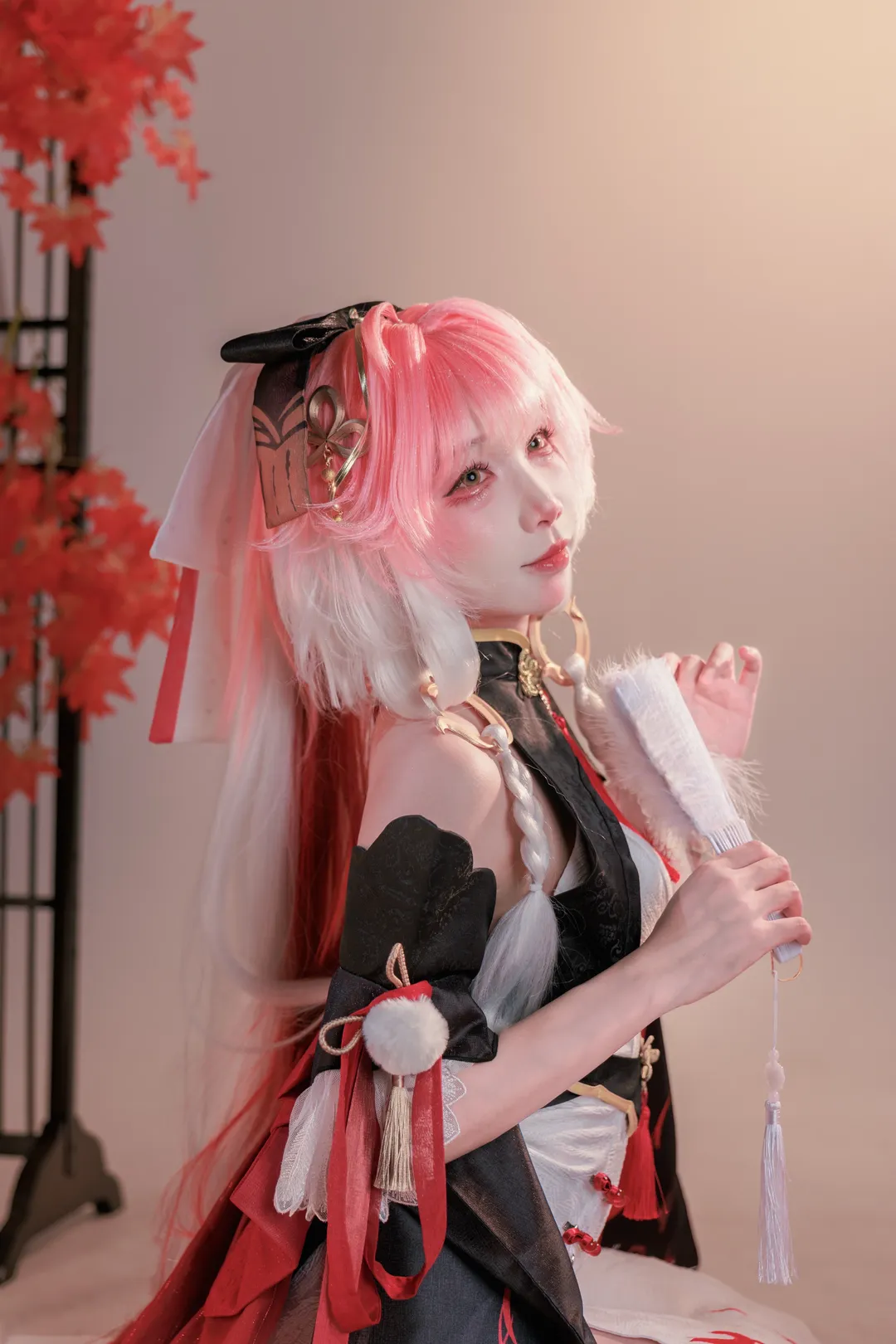
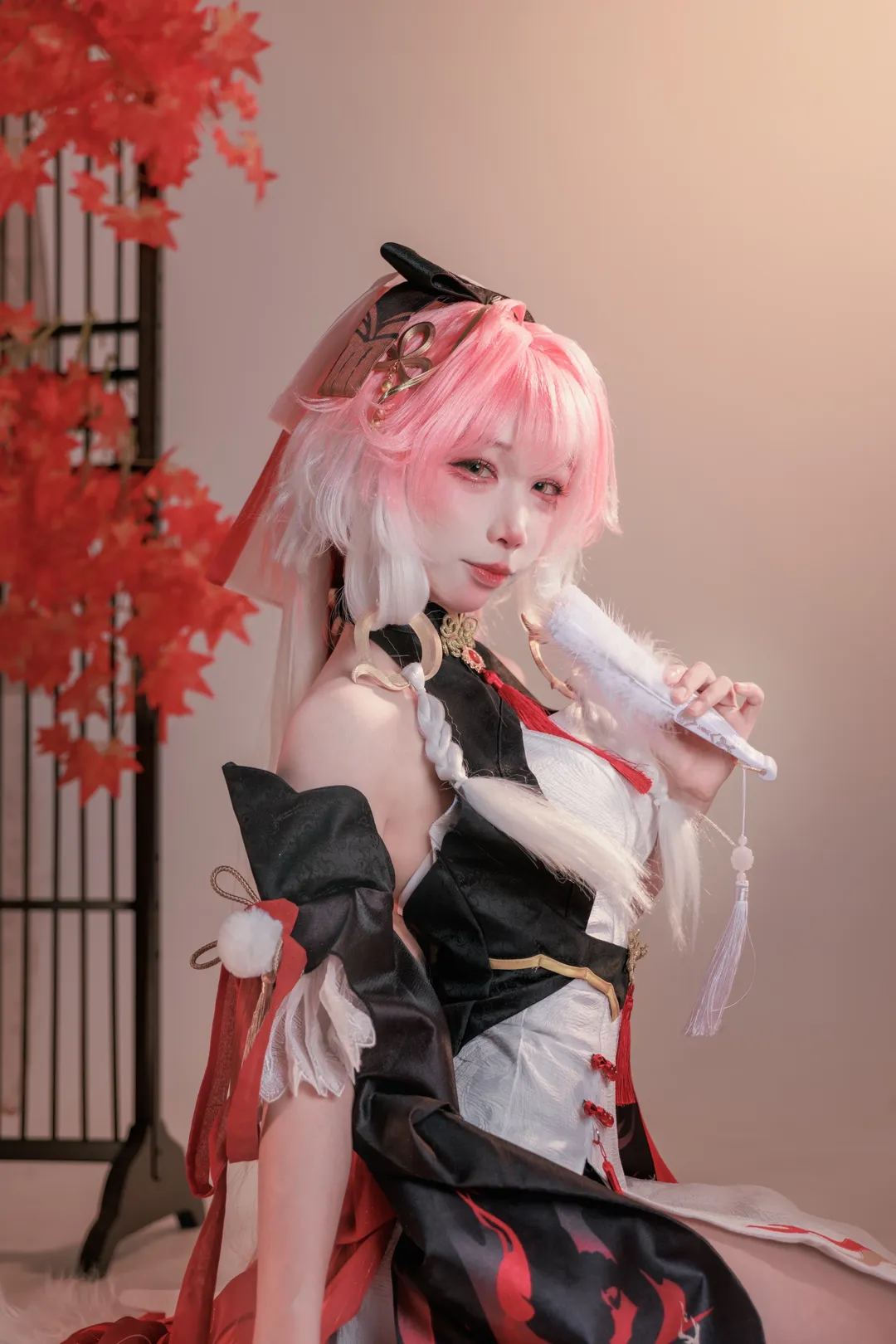
Today, I want to share some details from this studio shoot of Changli. We primarily aimed to create a late-autumn courtyard atmosphere in the studio, so we set up wooden lattice screens and hung an abundance of red maple leaves as accents. The overall lighting was kept warm, pairing a key light with side-backlighting to give the silhouette more dimension while bringing out a lustrous sheen across the pink-and-white gradient wig.
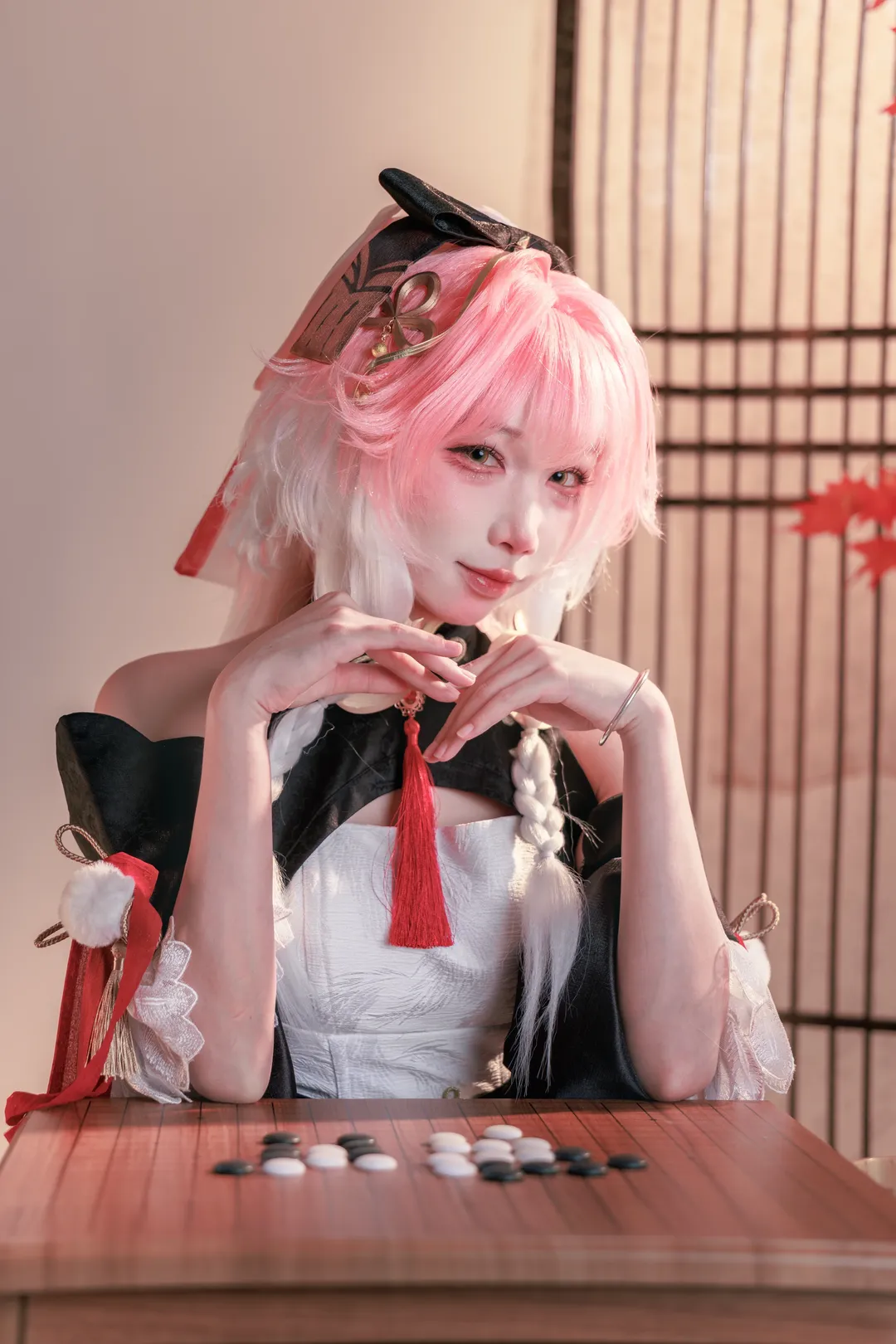
Changli's Qipao design is visually striking with its interwoven palette of black, white, and red. For the makeup, focus was placed heavily on crimson-toned eye shading, which, paired with green contact lenses, immediately channeled an alluring, dreamy gaze. The white braided accents and fuzzy pom-poms along the wig's edge also added a playful, spirited touch to the overall styling.
When it comes to studio posing, here are a few directions you can reference. While sitting on the floor, angle your body sideways toward the camera and let the long crimson skirt sweep across the frame. Hold the small white folding fan naturally across your chest or shoulder, lowering the shoulders slightly to reveal the back lines. Looking back over your shoulder is exceptionally photogenic: turn your body away first, then swivel only your head back toward the lens, tucking your chin slightly with a languid, relaxed gaze.
For the shots playing Go at the table, it was all about utilizing spatial depth. Rest an elbow on the tabletop, lightly rest fingers under your chin or along the edge of the Go stone bowl, and gaze down at the board or cast a casual glance toward the camera. Avoid stiffening up your entire body when holding these poses—slow your breathing and keep your range of motion within an elegant boundary. Prop handling is equally vital; the oil-paper umbrella and folding fan serve not only as aesthetic decor but also resolve the dilemma of not knowing where to place your hands.
During a studio shoot, remember to communicate frequently with your photographer, check real-time previews on the camera screen, and promptly adjust the amplitude of your movements and expressions. That is the true key to capturing your ideal shots.